A Radical Concept in a Conservative Market
While the snowboard binding market has seen recent innovations—particularly with the rise of step-in and step-on systems—true breakthroughs in snowboard construction itself have been rare. That changed in 2022, when Doubledeck Snowboards made a striking debut at ISPO Munich.
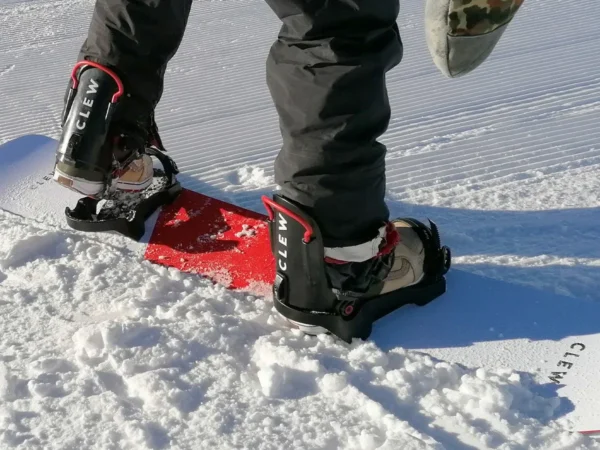
The German brand introduced a radically different idea: a dual-deck snowboard design. At first glance, it looks like a traditional snowboard topped with a raised upper platform. But this elevated deck is not a gimmick—it is designed to fundamentally change how the board flexes, absorbs vibrations, and transfers energy to the snow.
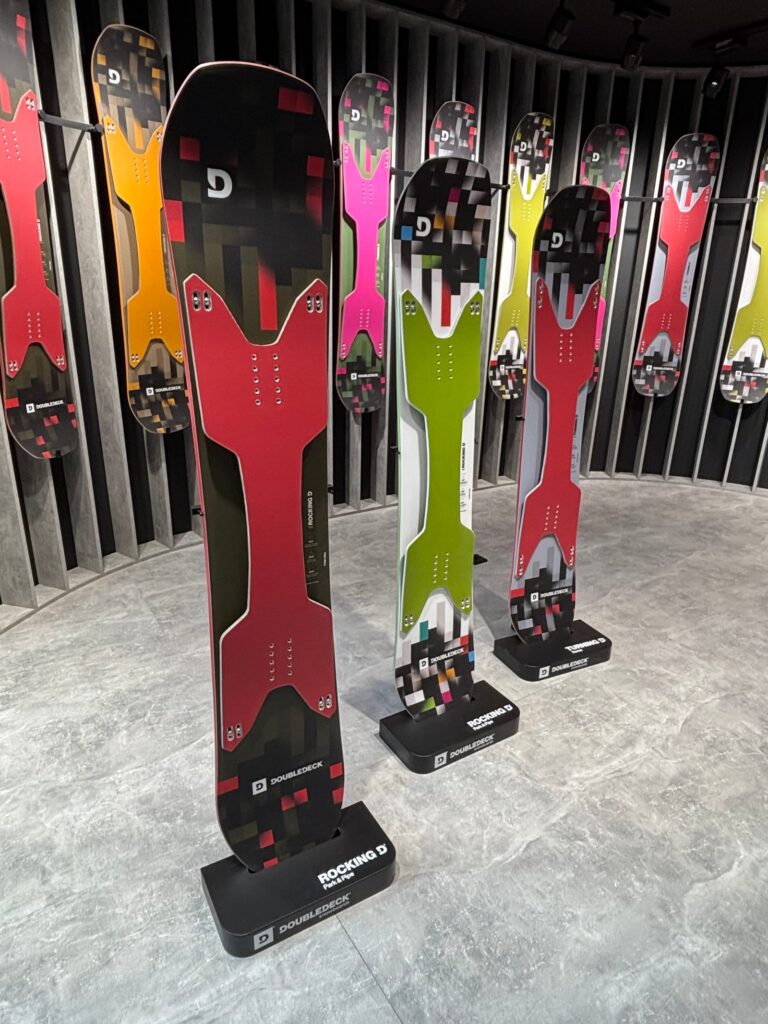
According to Doubledeck Snowboards, this architecture delivers:
- Improved torsional and longitudinal flex
- Enhanced stability at speed
- Faster edge-to-edge responsiveness
- Better vibration dampening on hardpack and uneven terrain
In an industry known for incremental evolution, Double Deck’s concept immediately stood out as something truly unconventional.
Terje Håkonsen and the Credibility Factor
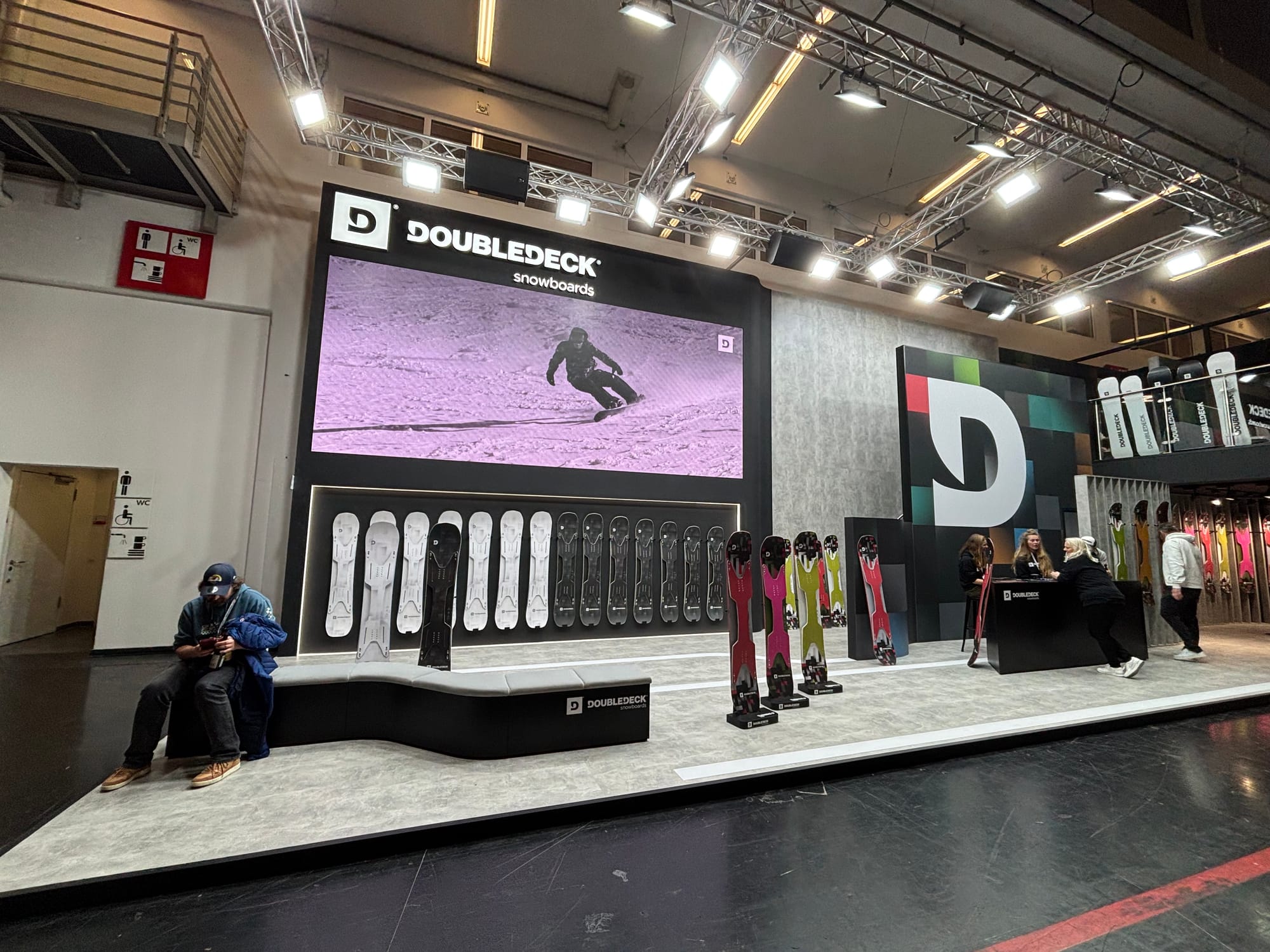
Two years later, the brand returned to ISPO with a much more prominent presence—a booth worthy of a major industry player. Dominating the stand was a giant screen looping footage of Terje Håkonsen, one of the most influential snowboarders of all time and a key contributor to the product’s development.
For a young and experimental brand, this collaboration is nothing short of a statement.
“Working with Terje Håkonsen is a huge milestone for us. We already knew Terje from our own snowboarding background and had great respect for his experience and expertise. When he discovered Double Deck, he was immediately enthusiastic about our technology and our new approach.”
— ISPO.com
Håkonsen’s involvement adds serious credibility to a concept that could otherwise be perceived as too radical or experimental. His reputation for precision, innovation, and technical riding aligns perfectly with Double Deck’s ambition.
Doubledeck Snowboards Today: Innovation Meets Market Reality
So where does Doubledeck Snowboards stand today?
The answer is not entirely clear—and not necessarily reassuring. The global snowboard market remains sluggish, and innovation alone does not guarantee commercial success. In fact, during the most recent ISPO edition, Double Deck Snowboards was the only snowboard brand exhibiting, a telling sign of the industry’s current challenges.
Price is another major barrier. With a retail price around €950, Double Deck boards clearly target a niche audience of early adopters, tech enthusiasts, and expert riders. This is a significant investment, especially for a product with very limited independent testing and reviews available so far.
To lower the entry barrier, the brand also offers a rental program, priced between $40 and $60 per day. While this allows riders to experience the technology firsthand, the cost remains higher than standard resort rental options—though, to be fair, the comparison is not entirely equivalent given the uniqueness of the product.
A Bold Vision for the Future of Snowboarding
Doubledeck Snowboards sits at a fascinating crossroads. On one hand, the brand represents one of the most ambitious design innovations in modern snowboarding, backed by serious engineering and the endorsement of a living legend. On the other, it faces a shrinking market, high price sensitivity, and the challenge of convincing riders to rethink what a snowboard should look and feel like.
Whether Doubledeck Snowboards becomes a disruptive force or remains a bold experiment will depend on one key factor: real-world adoption. If riders feel a genuine performance difference on snow, the brand could carve out a lasting niche. If not, it may remain one of snowboarding’s most intriguing “unidentified sliding objects.”
Double Deck snowboards are primarily designed for advanced to expert riders. Due to their price, technical design, and performance-oriented focus, they may not be ideal for beginners. Riders with strong carving skills and a sensitivity to board feel will benefit the most from the technology.
The key advantages include:
- Enhanced stability at speed
- Improved vibration dampening
- More controlled and dynamic flex
- Increased edge precision
- Reduced fatigue on long or aggressive runs
These benefits make Double Deck boards particularly appealing for technical freeriding and high-performance carving.
A Double Deck snowboard retails for approximately €950, positioning it in the premium segment of the snowboard market. This price reflects its advanced engineering, unconventional construction, and limited production scale.