Snowboarding has always involved a small ritual at the top of every run: sitting down, strapping in, adjusting, tightening, and checking. While binding straps have become lighter and more ergonomic over the years, the process itself remains time-consuming.
Over the past decade, several brands have attempted to rethink this experience. The result is a new generation of quick entry snowboard bindings, designed to reduce transition time without sacrificing performance, comfort, or safety. In 2026, these systems are no longer experimental—they are viable alternatives to traditional bindings.
Burton Step On: The Pure Strapless Revolution
How the Step On System Works
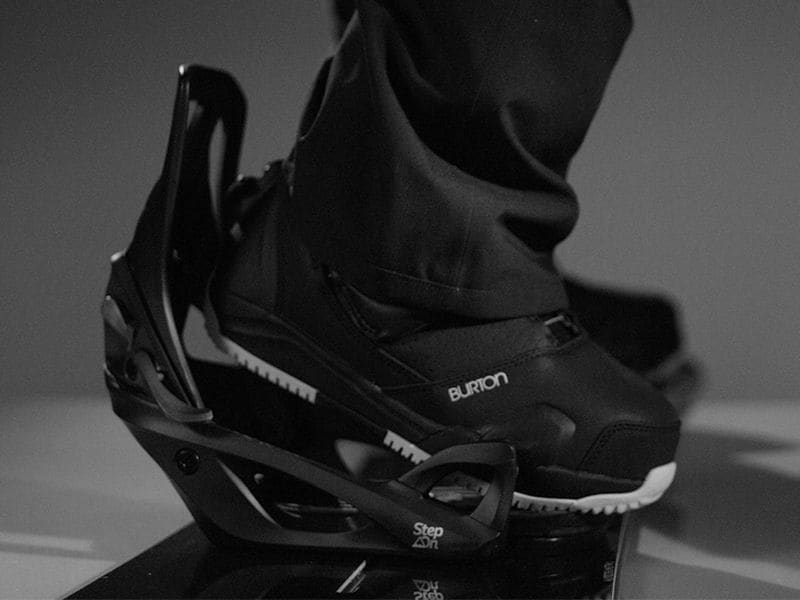
Developed by Burton Snowboards, the Step On system removes straps entirely. Instead of ratchets, the boot features integrated cleats that mechanically lock into the binding at three contact points: two at the toe and one at the heel.
To engage the system, the rider simply steps down into the binding until it clicks. To release, a lever located on the heel disengages the mechanism.
Strengths and Riding Feel
The Step On system offers:
- Extremely fast entry and exit
- A clean, minimalist interface
- Direct energy transfer, especially heel-side
On groomers and hardpack snow, the response is precise and immediate. The system feels particularly efficient for resort riding, instructors, and riders who value convenience above all else.
Limitations
The main drawback remains boot compatibility. Riders must use Step On-specific boots, which limits choice and flexibility. Some riders also report reduced lateral freedom compared to traditional straps, particularly in freestyle or powder conditions.
Nidecker Supermatic: Rear Entry Reinvented
A Modern Take on Rear-Entry Bindings
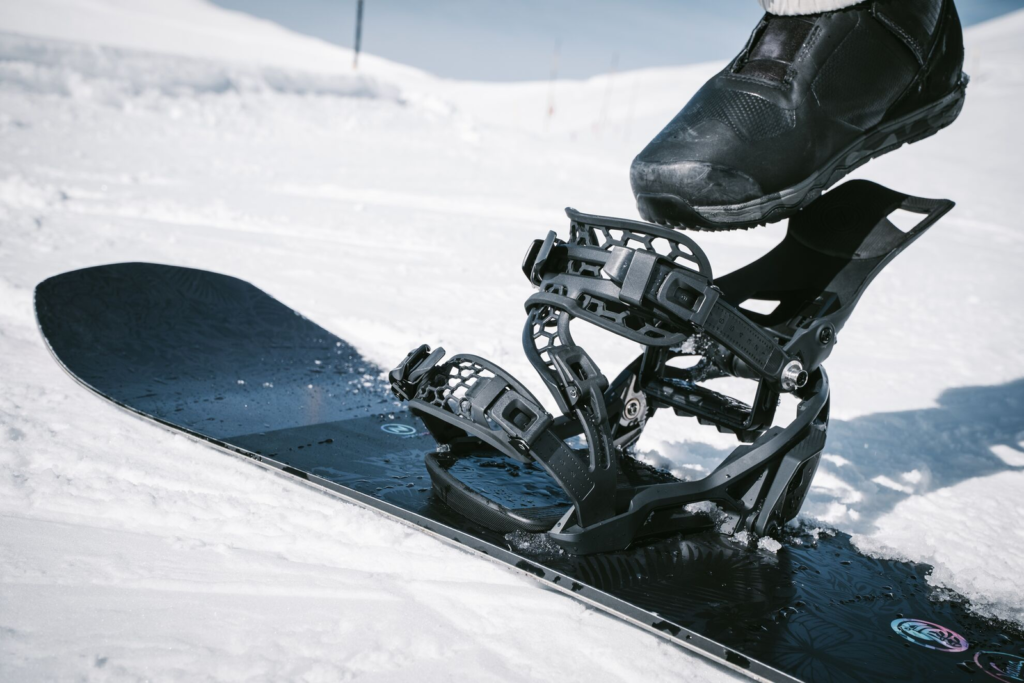
The Nidecker Supermatic represents one of the most sophisticated rear-entry systems ever developed. Unlike classic rear-entry bindings, the Supermatic automatically opens when you step out and locks back into position when you step in.
Once adjusted, the straps never need to be re-ratcheted. The rider simply steps in from the rear and rides away.
On-Snow Performance
The Supermatic delivers:
- Strong all-mountain performance
- A familiar strap-binding feel
- Excellent support at speed
Because it works with standard snowboard boots, it offers far greater flexibility than Step On systems. The trade-off is slightly higher weight and mechanical complexity.
Who Is It For?
Riders who want speed without sacrificing traditional feel will find the Supermatic particularly appealing, especially all-mountain and freeride snowboarders.
FASE System: The Hybrid Philosophy
What Is FASE?
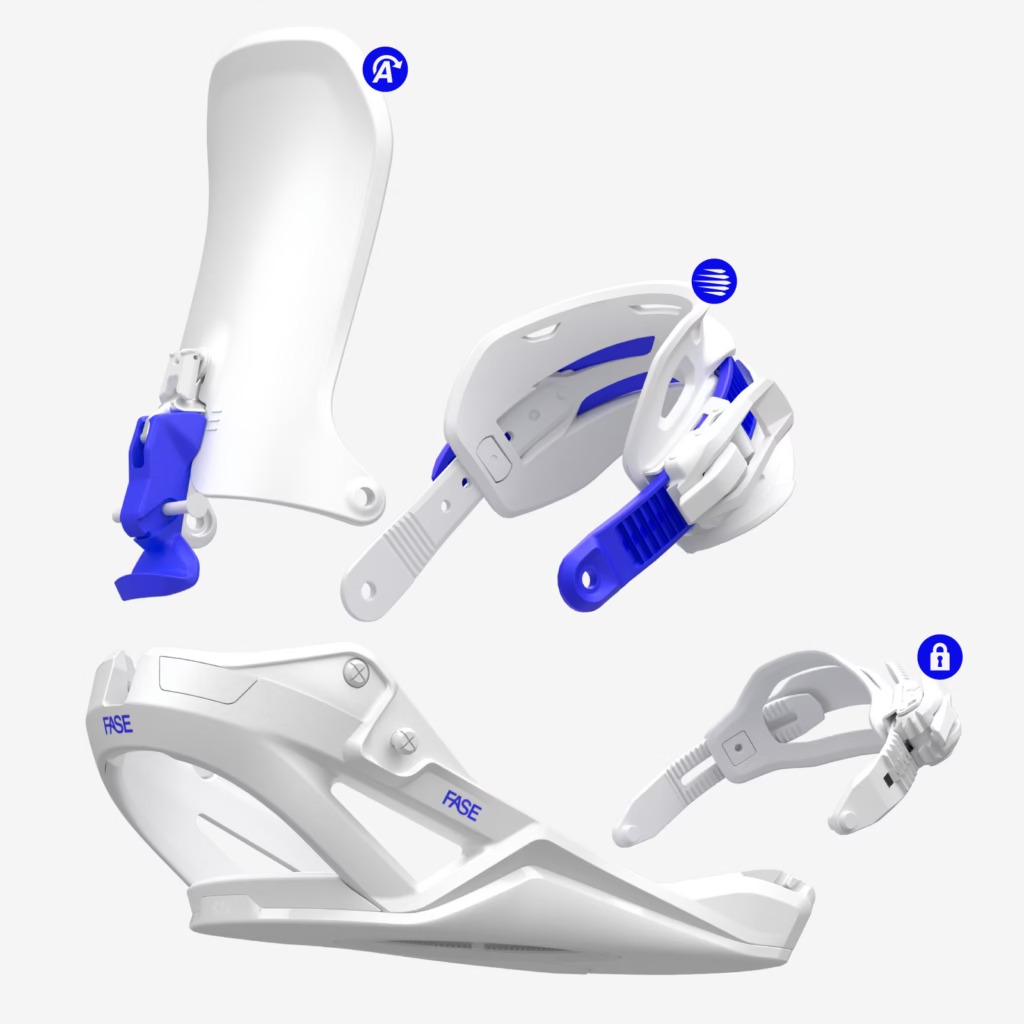
The FASE (Fast Entry System) is a hybrid concept adopted by several brands, including Jones Snowboards, Bataleon, and Rome SDS.
FASE keeps traditional straps but modifies the rear entry motion. The highback opens automatically, allowing the rider to slide in, while the straps self-position around the boot.
Riding Sensations
Because straps remain part of the system, FASE bindings feel very close to classic bindings:
- Excellent board control
- Natural flex and lateral movement
- Familiar adjustment options
Entry is faster than standard straps, though not as instant as Step On.
Ideal Rider Profile
FASE is ideal for riders who want incremental convenience rather than a full system change—freeriders and technical riders often prefer this balance.
Clew Bindings: Modular Step-In Hybrid
A Unique Detachable Concept
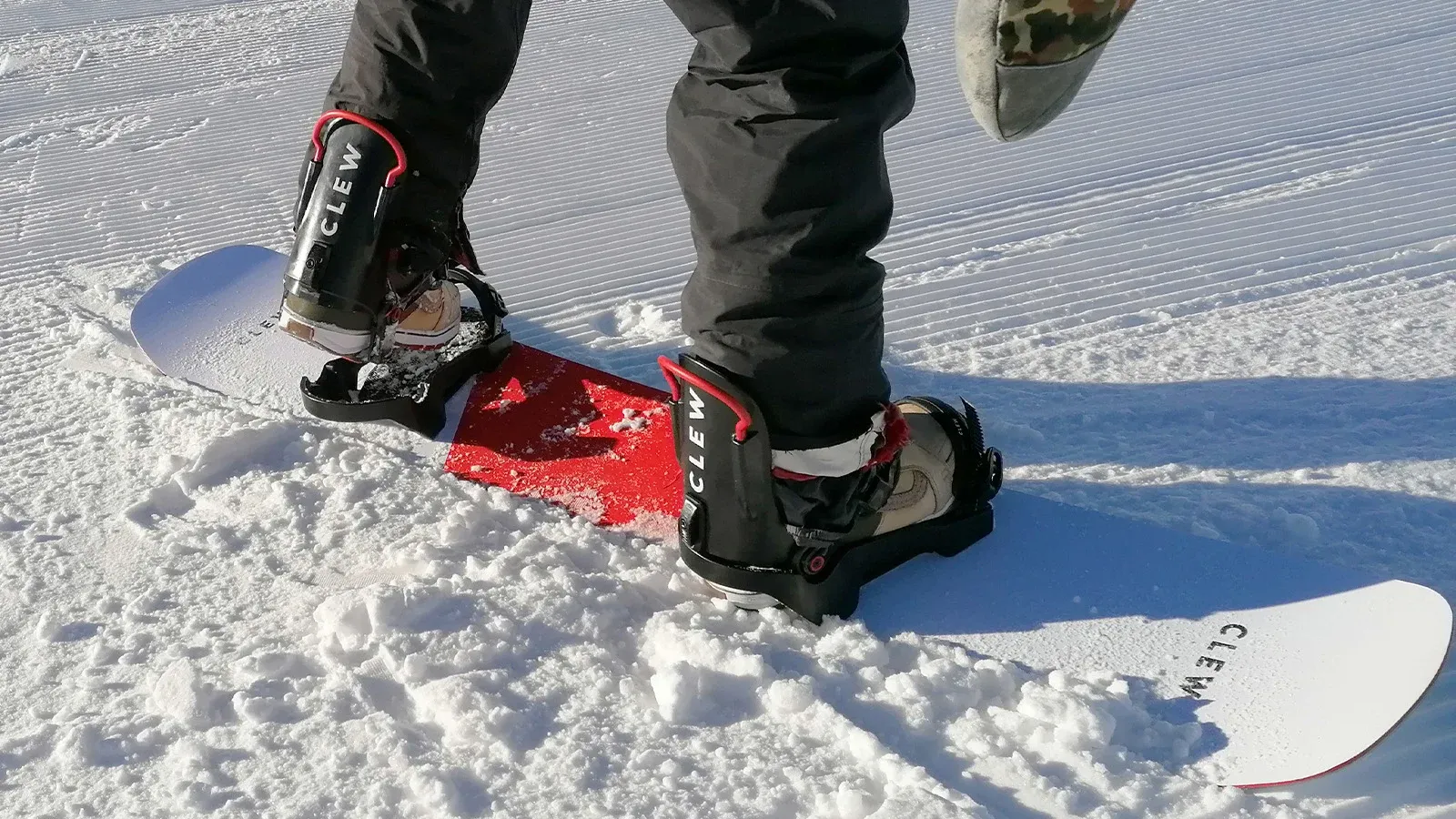
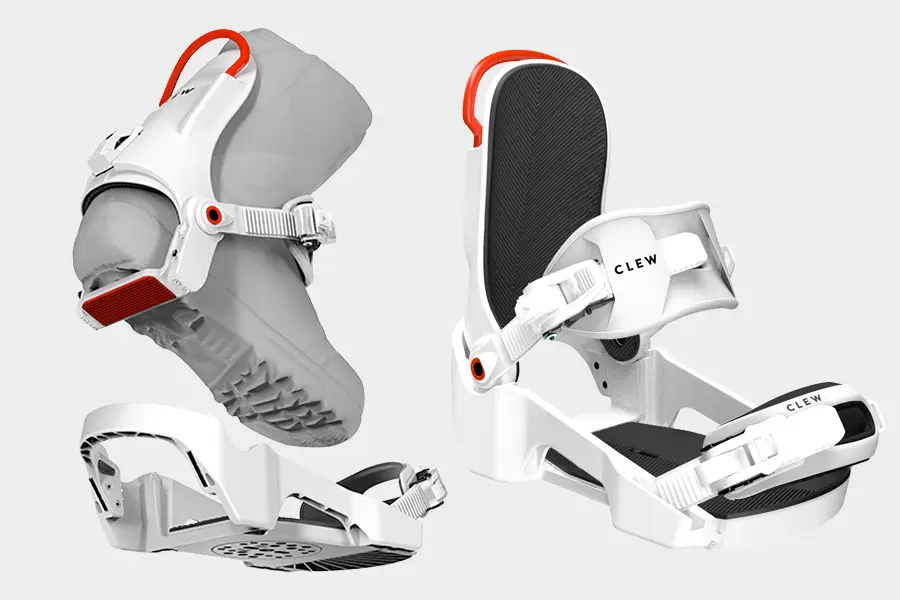
Clew takes a different approach. The Clew system separates the binding into two parts: a baseplate mounted to the board and a detachable upper unit attached to the boot.
You step into the baseplate, click the upper unit into place, and ride.
Advantages and Drawbacks
Clew bindings offer:
- Quick step-in functionality
- Compatibility with most standard boots
- A familiar strap feel
However, the detachable mechanism adds bulk and weight, and some riders find the interface less intuitive than rear-entry systems.
Flow Bindings: The Original Rear-Entry Pioneer
Still Relevant in 2026?
Flow, under the Nidecker Group, pioneered rear-entry bindings decades ago. Modern Flow models remain reliable and comfortable but feel less innovative compared to newer systems like Supermatic.
They remain a solid choice for riders who want rear-entry convenience without complex mechanics.
| System | Entry Type | Boot Compatibility | Speed | Feel on Snow | Best Use |
|---|---|---|---|---|---|
| Burton Step On | Strapless Step-In | Specific boots | Very fast | Direct, precise | Resort riding |
| Nidecker Supermatic | Auto rear-entry | Standard boots | Fast | Traditional & powerful | All-mountain |
| FASE (Jones, Rome, Bataleon) | Hybrid rear-entry | Standard boots | Fast | Classic strap feel | Freeride |
| Clew | Step-in hybrid | Most boots | Fast | Familiar but heavier | All-terrain |
| Flow | Rear-entry | Standard boots | Moderate | Comfortable | Casual riding |
Final Thoughts: Which System Should You Choose?
There is no single “best” quick entry system—only the best system for your riding style.
- Choose Step On if speed and simplicity are your top priorities
- Choose Supermatic if you want fast entry without giving up straps
- Choose FASE if performance and familiarity matter most
- Choose Clew if you like modular innovation
What’s clear in 2026 is that quick entry bindings are no longer a niche. They represent a mature, diverse segment of the snowboard market—one that continues to evolve.