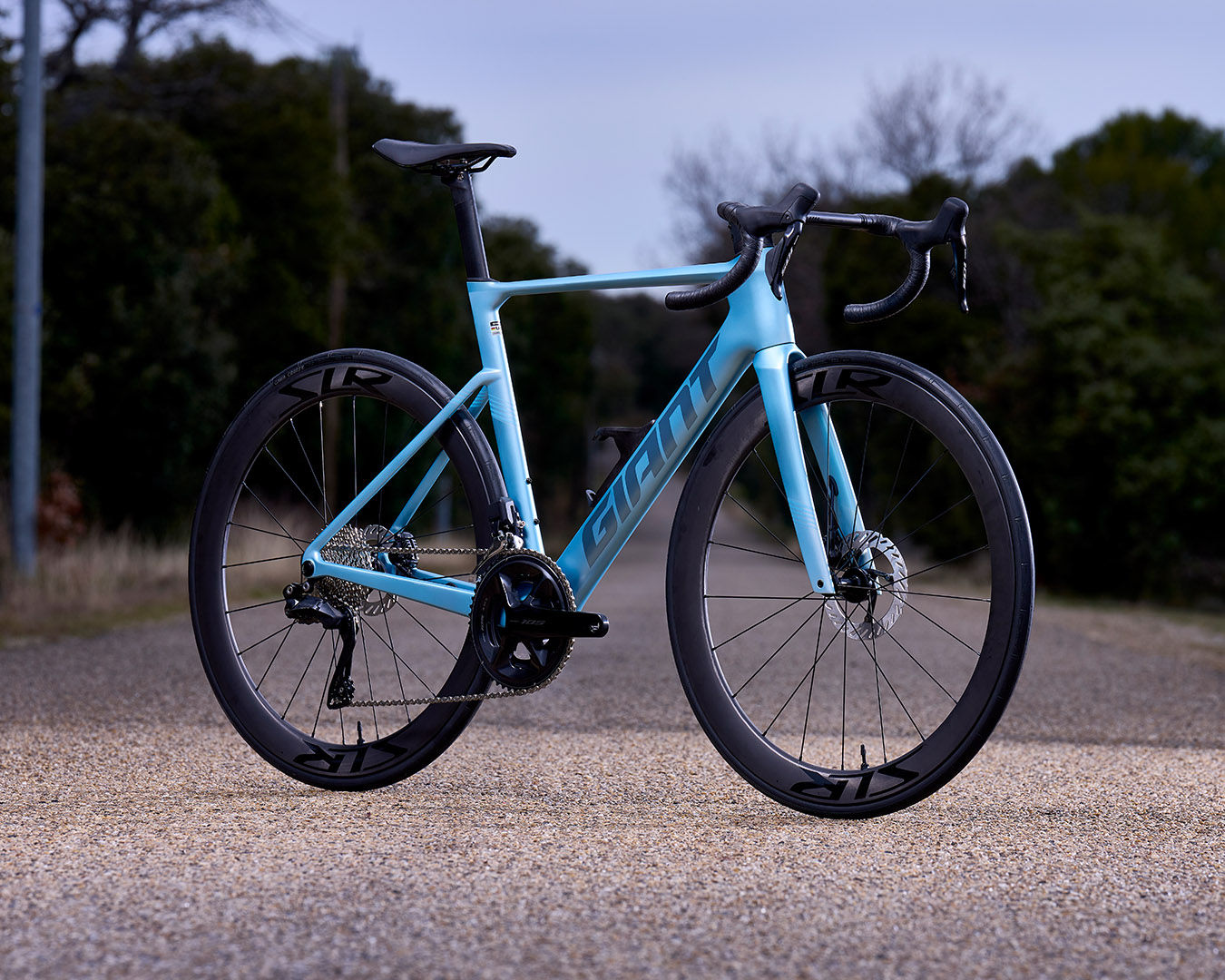
There is an irony at the heart of Giant’s story. The world’s largest bicycle manufacturer — a company that produces more bikes annually than any other brand on earth, that has manufacturing facilities on three continents, and that built frames under contract for the brands you thought you knew — is not the first name that comes to mind when cyclists talk about their dream bikes. Giant built its reputation in the background before building it in plain sight, and that trajectory from invisible supplier to global reference brand explains a great deal about what Giant is, what it does better than most, and why it deserves more credit than cycling’s boutique culture tends to give it.
Taiwan, 1972: The OEM Origin Story
King Liu founded Giant Manufacturing in Dajia, Taichung County, Taiwan in 1972, using $100,000 raised with partners to start a contract bicycle manufacturing business. The company’s early years were spent producing bikes for other brands — most consequentially, for Schwinn, the dominant American bicycle company of the era. When Schwinn’s Chicago plant workers went on strike in 1981, Schwinn moved all production to Giant in Taiwan. At its peak, Giant was manufacturing more than two-thirds of all Schwinn bikes, representing 75% of Giant’s own revenue.
That OEM relationship was the making of Giant as an engineering company. Building bikes at Schwinn’s volume and to American market specifications forced Giant to develop the manufacturing precision, materials expertise, and design capability that would later underpin its own brand. By the time Giant launched under its own name — in Taiwan in 1981, then progressively across Europe and North America through the mid-1980s — it was not a startup. It was a manufacturer with a decade of high-volume, quality-controlled production experience, applying that knowledge to its own product line for the first time.
The brand’s first major technological statement came in 1987 with the Cadex 980: the first carbon fibre road bike produced at scale using computer-aided design and volume production methods. Where carbon bikes had previously been hand-made artisan products at extraordinary prices, Giant applied its manufacturing capabilities to bring the material to a broader audience. That commitment to making elite technology accessible at scale remains one of Giant’s defining characteristics fifty years later.
The TCR: Rewriting Road Racing Geometry
In 1997, Giant introduced the TCR — Total Compact Road — with a dramatically sloping top tube and compact rear triangle that departed entirely from the horizontal top tube geometry that had defined road racing bikes since the beginning of the sport. The compact design increased frame rigidity, reduced weight, and improved handling by lowering the overall frame height and tightening the rear triangle. It was immediately controversial. It was also immediately successful.
ONCE team riders Joseba Beloki and Laurent Jalabert raced the TCR at Tour de France level. Beloki finished on the podium twice. The design was copied within years by every major road bike manufacturer. The horizontal top tube — which had been the industry standard for a century — effectively disappeared from performance road bikes within a decade of the TCR’s introduction. Giant did not just launch a new model; it changed what performance road bikes looked like.
The TCR is now in its ninth generation, still raced at WorldTour level, and still the reference platform against which Giant measures its road racing engineering. The TCR Advanced SL represents the brand’s apex road bike: a WorldTour-proven frame that competes on weight and stiffness with Specialized’s Tarmac, Trek’s Emonda, and Canyon’s Ultimate.
The Revolt: Giant’s Gravel Reference
The Giant Revolt is the brand’s flagship gravel platform and the model most relevant to hill.camp/’s audience. Introduced in its current form in 2018 following a year of development with the Giant Factory Off-Road Team, the Revolt Advanced was built around three specific engineering priorities: D-Fuse compliance technology, geometry that works across terrain types, and tyre clearance that accommodates genuinely off-road rubber.
The D-Fuse system — applied to both the seatpost and, on higher-end versions, the handlebar — uses a cross-section that is cylindrical at the front and flattened at the rear. This geometry allows the post or bar to flex vertically under impact while remaining laterally stiff for cornering and sprinting. The result is measurable vibration absorption on rough gravel without the compliance penalty of a fully suspended system. Combined with up to 53mm tyre clearance, Shimano GRX or SRAM Rival AXS groupset options, and a geometry that sits between the stability of a touring bike and the responsiveness of a cyclocross bike, the Revolt occupies the adventure gravel space clearly and competently.
In gravel bike testing contexts, the Revolt consistently performs as one of the most well-rounded options in its price bracket, with particular praise for long-distance comfort and the D-Fuse system’s genuine effectiveness on mixed terrain. It competes directly with the Canyon Grizl, the Specialized Diverge, and the Trek Checkpoint.
Key Product Lines
| Model | Category | Best For |
|---|---|---|
| TCR Advanced SL | Road race | Climbing, WorldTour-level performance |
| Propel Advanced SL | Aero road | Sprinting, flat stages, aero priority |
| Defy Advanced | Endurance road | Long-distance comfort, sportives |
| Revolt Advanced | Gravel | Mixed terrain, adventure riding, racing |
| TCX Advanced | Cyclocross | CX racing, technical off-road |
| Trance X Advanced | Trail MTB | All-mountain, trail riding |
| Anthem Advanced | XC MTB | Cross-country racing |
What Makes Giant Different
Vertical integration at scale. Giant’s carbon production is one of the most vertically integrated operations in the industry. The brand controls its own composite materials production, frame manufacturing, and quality control under one roof in Taiwan. This gives Giant an engineering feedback loop that brands relying on external manufacturing — which includes most of the industry — cannot replicate as directly. When the TCR Advanced SL’s carbon layup is refined, Giant’s engineers work directly with the composite manufacturing line. The distance between design intent and production reality is shorter at Giant than at most competitors.
Price discipline. Giant consistently delivers competitive performance at prices below what the European heritage brands charge for equivalent specifications. The TCR Advanced SL sits at a price point that undercuts the Specialized Tarmac SL8 and Trek Emonda SLR for broadly equivalent performance. This is not a product quality compromise — it reflects Giant’s manufacturing cost structure, which benefits from the scale and integration that no smaller brand can match.
Liv — genuinely women’s cycling. In 2008, Giant established Liv as a dedicated women’s cycling brand, developing frames, geometry, and components around female-specific biomechanics rather than scaling down men’s products. Liv has grown into one of the most credible women’s cycling brands in the world, with its own WorldTour team and a product development process independent of the main Giant line.
Honest Limitations
Giant’s scale is also its primary limitation in brand perception terms. The brand is everywhere — which means it never quite carries the cachet of a less-distributed competitor. For cyclists who want their equipment choice to be a statement, Giant’s ubiquity works against it. The brand has also faced significant criticism for labour practices at its Taiwanese manufacturing facilities, with 2024 reporting documenting poor living conditions and wage withholding practices affecting migrant workers. Giant committed to policy changes in 2025, but the issue reflects the real cost of high-volume manufacturing at competitive prices.
On the product side, Giant’s gravel range — while strong — has historically been more conservative in geometry and tyre clearance than some competitors at the adventure end of the market. The Revolt’s 53mm tyre clearance is generous by most standards, but brands like Canyon with the Grizl and Cannondale with the Topstone have pushed further into bikepacking territory with different geometry priorities.
Our Take on Giant
Giant is the brand that cycling’s enthusiast culture underrates and cyclists’ garages tell the truth about. The TCR’s influence on road bike design is permanent and documented. The Revolt is a genuinely excellent gravel bike that competes on merit rather than heritage. The manufacturing capability is real and it produces frames that rival the best in the industry at prices that consistently undercut equivalently specified competitors.
For riders who want strong performance-per-euro across road, gravel, and trail disciplines, Giant belongs near the top of any shortlist. The fact that you will see a lot of them at the sportive start or the gravel race — that is not a criticism of Giant. It is the market’s verdict on value.
Explore the full Giant road and gravel range on the Giant official website.