The adventure gravel segment has become the most competitive corner of the bike market, and two bikes consistently rise to the top of any honest conversation about the best all-terrain machines at realistic prices: the Giant Revolt and the Canyon Grizl. Both are designed for riders who want to push further off the smooth stuff, who consider 40mm tyres a starting point rather than a maximum, and who expect their bike to handle a loaded weekend as credibly as a race-day effort. They are also meaningfully different in character, and choosing between them is not a coin flip.
Read our profiles on Giant and Canyon for brand context. For adjacent comparisons, our Cannondale Topstone vs Canyon Grizl and Canyon Grizl vs Specialized Diverge articles round out the field.
The Short Answer
The Giant Revolt is the more refined ride. D-Fuse compliance technology in both seatpost and handlebar provides measurable vibration absorption on rough terrain, the frame quality is among the best in the category, and Giant’s manufacturing depth means the carbon construction is consistently excellent across price points. It handles mixed terrain with poise and is a genuinely pleasant bike to ride fast.
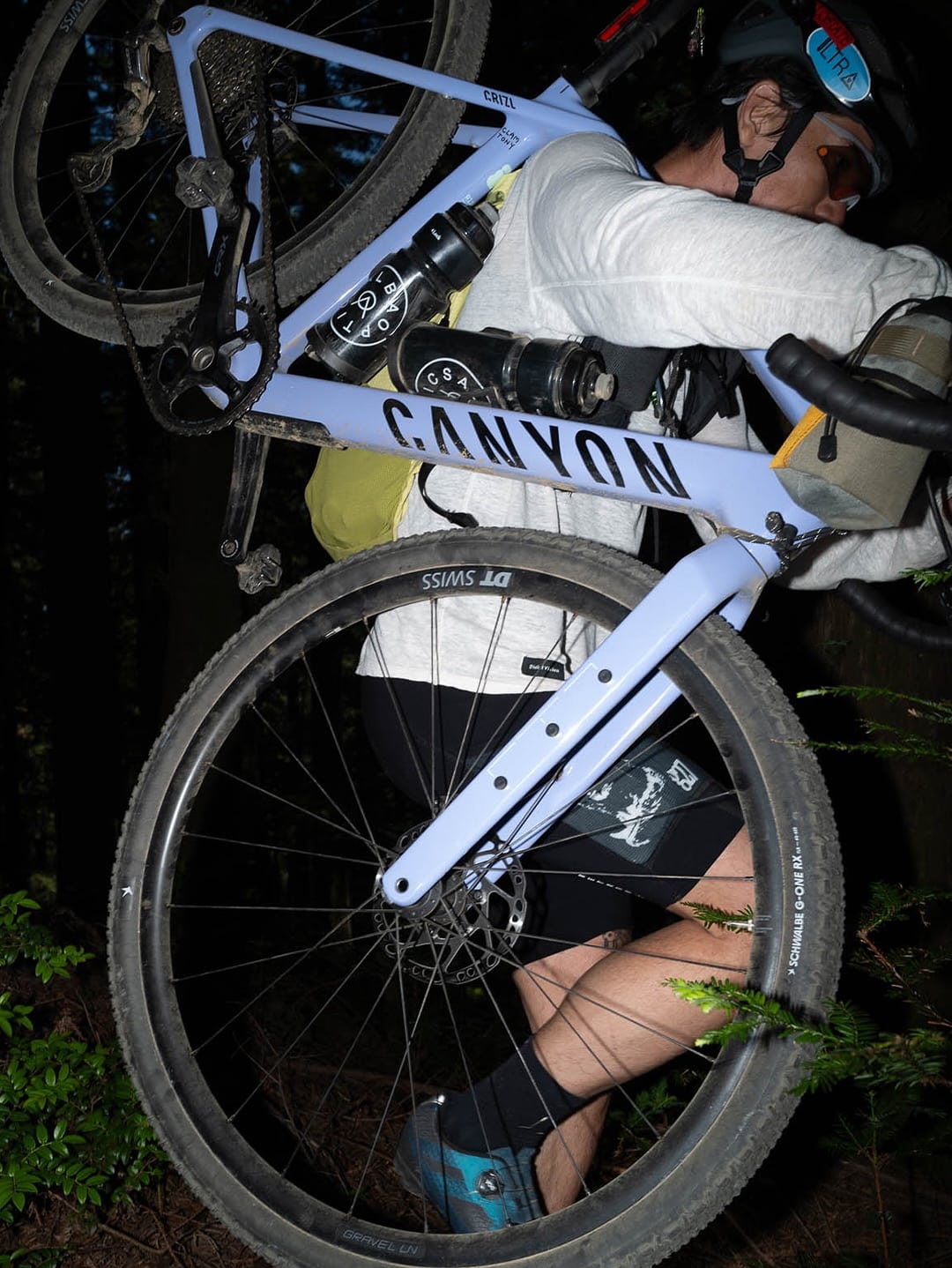
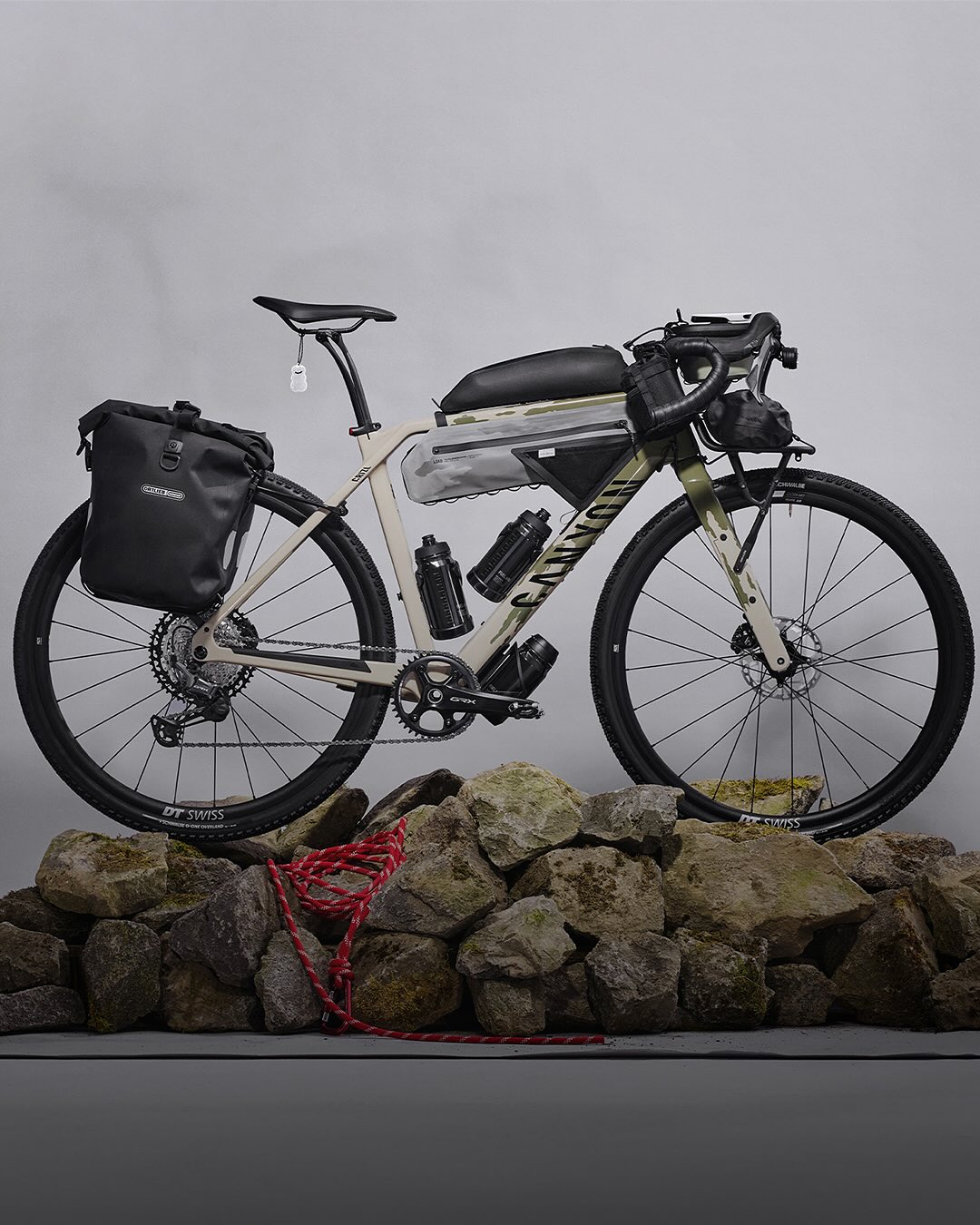
The Canyon Grizl is the more adventure-ready machine. Greater tyre clearance (up to 700×45 or 650b×2.1), more aggressive bikepacking geometry, and Canyon’s direct-to-consumer value proposition — more specification for less money — make it the natural choice for riders planning loaded expeditions or extended off-road routes. It is not as polished a ride as the Revolt, but it goes further into the rough stuff with confidence.
Specs Side by Side
| Spec | Giant Revolt Advanced 1 | Canyon Grizl CF SLX 8 |
|---|---|---|
| Frame | Advanced carbon | CF SLX carbon |
| Compliance | D-Fuse seatpost + D-Fuse handlebar | Flex-stays, no dedicated compliance system |
| Tyre clearance | Up to 700×53mm | Up to 700×45 / 650b×2.1 |
| Geometry | Balanced gravel / adventure | Adventure-forward, relaxed head angle |
| Groupset | Shimano GRX 810 1× | SRAM Rival AXS (wireless) |
| Bikepacking mounts | Comprehensive | Comprehensive + top tube bag integration |
| Retail model | Dealer network | Direct-to-consumer (online only) |
| Price (approx.) | ~€3,000–3,500 | ~€2,500–3,000 |
D-Fuse vs Flex-Stays: Compliance Philosophies
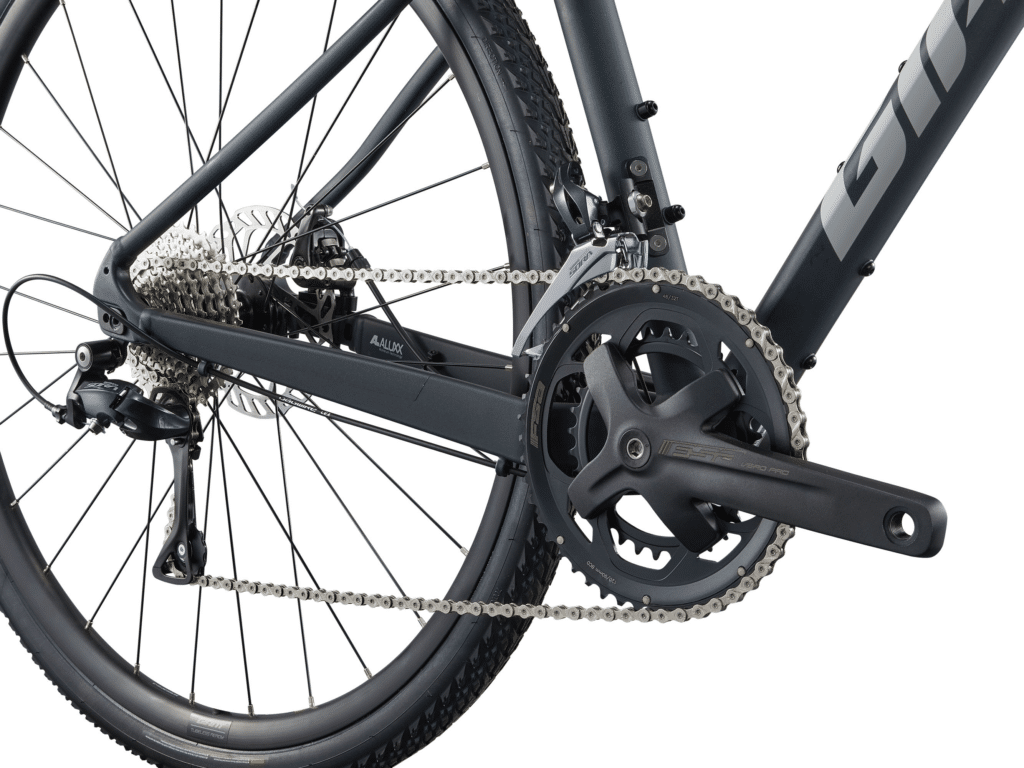
Giant’s D-Fuse system is the Revolt’s most distinctive technical feature. Both the seatpost and handlebar (on Advanced models) use a cross-section that is round at the front and flattened at the rear, allowing vertical flex while maintaining lateral rigidity. The result is measurable — the Revolt absorbs trail chatter at both contact points without the weight or complexity of a suspension system. On long days on rough gravel, this translates to noticeably less arm and back fatigue than a conventional rigid setup.
The Canyon Grizl uses flex-stay rear construction and a slightly more compliant frame design to absorb road inputs, but has no equivalent to D-Fuse at the handlebar. In ride feel comparison, the Revolt is smoother on mixed hard-pack and gravel; the Grizl is more directly connected to the terrain — which suits riders who prefer feedback to filtration.
Tyre Clearance and Off-Road Capability
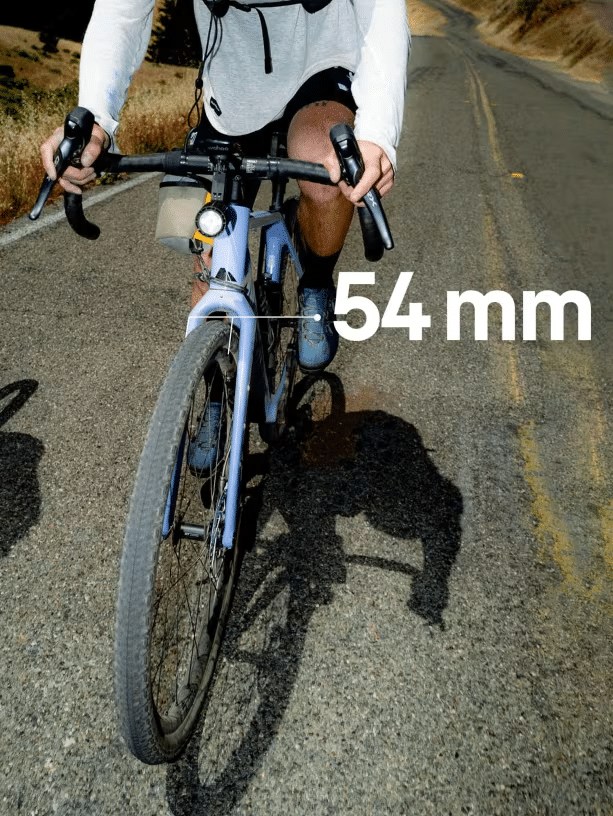
The Revolt’s 53mm maximum tyre clearance on 700c wheels is generous by most standards — wide enough for a loaded bikepacking setup or genuinely loose terrain. The Grizl’s 45mm on 700c is slightly less, but the availability of a 650b wheelsize option with up to 2.1-inch tyres gives the Grizl a meaningful advantage for riders planning on seriously rough or muddy singletrack sections. 650b Grizl with 2.1-inch tyres is a different machine from a 700c version — closer to a hardtail mountain bike in capability on technical terrain.
Value and the Direct-to-Consumer Factor
Canyon’s direct-to-consumer model consistently delivers more specification for less money than equivalent dealer-network bikes. At comparable price points, the Grizl typically comes with a higher-level groupset (SRAM Rival AXS wireless on the CF SLX 8 versus Shimano GRX 810 mechanical on comparable Giant models) than the Revolt. For component-focused buyers, this is a meaningful advantage. The trade-off is that Canyon requires purchasing online without a test ride — a significant constraint for fit-sensitive riders or those buying their first gravel bike.
Verdict
Choose the Giant Revolt if: ride quality and D-Fuse compliance matter; you want to test-ride before buying at a local Giant dealer; your terrain is primarily hard-pack gravel and mixed surfaces rather than deep mud or technical singletrack; or you prioritise the quality of the ride feel over component specification at a given price point.
Choose the Canyon Grizl if: adventure and off-road capability are the priority; you want 650b wheelsize compatibility for genuinely technical terrain; the direct-to-consumer value proposition appeals and you are comfortable buying online; or SRAM AXS wireless shifting is a priority at your budget level. Read our Canyon Grail vs Grizl comparison if you are also considering Canyon’s other gravel option.
See the full Giant gravel range on the Giant official website, and the Canyon Grizl lineup on the Canyon official website.