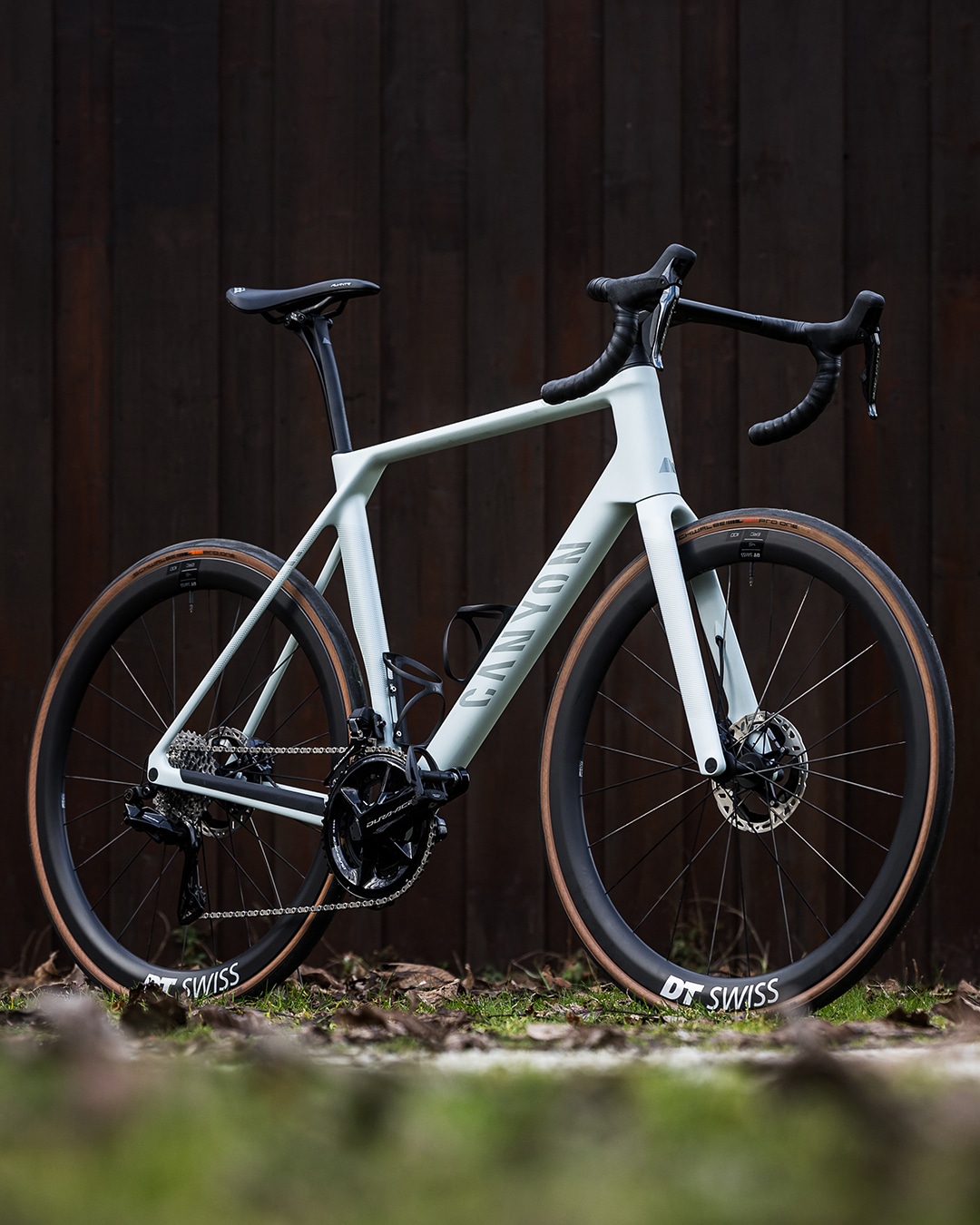
Both of these bikes cost roughly the same, target the same rider, and promise the same thing: a comfortable, capable endurance road bike that can handle long days in the saddle without requiring a carbon budget. The Canyon Endurace 7 and the Trek Domane AL 5 are two of the most serious answers to the question of what a well-built aluminium endurance bike looks like in 2025. They share a groupset, a material category, and a price bracket. But they are meaningfully different machines — and understanding those differences is the whole point of this comparison.
For broader brand context, our profiles on Canyon and Trek cover the two brands in detail. For the premium tier of this same endurance road debate, our Trek Domane vs Specialized Roubaix and BMC Roadmachine vs Trek Domane comparisons cover the carbon field.
The Short Answer
The Canyon Endurace 7 is the faster, more dynamic of the two. Its frame geometry leans more aggressively than the Domane — shorter stack, longer reach, quicker handling — and the ride feel rewards riders who want an endurance bike that still accelerates with conviction. The carbon fork contributes to a front-end stiffness that feels almost carbon-bike-like, and the direct-to-consumer price advantage means you get full Shimano 105 hydraulic disc brakes at a price point where the competition typically compromises somewhere. If you want a bike that will keep up with faster groups and reward effort on the bike, the Endurace 7 is the better tool.
The Trek Domane AL 5 is the more genuinely comfortable machine. Its Alpha Aluminium frame is paired with Trek’s IsoSpeed decoupler — a patented pivot system at the seat tube junction that allows the rear of the frame to flex independently, absorbing road vibration before it reaches the rider. No equivalent compliance technology exists on the Endurace. Combined with wider tyre clearance (38mm versus the Endurace’s 35mm), the Domane AL 5 is the better long-distance companion on imperfect roads, and the more versatile choice for riders who want to occasionally venture off smooth tarmac. The trade-off is that it rides heavier and less lively than the Canyon.
Specs Side by Side
| Spec | Canyon Endurace 7 | Trek Domane AL 5 Gen 4 |
|---|---|---|
| Frame | Aluminium (double-butted) | 100 Series Alpha Aluminium |
| Fork | Carbon | Carbon |
| Compliance system | None | Rear IsoSpeed decoupler |
| Groupset | Shimano 105 (2×12) | Shimano 105 (2×12) |
| Brakes | Shimano 105 hydraulic disc | Shimano 105 hydraulic disc |
| Tyre clearance | Up to 35mm | Up to 38mm |
| Wheel sizes | 650c / 700c | 700c |
| Wheels | Aluminium | Aluminium |
| Weight (approx.) | ~9.4 kg | ~10.1 kg |
| Geometry | Sportive endurance (racier) | Relaxed endurance (more upright) |
| In-frame storage | No | Yes (top tube) |
| Retail model | Direct-to-consumer (online only) | Dealer network |
| Price (approx.) | ~€1,699 | ~€1,799 / £1,600 |
IsoSpeed: The Domane’s Ace Card
Trek’s IsoSpeed decoupler is the single most distinctive technology in this comparison, and it genuinely changes the ride character of the Domane AL 5 in ways that no specification sheet fully communicates. The system works by allowing the seat tube to flex rearward independently of the main triangle — decoupling the vertical movement of the saddle from the stiffness of the frame under pedalling loads. The result is that high-frequency road buzz, chip-seal chatter, and the sustained vibration of rough tarmac are absorbed by the frame before they travel through the seatpost to the rider.
On a two-hour ride, this difference is noticeable but not decisive. On a five-hour day over imperfect roads, it is the difference between arriving fresh and arriving shaken. The IsoSpeed system on the AL 5 is non-adjustable (the adjustable version is reserved for carbon Domane models), but even in its fixed form it delivers a measurable reduction in fatigue over distance. Independent tests consistently describe the Domane AL range as the smoothest-riding aluminium endurance bike in its price category, by a margin that is not close.
The Canyon Endurace 7 has no equivalent. Its double-butted aluminium frame is well-built and rides better than many aluminium bikes, with a carbon fork that handles front-end vibration effectively. But the rear triangle is a conventional aluminium construction, and over rough surfaces the difference between the two bikes at the saddle is meaningful. If long-distance comfort over imperfect roads is the primary selection criterion, the Domane wins this category without qualification.
Geometry and Ride Character
The Canyon Endurace 7 has what Canyon calls « sportive » geometry — positioned between a full race bike and a pure comfort endurance platform. The result is a bike that places the rider in a lower, longer position than the Domane, with faster steering responses and more direct power delivery. Reviews consistently describe the Endurace as a bike that accelerates with gusto, holds speed well, and handles with a sharpness that belies its endurance category positioning. It is not a race bike, but it feels more connected to that world than the Domane does.
The Trek Domane AL 5 Gen 4’s geometry is more upright. The higher stack-to-reach ratio keeps the rider in a more comfortable, less stretched position — which is either a positive or a negative depending entirely on what you want from an endurance bike. For riders coming from a more relaxed cycling background, or those who prioritise all-day comfort over performance feel, the Domane’s position is immediately welcoming. For riders who want an endurance bike that still feels engaging at pace, the Domane’s geometry can feel passive by comparison.
One practical advantage of the Endurace’s dual-wheel-size compatibility (650c and 700c) is worth noting: smaller riders can run 650c wheels for better geometry and clearance, a feature that Trek does not offer on the Domane AL. This makes the Endurace a more complete solution for riders at the shorter end of the height range.
The Value Question: Direct-to-Consumer vs Dealer Network
Both bikes arrive at similar price points with near-identical drivetrain specifications — full Shimano 105 12-speed mechanical with hydraulic disc brakes. At this level, neither brand is cutting corners on the groupset. The real value comparison comes down to what else you get for the money and what the purchase experience looks like.
Canyon’s direct-to-consumer model consistently delivers strong component specifications at competitive prices, and the Endurace 7 is no exception. The bike ships requiring assembly, which for most buyers means a trip to a local mechanic or a careful self-assembly session — a meaningful practical consideration for first-time buyers. Canyon’s online purchase experience is mature and well-supported, but the absence of a dealer network means no test ride before purchase.
The Trek Domane AL 5 is available through Trek’s dealer network, which means a test ride is possible and setup can be handled by a professional. The Domane also includes Trek’s in-frame storage compartment — a small but genuinely useful feature for carrying a spare tube and multi-tool on long rides without attaching a saddlebag. The Bontrager IsoZone handlebars with their VR-SF vibration-reducing design add a further layer of front-end compliance that the Canyon does not offer at this price point.
Weight
The Canyon Endurace 7 is meaningfully lighter — approximately 700g less than the Domane AL 5 at comparable sizing. That gap matters on climbs, particularly over long days with significant elevation. The Domane’s extra weight is partly a function of the IsoSpeed system’s additional hardware, partly a function of Trek’s heavier aluminium tubing compared to Canyon’s double-butted construction. For riders who do a lot of climbing, the Endurace’s weight advantage is a genuine consideration. For riders focused primarily on flat or rolling terrain, 700g is less decisive.
Verdict
Choose the Canyon Endurace 7 if: performance feel and efficiency at pace are the priority; you do significant climbing where the lighter weight is an advantage; you are comfortable buying online without a test ride; you ride primarily on well-maintained roads where the absence of IsoSpeed is less critical; or the 650c wheel compatibility matters for your height. The Endurace 7 is the better bike for riders who want their endurance machine to still feel alive when they push it.
Choose the Trek Domane AL 5 if: long-distance comfort on imperfect roads is the primary selection criterion; IsoSpeed’s compliance advantage over rough surfaces matters for your typical riding terrain; you want to test ride before buying and value dealer support for setup and servicing; you want the additional practicality of in-frame storage; or your rides regularly take you to the edge of tarmac where the extra 3mm of tyre clearance opens options. The Domane AL 5 is the right choice for riders who measure success in how good they feel at the end of a long day, not how fast they covered it.
Our honest lean is toward the Canyon Endurace 7 for the majority of riders in this category. The IsoSpeed advantage on the Domane is real, but it becomes decisive only in specific conditions — rough roads, very long distances, riders with back or wrist sensitivity. For most riders on most roads, the Endurace’s lighter weight, sportier geometry, and sharper ride character produce a more engaging and ultimately more satisfying experience. At the same price, more bike for the money is hard to argue with. The Domane is the right answer for a specific type of rider. The Endurace is the right answer for a broader one.
Explore the full Canyon endurance bike range on the Canyon official website, and the complete Trek Domane lineup on the Trek official website.