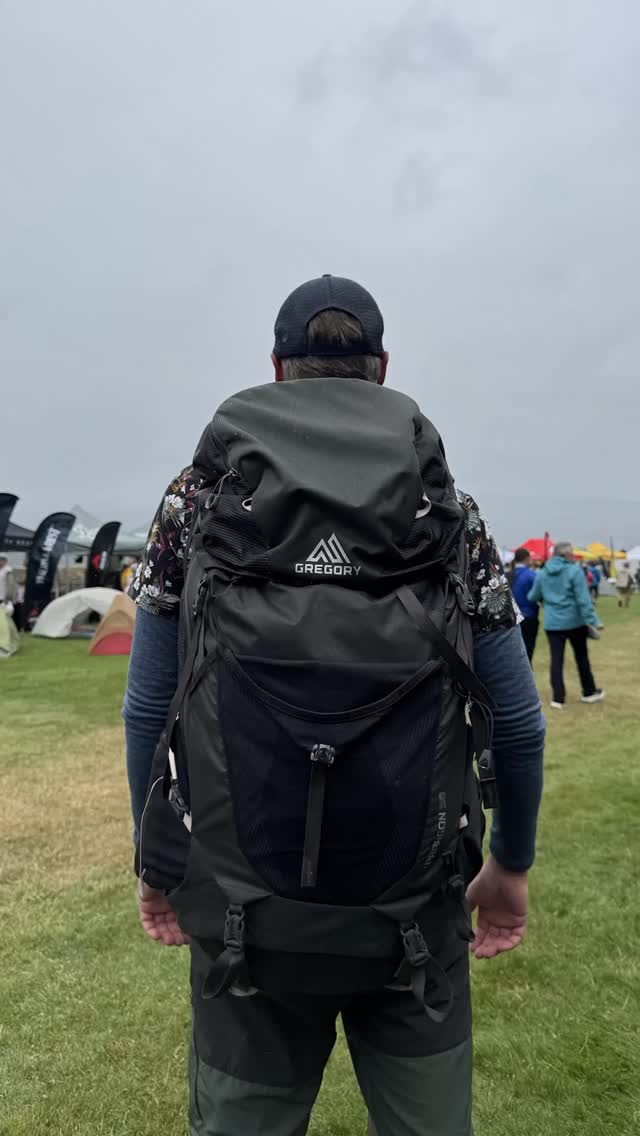
Wayne Gregory said it first, and it remains the most precise description of what his brand set out to do: a backpack should be worn, not carried. The distinction sounds philosophical until you spend a long day on a mountain with a poorly fitted pack pressing on the wrong points and dragging on your shoulders. Then it becomes physical. Gregory’s founding credo was not marketing language. It was the insight of someone who had spent years studying human movement and load distribution and concluded that most packs were solving the wrong problem.
Founded in 1977 in San Diego, Gregory Mountain Products has spent nearly fifty years making that philosophy real in fabric, frame, and foam. The result is a brand that consistently ranks among the best-fitting backpacks on the market — not through complexity or gimmickry, but through obsessive attention to the geometry of how a human body actually carries weight.
A Boy Scout Project That Became a Brand
Wayne Gregory built his first backpack at fourteen because he could not afford to buy one. He checked the packs in his local outdoor store, figured out their construction, and made his own. The instinct was already there: if the available gear is not good enough, build something better.
He spent his formative years around the Adventure 16 outdoor shop in San Diego, absorbing production knowledge and testing ideas. In 1970, he launched his first company — Sunbird — focused on external frame packs. By 1973, he had dissolved it. External frames were a dead end to his eye, too limiting and too rigid for the kind of performance he was after. He spent a few years freelancing, designing sleeping bags and tents and apparel, watching the industry shift toward soft packs and internal frames. When the technology caught up with his vision, he was ready.
Gregory Mountain Products launched in 1977. The first major success was the Cassin Pack — a soft internal frame design that found its way into Colin Fletcher’s The Complete Walker, then considered the hiker’s bible. Word spread quickly among people who took backpacking seriously.
In 1999, Gregory won a US Special Forces contract to supply 120-pound capacity tactical packs — a validation of the brand’s load engineering that no civilian marketing campaign could replicate. By the mid-2000s, Gregory was winning Backpacker Magazine’s Reader’s Choice and Editor’s Choice awards. Outside Magazine named them Gear of the Year in 2009 and 2010.
Today, Gregory is part of Samsonite — the global luggage group — with headquarters relocated to the base of the Wasatch Mountains south of Salt Lake City. The acquisition did not break the brand. The product engineering culture, the fit obsession, and the lifetime guarantee are all intact.
Why Gregory Fits Better: The Engineering Behind the Philosophy
Gregory’s fit superiority is not accidental. It traces back to specific technical decisions that Wayne Gregory made and that the brand has consistently built on.
Gregory was the first pack manufacturer to build packs in different frame, harness, and waist belt sizes — the foundational insight that one size of shoulder harness and one size of hipbelt cannot possibly fit every hiker’s body. This sounds obvious now because Gregory made it obvious by doing it first and proving the commercial case.
More distinctively: Gregory developed a waist belt system that adjusts to fit different hip angles, automatically improving load transfer for each individual wearer’s skeletal geometry. This remains unique. No other major pack manufacturer has replicated it. Hip angle varies significantly between individuals, and a belt that fits the average hip angle poorly transfers load — which means the shoulders and spine carry more than they should. Gregory’s solution is mechanical, precise, and practically invisible to the wearer.
The brand also developed the center-locking bar tack — a stitching technique that ends and locks off on the center of a seam rather than the edge, distributing stress across a larger area at the points most vulnerable to tearing. It is the kind of manufacturing detail that shows up in longevity statistics, not product photos.
The Packs That Made Gregory’s Reputation
The Baltoro (men’s) and Deva (women’s) are Gregory’s landmark backpacking packs — the models most serious hikers reference when the brand comes up in conversation. Available in large volumes from 65 to 105 litres, they combine Gregory’s most capable suspension with detailed organization, accessible compartmentalization, and the hipbelt angle adjustment that sets the brand apart. These are heavy-haul packs built for multi-week expeditions where comfort under load matters more than ounce counts. Mountaineers have carried them to the summit of Everest. That is not hyperbole. It is provenance.
The Zulu (men’s) and Jade (women’s) lines cover day hiking and lighter overnight use with the same fit precision at lower volumes and weights. These are among Gregory’s best-selling models globally and represent the brand’s most accessible entry point for hikers who want Gregory’s fitting experience without the expedition-scale price.
For alpine terrain, the Alpinisto series offers a climbing-specific, low-profile fit with a lightweight strippable design and a geometry that allows full range of motion for technical movement. For ski touring and backcountry skiing, the Targhee range has received consistent awards from the outdoor press, including recognition from Gear Junkie as one of the best ski backpacks available.
Gregory has also made serious moves into inclusive sizing, with Plus-Size packs across day hiking and multi-day categories — extended hipbelts, wider shoulder straps, and adjusted geometry for diverse body shapes. This is relatively rare in the technical pack market and reflects a genuinely thoughtful approach to who actually hikes and what they need.
Gregory in Japan: A Cult Becomes a Classic
One of the more unusual chapters in Gregory’s story is its status in Japan. The brand became enormously popular there in the 1990s — not through mass-market advertising, but through the kind of word-of-mouth that happens when a product is genuinely better than its peers and finds an audience that notices. Japanese outdoor enthusiasts adopted Gregory packs as a standard, and that reputation has persisted. The brand is often discussed in Japanese gear culture with the same reverence applied to American heritage workwear and vintage outdoor equipment: something that was made seriously, lasts seriously, and retains its relevance across generations of gear churn.
Honest Strengths and Honest Limitations
Gregory’s strengths are consistent: fit precision, load management, durability, and the lifetime guarantee that Wayne Gregory introduced and the brand still honors. The Baltoro in particular has a reputation for comfort under genuinely heavy loads that very few packs can match. If you are carrying 20 kilograms for two weeks across mountain terrain, Gregory is one of a very small number of brands where the pack genuinely stops being something you notice.
The limitations are also worth naming. Gregory’s packs tend to be heavier than the ultralight competition — the suspension systems that create the comfort add weight, and there is no way around that physics. For fast-and-light hikers who keep base weight under five kilograms and treat the pack itself as part of the gram count, Gregory is probably not the right answer. The brand sits in a different part of the spectrum from cottage ultralight manufacturers, and it knows it.
The catalog can also feel dense. Gregory makes packs across alpine, ski, backpacking, hiking, trail running, and everyday categories, and the naming conventions are not always intuitive. First-time buyers may need to spend time with the fit guide before the right model becomes clear.
And the Samsonite ownership is a real contextual fact — not a disqualifier, but worth noting for anyone who prefers the gear they carry to come from independent companies. Gregory’s product quality has not deteriorated under that ownership. The cultural footprint is more corporate than it was in the Wayne Gregory era.
Where Gregory Fits Among the Great Backpack Brands
Gregory belongs in the same conversation as Osprey and Deuter — the three American and European brands that have shaped what a serious hiking backpack can be. Of the three, Gregory is the most obsessive about fit geometry specifically, Deuter is the deepest engineering heritage, and Osprey offers the broadest product range with the best-known warranty. All three are excellent. The choice between them usually comes down to torso length, back shape, and the specific kind of hiking you are planning to do.
For the complete outdoor kit, Gregory packs combine naturally with headlamps from Petzl or Silva, navigation tools from Silva, and cooking systems from MSR. For apparel, brands like Norrøna and Fjällräven share the same ethos: functional, durable, built for real terrain rather than image management.
Wayne Gregory built packs in the back of a San Diego shop because he believed fit was the most important thing a backpack could offer. Nearly fifty years later, that belief is still visibly present in every product the brand makes. In a gear market that moves fast and forgets quickly, that kind of consistency is worth something.