The 5–6 litre vest bracket is where most trail runners spend the most money. Long enough runs to need a vest, short enough that every gram and every degree of breathability matters. The Salomon ADV Skin 5 and the Osprey Duro 6 are the two most consistent recommendations in this space — and they approach the brief from very different directions. The Salomon is a race-optimised garment-vest with a fifteen-year pedigree at elite level. The Osprey is a more structured, multi-purpose pack that trades pure running focus for greater versatility and reservoir compatibility. Understanding which one you actually need is the whole point of this comparison.
For broader context on each brand, see our profiles on Salomon and Osprey. And for the step up in capacity, our Salomon ADV Skin 12 vs UD Ultra Vest 12 comparison covers the ultra-distance options.
The Short Answer
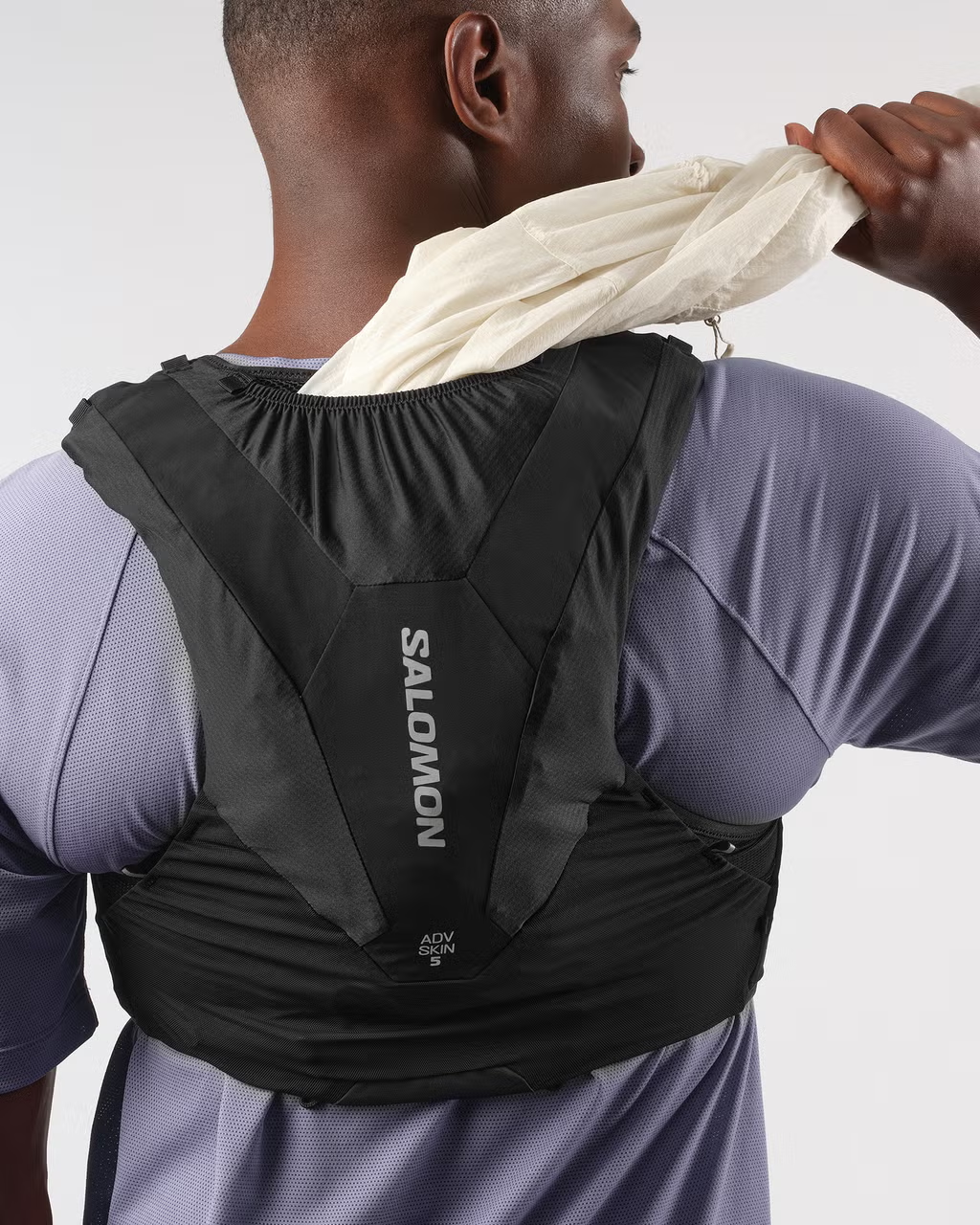
The Salomon ADV Skin 5 is for running. It is built from the ground up for trail races, training runs of one to four hours, and mountain events where the vest must move with you rather than around you. Its SensiFit garment-like construction, Y-shaped back panel, and stretch fabric system produce the closest thing to wearing nothing that a 5-litre vest currently achieves. Race podiums and UTMB start lines are full of runners in ADV Skin 5s.

The Osprey Duro 6 is for running and more. It is a well-fitted vest that includes a 1.5L reservoir, offers genuine body-mapped comfort across a range of paces, and crosses over credibly to fast hiking, bike commuting, and day use. It is the vest for the runner who wants one piece of kit that covers multiple activities without compromise.

Specs Side by Side
| Spec | Salomon ADV Skin 5 | Osprey Duro 6 |
|---|---|---|
| Capacity | 5 L | 6 L |
| Weight | ~145 g (5.1 oz) | ~395 g (13.9 oz, incl. reservoir) |
| Included hydration | 2 × 500ml soft flasks | 1.5L reservoir (included) |
| Soft flask compatible | Yes | Yes (front pockets for 2 × 500ml, sold separately) |
| Fit construction | SensiFit stretch garment, Y-shape back | Body-mapped 3D mesh |
| Sternum straps | Bungee QuickLink system | Dual adjustable buckle straps |
| Insulated tube | No | Yes |
| Women’s version | Yes (Dyna) | Yes |
| Made with recycled materials | No (PFC-free DWR) | Yes (100% recycled, bluesign) |
| Price (approx.) | ~€110–125 | ~€110–130 |
Weight: The Gap That Defines the Decision
145g versus 395g including the reservoir. That is not a marginal difference — it is the weight of a small phone versus a full meal. The Salomon’s 145g figure makes it one of the lightest functional trail vests available at 5L capacity. The Osprey’s 395g includes the 1.5L reservoir; without it, the vest itself is approximately 250g — still heavier than the ADV Skin, but by a less dramatic margin.
For runners who race with a number bib and optimise everything, that weight gap rules out the Duro 6 before the conversation begins. For runners who train consistently on technical trails and want a vest for all-day use rather than race day, the Osprey’s extra weight is the price of its additional features and a considered trade-off rather than a failure.

Hydration System: Two Different Approaches
The Salomon ADV Skin 5 is designed around soft flasks at the front — two 500ml flasks in chest pockets, immediately visible and accessible without removing the vest or breaking stride. This system, which Salomon pioneered in 2013, is now the standard for competitive trail running. Bladder compatibility exists but is secondary — the design philosophy is flask-forward.

The Osprey Duro 6 includes a 1.5L reservoir as standard and is designed around bladder-first hydration. The insulated drinking tube prevents the first sip from being scalding hot on warm days or freezing over in cold weather — a thoughtful detail missing from most vest designs. Front pockets accept 500ml flasks (sold separately), making a combined 2.5L of accessible hydration possible. For longer training runs where stopping to refill is not part of the plan, the Duro 6 carries more water more conveniently.

Fit and Running Feel
The ADV Skin 5’s SensiFit construction is its defining feature. The vest uses stretch fabric throughout, wrapping around the torso in a way that reduces relative movement between vest and runner to near zero when correctly fitted. The Y-shaped back panel stabilises load from the rear compartment without creating pressure points. At its best, the ADV Skin 5 genuinely disappears. At its worst — on a body shape that the stretch fit does not map well, or in a size that is slightly off — it can chafe at unexpected points. Fit selection matters more than on conventional vests.

The Osprey Duro 6 uses body-mapped 3D mesh construction with dual adjustable sternum straps. The fit is more conventional but highly effective — Osprey’s track record in body-specific fitting (the Dyna is the women’s version, not a resized men’s model) means the vest holds well across a wide range of body shapes. Bounce is minimal when properly fitted and loaded. Reviewers consistently praise the Duro’s comfortable fit even at higher intensities; the criticism, when it appears, tends to focus on the vest feeling warm rather than on any movement issue.

Sustainability
Osprey has made a significant sustainability commitment across its trail running vest line: the Duro and Dyna are made with 100% recycled materials, all fabric is bluesign approved, and PFC/PFAS chemicals are absent from the construction. For runners who factor supply chain ethics into purchasing decisions, this is a meaningful differentiator. Salomon’s ADV Skin uses PFC-free DWR treatment and has adopted progressive environmental targets, but the Osprey’s full-recycled-materials commitment is currently the more complete statement.
Who Each Vest Is For
Choose the Salomon ADV Skin 5 if: you race trail distances from 10km to 60km and want the lightest, most running-optimised vest in the category; you prefer soft flask hydration over a reservoir; fit precision matters more than versatility; or you want the vest worn by more competitive trail runners than any other model on the market. Also consider it if you already have Salomon soft flasks and want everything to work together out of the box.
Choose the Osprey Duro 6 if: you want one vest for training runs, fast hikes, and occasional multi-activity use; you prefer reservoir hydration for longer training efforts; sustainability in materials matters to your purchasing decision; or you are new to trail running vests and want a more conventional fit system that is easier to adjust on the fly. The Duro 6 is also the better choice for cooler conditions where the warm feel of the Salomon’s stretch fabric is a positive rather than a negative.
For the step up in capacity when your runs get longer, see our comparison of the Salomon ADV Skin 12 and UD Ultra Vest 12. And for guidance on building a complete kit around your vest choice, our trail running nutrition and hydration guide covers what to carry and how to use it.
See the full Salomon vest range at the Salomon official website, and explore the complete Osprey running vest lineup at the Osprey official website.