Most running brands that talk about sustainability point to a recycled-polyester capsule collection or a plastic-neutral pledge buried in the footer. ACT Running, a Paris label publicly launched in February 2025 by the founders of French footwear brand Odaje (formerly M.Moustache), does something blunter: it prints a carbon number on the product itself and lets the B Corp label vouch for the rest of the business. Whether that adds up to more than good marketing is worth actually checking.
| Founded | Registered 2023; publicly launched February 2025, Paris |
| Founders | Team behind Odaje (ex M.Moustache), including Thibault Repelin |
| Certification | Certified B Corp |
| Signature material | BioPerf™ nylon, derived from castor bean oil |
| Headline claim | -59% carbon footprint vs. conventional nylon (BioPerf); -47% across the wider collection |
| Range | T-shirts, shorts, jackets, tights, socks, caps, cold-weather gear, plus one running shoe (C.1) |
| Price range | Roughly $55–$205 |
A Paris Startup Betting the Whole Pitch on Carbon Math
ACT Running was incorporated in June 2023 out of Paris, which puts it firmly in the wave of small, direct-to-consumer running labels that have popped up in the wake of Tracksmith and Bandit Running — brands selling a lifestyle as much as a shoe. What sets ACT apart from that crowd isn’t aesthetics. It’s the decision to build the entire brand narrative around one metric: the carbon footprint of the fabric itself.
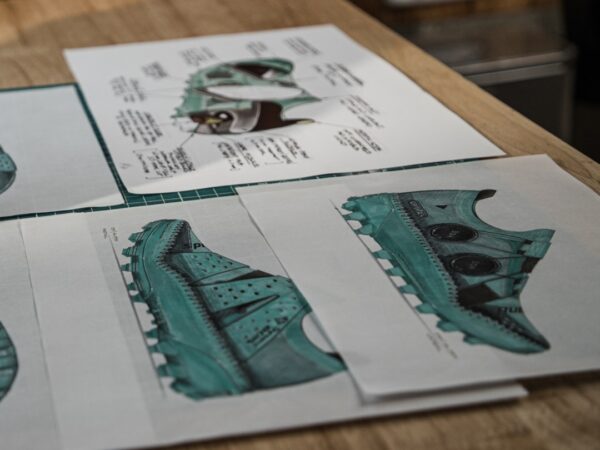
The company is small and apparel-heavy. Unlike the American brands it superficially resembles, ACT has released exactly one running shoe so far — the C.1 — while the bulk of the catalog is still t-shirts, shorts, jackets, and tights. That’s a meaningfully different bet than a brand like Valone, another French label chasing sustainability credentials but doing it through shoe durability rather than textile chemistry.
Built by the Team Behind Odaje
ACT isn’t a first-time venture. It comes from the founders of Odaje, the French footwear brand formerly known as M.Moustache — a company with a decade-plus track record, roughly fifteen of its own boutiques, some 300 retail partners, and reported 2024 revenue around €17 million. Odaje itself is B Corp-certified, which means ACT’s certification is less a startup flex and more a second application of a playbook this team already knows how to run. The two brands are legally and operationally independent — no shared ownership structure, no cross-promotion — but the shared pedigree explains why ACT arrived with a coherent brand system and retail ambitions instead of the usual scrappy DTC launch.
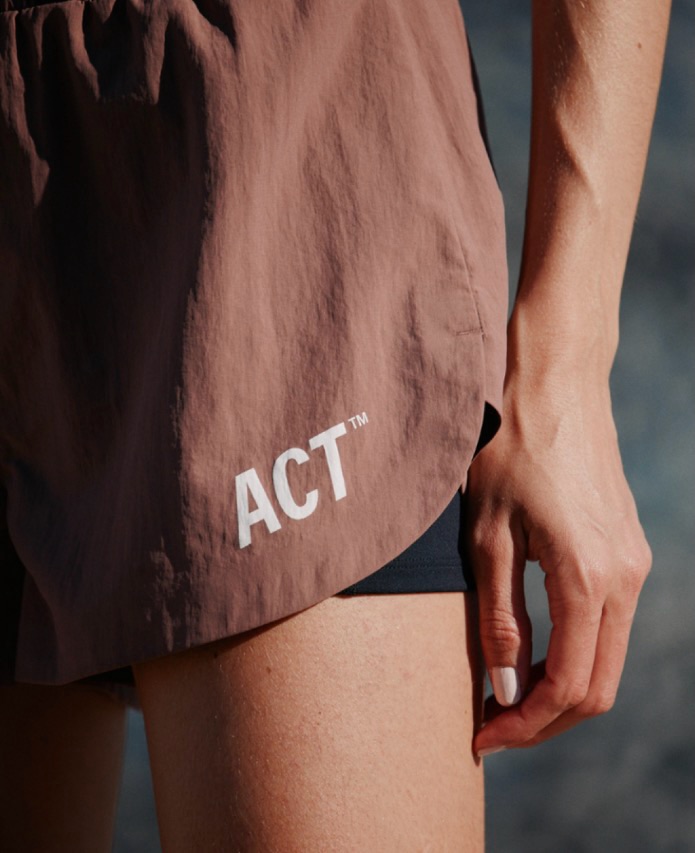
The first collection, released in February 2025, was menswear-only: t-shirts, long-sleeve tops, tank tops, shorts, and windbreakers, in a muted palette of terracotta, beige, and black. Running shoes weren’t part of that initial drop — they followed later in 2025, which is why the C.1 now reads as a genuine second act rather than the brand’s founding product.
BioPerf, ShellLight, BioFlex: Bio-Sourced Fabrics, Not Just Marketing Names
ACT’s core pitch rests on BioPerf™, a nylon made from castor bean oil rather than petroleum feedstock. Castor plants grow on marginal land that doesn’t compete with food crops, which is the detail sustainability-minded runners should actually be checking rather than taking « bio-sourced » at face value. According to the brand’s own published figures, BioPerf carries a 59% smaller carbon footprint than conventional nylon, and the brand’s tees built from it weigh just 113 grams while drying roughly 50% faster than standard nylon — a genuine performance claim, not only an environmental one.
The rest of the material lineup follows the same logic under different names: ShellLight™ for lightweight, water-repellent, bio-sourced shells; BioFlex™ for compressive leggings and tights; AirShell™ for breathable everyday tees. It’s a lot of trademarked names for what is, functionally, one strategy repeated across categories — plant-derived synthetics standing in for petroleum-derived ones at comparable weight and performance.
The Carbon Label: Making the Number Visible
Where ACT differentiates itself from brands that simply claim to be sustainable is the Carbon Label initiative: every product carries its calculated environmental footprint the way it would carry a price tag. The brand states a 47% lower environmental impact across the collection compared with traditional running gear. That’s a self-reported figure rather than one certified by an independent lifecycle-assessment body, which is worth flagging plainly — it’s the brand’s own math, not a third-party audit of that specific number. It’s a more transparent gesture than most competitors make, but it isn’t the same thing as third-party verification of the number itself.
B Corp Certification — What It Actually Covers
ACT Running holds B Corp certification, which requires a minimum score of 80 out of 200 on B Lab’s assessment across governance, workers, community, and environmental impact, plus a legal commitment to stakeholders beyond shareholders. It’s a real, externally audited standard — not a self-issued badge — and only a small fraction of apparel and footwear brands worldwide have cleared it. What it does not do is independently verify the specific carbon-reduction percentages ACT prints on its products; that’s a separate claim, made by the brand itself. B Corp status speaks to how the company as a whole is run. The Carbon Label speaks to individual products. Runners evaluating ACT should treat those as two different, complementary signals rather than one guarantee.
Who This Actually Fits
ACT makes sense for runners who care about where their kit’s fabric comes from and are willing to pay apparel prices in the same range as Tracksmith or Bandit for that story. It makes less sense for anyone shopping primarily on shoe pedigree: the C.1 is ACT’s only model, and one shoe is not a track record the way Hoka, Salomon, or even newcomers like Norda have built one. This is currently an apparel brand with a foothold in footwear, not the reverse — though the Odaje pedigree behind it, and that brand’s existing retail network, suggests ACT is better positioned to scale distribution than most single-founder running startups.
Our Take
ACT Running is doing something more specific than most « eco » running labels: naming an actual feedstock (castor oil), publishing an actual number (-59%), and backing the whole operation with a genuine third-party certification rather than a self-designed seal. That combination is rare enough in running apparel to take seriously. The caveat is proportion — this is a young, small brand with one shoe, and its carbon-reduction figures are self-reported rather than independently audited product-by-product. Worth trying for apparel if the fabric story genuinely matters to you; too early to judge on footwear alone.
FAQ
Is ACT Running actually B Corp certified?
Yes. B Corp certification is issued and audited by B Lab, a third-party nonprofit, and requires a score of at least 80 out of 200 across governance, worker treatment, community impact, and environmental practices. ACT Running states this certification on its own site and displays the B Corp mark across its brand pages.
What is BioPerf, and how is it different from regular nylon?
BioPerf is ACT’s nylon made from castor bean oil instead of petroleum. The brand reports a 59% lower carbon footprint than conventional nylon for this specific material, alongside faster drying time and lighter fabric weight.
Does ACT Running make trail running shoes?
Not yet, in any dedicated sense. ACT’s only footwear model to date is the C.1, positioned as a road-oriented running shoe rather than a trail-specific design. The brand’s range is still built mostly around apparel.
Where is ACT Running based and where can you buy it?
ACT Running is a French company headquartered in Paris, publicly launched in February 2025. It sells direct-to-consumer through its own site and ships internationally, with a small number of physical stockists.
Is ACT Running connected to Odaje?
ACT was founded by the same team behind Odaje (formerly M.Moustache), a French footwear brand also B Corp-certified. The two companies are independent — separate legal entities with no shared ownership or cross-promotion — but ACT benefits from its founders’ prior experience building and distributing a French sustainability-focused brand.
Runners curious about the fabric technology in more depth, or the current product range, can check the brand directly at act-running.com.