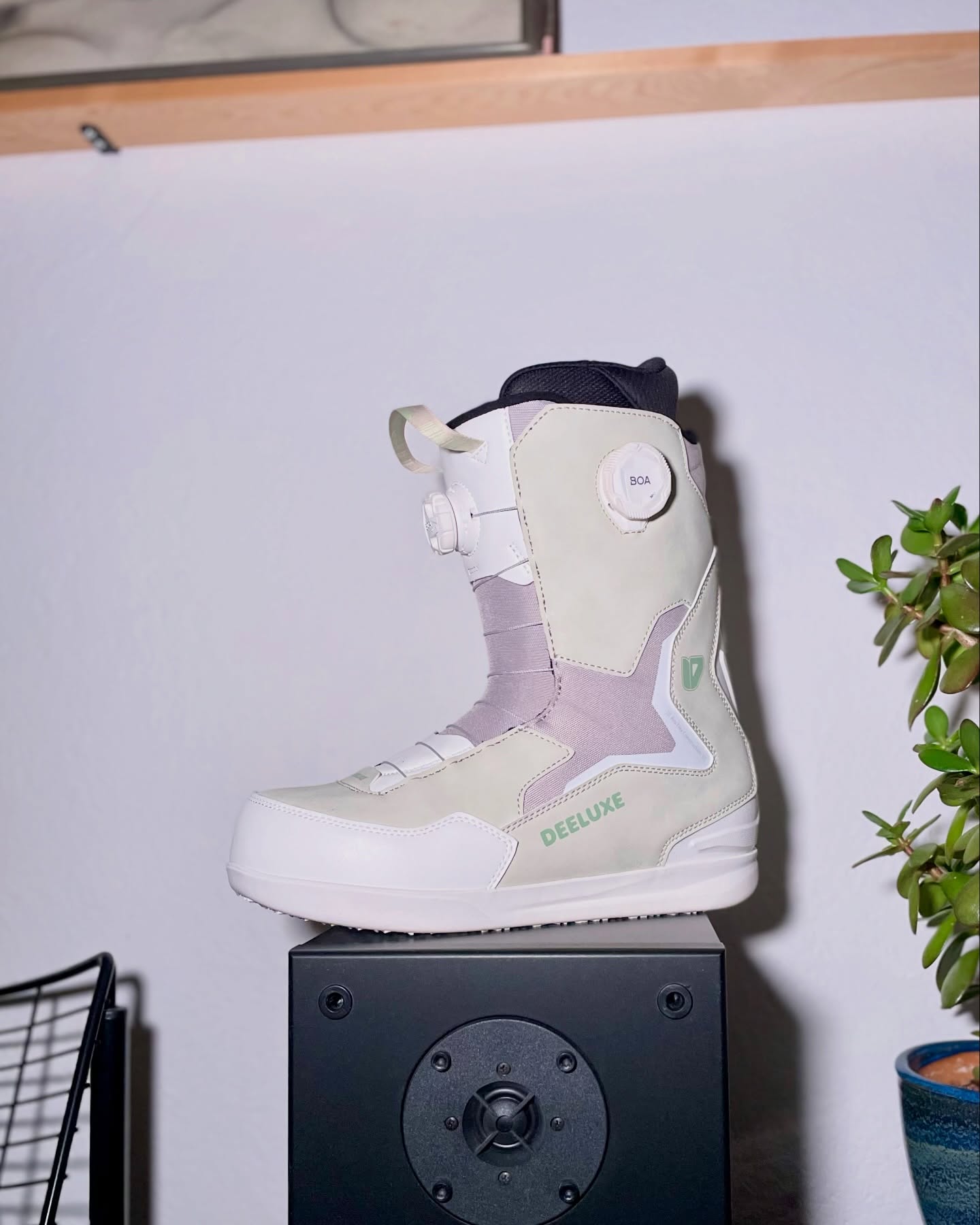
| Founded | 1996, Tyrol, Austria |
| Headquarters | Kufstein / Kirchbichl, Austria |
| Signature innovation | World’s first thermo-mouldable snowboard boot liner (1997) |
| Focus | Snowboard boots exclusively — softboots and hardboots |
| Key technologies | BOA Fit System, Flex Booster, Rapid React Modular Technology, Rise by Bloom |
| Notable riders | Elias Elhardt, Eiki Helgason, Kevin Backstrom, Xavier De Le Rue, Werni Stock, Elena Koenz, Ståle Sandbech |
| Official site | deeluxe.com |
A Company With One Job
Most snowboard brands try to sell you a whole setup. Boards, bindings, boots, outerwear, sometimes a lifestyle collection to go with it. Deeluxe never went that route. Since 1996, the Austrian company has made exactly one product: snowboard boots. Softboots, hardboots, splitboard boots — but never a deck, never a binding, never a jacket. Heading into the 2026/27 season, the brand’s own thirtieth-anniversary messaging leans into this rather than apologizing for it, describing itself as one of the very few companies left in the industry still fully dedicated to the boot alone.
That narrowness is either a limitation or the whole point, depending on who you ask. Deeluxe’s own argument is that boots are the part of the setup riders actually feel, all day, every run, and that splitting attention across four product categories the way Burton or the big multi-brand groups do inevitably means compromises somewhere. It’s a clean pitch. Whether a rider buys into it usually comes down to whether they’ve had a bad experience with an off-the-shelf boot from a brand better known for its boards.
1997: The Liner That Changed the Industry
A year after launching, Deeluxe introduced the world’s first thermo-mouldable boot liner — a liner that could be heated in-store and moulded to the exact shape of a rider’s foot rather than relying on generic sizing and a long break-in period. It’s one of those inventions that became so standard across the industry that it’s easy to forget someone had to do it first. Nearly three decades later, every Deeluxe boot still ships with a thermo-mouldable liner as standard, not an upsell, and shops carrying the brand typically keep the heating oven needed to mould them on-site.
The system has been refined rather than reinvented since — Deeluxe now tailors liner construction by boot category, so a freestyle-oriented liner differs from what goes into an all-mountain or splitboarding model — but the basic promise from 1997 hasn’t changed: a boot that fits your foot rather than the other way around.
Built by the Riders Who Wear Them
Deeluxe describes itself as run by « a tight-knit crew of dedicated riders, » and the team roster backs that framing up more than most brand taglines do. Elias Elhardt has ridden for the brand for over sixteen years and based his signature model on the Deemon, chasing ankle stability without sacrificing flex. Eiki Helgason, known for his urban jibbing, was riding Deeluxe boots for years before joining the team and now has his own signature line, Brainchild. Kevin Backstrom and Markus Olimstad, both part of the brand’s Scandinavian contingent, favour the mid-flexing Team ID and the newer ID Bloodline. Werni Stock — a Mayrhofen local — rides the Edge, historically the brand’s stiffest freestyle boot, built for stomping big park hits. Xavier De Le Rue helped Deeluxe design one of the first true mountaineering and splitboarding boots, the Spark XV, built around a Vibram sole shaped for scrambling over rock and ice and a clip system for attaching crampons. Elena Koenz rides the Empire Lara, the brand’s women’s freestyle model built to handle jumps, rails, and powder days without feeling like an afterthought next to the men’s line.
What’s worth noting is how consistently the riders talk about switching to Deeluxe on their own before ever being sponsored — not the usual script. That doesn’t make the boots objectively better, but it does suggest the enthusiasm isn’t purely contractual.
The Technology Stack: BOA, Flex Booster, and Rapid React Modular
Beyond the thermo liner, Deeluxe’s technology sits in three main buckets:
- BOA Fit System — dial-based lacing, often configured as dual-zone so the upper and lower parts of the boot can be tightened independently. Deeluxe worked with BOA’s Austrian division to build its own L3 BOA configuration, combining BOA’s dial with Deeluxe’s own patented lacing geometry.
- Flex Booster — an add-on insert for the tongue that stiffens flex and can restore support as a boot ages. It’s a smart piece of engineering, but it’s worth being upfront that it’s often sold as a separate accessory rather than included, so riders chasing a stiffer ride may need to budget for it on top of the boot price.
- Rapid React Modular Technology — the newest addition, first introduced on the ID Y-20 for 2025/26 and expanded across the 2026/27 range. It replaces the traditional 3D-moulded EVA foam tongue with an injected TPU tongue and a TPU highback (« Flex Guard »), aiming to solve a real problem: foam tongues compress over a season, so a boot rated Flex 8 can feel like a Flex 10 out of the box and a Flex 6 by spring. Deeluxe’s pitch is that TPU holds its shape for the life of the boot. It’s a genuinely useful idea on paper — the tradeoff is that it’s new enough that there isn’t yet multi-season, independent evidence of how it holds up compared to the EVA construction it’s replacing.
Sustainability: Rise by Bloom and the Long Game
In 2022, Deeluxe became the first snowboard boot brand to bring a model built with Rise by Bloom to market — a bio-based foam derived from algae harvested from ecosystems affected by agricultural runoff, positioned as both a carbon-sequestering material and a way to help restore the waterways it’s sourced from. The brand has since expanded Rise by Bloom across more models in the lineup, alongside smaller-scale changes: PVC-free construction, no plastic packaging, and shipping products by rail where it’s feasible. None of this makes Deeluxe a sustainability-first brand in the way some outdoor apparel companies frame themselves, but for a category — snowboard boots — where recyclable, algae-derived foam is still rare, it’s a genuine point of differentiation rather than a marketing footnote.
Where Deeluxe Sits in the Market Today
Deeluxe’s position is unusual: it’s a specialist competing against generalists. Burton sells boards, bindings, boots, and outerwear under one roof, with the vertical integration and retail reach that comes with it. Bindings specialists occasionally cross over the other way — Union entered the boot category for the first time with the Reset Pro, after two decades focused solely on bindings, which says something about how attractive the boot market looks from the outside even to companies with no history in it. Deeluxe has effectively run that experiment in reverse for thirty years: stay in one lane and try to own it completely.
As the DNA Boot Partner for the Natural Selection Tour, Deeluxe gets high-visibility proof of concept in big-mountain freeride, a discipline where a boot’s stiffness, support, and precision genuinely matter under pressure. That’s a useful credibility marker for a brand competing against companies with far bigger marketing budgets. If you’re weighing options more broadly before settling on a boot, our guide to choosing the right snowboard boots covers the fit and flex fundamentals that apply regardless of which brand you land on.
Deeluxe: Frequently Asked Questions
Where are Deeluxe snowboard boots made?
Deeluxe is based in Tyrol, Austria, with operations spanning Kufstein and nearby Kirchbichl. The company has been headquartered in the region since its founding in 1996.
Does Deeluxe make anything besides snowboard boots?
No. Unlike most snowboard brands, Deeluxe has stayed exclusively focused on boots — softboots, hardboots, and splitboard-specific models — since it launched, without expanding into boards, bindings, or apparel.
What is Rapid React Modular Technology?
It’s Deeluxe’s system of injected TPU tongues and highbacks, first introduced on the ID Y-20 for 2025/26, designed to replace foam tongues that compress and soften over a season. It’s built to deliver consistent flex from the first day on snow through the entire life of the boot.
Is the thermo-mouldable liner included in every Deeluxe boot?
Yes. Every current Deeluxe model ships with a thermo-mouldable liner as standard, a technology the brand pioneered in 1997. Shops carrying Deeluxe typically have the heating equipment on-site to mould the liner to a rider’s foot at the point of sale.
Thirty years in, Deeluxe is still betting that one product done relentlessly well beats a full catalogue done adequately. For riders who’ve never thought much about their boots beyond sizing, that stubbornness is exactly the argument worth hearing out — full range and pricing at deeluxe.com.