In 2009, while the running industry was racing toward minimalism — thinner soles, lower drops, the barefoot revolution — two former Salomon employees from Annecy decided to go in exactly the opposite direction. Nicolas Mermoud and Jean-Luc Diard wanted to run downhill faster without destroying their legs. Their answer was not to remove cushioning but to add far more of it than anyone thought reasonable. The result was a shoe that looked like a prototype for a different sport, attracted immediate ridicule from the running establishment, and went on to become one of the most influential footwear brands in the world. Hoka did not just survive the minimalism era. It outlasted it and reversed the direction of the entire industry.
Annecy, 2009: The Maximalist Bet
Mermoud and Diard had spent years in the technical footwear world at Salomon, developing trail running products that they tested personally on the terrain around Annecy and Chamonix. Their problem was specific: after long technical descents, their bodies paid for it. The repetitive impact of downhill running at pace accumulates faster than most runners acknowledge, and the minimalist shoes of the era offered nothing to mitigate it.
Their inspiration came from an unlikely source: the oversized wheels of downhill mountain bikes, which absorb terrain irregularities through sheer volume rather than structural complexity. What if a running shoe did the same? A very thick, very light EVA midsole — far beyond anything in the mainstream — paired with a rockered geometry that kept the foot moving forward efficiently despite the stack height. The first prototype was tested on a descent of Mount Etna in Sicily. The result was enough to commit to a company.
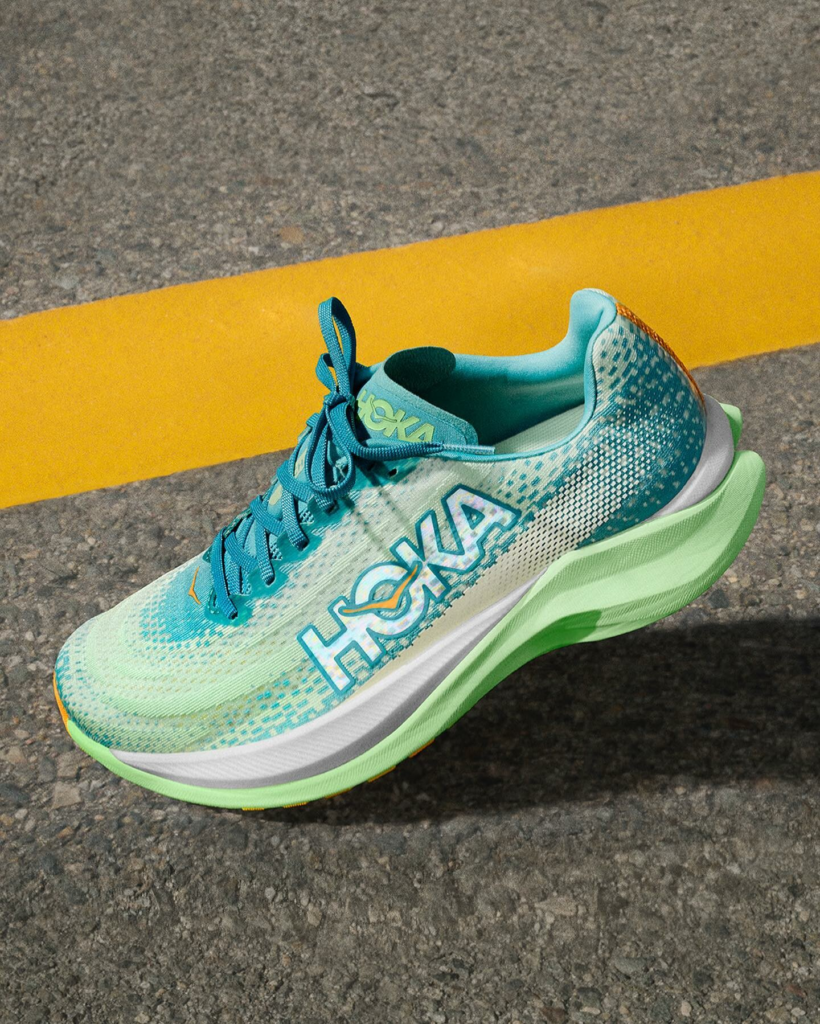
Hoka One One — the name derives from a Māori phrase meaning « fly over the earth » — debuted its first shoes at a trade show in France in December 2009. The initial reception was skeptical at best. The shoes looked absurd. But at Boulder Running Company in Colorado, one of the most respected specialty running stores in the United States, owner Mark Plaatjes — a physical therapist and former world marathon champion — agreed to test a prototype on the spot. He immediately grasped what Mermoud and Diard had built. Boulder Running Company became Hoka’s first US stockist. Word spread through the ultrarunning community, where the shoes’ ability to reduce fatigue over hundred-mile distances resonated faster and more forcefully than in any other running market.
Deckers Brands — the group behind UGG and Teva — acquired Hoka in 2012 for approximately $1.1 million, at a point when the brand had barely $2 million in annual sales. It was a small acquisition that would become one of the most consequential purchases in the history of the outdoor footwear industry. By 2017, Hoka was the top shoe at the Ironman World Championship in Kona. By 2024, the brand was generating over $1.5 billion in annual revenue, making it one of the fastest-growing footwear brands in history.
What Hoka Actually Changed
Hoka’s impact on the running shoe industry is not merely commercial. The brand shifted the direction of product development across the entire category. In 2009, every major brand was reducing stack heights and removing material. By 2016, every major brand was adding cushioning and citing Hoka’s success as justification. Nike’s Vaporfly carbon-plate racing shoe — which triggered the plated running shoe revolution — owes as much to Hoka’s proof of concept that more foam could be lighter and faster as it does to Nike’s internal engineering.
The Meta-Rocker geometry — Hoka’s signature curved midsole profile that rolls the foot forward through the gait cycle — is now replicated in various forms across dozens of brands. The idea that a high-stack shoe could be lighter than a lower-stack conventional shoe, through the use of less dense but more voluminous foam, is now industry standard knowledge. Hoka did not just make a popular product. It changed what the industry thought was possible.
The Speedgoat: Karl Meltzer’s Shoe
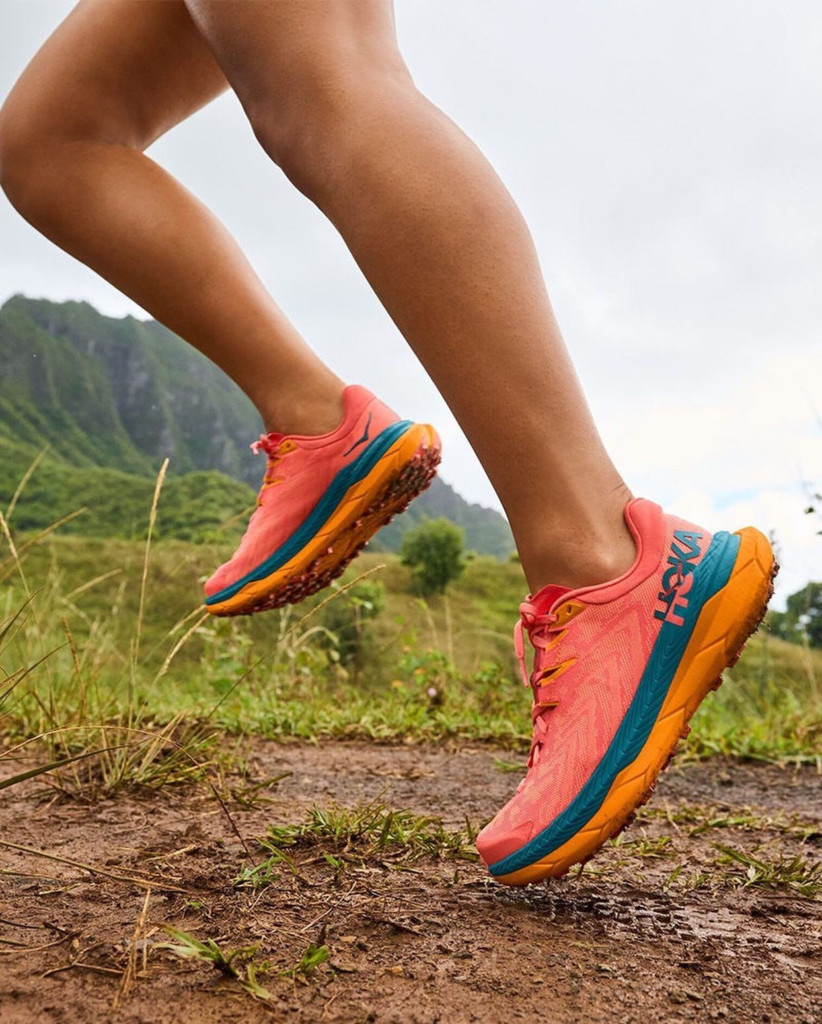
Hoka’s first US-sponsored athlete was Karl Meltzer — known as « Speedgoat » in the ultrarunning community for his record 40 victories in hundred-mile races, including five wins at Hardrock 100. With Meltzer’s input, Hoka developed the original Speedgoat trail shoe in 2015: a high-stack, Vibram Megagrip outsole, technical trail design built around the specific demands of rugged mountain ultrarunning. The name stuck. The Speedgoat became Hoka’s flagship trail product and remains so today, now in its sixth major iteration. For a direct comparison with its closest rival, see our Speedgoat vs Speedcross and Norda 001 vs Speedgoat head-to-heads.
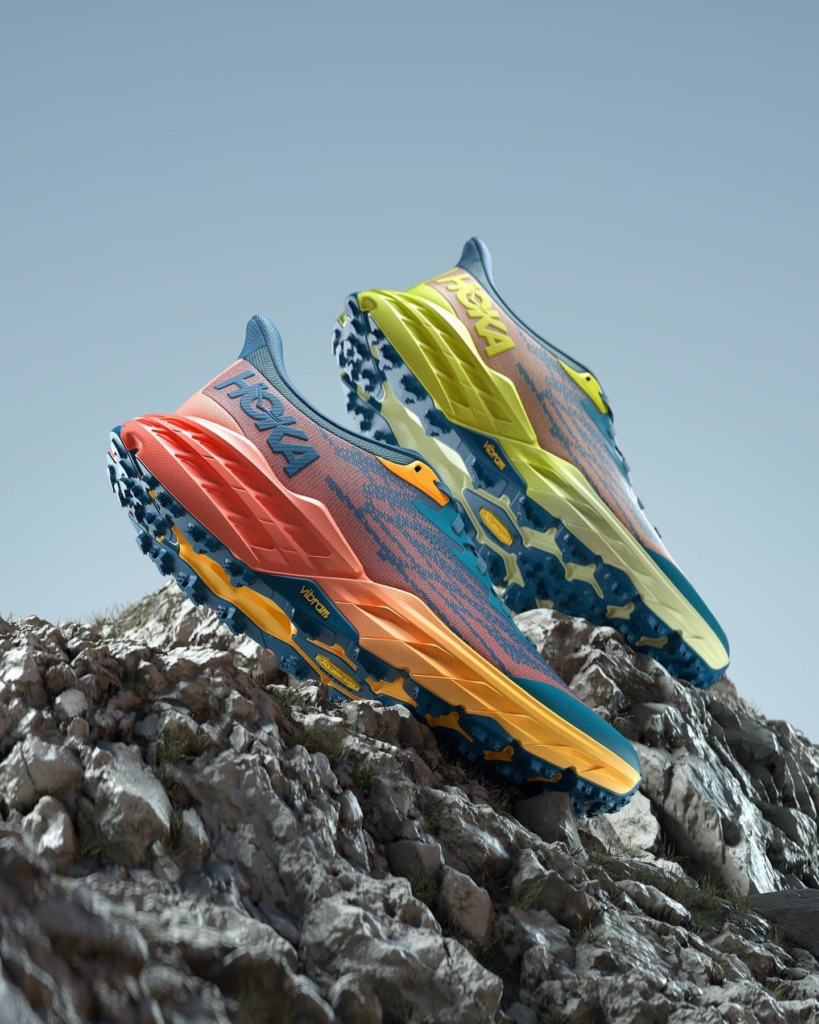
The Speedgoat 6 carries a 40mm heel stack, 35mm forefoot stack, 5mm drop, and the Vibram Megagrip outsole that has become the reference for high-grip trail running across the industry. It is not the lightest trail shoe. It is not the most technically aggressive for pure scrambling terrain. But on varied mountain terrain over long distances, it absorbs impact, maintains grip, and protects feet in a way that very few competing products match consistently.
The Key Product Lines
Trail Running
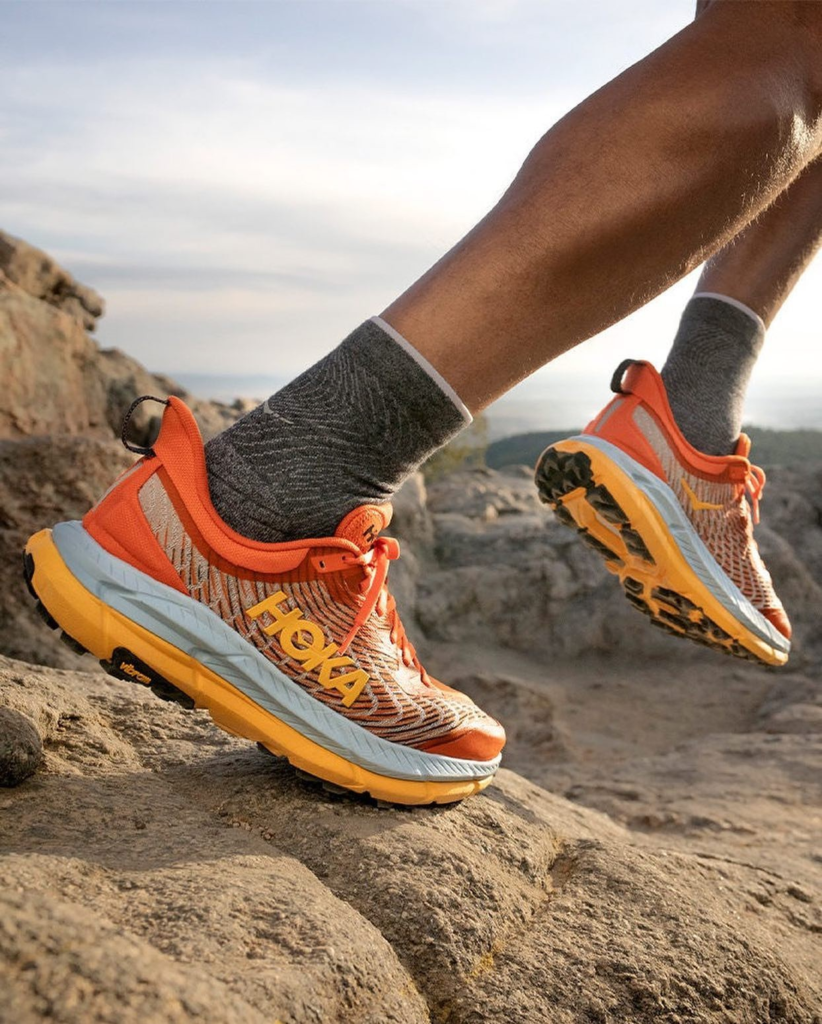
The Speedgoat series is Hoka’s most versatile trail shoe — the reference for runners seeking cushioning and grip across varied terrain. The Mafate series, now including the 2025 Mafate X with a carbon plate, targets ultra-distance efforts on rocky terrain with even higher stack heights and more aggressive outsoles. The Challenger bridges trail and road, functioning well on mixed surfaces that runners encounter on routes through urban and semi-urban terrain. The Tecton X is Hoka’s race-specific trail shoe: twin carbon plates, aggressive outsole, designed for competitive trail racing rather than training.
Road Running
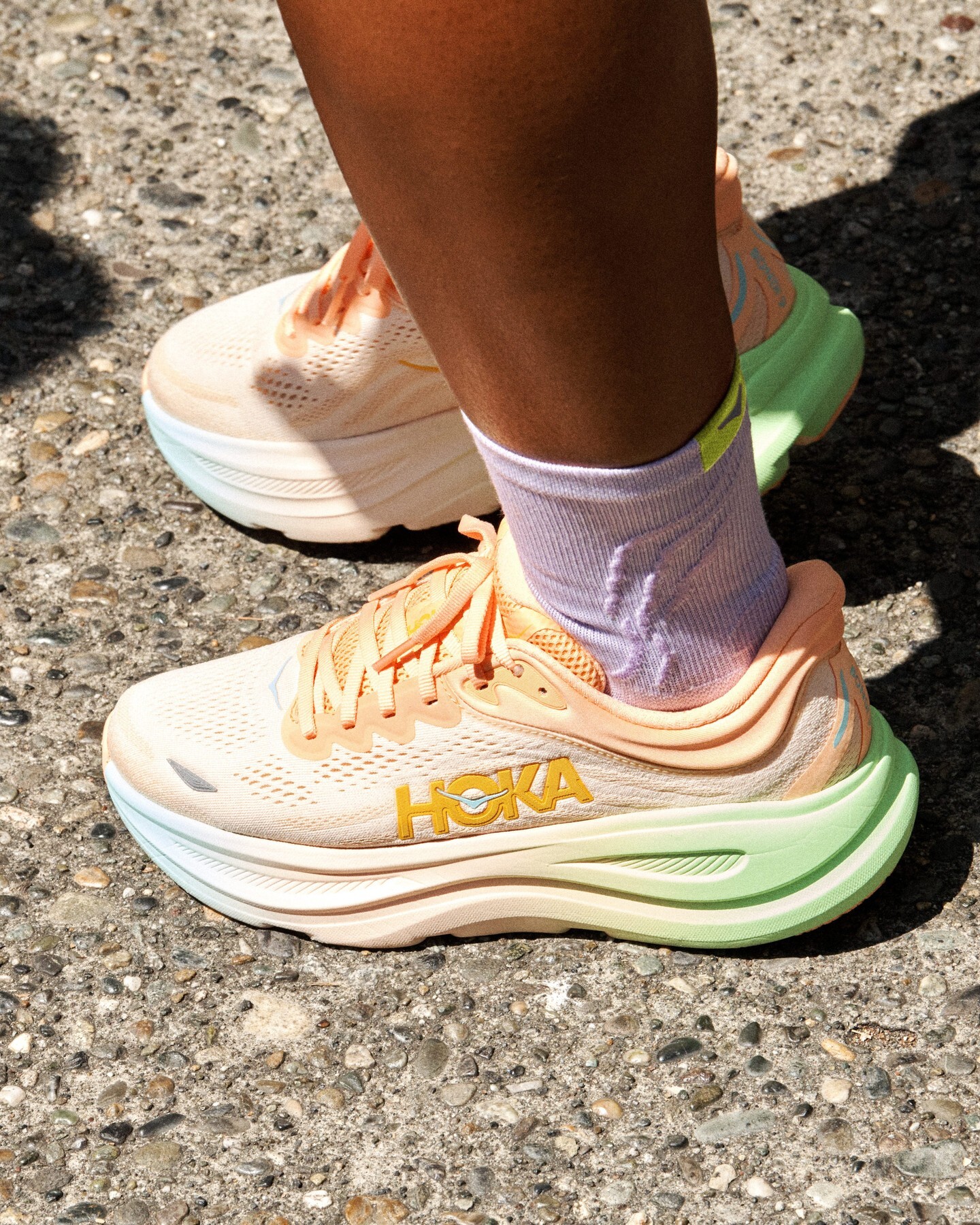
The Clifton is Hoka’s most commercially successful road shoe: plush, cushioned, versatile, and now in its tenth generation. The Bondi is the maximalist option for recovery runs and high-mileage training weeks where joint protection matters most. The Mach series is Hoka’s lightweight daily trainer, and the Rocket X is its carbon-plate road racer — a direct competitor to the Nike Vaporfly and Adidas Adizero family at the pointy end of marathon racing.

| Model | Category | Best For |
|---|---|---|
| Speedgoat 6 | Trail | Versatile mountain terrain, ultras |
| Mafate X | Trail | Rocky long-distance, carbon plate |
| Tecton X 2 | Trail race | Competitive trail racing |
| Challenger 7 | Trail / road | Mixed surface, road to light trail |
| Clifton 10 | Road | Daily training, all-rounder |
| Bondi 9 | Road | Maximum cushioning, recovery |
| Rocket X 2 | Road race | Marathon racing, carbon plate |
The Fashion Dimension
Hoka’s cultural trajectory since approximately 2019 follows a pattern familiar from other technical outdoor brands that find unexpected lifestyle audiences. The XT-6 of trail running is Hoka’s chunky silhouette arriving on the feet of people who will never run further than a coffee shop. Collaborations with Moncler and Engineered Garments elevated the brand into luxury fashion territory. Hospital nurses and airport travelers adopt Hoka for the same reason ultrarunners do: the cushioning genuinely reduces fatigue. The performance logic translates across contexts.
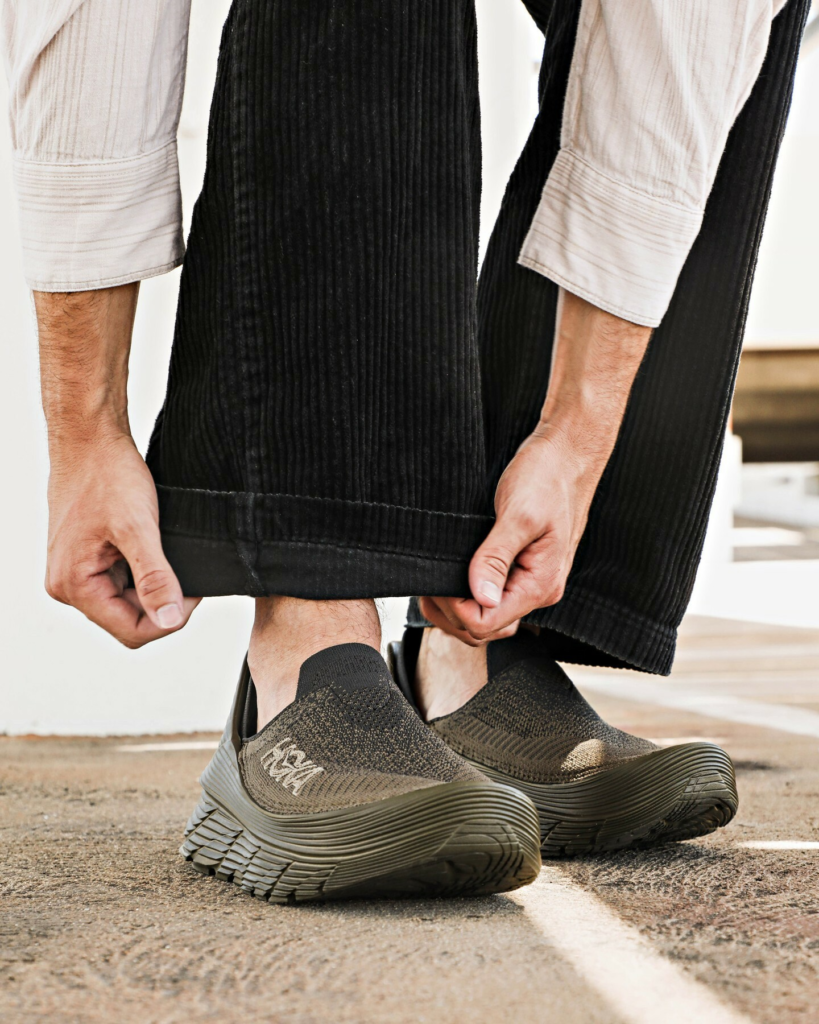
Unlike some brands navigating the performance-lifestyle crossover, Hoka has managed to grow its fashion presence without visibly compromising its technical development. The Speedgoat and Tecton X continue to improve as performance products. The fashion universe operates in parallel, not at the expense of the running universe.
Our Take on Hoka
Hoka is one of the most interesting brands in running footwear because its success was not inevitable. In 2009 the bet was contrarian. The minimalism trend had the entire industry’s momentum behind it. Mermoud and Diard were former employees of a competitor, working from Annecy, making shoes that the running establishment considered absurd. That the Speedgoat is now one of the best-selling trail shoes in the world, that the Clifton changed what road runners expect from a daily trainer, and that Hoka’s approach to midsole geometry has influenced every major brand in the category — none of that was obvious in 2009.
For trail runners, the Speedgoat remains one of the most honest recommendations we can make: a shoe that works across terrain, distances, and runner profiles without requiring the specific body mechanics that more minimalist options demand. If you are preparing for your first ultra or navigating the demands of ultra-trail training, the Speedgoat is a low-risk starting point.
For runners with different philosophies — those who prefer ground feel, natural foot movement, and zero drop — the Speedgoat’s stack height is a fundamental mismatch. Altra and Norda answer that question better. But for runners who want protection, cushioning, and confidence across varied mountain terrain, Hoka remains the reference that others are measured against. Our Lone Peak vs Speedcross comparison also illustrates how differently brands approach grip and protection on trail.
Frequently Asked Questions
Where is Hoka made?
Hoka was founded in Annecy, France, in 2009 by Nicolas Mermoud and Jean-Luc Diard. The brand is now owned by Deckers Brands (US) and manufactures its shoes primarily in Asia, as is standard across the performance footwear industry.
What makes Hoka shoes different from other trail running shoes?
Hoka’s defining feature is its maximalist midsole geometry: unusually thick, lightweight EVA foam paired with a Meta-Rocker profile that rolls the foot forward through the gait cycle. This combination reduces impact on long descents and fatigue over ultra-distance efforts — the opposite of the minimalist approach that dominated the industry when Hoka launched.
Is the Hoka Speedgoat good for beginners?
Yes. The Speedgoat’s high stack height and Vibram Megagrip outsole make it one of the most forgiving trail shoes for runners new to mountain terrain. It doesn’t demand precise foot placement or specific running mechanics the way more minimal options do. For a detailed comparison, see our Speedgoat vs Speedcross head-to-head.
How does Hoka compare to Salomon for trail running?
Hoka prioritizes cushioning, impact protection, and long-distance comfort. Salomon leans toward precision, foot wrapping, and technical agility on steep or rocky terrain. Both are reference brands — the choice depends on whether your priority is protection over mileage or reactivity on technical ground.
What is the difference between the Hoka Speedgoat and the Mafate?
The Speedgoat is Hoka’s versatile all-rounder — suitable for varied mountain terrain, training, and racing. The Mafate targets ultra-distance efforts on more extreme terrain, with an even higher stack, more aggressive outsole lugs, and — in the Mafate X — a carbon plate for added propulsion. If you’re not racing hundred-milers on rocky ground, the Speedgoat is the right starting point.
Discover the full Hoka trail and road running shoe range on the Hoka official website.