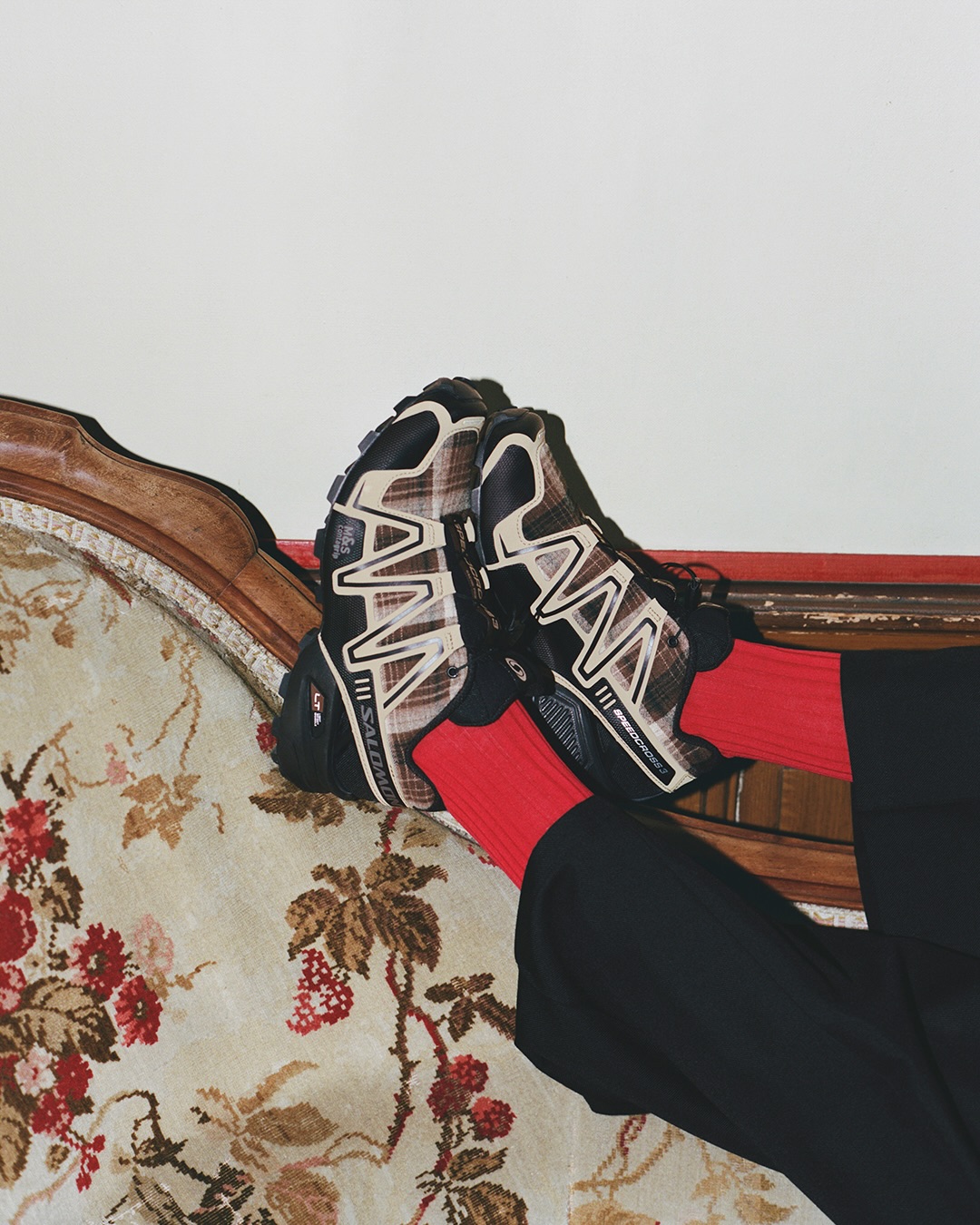
There are brands that sell gear for mountain sports. And then there is Salomon — a brand that has, over seventy-five years, become almost inseparable from the sports themselves. Founded in a small workshop in the French Alps in 1947, Salomon began by making ski edges and ended up reshaping trail running, redefining what a hydration vest could be, and producing shoes worn simultaneously by elite ultramarathoners and fashion editors in Paris. That trajectory is not accidental. It is the result of engineering obsession, deep athlete relationships, and a consistent willingness to do things differently when the existing answers are not good enough.
Annecy, 1947: A Workshop, a Family, an Idea
François Salomon opened his workshop in Annecy — a lake town in the Haute-Savoie department of the French Alps, close enough to the mountains that their influence was inescapable — in 1947, initially making saw blades and steel ski edges. His son Georges, an engineer by training, joined the family business and immediately began applying his technical mind to the problems of alpine sport. In 1955, Salomon introduced a revolutionary releasable toe binding that allowed a skier’s foot to twist free in a fall, replacing the leather straps that had been breaking ankles for decades. Marketed as votre ange gardien — your guardian angel — it defined what a ski binding was supposed to do. By 1972, Salomon was manufacturing over one million ski bindings a year and had become the world’s largest binding producer.
The brand expanded methodically through the following decades — ski boots in 1979, skis in the 1980s, hiking shoes in 1992 — always from the same base in Annecy, always with the same engineering-first culture. Adidas acquired Salomon in 1997 and sold it to Finnish sporting goods group Amer Sports in 2005, where it remains today alongside brands including Arc’teryx and Atomic. Crucially, through both ownership changes, the Annecy Design Centre — a 33,000 square metre facility housing 750 employees across skiing, running, and outdoor disciplines — remained the operational and creative heart of the brand.
The Pivot to Trail Running: Kilian, the Speedcross, and Everything That Followed
Salomon’s move into trail running did not happen overnight. The brand entered hiking footwear in 1992 with the XA Pro — a shoe with a chassis and protection level designed for demanding mountain terrain. The XA Pro became a reference and remains in the lineup today. But it was the Speedcross, launched in 2006, that changed everything.
The Speedcross was designed for technical off-road running with lugs inspired by motocross tyres — aggressive, distinctive, and unlike anything else on the market. Salomon’s original forecast was 1,000 units. Within years, the brand was selling over one million pairs annually in Europe alone. The Speedcross has become one of the best-selling trail running shoes ever made, recognisable across the entire spectrum of the sport from parkrun course-markers to hundred-mile ultramarathon finishers.
The athlete relationship that cemented Salomon’s dominance in trail running is Kilian Jornet. In 2008, an almost unknown nineteen-year-old running for Salomon broke the UTMB record, winning one of the world’s most prestigious trail races ahead of seasoned veterans. It was the moment Salomon’s trail running pivot became impossible to ignore. When Jornet finished the 2010 Western States 100 without winning — an outcome he found unacceptable — he went back to Salomon’s design team and demanded a new shoe. The normal development timeline for a technical running shoe is two years. Salomon built the Sense in one. Jornet won Western States in 2011 wearing it. That iteration of the athlete-engineer relationship, replicated across Salomon’s S/Lab line ever since, is part of what keeps the brand technically ahead of most competition.
Inventing the Hydration Vest
In 2008, when Kilian Jornet won the UTMB, he did so wearing a prototype Salomon pack that was fundamentally different from anything else available: a vest-style carrying system that wrapped around the torso, kept gear close to the body, and eliminated the bounce and load-shift that plagued conventional running packs. Salomon called it the Skin Bag, and it changed trail running equipment for good.
By 2013, Salomon introduced soft flasks specifically designed for their vest pockets, replacing the rigid bottles and bladder tubes that had been the only hydration options. The combination of vest fit and soft flask technology — water held at the chest, immediately accessible, collapsing as it emptied — became the template that every subsequent running vest brand copied. The ADV Skin series, refined across multiple generations, remains the best-selling trail running vest range in the world. Today it is considered the reference by which competitors are measured, as our comparisons of the best hydration packs for trail running consistently demonstrate.
The Products That Define Salomon Today
ADV Skin Vest Series
The ADV Skin is Salomon’s flagship trail running vest and the product most associated with the brand in competitive trail running globally. Available in 5L and 12L capacities, it uses SensiFit construction — a wrap-around garment-like design in stretch, breathable fabric — and a Y-shaped back panel that stabilises load and distributes weight without the bounce or pressure points that affect conventional pack designs. Both sizes include 500ml soft flasks, trekking pole storage, and a comprehensive pocket layout accessible on the move. The 2025 update added stiffer back-panel fabric for improved bounce reduction and enlarged mesh perforations for airflow. Despite mixed reviews on specific detail changes from long-time users, the ADV Skin remains the most copied vest design in trail running.
Speedcross
The Speedcross is Salomon’s most iconic footwear product and one of the most recognisable trail running shoes ever made. The aggressive lug pattern, inspired by motocross tyres, delivers exceptional traction on soft and technical terrain. Now in its seventh major generation (Speedcross 6), it has maintained its core identity while evolving the upper materials, lacing system, and outsole compound across iterations. It is not a shoe for hard-packed or rocky surfaces — the deep lugs sacrifice efficiency on firm ground — but on mud, wet grass, and soft forest trails it remains the dominant reference.
Sense and S/Lab Series
The Sense range covers fast, technical trail running in a lightweight format: minimal construction, close ground feel, responsive ride. The S/Lab line — Salomon’s most performance-focused category, developed in direct collaboration with elite athletes including Kilian Jornet and François D’Haene — targets competitive ultrarunning where every gram and every millimetre of stack height is a considered decision. The S/Lab Ultra is Salomon’s flagship ultra-distance race shoe.
XA Pro and Hiking Range
The XA Pro chassis — built around a protective midsole guide rail and a grippy Contagrip outsole — remains Salomon’s core hiking and mountain running platform. The current XA Pro 3D line offers Gore-Tex waterproofing options and covers terrain from day hikes to technical mountain routes. The Quest boot range extends into multi-day trekking territory with higher ankle support and more aggressive protection. For runners navigating ultra-trail preparation with mixed terrain including technical hiking sections, the XA Pro family bridges running and trekking more effectively than most competitors.
Apparel and Technical Clothing
Salomon’s apparel range has grown significantly alongside its footwear and pack business. The trail running clothing line covers shorts, tights, windshells, waterproof jackets, and baselayers designed for mountain movement at pace. The S/Lab apparel is the reference for competitive trail racing: minimal weight, maximum freedom of movement, and the PFC-free DWR treatments that Salomon adopted across its entire product line as a sustainability commitment.
XT-6 and Sportstyle
Since 2015, Salomon has operated a Sportstyle division that adapts its technical footwear — primarily the XT-6 trail shoe and the ACS Pro — for fashion and lifestyle markets. The pivot was accidental: a single customer walked into a Paris streetwear boutique asking for Salomon Snowcross boots, and within years the brand’s technical shoes were appearing in fashion editorials and being stocked by some of the world’s most influential concept stores. The Sportstyle range now sells to a customer base entirely separate from the trail running community, without diluting the performance credentials of the core product line. It is a rare and difficult balance to maintain, and Salomon has managed it better than most performance brands in similar positions.
| Product | Category | Best For |
|---|---|---|
| ADV Skin 5 | Running vest | Marathon trail, races up to 60km |
| ADV Skin 12 | Running vest | Ultra-distance, 60km+ |
| Speedcross 6 | Trail shoe | Soft, technical, muddy terrain |
| Sense Ride 5 | Trail shoe | Versatile trail, daily training |
| S/Lab Ultra | Trail shoe | Competitive ultrarunning |
| XA Pro 3D | Trail / hiking shoe | Mixed mountain terrain, day hikes |
| XT-6 | Sportstyle / trail shoe | Urban and light trail |
What Makes Salomon Different
Three things consistently distinguish Salomon from its competitors in the trail running space.
The Annecy Design Centre. Everything Salomon makes is designed, prototyped, and tested in one location, by a team that lives next to the mountains it is building gear for. The concentration of expertise — designers, biomechanists, engineers, and athletes working in the same building — produces a feedback loop that brands with distributed development structures cannot replicate as efficiently.
Athlete co-development. Salomon’s relationship with elite athletes is not a sponsorship arrangement in the traditional sense. Kilian Jornet, François D’Haene, Courtney Dauwalter, and others have been directly involved in product development, field-testing prototypes under race conditions, and feeding that data back into the engineering process. The Sense shoe that won Western States was not a marketing story. It was a product built to a specific performance brief from an athlete who knew exactly what he needed and why.
SensiFit and vest design innovation. Salomon’s garment-inspired approach to running vest construction — treating the vest as something worn rather than carried — remains the most coherent design philosophy in the category. No other major brand has challenged it as effectively on a sustained basis. The ADV Skin’s longevity at the top of testing roundups is not a matter of inertia; the design genuinely continues to outperform most alternatives on the criteria that matter to long-distance runners.
Honest Limitations
Salomon is not a perfect brand. The Speedcross’s lug depth makes it inefficient on hard-packed terrain where many trail runners spend much of their time — it is a specific tool, not a universal one. The ADV Skin 2025 update drew criticism from long-time users who found that specific detail changes — the Quick Link sternum system’s plastic retention clips in particular — reduced rather than improved reliability on multi-day runs. And like many large outdoor brands, Salomon’s sustainability commitments are real but incremental; the 2021 Advanced Shoe Factory in France that repatriated production of some high-end shoes is a genuine step, but the brand still produces most of its volume in Asia.
On hydration packs specifically, Salomon faces increasing competition from Ultimate Direction, CamelBak, and specialist brands who have studied the ADV Skin closely and addressed some of its limitations — particularly around volume-to-weight ratio on the 5L and waterproofing options. The vest category is more competitive than it has ever been.
Our Take on Salomon
Salomon is the reference brand for trail running equipment, and it earned that position through consistent innovation rather than marketing spend. The Speedcross and ADV Skin vest are two products that genuinely changed the sport they serve. The Annecy Design Centre and the athlete co-development model produce gear that is genuinely tested in the environments it will be used in.
For any trail runner building a kit from scratch, Salomon should be on the shortlist for footwear and hydration. Not because it is automatically the right answer — Altra, Norda, and other brands offer compelling alternatives for different foot shapes and running philosophies — but because its products are designed by people who run the distances you are training for, in the terrain you are training on. That alignment shows up in the details, and those details add up over a hundred miles.
Explore the complete Salomon trail running, skiing, and outdoor range on the Salomon official website.