In 1989, a paramedic named Michael Eidson was competing in the Hotter’N Hell 100 — a hundred-mile cycling race held in the brutal August heat of Wichita Falls, Texas. He needed to drink without stopping. No hands-free hydration solution existed. So he did what any resourceful emergency medical technician might do: he filled a hospital IV bag with water, stuffed it into a tube sock, pinned it to the back of his jersey, threw the hose over his shoulder, and clamped it shut with a clothespin. While the other riders fumbled with water bottles, Eidson was drinking on the move. The people around him laughed. Then they started asking where they could buy one.
That improvised contraption became CamelBak. And CamelBak became — depending on who you ask — either the inventor of the hydration pack category, or the brand that made it famous enough for everyone else to follow. Either way, the result is the same: a company that started with a tube sock and became the global leader in personal hydration gear, present on six continents, trusted by trail runners, mountain bikers, soldiers, and everyone in between.
If you are trying to understand the hydration vest landscape — which brands exist, what they offer, and how to choose — our complete guide to trail running hydration packs is a good starting point. CamelBak will come up early and often.
From a Tube Sock to a Global Brand
Eidson refined the idea quickly. The first commercial product — the ThermoBak, an insulated sleeve with two nylon straps and a drinking hose — followed within months. From there, CamelBak grew with remarkable speed, fuelled largely by word of mouth among cyclists and outdoor athletes who had never had a better solution to the problem of drinking on the move.
The brand’s unlikely growth story includes a critical early hire: Jeff Wemmer, a competitive cyclist so enthusiastic about the product that he started selling packs out of his saddlebag at races before CamelBak even had a proper sales operation. The company eventually hired him, and in 1993 he kept the fledgling startup alive by touring bike shops from Florida to California on a motorcycle, faxing orders back to the factory from the road. It is the kind of origin story that sounds apocryphal but isn’t.
The US military played a significant role in scaling the brand. American troops deployed CamelBak packs in the Gulf War, and the product’s visibility in conflict zones — combined with a memorable slogan, Hydrate or Die — pushed the brand into mainstream consciousness. By the mid-2000s, CamelBak was a household name in the outdoor world. The company changed hands several times over the years — Kransco in 1996, Bear Stearns Merchant Banking in 2004, Vista Outdoor in 2015 — each acquisition reflecting the brand’s growing commercial value. The Petaluma, California headquarters closed in early 2024, marking the end of an era for a company that had long prided itself on its Northern California roots.
What CamelBak Actually Makes
The product range is broader than most people realise. CamelBak is not just a hydration vest company — it is a full hydration ecosystem brand, covering everything from running vests to reusable water bottles to military-grade reservoirs resistant to chemical agents. For the purposes of trail running and endurance sport, the relevant categories are the following.
Running Vests
CamelBak’s current trail running vest lineup centres on three models. The Zephyr Pro is the flagship performance option — 11 litres of gear capacity, ultralight 40D ripstop fabric treated with Polygiene antibacterial coating, stowable trekking pole quiver, dual adjustable sternum straps, and two included 500ml Quick Stow flasks. It is designed for ultra-distance racing and serious backcountry running, and it performs competently at that task. The women’s version features an S-curved shoulder harness adapted to female anatomy rather than simply being a smaller version of the men’s model.
The Apex Pro sits above the Zephyr Pro in structure and load-carrying ability — a more organised, burlier option for runners who need to carry more gear with a stable, bounce-free feel over long days. The Circuit and Trail Run vests complete the range at lower price points, targeting beginners and recreational runners who want the CamelBak system without the ultra-specific feature set.
Hydration Packs
The classic reservoir-based backpack remains a core product. The Octane series bridges fast hiking and trail running, offering rear-loaded reservoir hydration with accessible front organisation. These are the descendants of the original CamelBak idea — a bladder on your back, a hose over your shoulder, hands free — and they remain the right tool for routes where you do not need the vest-style load distribution.
Reservoirs and Soft Flasks
CamelBak manufactures its own reservoirs in-house — one of the few major hydration brands to do so — which gives it control over quality and fit. The Fusion reservoir features a TRU Zip leakproof closure and integrates cleanly with the vest range. The Quick Stow soft flasks included with the Zephyr Pro are well-regarded for their structure and locking caps, though some reviewers have noted that the lids need to be tightened firmly to avoid leaking — a legitimate gripe on long runs.
Bottles
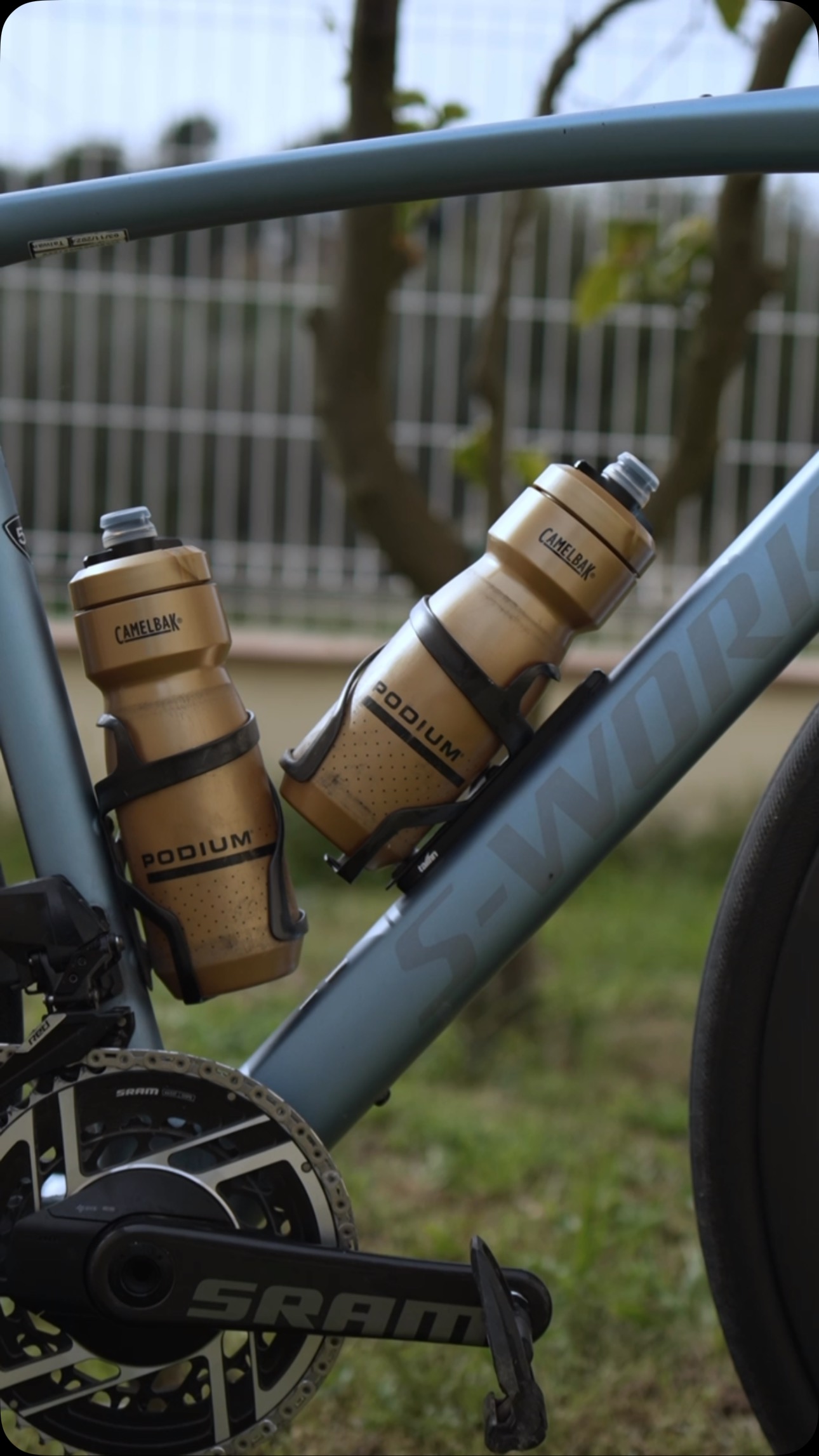
CamelBak entered the reusable bottle market in 2006 and has since built a substantial range of insulated and non-insulated options. In 2008, it introduced the industry’s first BPA-free plastic reusable bottle. The bottle range is now one of the brand’s best-sellers globally and plays a significant role in its sustainability messaging, with the long-running Ditch Disposable campaign encouraging athletes to stop using single-use plastic.
| Product | Category | Capacity | Best For |
|---|---|---|---|
| Zephyr Pro Vest | Running vest | 11 L | Ultra-distance racing |
| Apex Pro Vest | Running vest | 12 L | Long-day structured carry |
| Trail Run Vest | Running vest | 6 L | Beginner to intermediate |
| Octane 25 | Hydration pack | 25 L | Fast hiking, trail running |
| Fusion Reservoir | Bladder | 1.5–3 L | Vest and pack compatible |
| Quick Stow Flask | Soft flask | 500 ml | Vest front pockets |
CamelBak vs. the Trail Running Specialist Brands
Here is where honest editorial perspective matters. CamelBak is an excellent brand. It is also not the same kind of brand as Ultimate Direction or HydraPak when it comes to trail running specifically. CamelBak is a mass-market hydration company with a strong trail running line. UD is a trail running company that happens to make most of its money from hydration. The products reflect that difference.
The Zephyr Pro is a good vest. It is not the most technically refined vest on the market for ultra-distance racing. Experienced reviewers have noted that the shoulder straps can twist on some models, and the flask pockets are less precisely engineered than those on competing products at similar price points. CamelBak compensates with breadth, accessibility, and widespread retail availability — three things that matter enormously for runners who do not want to special-order gear online or spend weeks researching which brand’s flask fits which pocket.
For runners preparing for their first trail race, doing moderate-distance trail running, or wanting a reliable, well-supported product from a brand with a genuine lifetime guarantee (Got Your Bak), CamelBak is an excellent choice. For runners competing at the sharp end of ultras, or who spend serious time optimising their kit, there are vest options that offer more precision — but they require more research and are often harder to find in-store. Understanding how to fuel alongside staying hydrated is as important as the gear itself — we have covered that in depth in our guide to trail running nutrition and hydration.
What CamelBak Does Exceptionally Well
None of that nuance should obscure what CamelBak genuinely does better than almost anyone else. Its reservoir technology remains a reference — the Fusion bladder is one of the easiest to fill, clean, and use on the market, and the bite valve system has been refined across decades of iteration. The brand’s women’s-specific design is genuinely thoughtful, not token. The breadth of the range means there is a CamelBak product for almost every type of runner, from the person doing their first 10km trail event to the person attempting a multi-day unsupported mountain crossing.
Distribution is also a real advantage. In Europe, CamelBak is stocked by most major outdoor retailers and online platforms. You can walk into a specialist running shop in Paris, Munich, or Madrid and find a CamelBak vest on the shelf. That is not true of every brand in the hydration space — as we noted in our piece on Ultimate Direction, American brands with weaker European distribution pipelines often struggle to reach trail runners who would genuinely benefit from their products.
The Got Your Bak lifetime guarantee is also worth taking seriously. CamelBak backs its products against defects for life. For trail running gear that takes genuine punishment — mud, abrasion, repeated washing, years of hard use — that commitment has real monetary value.
The Scale Question
CamelBak’s journey from garage invention to Vista Outdoor subsidiary to globally distributed brand raises a question that any serious gear buyer should think about: does scale compromise product quality? The honest answer, for CamelBak, is: sometimes, at the margins. The mid-range and entry-level vests feel like products that were designed with cost management in mind. The flagship Zephyr Pro and Apex Pro do not. The brand has maintained a genuine commitment to innovation at the top of its range while accepting that the lower end is a volume play.
That is a reasonable commercial decision, and it is consistent with how most major outdoor brands operate. If you are buying CamelBak, buy the product that reflects the brand’s real capabilities — not the entry point that happens to carry the same name.
Worth Your Consideration?
Yes — with appropriate expectations. CamelBak is not the most specialist trail running hydration brand on the market. It is the most accessible, the most widely distributed, and one of the most technically competent for the majority of trail runners. If you are running ultras regularly and optimising every gram, look harder at UD or the specialist vest brands. If you are looking for a reliable, well-made hydration vest backed by a lifetime guarantee and available at your local outdoor shop, CamelBak deserves to be at the top of your list.
The tube sock improvisation in a Texas heat race has come a long way. It earned its place in the history of trail running gear — and so has the brand that grew from it. For runners also thinking about footwear choices to match their hydration kit, brands like Altra share CamelBak’s accessibility-first approach to the trail running market while maintaining genuine performance credentials. And for those heading into the backcountry with more volume to carry, our comparisons of Osprey and Gregory packs cover the step up from running vest to full hiking pack.
Explore the full CamelBak vest and hydration range on the CamelBak official website.