Ask any trail runner to name the two most iconic trail running shoes of the past decade and there is a strong chance these two will come up. The Hoka Speedgoat and the Salomon Speedcross define opposite ends of a philosophical spectrum that runs through the heart of trail running footwear: maximum cushioning and protection on one side, aggressive grip and terrain feedback on the other. Both shoes have genuine cults of followers. Both have been worn to finish lines of the world’s hardest ultras. Both are wrong for some runners and transformatively right for others. Here is how to figure out which category you fall into.
For full brand context, read our profiles on Hoka and Salomon.
The Short Answer
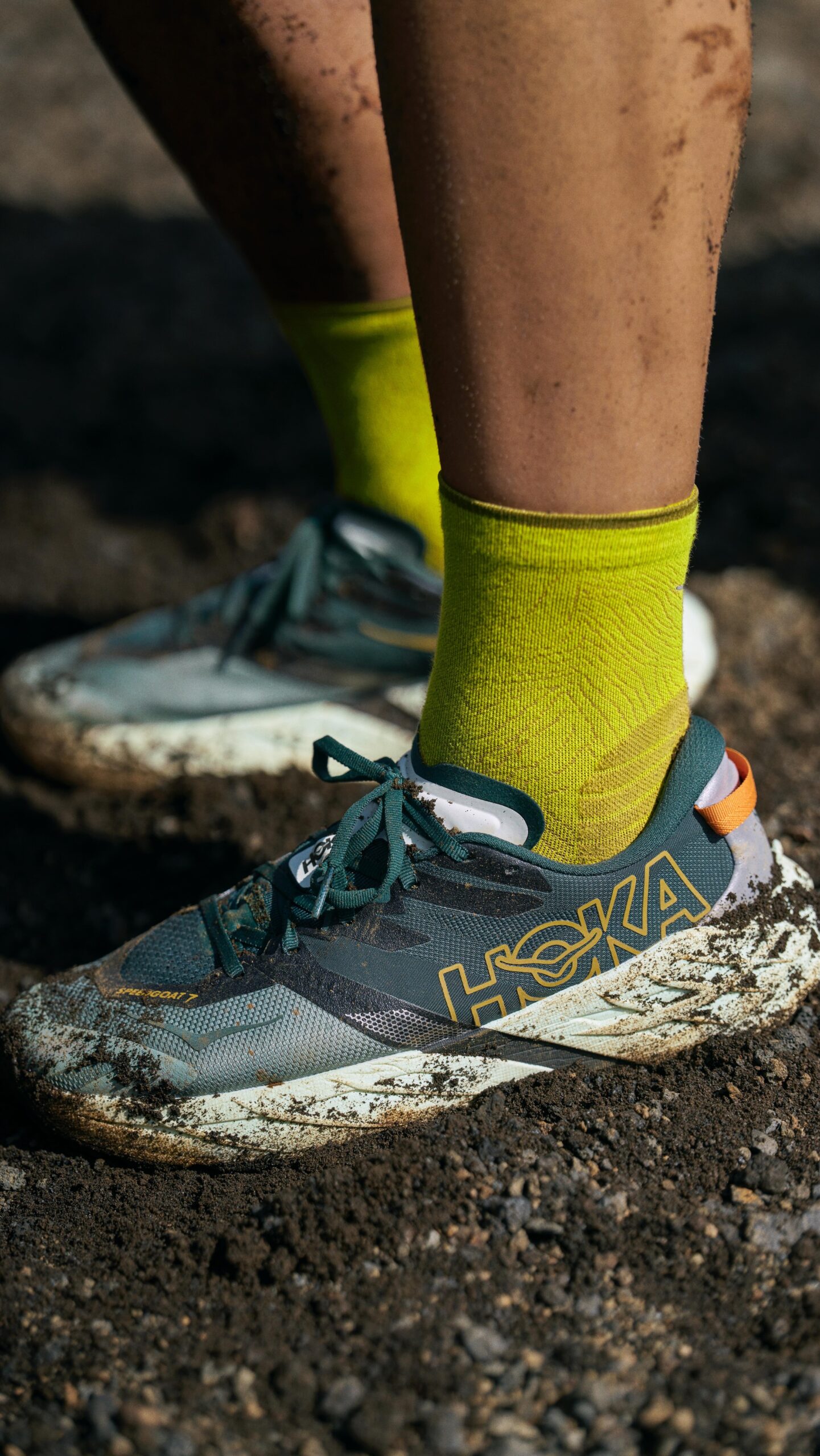
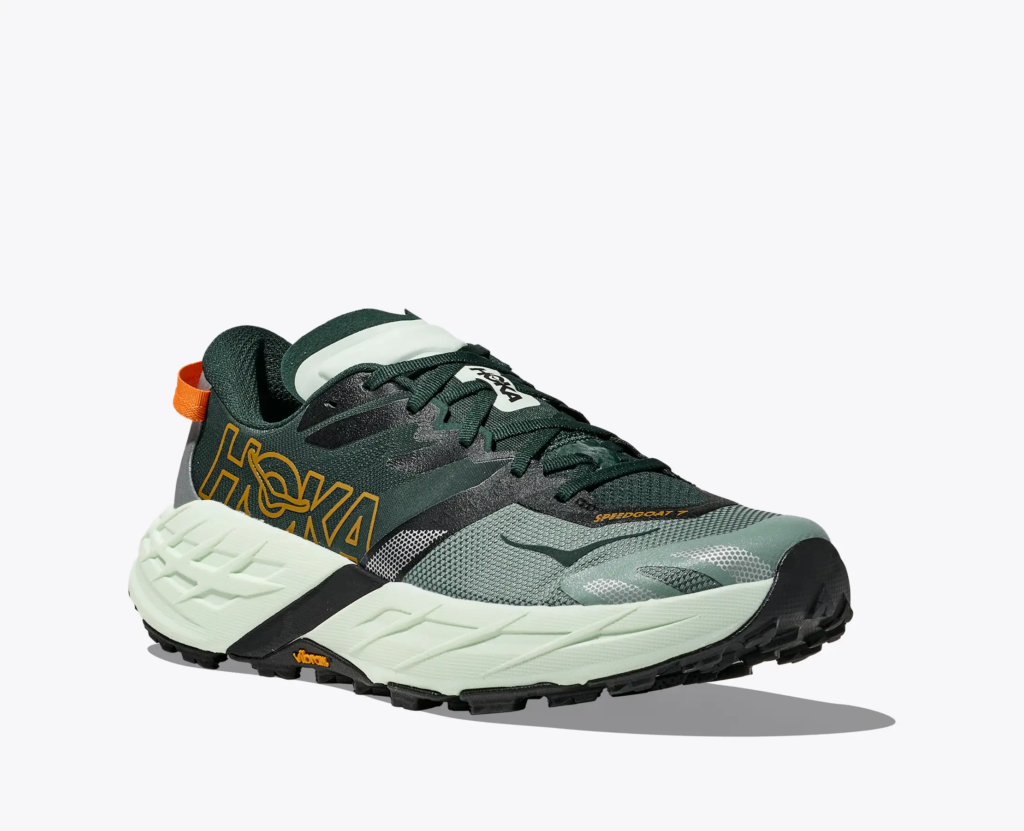
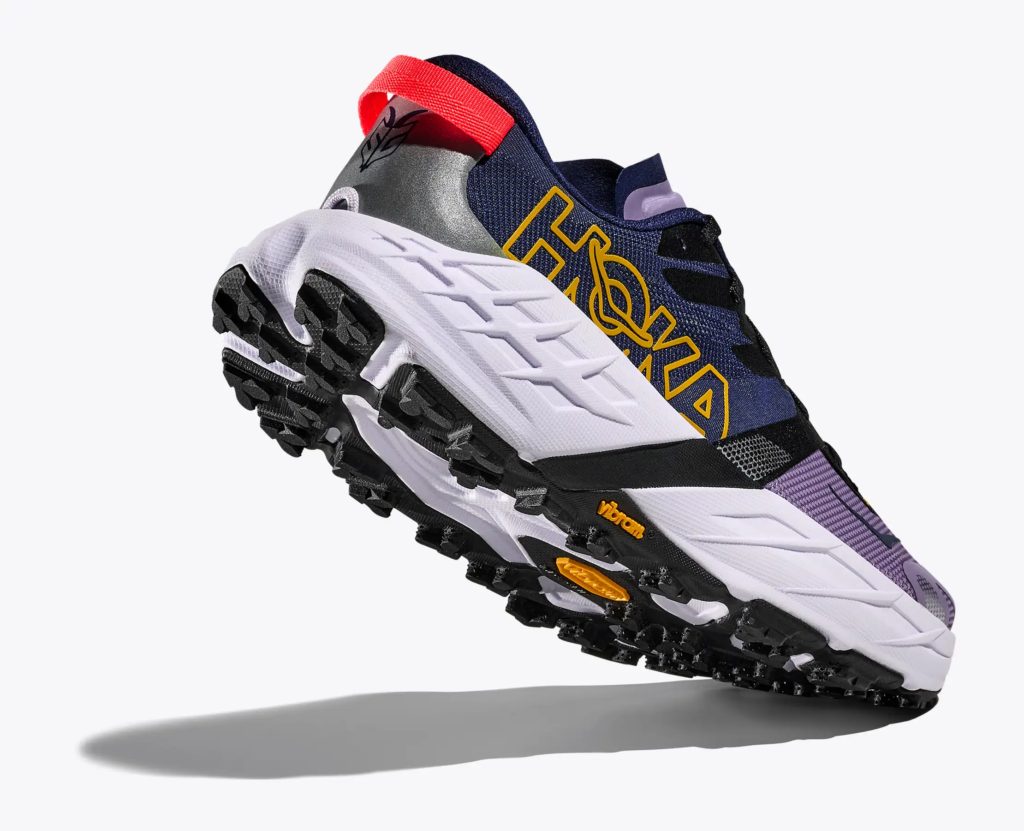
The Hoka Speedgoat is built around protection and versatility. Its high-stack cushioning absorbs impact across hundreds of miles, its Vibram Megagrip outsole provides reliable traction on most terrain types, and its wide platform gives inherent stability. It is the shoe for runners who want to cover a lot of ground with minimal foot fatigue, on terrain that mixes rocky, rooty, and variable surfaces.
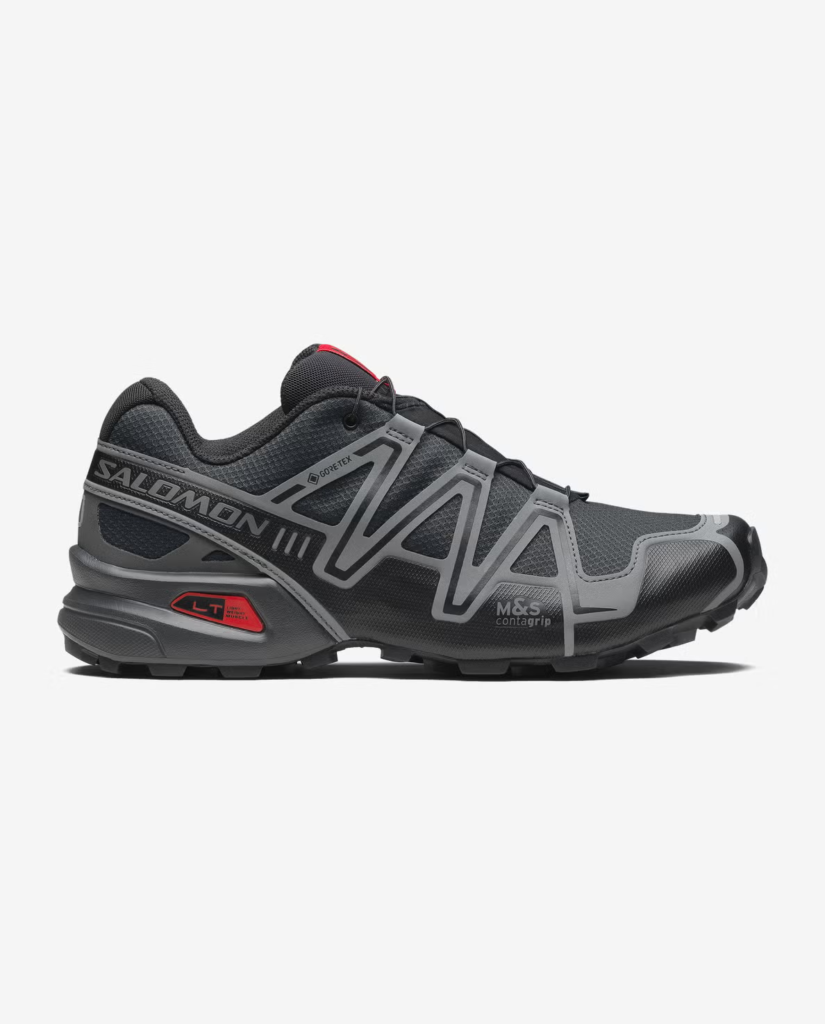
The Salomon Speedcross is built around grip. Its deep, aggressive chevron lugs — inspired by motocross tyres — excel on soft, muddy, and loose terrain to a degree that no other mainstream trail shoe matches. It is a specialist tool that performs brilliantly in its intended conditions and noticeably less well outside them.
Specs Side by Side
| Spec | Hoka Speedgoat 6 | Salomon Speedcross 6 |
|---|---|---|
| Stack height (heel / forefoot) | 40mm / 35mm | ~30mm / ~22mm |
| Drop | 5mm | 8mm |
| Weight (approx. size UK9) | ~310 g | ~310 g |
| Outsole | Vibram Megagrip | Salomon Contagrip TA (deep chevron lugs) |
| Lug depth | ~5mm | ~6mm |
| Upper | Engineered mesh + reinforced toe | Jacquard mesh + Sensifit cradle |
| Closure | Standard laces | Quicklace system |
| Best terrain | Varied, rocky, technical, hard-pack | Soft, muddy, loose, wet forest trails |
| Price (approx.) | ~€155–175 | ~€130–150 |
The Terrain Question: Where Each Shoe Excels
This is the most important question in this comparison, and the honest answer determines everything else.
The Speedcross was designed for soft and technical terrain — mud, wet grass, loose forest floor, and conditions where maximum grip is the primary concern. Its deep chevron lugs self-clear mud efficiently and bite into soft ground with authority. On these surfaces, the Speedcross is one of the most capable shoes available at any price. Where it struggles is on hard-packed trails, rocky terrain, and tarmac road sections. The same deep lugs that excel in mud become inefficient on firm ground, creating an unstable rolling sensation and faster wear. Running significant tarmac sections in Speedcross is a poor experience and shortens the shoe’s life.
The Speedgoat works across a wider range of terrain. The Vibram Megagrip compound provides excellent traction on wet rock, hard-pack, mixed terrain, and light mud — not quite as good as the Speedcross in truly deep mud, but capable across all other surface types. The high stack height means the shoe handles rocky terrain particularly well, cushioning the repeated impact of technical footfall. For races and routes that mix terrain types — rocky ascents, forest descents, short road links — the Speedgoat is the more versatile choice.
Cushioning and Ground Feel
The Speedgoat’s 40mm heel stack is approximately 10mm higher than the Speedcross. That difference defines the feel of each shoe in a way that goes beyond spec-sheet comparison. The Speedgoat absorbs impact — you feel protected from the terrain rather than part of it. This is a genuine advantage on long days in the mountains, where foot fatigue accumulates and joint protection becomes increasingly valuable after hour six or seven. It is also a disadvantage for runners who want terrain feedback, ground feel, and the proprioceptive connection to the trail that lower-stack shoes provide.
The Speedcross gives you more of the terrain. Its relatively modest stack height means you feel what you are running on more directly — which is either desirable or unsettling depending on your running background and physical profile. For runners with strong feet who have trained on technical terrain, the feedback is useful. For runners building up volume on rough ground, the protection the Speedgoat offers is often the more sensible choice.
Fit and Upper Construction
The Salomon Speedcross uses Salomon’s Sensifit upper cradle, which wraps the foot firmly through a gusset-style overlay system. The fit is secure, the heel hold is strong, and the Quicklace system allows one-pull tightening and locking without managing individual laces. For runners who value a locked-in, precise fit — particularly important on technical terrain where foot slippage inside the shoe creates blisters — this is a genuine advantage. The trade-off is that the toe box is narrow by current standards, and runners with wider feet or a preference for more room may find the Speedcross constricting on long efforts.
The Speedgoat’s upper is more conventional: engineered mesh with reinforced overlays and a standard lacing system. The fit is comfortable and roomy enough for foot swelling on long runs, but the hold is less precise than the Speedcross’s Sensifit system. For runners who have experienced foot slippage in the Speedgoat on steep technical descents, this is a known limitation.
Longevity
The Speedcross’s deep lugs wear faster on hard surfaces than the Speedgoat’s Vibram compound on equivalent terrain. If your training includes a significant proportion of tarmac or hard-pack, the Speedcross will show midsole compression and lug wear noticeably faster than on its intended soft terrain. The Speedgoat, used across the mixed terrain it is designed for, typically delivers 600–800km of use before noticeable performance degradation.
Who Should Buy Which
Choose the Hoka Speedgoat if: you run across varied terrain that includes rocky sections, hard-pack, and mixed surfaces; you prioritise cushioning and joint protection for high-mileage training; you want one shoe that works across most conditions you will encounter; or you find deep-lug specialist shoes unnecessarily restrictive for most of your running.
Choose the Salomon Speedcross if: your running is primarily on soft, muddy, or wet forest terrain; you want the best possible grip in slippery, loose conditions; you prefer a more locked-in fit and are comfortable with narrower toe box geometry; or you race on specifically soft terrain where the Speedcross’s lug advantage over all competitors is decisive. Be honest about how much of your running involves hard surfaces — if the answer is « a lot », the Speedcross will disappoint you.
Many experienced trail runners own both. The Speedcross for muddy winter training and technical forest races; the Speedgoat for everything else. If your budget allows only one trail shoe, the Speedgoat’s versatility makes it the safer universal choice. If you run primarily in conditions that favour the Speedcross, it is the better specialist option by a significant margin.
For runners choosing between zero-drop options, our comparisons of Altra and Norda cover the natural-movement end of the trail shoe spectrum. And for building the complete kit around your footwear choice, our hydration pack guide and nutrition and hydration guide complete the picture.
See the full Hoka trail shoe range on the Hoka official website, and the complete Salomon trail lineup on the Salomon official website.