hill.camp does not test products first-hand; this review is a synthesis of independent field tests, specialist press reports, and verified consumer feedback.
The short-nose saddle has gone from niche curiosity to mainstream standard in the space of a decade. Fizik arrived at the party with the Vento Argo — and arrived having done its homework. Where some brands produced short saddles that simply lopped off the nose of an existing design, Fizik built the Argo from scratch around a specific riding philosophy: plant the rider, eliminate fidgeting, and free up the legs to do what they’re supposed to do. The result is a saddle with a genuinely distinct character — flat, angular, wide at the rear, with a coffin-shaped cut-out that runs from mid-nose to centre. It divides opinion, but its fans are loyal. Here is what you need to know about every version of it.
What the Vento Argo Is — and Who It’s For
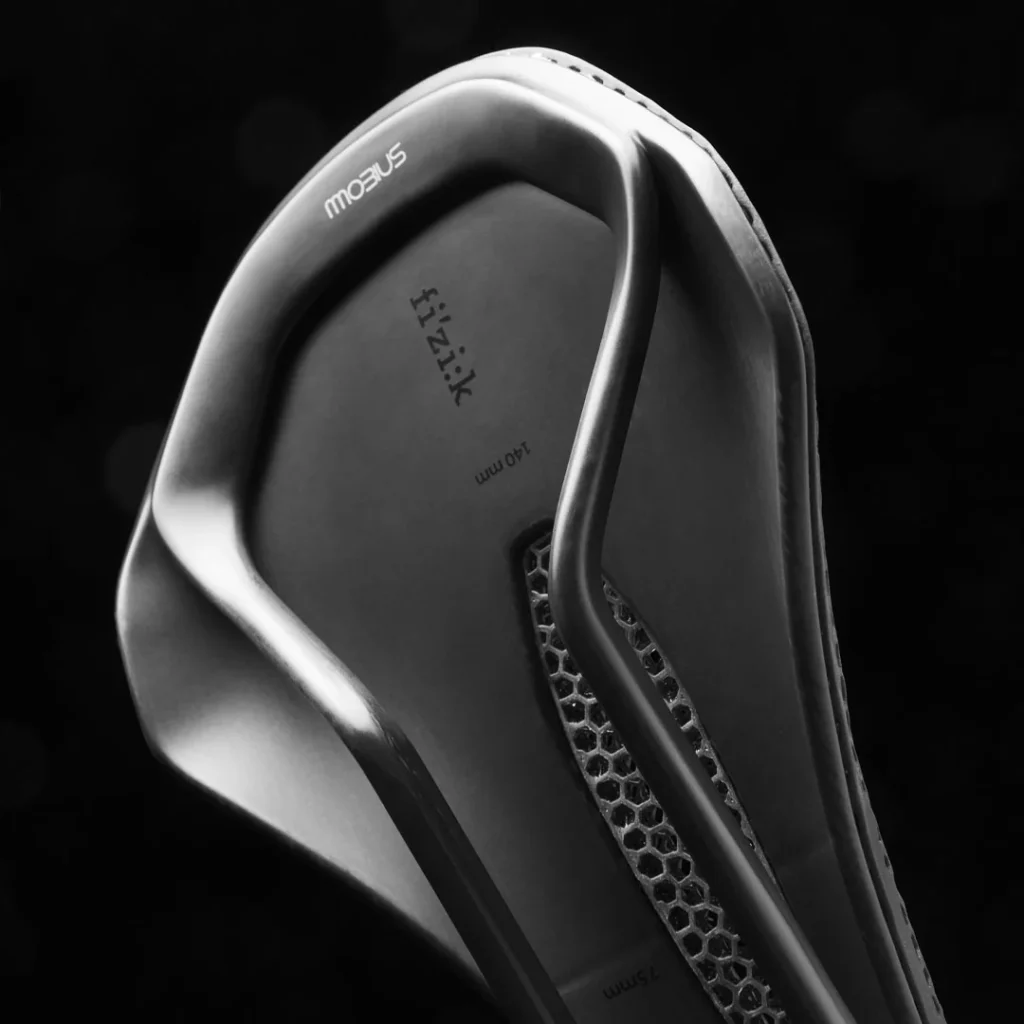
The Vento Argo is Fizik’s race-oriented short saddle, sitting alongside the more comfort-focused Tempo Argo in the broader Argo family. Vento means performance: firmer Type 1 foam, a lower profile, a more aggressive shape. It is 265 mm long — slightly longer than some competitors like the Specialized Power (240 mm) or the Prologo Dimension Nack (245 mm) — and available in 140 mm or 150 mm widths across all spec levels. The shell is carbon-reinforced nylon on the R5, R3, and R1, and full carbon on the 00. All versions share the same WingFlex shell technology, the same angular padding geometry, and the same large central cut-out.
The Vento Argo rewards riders who stay planted and pedal efficiently. It is not a saddle for those who constantly shift position during a ride — the short nose physically prevents the kind of fore-aft movement a traditional saddle allows. Used correctly, with a slight nose-down tilt rather than a level setup, the cut-out section becomes a pressure-relieving hammock and the broad rear platform provides solid sit-bone support. Used incorrectly — nose up or level — many riders find themselves fighting the shape constantly. Angle is everything on this saddle.
Vento Argo R5 — The Entry Point
The R5 is the least expensive way into the Vento Argo range, built around steel S-Alloy rails rather than the hollow Kium or carbon options found higher up. At around €100, it delivers the full Argo experience — same shell, same cut-out, same padding geometry — at a weight of 243 g in the 150 mm version. That is meaningfully heavier than the R3 (220 g) and significantly heavier than the R1 (190 g), but the weight difference rarely translates into a noticeable performance delta for most road and gravel riders.
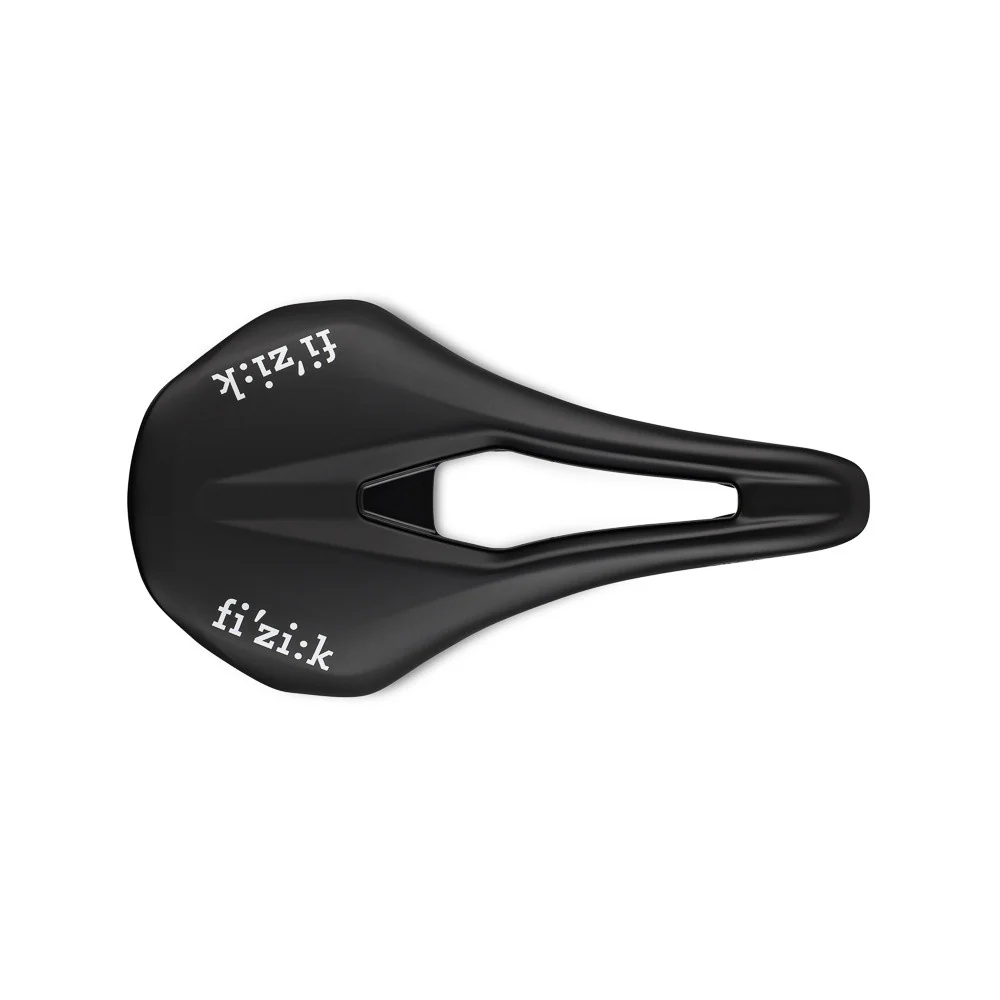
On the bike, the R5 behaves exactly as its more expensive siblings do: the shell has a characteristic springiness that absorbs road shock through flex rather than padding depth, the cut-out is generous and well-positioned, and the angular foam edges are firm enough to feel supportive without being punishing — provided the saddle is angled correctly. The main limitation of the R5 is that the S-Alloy rails offer less vibration damping than Kium or carbon, and the additional weight will matter to riders already optimising every gram. For everyone else, it is a strong buy.
Vento Argo R3 — The Sweet Spot
The R3 swaps the S-Alloy rails for Fizik’s proprietary Kium — a hollow-section titanium alloy that shaves around 20–25 g compared to the R5 and improves vibration compliance noticeably. At around €150, it represents the range’s best value proposition for most riders: the weight drops to 220 g, the ride feel improves meaningfully, and the price remains rational.
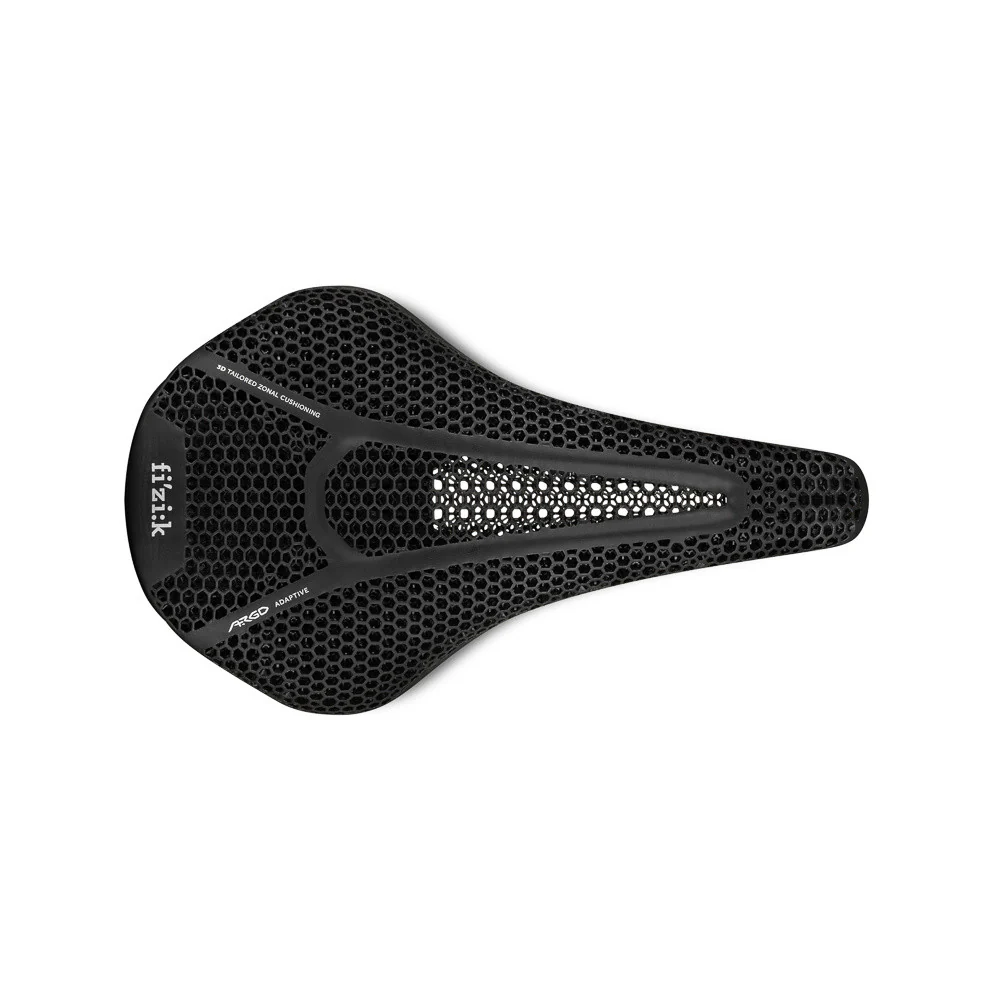
Independent testers consistently describe the R3 as the version they would recommend without hesitation to riders who want the Argo experience without paying for carbon rails. The shell, padding, cut-out geometry, and overall construction are identical to the R1 — the Kium rails are the sole concession to cost, and they are a good material in their own right. Comfortable across two- to four-hour sessions, supportive enough for racing, and versatile enough for cyclocross and XC mountain biking. The R3 is also the safer choice for riders with seatposts that do not accommodate the oval 10×7 mm carbon rails of the R1.
Vento Argo R1 — Carbon Rails, Meaningful Weight Savings
The R1 brings carbon rails — 10×7 mm oval — and drops the weight to a claimed 179 g (real-world weights typically come in around 185–190 g). At around €200, it costs significantly more than the R3 but delivers genuine improvements: the oval carbon rails provide better lateral stiffness and improved vibration damping compared to Kium, and the weight savings are real and consistent. The shell remains carbon-reinforced nylon, so this is not a full-carbon construction, but for most riders the shell compliance is an advantage rather than a limitation.
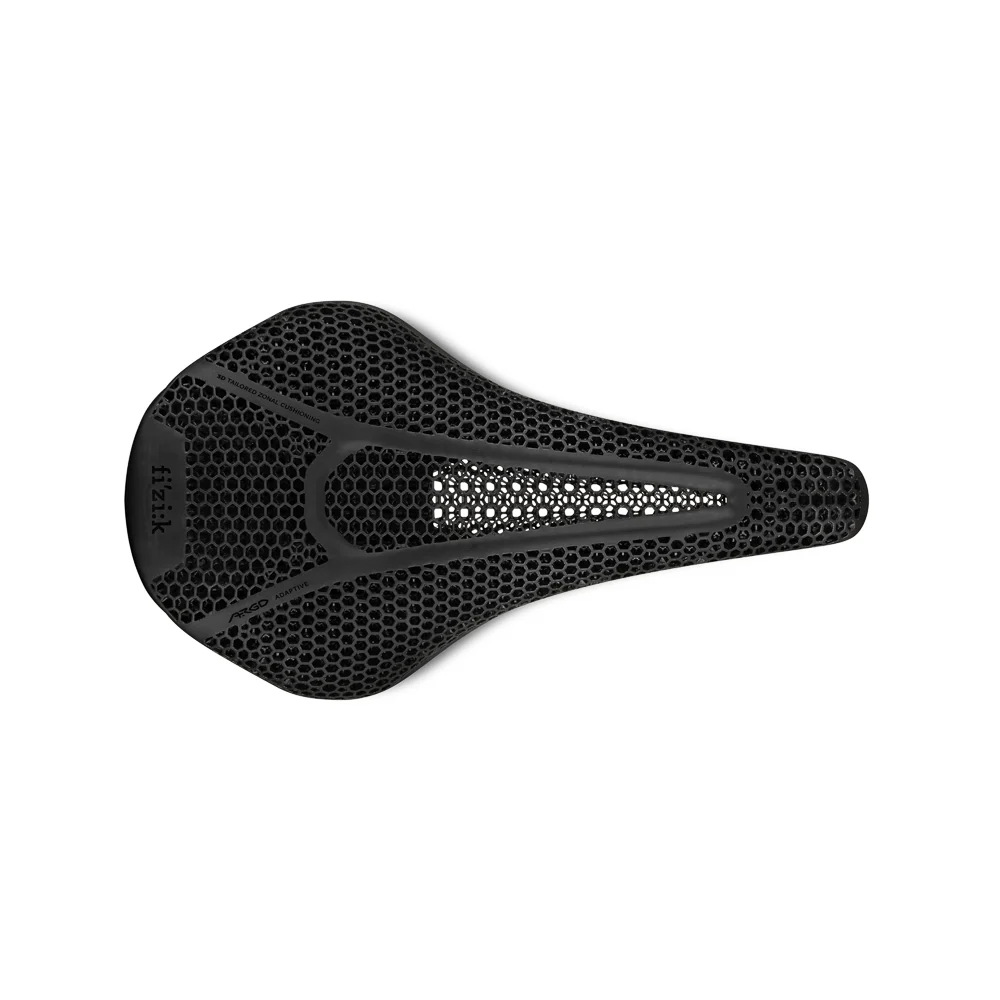
One important caveat: the 10×7 mm oval rail format is not compatible with all seatpost clamps. Standard round-rail clamps will not grip it correctly. Before buying the R1, verify that your seatpost accommodates oval rails — or plan to upgrade accordingly. The R3’s 7×7 mm round Kium rail avoids this complication entirely. Build quality on the R1 is excellent throughout; road.cc noted immaculate finishing even around the cut-out’s narrow structural strips, which could be a concern on less carefully made saddles.
Vento Argo 00 Adaptive — 3D-Printed, Full Carbon, Maximum Performance
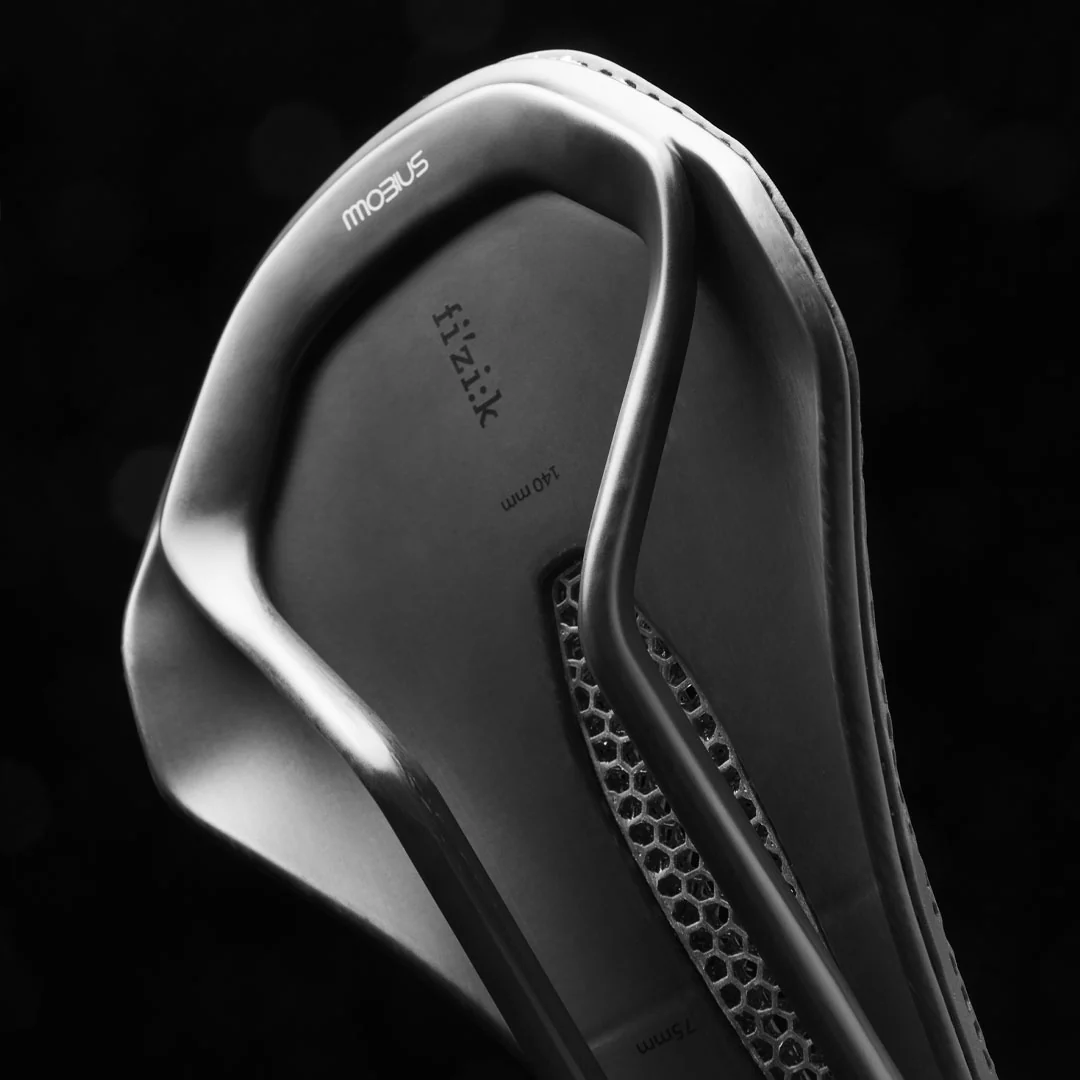
The 00 Adaptive is a different proposition entirely. Where the R5, R3, and R1 use conventional foam padding, the 00 replaces it with a 3D-printed lattice structure manufactured using Carbon’s Digital Light Synthesis technology. The result is a multi-zone upper where different areas of the saddle have been tuned for specific mechanical properties: firmer at the sides and nose to resist pedalling forces and support the pubic ramus, softer in the central zones to reduce perineal pressure. Fizik claims a 60% reduction in peak pressure compared to conventional saddles, and a full carbon shell and 7×9 mm carbon rails bring the claimed weight to 186 g.
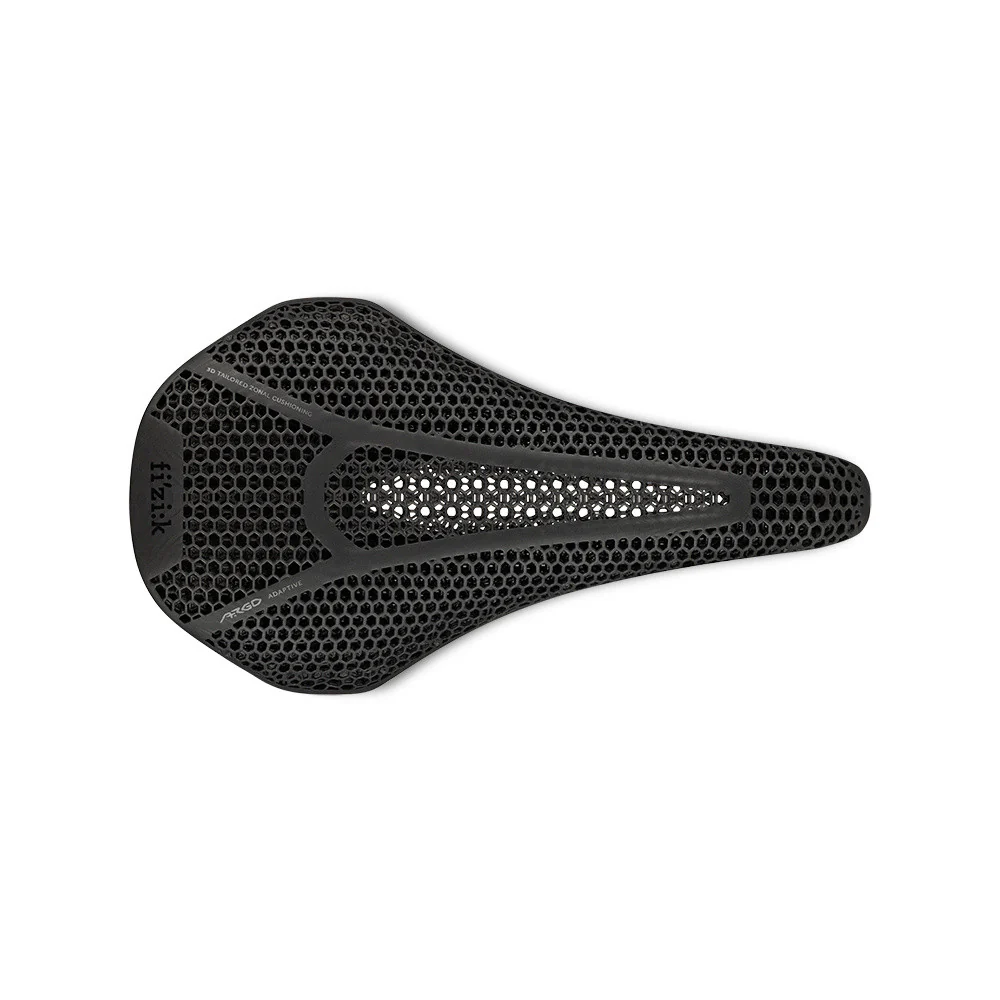
At €400, the 00 Adaptive is a significant financial commitment, and its character is distinctive enough to divide opinion. It is notably firmer overall than 3D-printed saddles from Specialized or Selle Italia — road.cc described it as better suited to riders who push hard on the pedals and carry less weight on the saddle itself, rather than those who want a plush, enveloping ride. For that rider profile — aggressive, power-focused, comfortable with a firm platform — the zonal cushioning and shell flex deliver excellent long-ride comfort without the sag or bottoming-out that affects softer saddles. The honeycomb structure is also notoriously difficult to keep clean; mud accumulates in the lattice and resists hosing off.
The R1 Adaptive sits between the standard R1 and the 00, offering the same 3D-printed upper on a carbon-reinforced nylon shell with carbon rails, at around €300. It provides a softer overall feel than the 00 while retaining the zonal cushioning benefits, and its 7×9 mm oval carbon rails carry the same seatpost compatibility caveat as the standard R1.
Choosing Between the Versions
The core decision is straightforward: every Vento Argo from R5 to R1 delivers the same shape, shell technology, and riding character. The upgrade path is purely about weight and rail material. For riders who are not actively chasing minimum weight, the R3 is the obvious choice — it improves meaningfully on the R5 without the oval-rail compatibility risk of the R1. The R1 is the right call for weight-conscious riders with compatible seatposts. The 00 Adaptive is for riders who want cutting-edge cushioning technology and are prepared to pay for it, clean it carefully, and ride hard enough to benefit from its firm, performance-focused character.
Width selection matters as much as spec level. The 140 mm version suits narrower anatomies and aggressive riding positions; the 150 mm broadens the support base for riders who need it. Fizik’s online saddle finder provides a starting point, but a sit-bone measurement at a dealer is a more reliable guide.
Verdict
The Fizik Vento Argo is one of the most coherently designed short-nose saddle ranges on the market. The shape has a specific character — flat, angular, demanding correct setup — but riders who get the angle right and commit to the platform consistently report that it disappears beneath them in the best possible way. The range’s strength is that it delivers the same fundamental experience at every price point; the upgrades are real but additive rather than transformative. Start with the R3 if in doubt. Move up if the weight matters.
For the full picture on Fizik’s saddle, shoe, and bar tape range, see our Fizik brand page. If you are deciding between the Argo and the Antares line, our Fizik Vento Antares R5 review covers the longer-nosed alternative in detail. The complete Vento Argo range is available on fizik.com.
Quick Specs Comparison
| Model | Rails | Shell | Padding | Weight (140mm) | Price (€) |
| Vento Argo R5 | Steel S-Alloy | Carbon-reinforced nylon | Type 1 foam | ~243g (150mm) | ~100 |
| Vento Argo R3 | Kium hollow alloy | Carbon-reinforced nylon | Type 1 foam | 220g | ~150 |
| Vento Argo R1 | Carbon 10×7mm oval | Carbon-reinforced nylon | Type 1 foam | 179g | ~200 |
| Vento Argo R1 Adaptive | Carbon 7×9mm oval | Carbon-reinforced nylon | 3D-printed lattice | ~197g | ~300 |
| Vento Argo 00 Adaptive | Carbon 7×9mm | Full carbon | 3D-printed lattice | 186g | ~400 |
FAQ — Fizik Vento Argo
What is the difference between the Fizik Vento Argo and the Tempo Argo?
The Vento Argo is Fizik’s race-focused short saddle: firmer Type 1 foam, a lower profile, and a shape optimised for aggressive riding positions. The Tempo Argo is aimed at endurance and long-distance riding, with thicker Type 2 memory-foam-style padding, a slightly wider cut-out, a gentler nose profile, and widths of 150 mm and 160 mm rather than 140 mm and 150 mm. Both share the short-nose Argo shape and the carbon-reinforced nylon shell, but they deliver meaningfully different rides.
How should I set up the tilt on the Fizik Vento Argo?
Unlike the Antares — which is typically run near-level — the Vento Argo generally works better with a slight nose-down angle. Running it flat tends to push riders backward onto the wide rear section, interfering with the pedalling action. A few degrees of nose-down tilt positions the rider naturally into the flexible hammock of the cut-out zone, with the firm nose section dropped away from sensitive areas. The exact angle requires experimentation, but nose-down is the reliable starting point for most riders.
Are the carbon rails on the Vento Argo R1 compatible with all seatposts?
No. The R1 uses 10×7 mm oval carbon rails, which are not compatible with standard round-rail seatpost clamps. Before purchasing the R1, verify that your seatpost accepts oval rails. The R3’s 7×7 mm Kium rails are round and compatible with any standard seatpost clamp. The R1 Adaptive and 00 Adaptive use 7×9 mm oval rails, which carry the same compatibility caveat.
Is the Vento Argo 00 Adaptive worth the price?
It depends on your riding style. The 00 Adaptive’s 3D-printed lattice delivers genuine zonal cushioning benefits — firmer where you need support, softer where you need pressure relief — and the full carbon construction keeps weight to 186 g. But it is a firm saddle overall, better suited to riders who push hard and carry weight on their pedals rather than their saddle. For more relaxed endurance riding, the softer R1 Adaptive often provides a more comfortable experience at a lower price. The 00 Adaptive is also notoriously difficult to keep clean. At €400, it is a considered purchase rather than an obvious upgrade.
What width should I choose for the Vento Argo: 140 mm or 150 mm?
Width selection should be based on sit-bone measurement rather than overall body size or personal preference. As a rough guide, riders with sit-bone widths below 100 mm typically suit the 140 mm; those above 100 mm generally benefit from the 150 mm. Many Fizik dealers offer sit-bone measurement services, and Fizik’s own online saddle finder provides a starting estimate. Note that the Tempo Argo range offers 150 mm and 160 mm widths rather than 140 mm and 150 mm, making it the better option for riders with wider anatomy.