hill.camp does not test products first-hand; this review is a synthesis of independent field tests, specialist press, and verified consumer feedback.
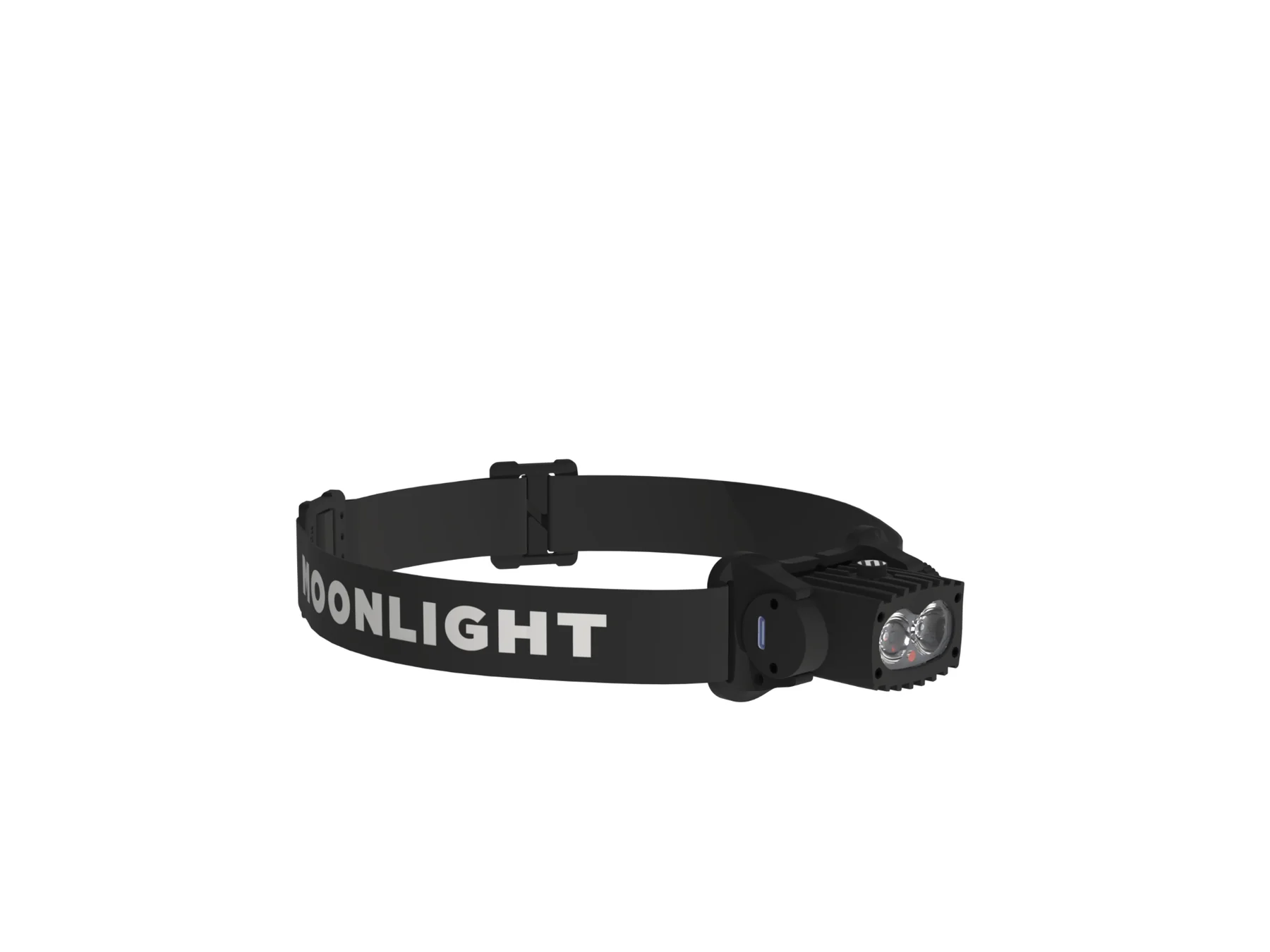
Moonlight Mountain Gear is not a brand that chases market share. Founded in 2014 in Åndalsnes, Norway, it builds headlamps the way serious outdoor practitioners build anything: with function as the non-negotiable starting point and no tolerance for failure in the field. The Noctia is the brand’s compact offering — lighter and smaller than the flagship Bright As Day series, but engineered to the same uncompromising standard. For trail runners, ultramarathon athletes, and fast-and-light alpinists who want premium build quality without carrying a lamp that feels like a miner’s torch, the Noctia makes a compelling case. Here is our Moonlight Noctia review.
Who Is the Moonlight Noctia For?
The Noctia sits in a specific gap in the Moonlight headlamp lineup. It is not the maximum-output tool that the Bright As Day 2000 or 3000 provides for cyclists or ski tourers moving at speed. It is instead designed for the runner or hiker who needs a reliable, capable lamp — 500 real lumens — in the smallest and most wearable form Moonlight offers. Think long training runs into the evening, ultra-distance events where weight and packability matter, overnight hikes, or anyone who simply wants a premium-built lamp that fits in a jacket pocket. If your reference point for headlamp quality has been mass-market plastic constructions from generalist outdoor brands, the Noctia will feel like a significant step up.
Build Quality: The Moonlight Standard
The Noctia shares its core construction DNA with every other lamp in the Moonlight range: aluminium alloy housing, IP68 waterproofing (dustproof and submersible to 1.5 metres for 30 minutes), and cold-weather reliability. Reviewers who have used it in sub-zero conditions report no loss of performance — consistent with Moonlight’s design brief of functioning down to -40°C. The build inspires the kind of confidence that cheap plastic alternatives never can: there is nothing on this lamp that feels like it will crack, flex, or fail after a season of hard use. One ultramarathon runner who tested it through the Summer Spine Race — one of Britain’s most punishing events — described it as a lamp that looked built for function, not aesthetics, which is about as accurate a description of Moonlight’s design philosophy as you’ll find.
The Replaceable Battery: A Genuinely Smart Design Choice
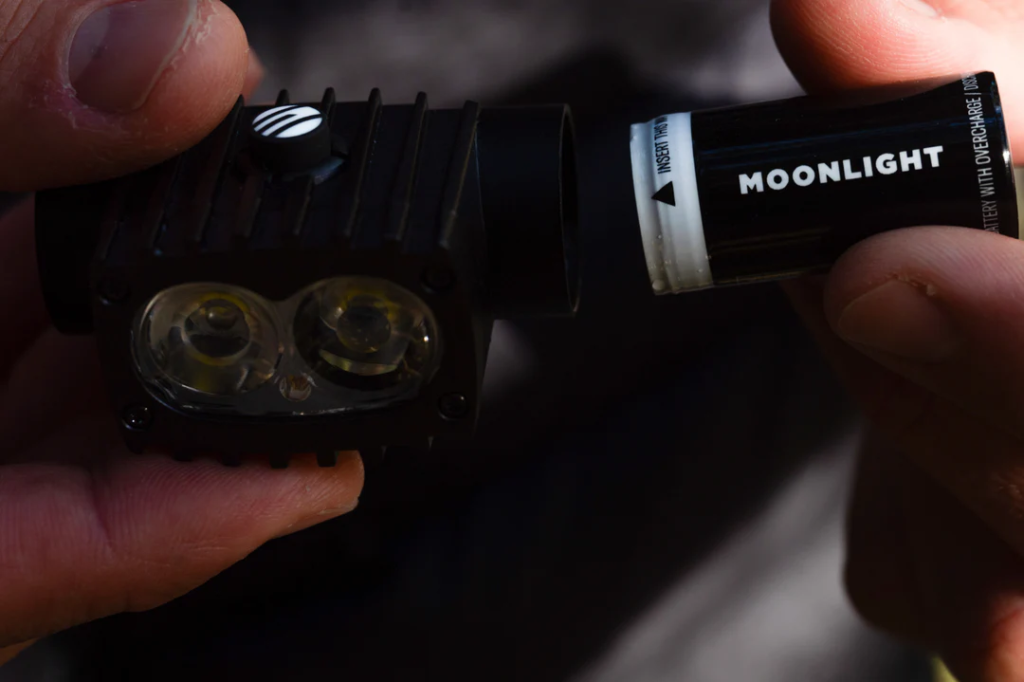
The Noctia’s most distinctive feature is its replaceable 1400mAh lithium-ion battery. Most headlamps in this category use integrated, non-swappable cells — which means that when the battery degrades after a few years of cycling, the entire unit becomes disposable. Moonlight’s approach is different: the battery pops out and can be replaced, either with a fresh long-term replacement or with a spare carried on race day. For multi-day adventures where charging infrastructure doesn’t exist, carrying two batteries is a straightforward solution to an otherwise irreducible problem. USB-C fast charging means a full charge takes under an hour for those who do have access to power. The battery orientation also includes reversed polarity protection — flipping the battery prevents accidental activation inside a pack, which is a practical detail that frequent travellers will appreciate.
Light Output and Real-World Performance
The Noctia delivers 500 lumens at maximum output — a genuine 500, not a peak figure that drops within seconds. Moonlight’s commitment to consistent, regulated output throughout the battery cycle applies here as it does across the rest of their range. Dual-lens optics produce a wide, clear beam that enhances peripheral vision rather than creating the tunnel-light effect common in single-beam lamps. In practice, the illumination is described as making the trail genuinely pop — a flood-spot combination that reads terrain well at pace.
The full brightness mode specifications break down as follows:
| Mode | Output | Battery Life |
|---|---|---|
| Maximum | 500 lumens | ~1h10min |
| High | 250 lumens | ~2h20min |
| Medium | 125 lumens | ~4h40min |
| Low | 25 lumens | ~25 hours |
| Minimum | 10 lumens | 2+ days |
The real-world figures align closely with these numbers: independent testers report around 55 minutes of bright run time at full power before the lamp steps down, with a graceful reduction to low mode rather than an abrupt cut-off that leaves you in the dark. At 125 lumens — the setting most trail runners will use on technical terrain — you get nearly five hours, which covers the vast majority of ultra segments and long training nights. The 10-lumen mode, while too dim for running on technical ground, is entirely practical for walking, camp tasks, or conservation mode during long multi-day efforts. At this setting, the Noctia effectively becomes a lamp you do not need to worry about for two full days.
Usability in the Field
Moonlight has kept the control interface simple: a single button cycles through brightness modes, and the lamp can be operated with thick gloves or mittens without fumbling — a detail that matters enormously on winter mountain runs or in alpine conditions. The headband is comfortable for extended wear without creating pressure points, and the lamp’s 150-gram weight sits well on the head over long durations. Beyond the main brightness settings, the Noctia includes red light (two modes), an emergency white light at 10 lumens, strobe red, strobe white, and an SOS Morse code sequence — features that field users have described discovering by chance, suggesting they are intuitive enough not to require memorising a complex manual. A storage bag is included in the box.
Noctia vs Noctia Max: Which One?
The Noctia Max is the larger sibling, adding 40 grams and a significantly larger 12.6 Wh battery that extends range from a maximum of around three hours (Noctia) to 130 hours (Noctia Max at minimum). The Max also adds the detach-and-use-as-torch functionality via a quick-release headband mount — a concept validated in the field during Kilian Jornet’s Rocky Mountain expedition and at events like the Tahiti Moorea Ultra Trail. The choice between the two comes down to the length and nature of your objectives. For events under 12 hours, or wherever a spare battery covers the remaining need, the Noctia’s lighter form factor is the better option. For multi-day adventures, extended expeditions, or anyone who wants one lamp to double as a daily-carry torch, the Noctia Max at €129 is the more versatile buy.
How It Compares to the Competition
Hill.camp has reviewed the full spectrum of trail-focused headlamps. At the lighter, more affordable end, the Silva Smini is a genuinely excellent ultralight option, and the Petzl Tikkina serves the entry-level market well. At the performance mid-range, the Petzl Actik Core and Silva Explore 5 represent the mainstream benchmark, while the Petzl Swift RL targets the reactive-lighting niche with reactive brightness technology.
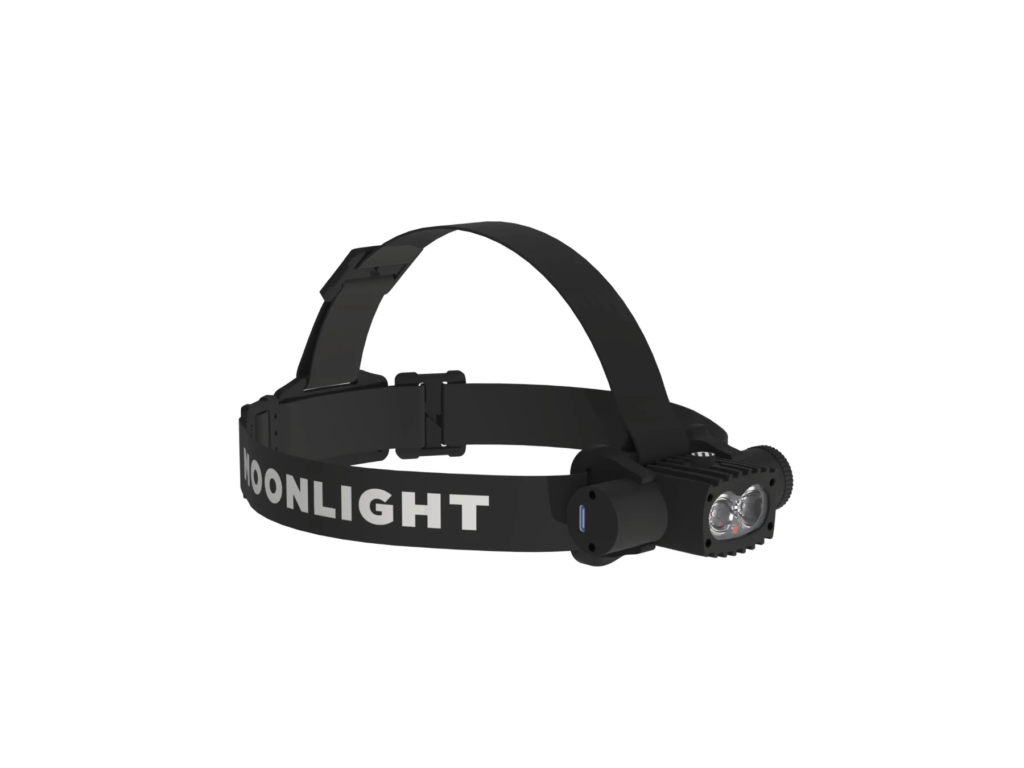
The Noctia does not compete directly with any of these. Its aluminium construction, IP68 rating, and replaceable battery system place it in a different category — closer to professional-grade equipment than to the consumer headlamp market. The closest analogy is buying a tool instead of a gadget. It costs more than most of its rivals, it weighs more than the ultralight options, and it does not chase lumen records. What it offers instead is a lamp built to outlast its owner’s interest in replacing it, perform in conditions that would compromise lesser builds, and be field-serviceable when it matters.
Pros and Cons
| Pros | Cons |
|---|---|
| Premium aluminium build, IP68 rated | Maximum brightness lasts under an hour |
| Replaceable battery — sustainable and field-practical | Heavier than ultralight competitors |
| Wide, clear dual-lens beam quality | Price reflects the premium tier |
| Single-button operation works with mittens | Lumen specs not printed on packaging |
| USB-C fast charge (under one hour) | |
| Graceful step-down rather than sudden cut-off | |
| Red light, strobe, and SOS modes included |
Verdict
The Moonlight Noctia is exactly what it sets out to be: a compact, serious headlamp built to the same standard as everything else Moonlight makes, in a form factor that trail runners and ultramarathon athletes can comfortably carry and wear for hours. The replaceable battery is the feature that genuinely differentiates it from the competition — both as a sustainability argument and as a practical race-day solution. The beam quality, build durability, and cold-weather reliability are consistent with the brand’s reputation. If 500 lumens and under three hours at full power meet your use case, this is one of the best-built lamps at its output level on the market. If you need longer burn time or want the daily-carry versatility, step up to the Noctia Max. Either way, you are buying into a product philosophy that prioritises performance over marketing — which is precisely what Moonlight Mountain Gear has always been about.
The Moonlight Noctia is available directly from Moonlight Mountain Gear. For runners building a complete night-running kit, pair it with a well-fitted trail running hydration vest and solid ultra-trail preparation.
What is the battery life of the Moonlight Noctia?
The Noctia offers five brightness settings with the following battery life: approximately 1h10 at 500 lumens, 2h20 at 250 lumens, 4h40 at 125 lumens, 25 hours at 25 lumens, and over two days at 10 lumens.
Is the Moonlight Noctia waterproof?
Yes. The Noctia carries an IP68 rating, meaning it is fully dustproof and can be submerged in water up to 1.5 metres for 30 minutes. It performs without loss of output in sub-zero temperatures and wet conditions.
What is the difference between the Moonlight Noctia and the Noctia Max?
The Noctia Max is 40 grams heavier and uses a larger 12.6 Wh battery, extending maximum autonomy to 130 hours. The Max also detaches from its headband for use as a handheld torch, and retails at €129. The standard Noctia is the better choice for events under 12 hours where weight is a priority.
Can the Moonlight Noctia battery be replaced?
Yes — and it is one of the lamp’s key differentiators. The 1400mAh lithium-ion battery is user-replaceable, allowing you to carry a spare for extended adventures or swap the cell when it degrades over time rather than replacing the entire unit.
How does the Moonlight Noctia compare to Petzl or Silva headlamps?
The Noctia occupies a higher-end tier than most Petzl or Silva consumer offerings. Where brands like Petzl and Silva cover a broad market with plastic-bodied lamps at various price points, Moonlight focuses on aluminium construction, IP68 durability, and replaceable batteries for athletes who demand professional-grade reliability. The trade-off is weight and price; the gain is a lamp built to last significantly longer and perform in more extreme conditions.