hill.camp does not test products first-hand; this review is a synthesis of independent field tests, specialist press reports, and verified consumer feedback.
At 109 euros, the Fizik Vento Antares R5 is not the saddle that makes headlines. No carbon rails, no 3D-printed adaptive padding, no weight savings that justify a separate press release. It is the entry point to one of road cycling’s most trusted saddle lines — and if the hype around its more expensive siblings has been distracting you from looking at this one, pay attention. The R5 makes a compelling case that you don’t need to spend 300 euros to get the Antares experience right.
What Changed with the Vento Update
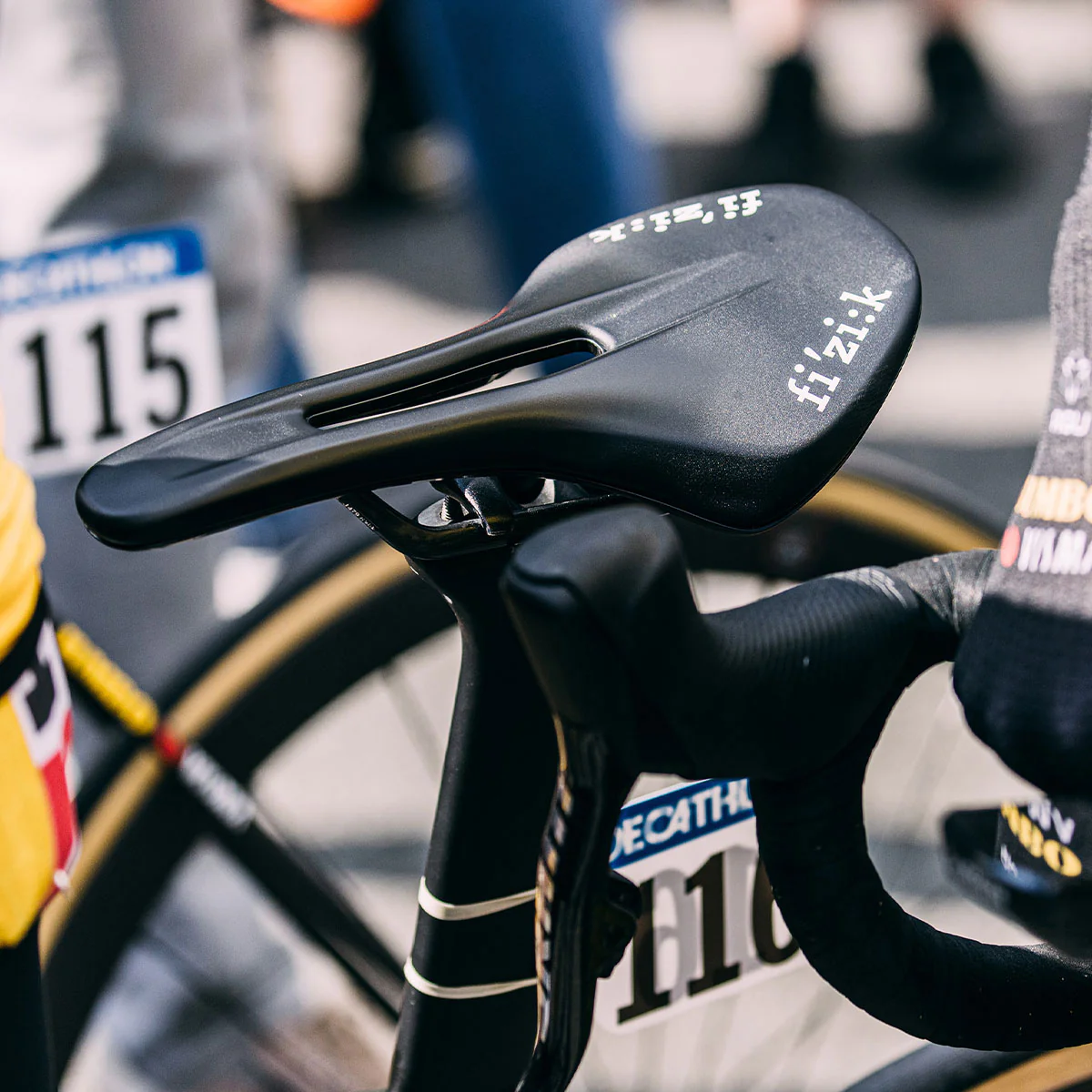
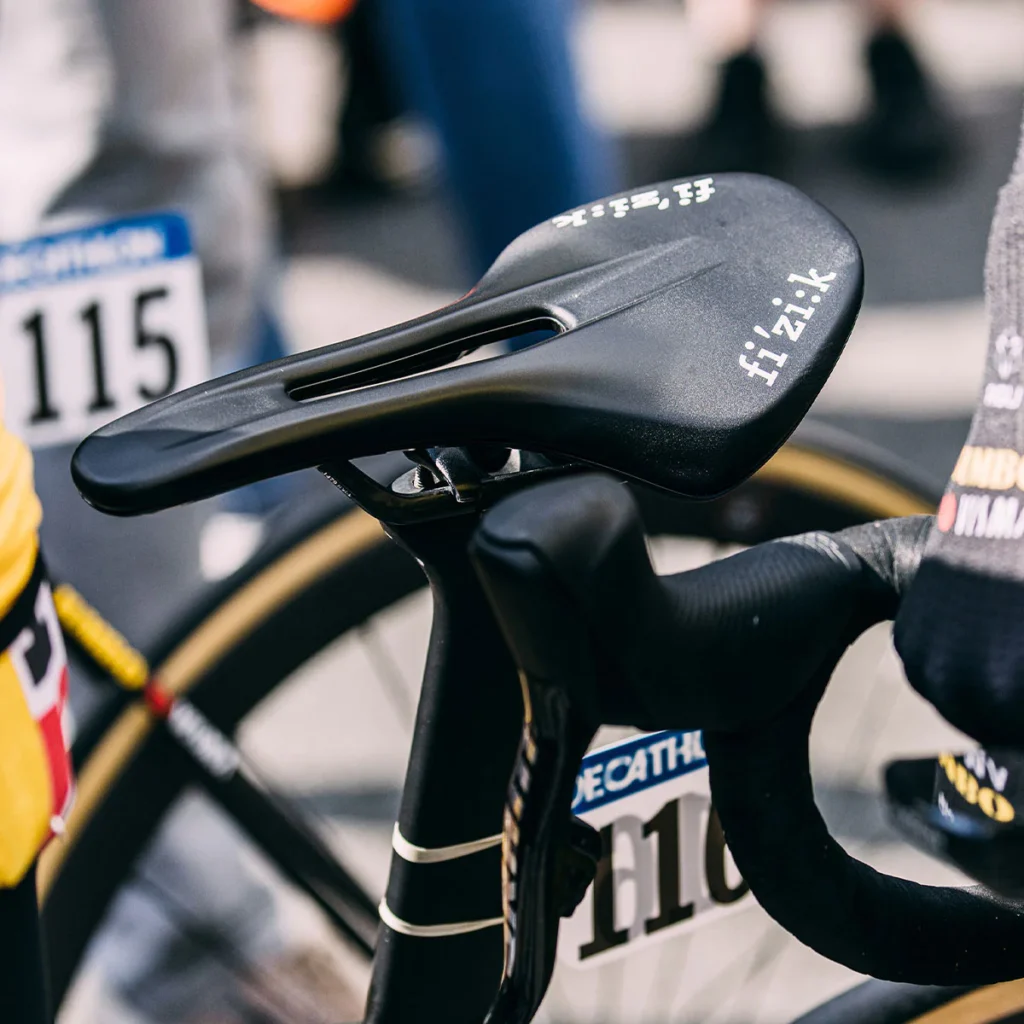
The Antares has been a fixture in the peloton for years — it’s the saddle Jonas Vingegaard races on, set nearly parallel to the ground, a setup that tells you something about how the shape is meant to be used. In 2023, Fizik moved the entire Antares range into the Vento family, making more than cosmetic adjustments in the process. The geometry was subtly but deliberately revised: slightly narrower (140 mm or 150 mm, down from 141 mm and 152 mm), slightly shorter (268 mm rather than 275 mm), and with a squarer nose profile. More importantly, a central cut-out was added across the full range, and the padding system was reworked using a double-density foam inspired by the brand’s 3D-printed adaptive saddles — firmer at the rear where sit bones load, softer toward the nose where perineal pressure tends to build on aggressive positions.
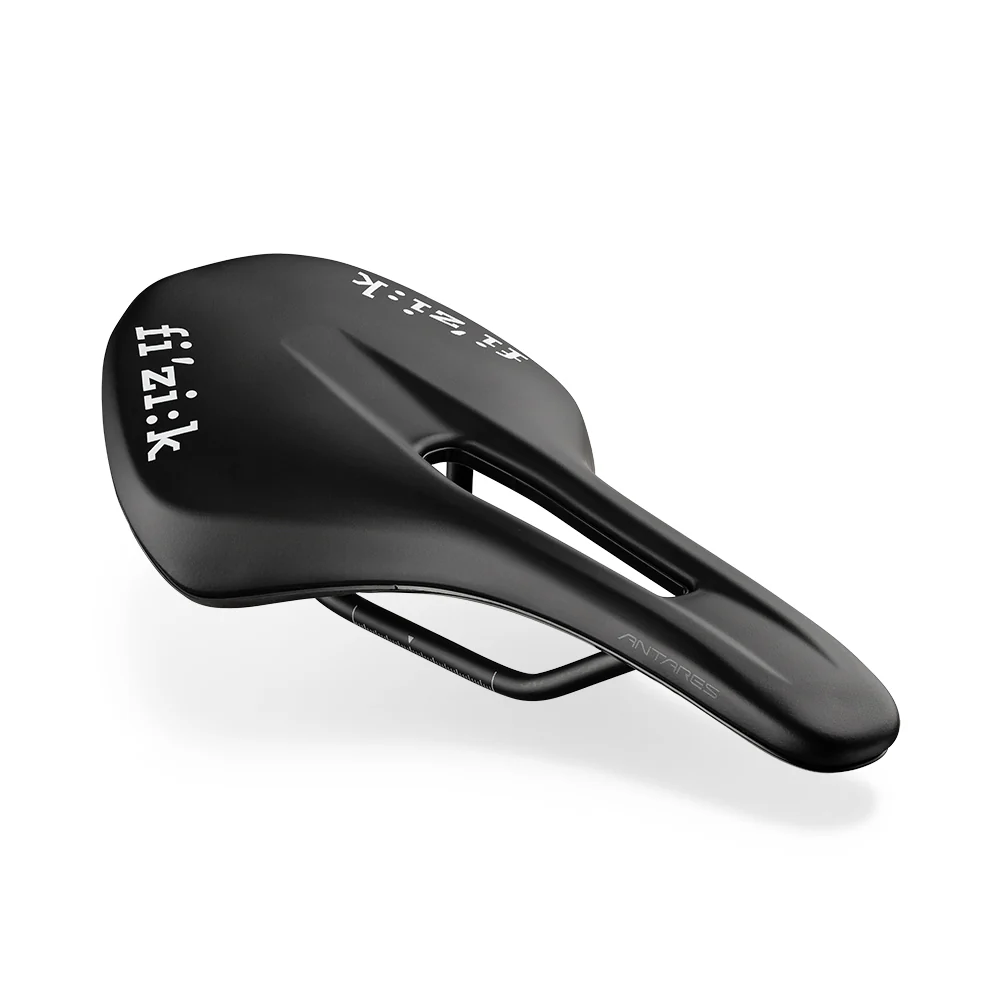
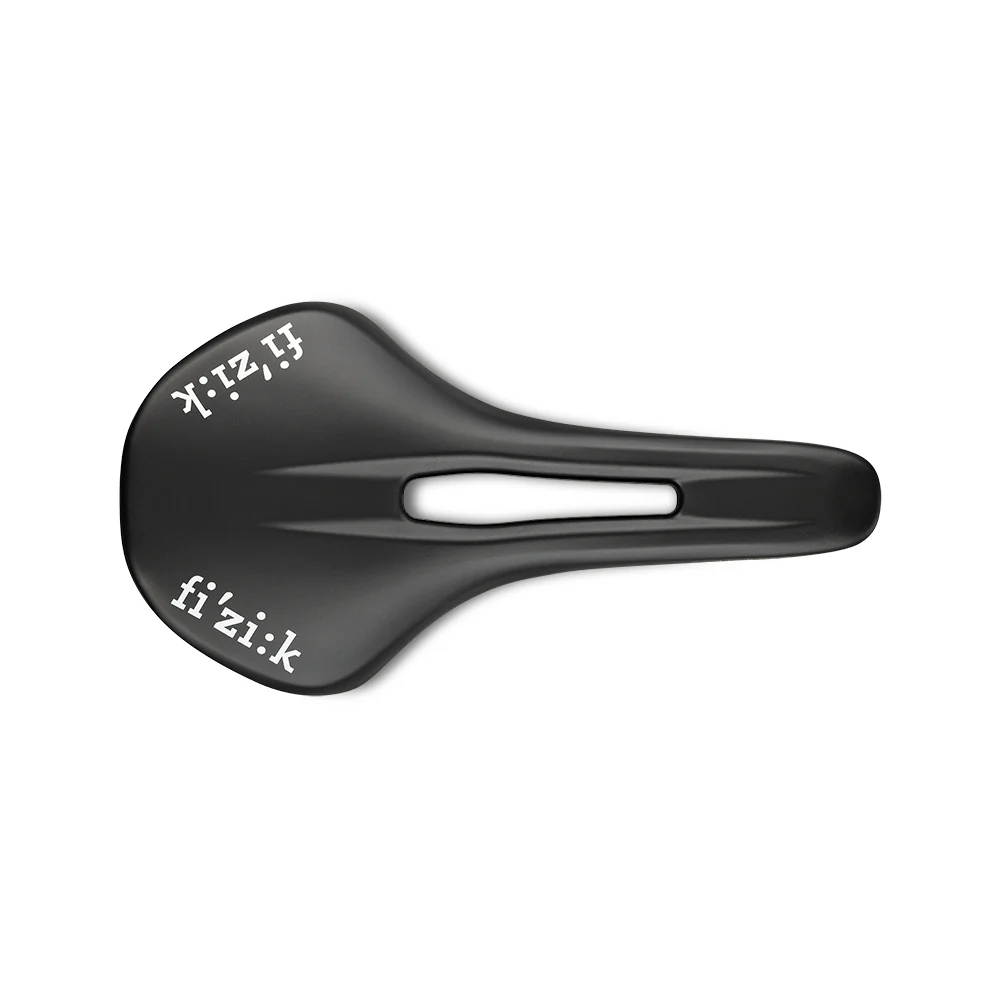
The result, even at the R5 tier, is a saddle that behaves noticeably more intelligently than what came before. The cut-out is well-positioned — it genuinely sits in the right place relative to the saddle’s sit bone zone, without creating a structural weak point. Testers who put 5,000+ km on the updated version consistently report no deformation, no collapse, no creaking. The shell holds.
Construction: What You Get at This Price Point
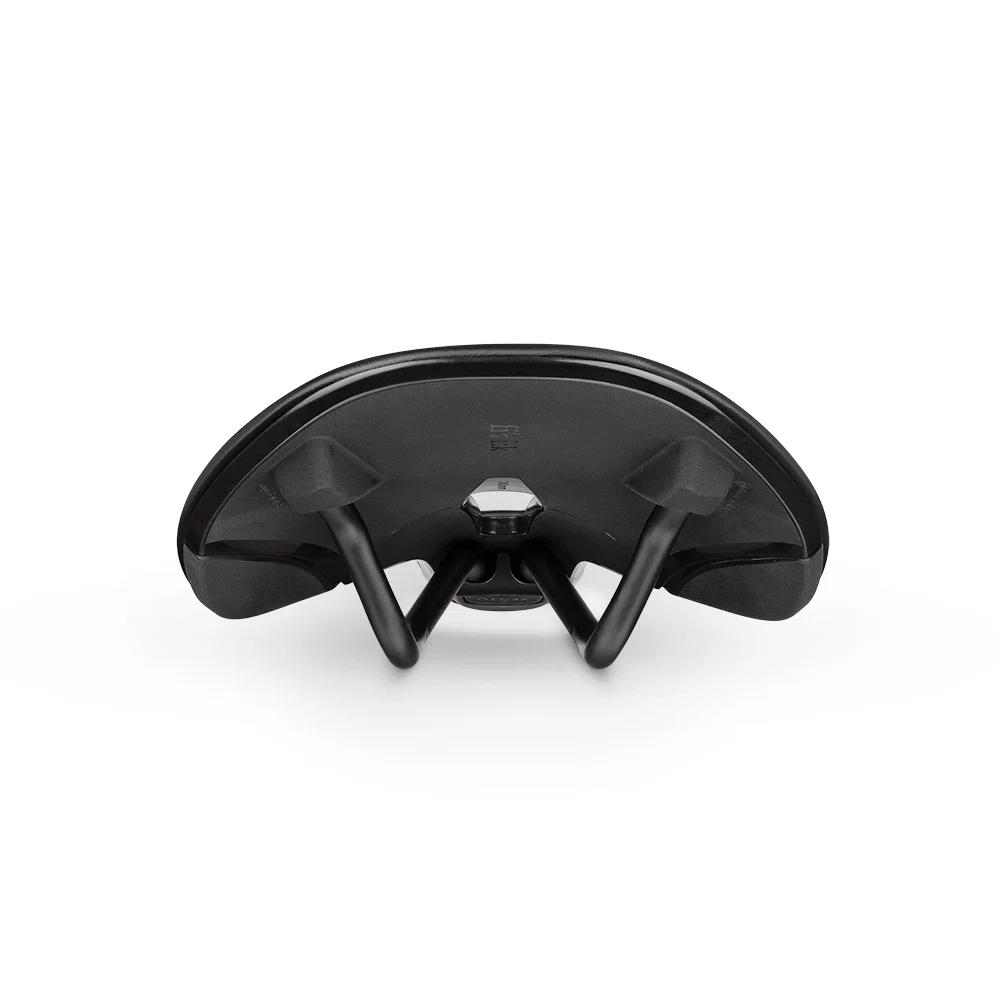
The R5 sits at the base of the Vento Antares range, below the R3 (Kium rails), R1 (carbon rails, carbon-reinforced nylon shell), and the 00 (full carbon everything). The R5’s differentiator is its alloy rail — 7 mm round aluminium, which adds mass relative to the upper tiers but is perfectly adequate for most road, gravel, and cyclocross use. Claimed weight lands at 210 g for the 140 mm width, 217 g for the 150 mm version.
The shell is carbon-reinforced nylon, the same material used across the R1 and R3. This matters: it incorporates Fizik’s WingFlex technology, which allows the lateral edges of the shell to yield slightly under pedalling load. On a saddle this flat and firm, that flex is not a gimmick — it meaningfully reduces thigh chafing and takes some of the harshness out of sustained efforts. The Microtex cover strikes the right balance between grip and slip, holding you in position without making repositioning feel like an effort.
On the Bike
The Antares is a Chameleon saddle in Fizik’s taxonomy — designed for riders with medium spinal flexibility, sitting between the Snake (highly flexible, the Arione territory) and the Bull (rigid, upright position). In practice, the shape suits a wide range of road riders: it’s flat enough for an aggressive aero tuck but wide enough at the rear to support sit bones during endurance riding. The 140 mm width works well for narrower anatomies; 150 mm broadens the support base for those who need it.
Setup matters more on the Antares than on many saddles. Rider accounts repeatedly flag the same learning curve: a nose-down tilt that feels natural on other saddles often feels wrong here, creating a sensation of constantly sliding forward. Level it out — nearly parallel to the ground, old-school — and the geometry clicks into place. Once there, the balance between firmness and support is well-judged. Not punishing, not spongy. Riders consistently report comfort through two- and three-hour sessions without significant hot spots, with longer rides more dependent on kit quality than the saddle itself.
The cut-out earns its keep. Unlike earlier generations of relieved saddles that shifted pressure problems rather than solving them, the Vento Antares cut-out is sized and positioned conservatively enough to do its job without undermining the platform’s rigidity or creating new edge-pressure issues.
Who It’s For
The R5 is the honest answer to a question many cyclists ask but rarely say out loud: do I actually need to spend 200 euros on a saddle? For most road and gravel riders logging training miles, sportives, and multi-hour adventures, the answer is no. The performance delta between the R5’s alloy rails and the R1’s carbon rails is real but marginal — a few grams and a fractional improvement in vibration damping. The shell, the padding, the WingFlex geometry, and the fit are identical.
Where the R5 starts to show its limits is at the extreme end of endurance. Riders regularly pushing beyond 70 to 80 miles on minimalist saddles may find the combination of thin padding and alloy rails more demanding than a more cushioned design. For that use case, a wider saddle with more padding makes more sense. But for performance-oriented riding on road or mixed terrain, the R5 covers the ground without compromise.
Verdict
The Fizik Vento Antares R5 is one of the better-value performance saddles in cycling right now. It carries the full Vento Antares design — revised geometry, central cut-out, double-density foam, WingFlex shell — at a price that doesn’t require a separate budget conversation. The alloy rails are the only meaningful concession to cost, and for most riders, they’ll never notice. If you’ve been curious about the Antares line but not curious enough to spend 200 euros finding out, this is the right starting point.
For a deeper look at Fizik’s full range — saddles, shoes, and bar tape — see our Fizik brand page. The complete Vento Antares lineup, from the R5 to the 00, is available directly on fizik.com.
Quick Specs
| Price | €109 / £105 / $130 |
| Weight | 210 g (140 mm) / 217 g (150 mm) |
| Widths | 140 mm / 150 mm |
| Length | 268 mm |
| Rails | 7 mm alloy |
| Shell | Carbon-reinforced nylon, WingFlex |
| Padding | Double-density foam, central cut-out |
| Cover | Microtex |
| Disciplines | Road, gravel, cyclocross, XC MTB |
FAQ — Fizik Vento Antares R5
What is the difference between the Fizik Antares R5 and the R3?
The main difference is the rails. The R5 uses 7 mm round alloy rails, while the R3 uses Fizik’s proprietary Kium rails — a titanium-aluminium alloy that is lighter and provides marginally better vibration damping. The shell, padding system, WingFlex technology, cut-out, and cover are identical across both models. The weight difference is around 15 g (210 g vs 195 g in 140 mm width), and the price gap is €40. For most riders, the R5 is the smarter buy.
Is the Fizik Vento Antares R5 suitable for long-distance riding?
It depends on your definition of long. Riders regularly report comfort through two- to three-hour sessions with no significant issues. Beyond that — think 120 km+ or full-day endurance events — the thin padding and firm platform start to demand more from your shorts. Quality bib shorts make a significant difference at this range. If ultra-endurance riding is your primary use case, a more cushioned saddle would serve you better. For sportives, training rides, and gravel days up to five or six hours, the R5 is more than adequate.
What width should I choose: 140 mm or 150 mm?
Width selection should be based on your sit bone measurement, not your overall body size. As a rough guide, sit bone widths under 100 mm generally suit the 140 mm saddle; above 100 mm, the 150 mm version tends to provide better support. Many bike shops offer a sit bone measurement service using a foam pad or pressure map — worth doing before committing to either width. The 140 mm is the more common choice among road-oriented riders in an aggressive position; the 150 mm is better suited to those riding in a more upright posture or with wider anatomy.
How should I set up the tilt on the Fizik Antares?
Nearly level — close to parallel with the ground — is the setup that works for the vast majority of Antares riders. This is counterintuitive if you’re used to running a slight nose-down angle on other saddles, but the Antares geometry is not designed for it. A nose-down tilt on this shape typically creates a feeling of constantly sliding forward, which then leads riders to brace with their arms and generate unnecessary upper-body tension. Start level, ride a few sessions, and make small adjustments from there. Jonas Vingegaard runs his almost perfectly flat — that’s not a coincidence.
Does the Fizik Vento Antares R5 have a cut-out?
Yes. The central cut-out was introduced across the entire Vento Antares range in 2023. On the R5, it is well-positioned relative to the perineal zone and does not compromise the structural integrity of the platform — a common failure point on poorly designed cut-out saddles. After extensive use, no deformation or weakening around the cut-out has been reported by independent testers.
Is the Fizik Vento Antares R5 worth the price?
At €109, it is one of the more competitive performance saddles on the market. You are getting the same shell, padding technology, WingFlex construction, and Vento Antares geometry as the R1 at nearly half the price. The only meaningful compromise is the alloy rails, which add a small amount of weight and provide fractionally less vibration compliance. For riders who are not chasing minimum weight, the R5 represents excellent value. It is a saddle that can last a decade with normal use — at that price point, it pays for itself quickly.