hill.camp does not test products first-hand; this review is a synthesis of independent field tests, specialist press reports, and verified consumer feedback.
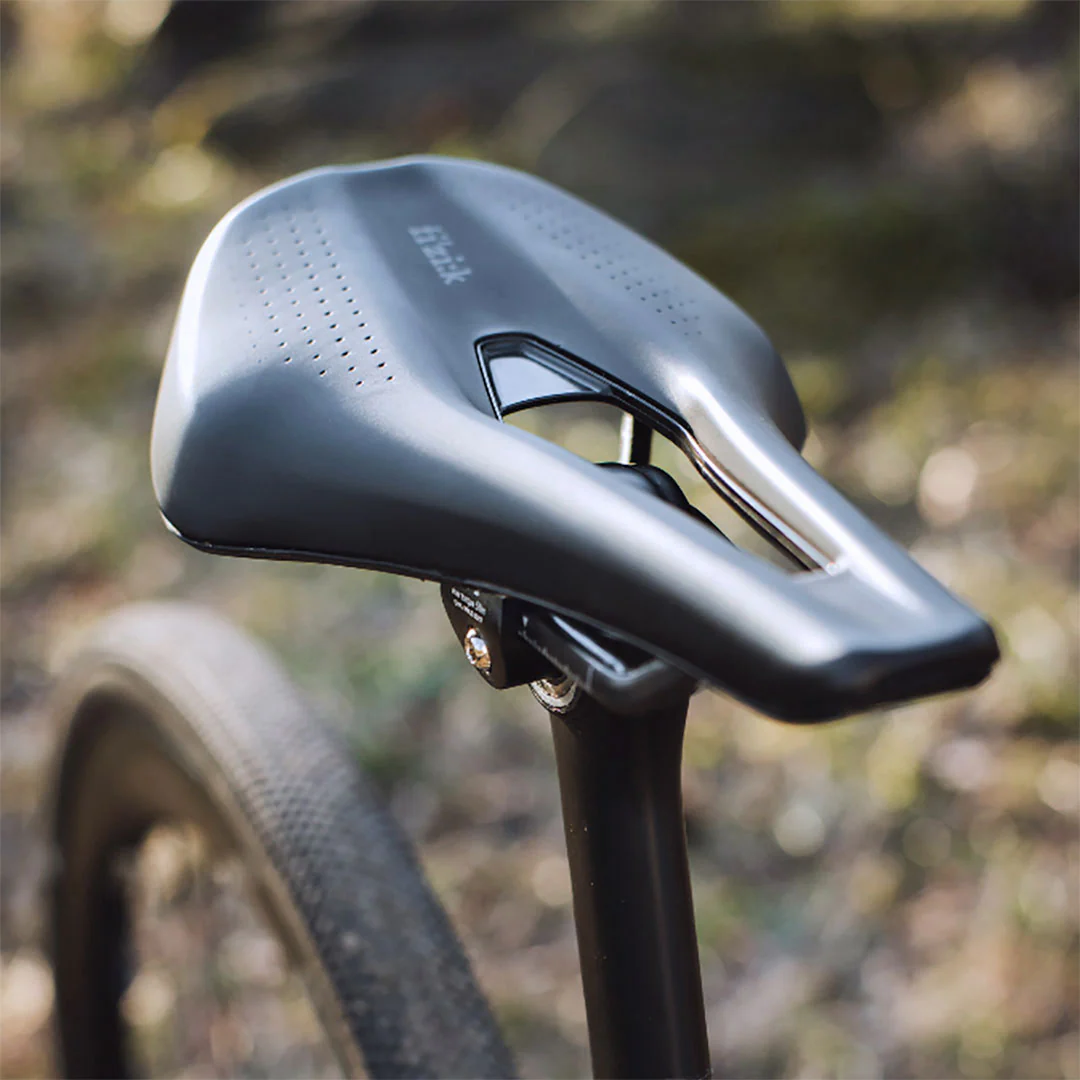
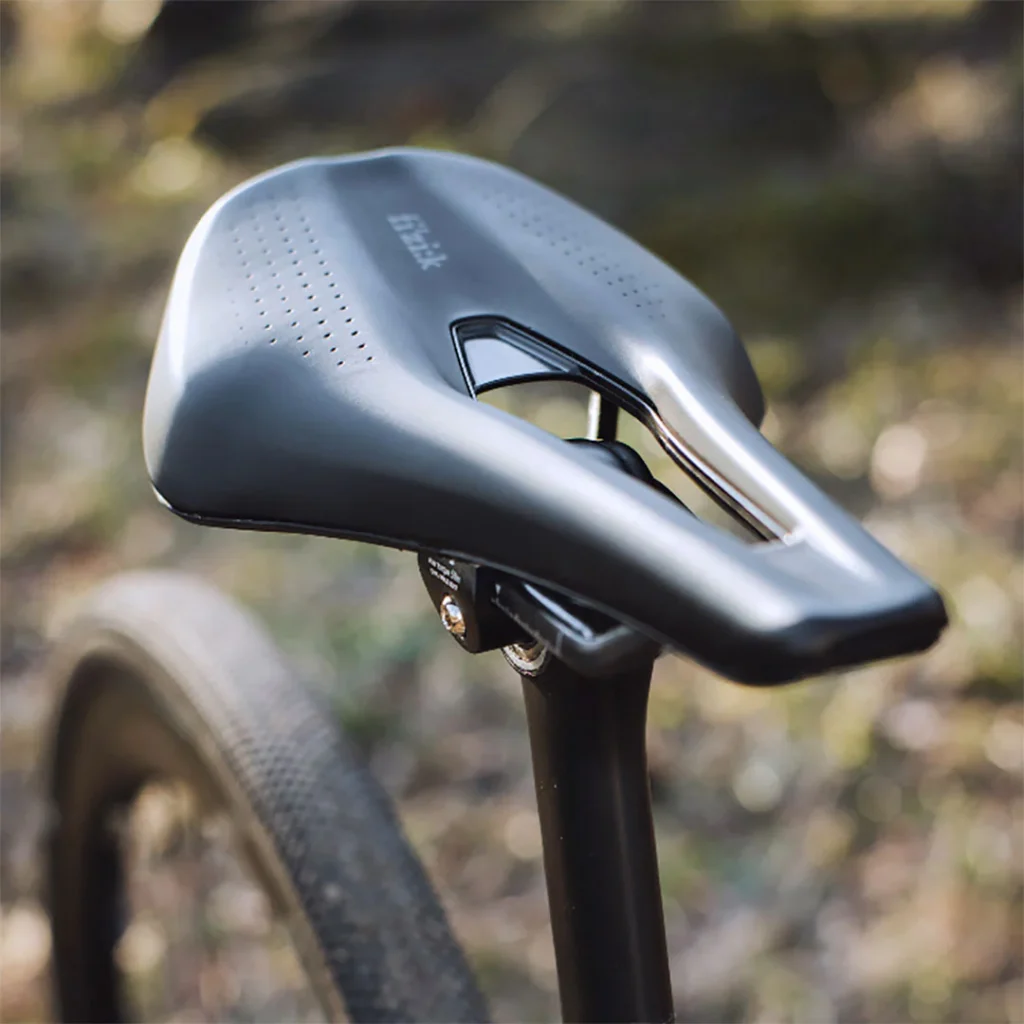
The Fizik Tempo Argo starts from a different brief than its Vento sibling. Where the Vento Argo is built for speed and aggression — firm padding, low profile, minimal fuss — the Tempo is built for distance. More padding, a wider cut-out, a more forgiving nose, and widths that go up to 160 mm. It is aimed at the rider who spends four to six hours in the saddle on endurance road rides, gravel epics, or mixed-surface adventures, and who needs pressure relief without sacrificing pedalling efficiency. The short-nose format remains, but the character is noticeably different: more enveloping, more comfortable from the first kilometre, and more forgiving of the slight position variations that accumulate over long rides.
What Sets the Tempo Argo Apart
The fundamental difference between the Tempo and the Vento Argo lies in the padding. The Tempo uses Fizik’s Type 2 foam — a dense, memory-foam-like material with an elastic, progressive feel — rather than the firmer, more reactive Type 1 foam of the Vento. This Type 2 padding is thicker around the ischial sit-bone area at the rear, providing better support for riders in a more upright position, and it delivers noticeably more comfort on rides where sustained seated power is the goal rather than raw speed.
The cut-out is also larger and wider than on the Vento — a significant diamond-shaped channel measuring approximately 135 × 35 mm — designed for riders who sit slightly more upright and therefore place more pressure on the perineal zone. The nose profile is less aggressively dropped than on the Vento, and the overall shape has a gentle upward kick at the rear that helps keep riders planted without requiring a nose-down tilt. The Tempo is 260 mm long (versus 265 mm for the Vento) and is available only in 150 mm and 160 mm widths — making it the right choice for riders with wider anatomy who find the Vento’s 140/150 mm range limiting.
One consistent note across all Tempo Argo variants: the smooth matt cover material performs excellently in dry conditions but becomes noticeably slippery in rain or spray. Multiple independent testers flag this as the saddle’s main weakness — a more textured cover would serve wet-weather riders significantly better. In dry conditions and on indoor trainers, where this issue does not arise, the Tempo Argo is consistently rated among the most comfortable saddles in its category.
Tempo Argo R5 — Endurance Comfort at an Accessible Price
The R5 is the entry point, built on Kium titanium alloy rails — note that unlike the Vento Argo R5 which uses steel S-Alloy rails, the Tempo Argo R5 specifies Kium as standard, which is already the R3-tier material on the Vento. Weight lands at around 247 g in the 150 mm version. At approximately €90, it is one of the better-value endurance saddles available, and the rider feedback across thousands of real-world reviews is strikingly consistent: the large cut-out eliminates the numbness and perineal pressure that plagues many cyclists on longer rides, and the Type 2 padding provides comfort over distances where firmer saddles begin to punish.
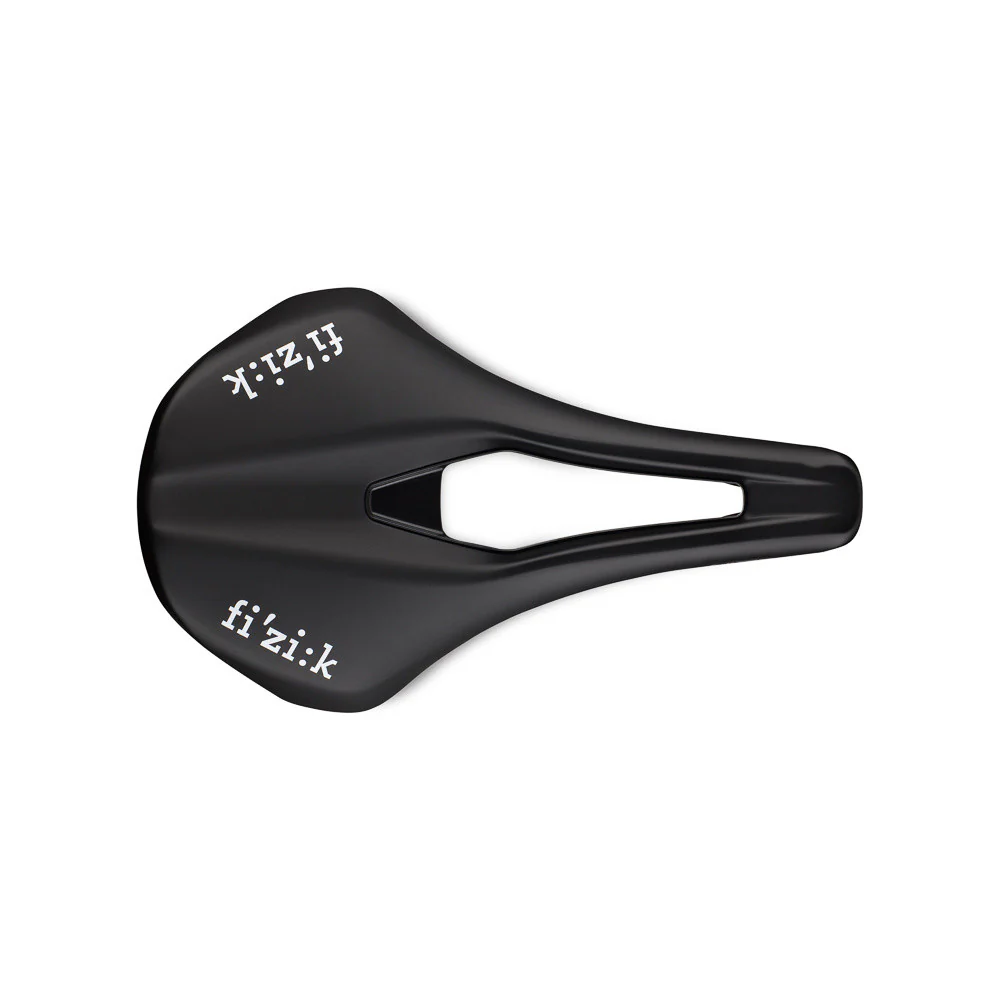
The R5 has accumulated a particularly strong following among riders returning to cycling after injury or health issues, and among those who spend significant time on indoor trainers — contexts where the absence of position variation makes pressure relief even more critical. The short nose also makes it a natural companion for riders who have added aero extensions or adopted a more forward position on the bike. The main limitation is weight: at 247 g, it is noticeably heavier than the R3 and R1, and the Kium rails, while solid, offer less vibration compliance than carbon.
Tempo Argo R3 — The Gravel and Endurance Sweet Spot
The R3 uses Tirox rails — a light alloy steel in the 7×7 mm round format, compatible with any standard seatpost clamp — on the same carbon-reinforced nylon shell and Type 2 padding as the R5. Weight comes in at 243 g in the 150 mm version, a modest saving over the R5, but the real benefit of the R3 is its positioning as a dedicated gravel and mixed-surface saddle: firm enough for efficient pedalling, padded enough for long days, and structurally robust enough for rougher terrain.
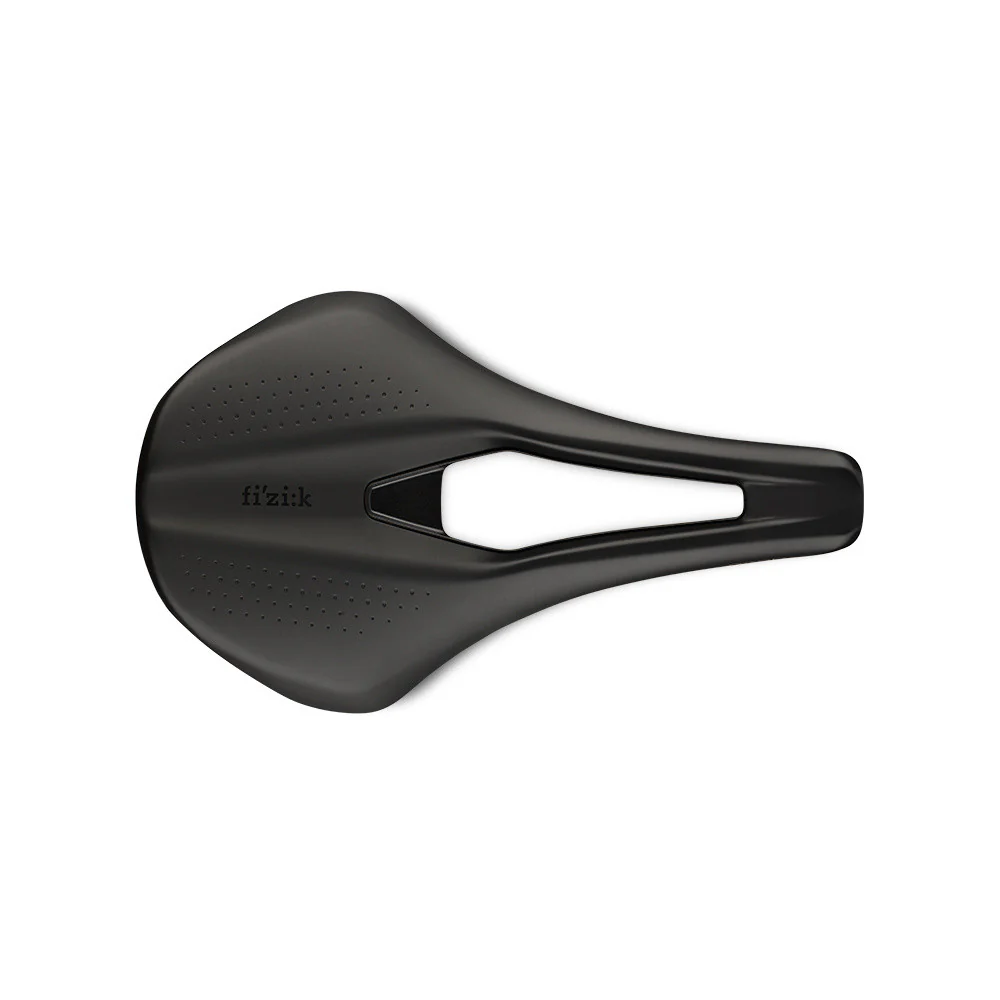
Independent testing at the Struggle Borderlands — covering 800+ km of mixed-surface riding — returned consistently positive results, with no comfort issues across back-to-back long days. The carbon-reinforced shell has a noticeable flex when pressed by hand, which translates into genuine vibration damping on rough surfaces without any instability under hard pedalling. The cut-out is large enough to provide reliable pressure relief across the full range of positions that endurance riding demands, including the slight forward shuffle needed for a more aerodynamic tuck. The R3 is heavier than some mid-range competitors but the comfort case is strong enough to make the weight differential a minor consideration for most riders.
Tempo Argo R1 — Premium Rails, Same Endurance Character
The R1 brings 9 mm oval carbon rails and a weight of around 198 g — a meaningful reduction from the R3’s 243 g, achieved without any change to the shell, padding, or overall riding character. At approximately €180–225 depending on market, it costs significantly more than the R3, and the question of whether the weight saving justifies the premium depends heavily on what you are riding and how much the extra grams matter.
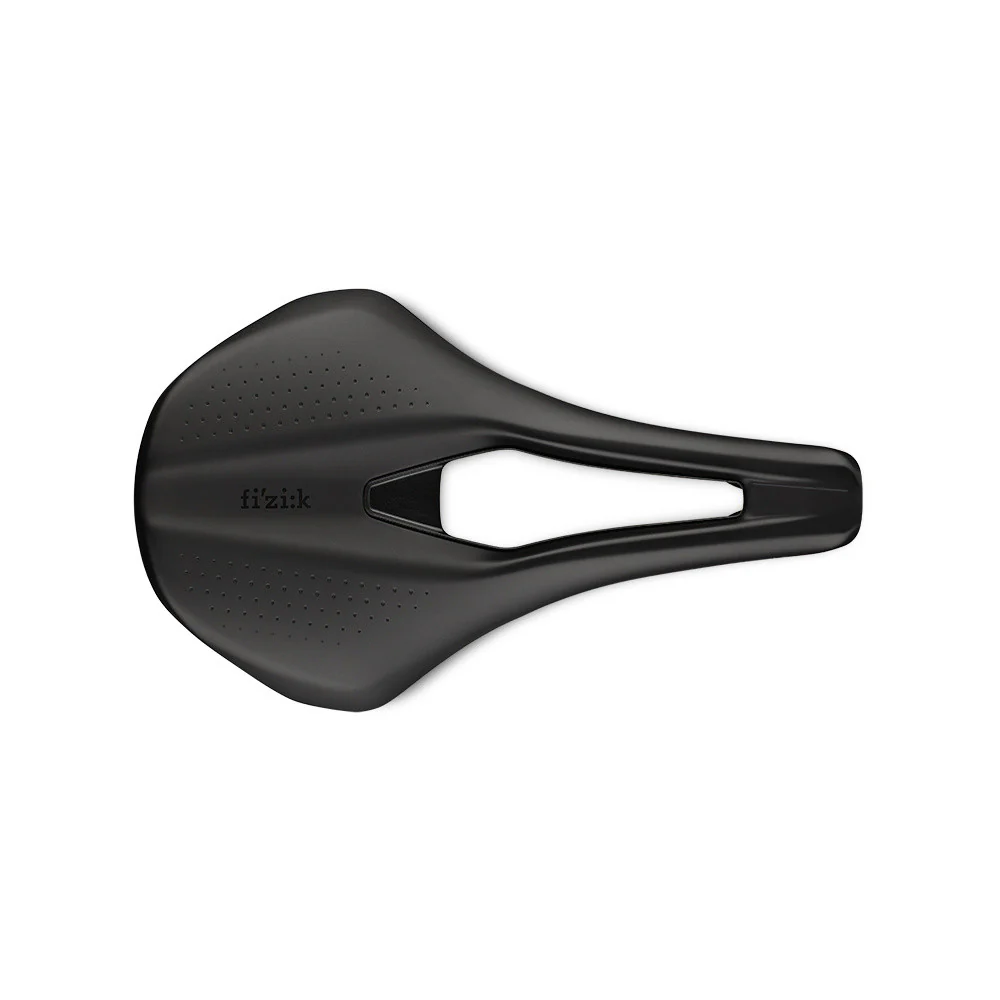
On the bike, the R1 delivers the same fundamental Tempo Argo experience as the R3 — the Type 2 padding, the generous cut-out, the endurance-focused shape — but with two tangible improvements: the carbon rails provide better vibration damping on rough surfaces, and the weight savings are real and consistent. Independent testers using the R1 for regular four- to six-hour rides describe it as genuinely easy to forget — the kind of saddle that stops intruding on your consciousness after the first few minutes and simply supports you through whatever distance follows.
The oval carbon rail format carries the same seatpost compatibility caveat as the Vento Argo R1: verify that your post accepts oval rails before purchasing. The R3’s round Tirox rails avoid this issue entirely and represent the better choice for riders who are not confident about their seatpost clamp format. For those who have confirmed compatibility, the R1 is a thoroughly capable saddle at a price that remains more competitive than equivalent offerings from some rival brands.
Width: 150 mm or 160 mm?
Unlike the Vento Argo, which offers 140 mm and 150 mm, the Tempo Argo is only available in 150 mm and 160 mm. This reflects its endurance positioning — riders in more upright positions tend to have greater sit-bone loading and benefit from wider support. The 160 mm version is the widest saddle in Fizik’s mainstream road range, and while some reviewers question whether it is truly necessary for most riders, those with sit-bone widths above approximately 135–140 mm consistently find it the more comfortable option. User feedback frequently notes that going narrower than your sit-bone measurement requires generates pressure at the edges of the cut-out — a reliable indicator that a wider saddle is needed.
Verdict
The Fizik Tempo Argo is the honest answer to a specific problem: how do you get the benefits of a short-nose saddle — stability, perineal pressure relief, pedalling freedom — without the firm, uncompromising character of a race-oriented design? The Type 2 padding, larger cut-out, and endurance-shaped nose make it genuinely comfortable across full days in the saddle in a way the Vento Argo is not designed to be. The R5 offers excellent value at entry level; the R3 adds construction quality and is the natural choice for gravel riding; the R1 refines the package with carbon rails for riders who want the lightest possible setup. In all three cases, the wet-weather slipperiness of the cover is worth factoring in if you ride regularly in rain.
For more on Fizik’s full range of saddles and contact points, visit our Fizik brand page. If you are deciding between the Tempo and Vento lines, our dedicated review of the Fizik Vento Antares R5 covers the longer-nosed alternative. The complete Tempo Argo range is available directly on fizik.com.
Quick Specs Comparison
| Model | Rails | Shell | Padding | Weight | Price (€) |
| Tempo Argo R5 | Kium alloy | Carbon-reinforced nylon | Type 2 foam | ~247g (150mm) | ~90 |
| Tempo Argo R3 | Tirox alloy 7×7mm | Carbon-reinforced nylon | Type 2 foam | 243g (150mm) | ~149 |
| Tempo Argo R1 | Carbon 9mm oval | Carbon-reinforced nylon | Type 2 foam | ~198g (160mm) | ~189 |
FAQ — Fizik Tempo Argo
What is the difference between the Fizik Tempo Argo and the Vento Argo?
The Tempo Argo is designed for endurance riding: it uses thicker Type 2 memory-foam-style padding, a larger cut-out, and a more forgiving nose profile than the race-oriented Vento Argo. It is available in 150 mm and 160 mm widths rather than 140 mm and 150 mm. The Vento Argo uses firmer Type 1 foam and a lower, more aggressive profile suited to performance and racing use. Both share the short-nose Argo shape and carbon-reinforced nylon shell.
Is the Fizik Tempo Argo comfortable for long rides?
Yes, consistently so. The combination of Type 2 foam, the large pressure-relief cut-out, and the short-nose format that keeps sensitive tissues away from the saddle surface makes the Tempo Argo one of the more effective long-distance saddles in its category. Riders regularly report comfort across four- to seven-hour sessions with no significant pressure points. The main caveat is wet weather: the smooth matt cover becomes slippery in rain, which requires additional effort to stay in position and can undermine the saddle’s otherwise strong comfort credentials.
How should I tilt the Fizik Tempo Argo?
The Tempo Argo is more forgiving of tilt variation than the Vento, but it generally works best with a slight nose-up angle relative to fully level — the opposite of what the Vento requires. The rear section has a gentle upward kick that keeps riders planted, and a slight nose-up position works with this geometry rather than against it. That said, multiple testers note that the ideal angle varies significantly between riders and riding positions, so patience with initial setup is worthwhile. Tilt the nose too far up and it creates unwanted pressure; too far down and you slide forward continuously.
Which width should I choose — 150 mm or 160 mm?
Base your choice on sit-bone measurement. Riders with sit-bone widths below around 125–130 mm typically suit the 150 mm; those above that range generally find the 160 mm more supportive. User feedback consistently shows that going narrower than your anatomy requires generates pressure at the cut-out edges — an uncomfortable and avoidable outcome. If in doubt, a sit-bone measurement at a Fizik dealer or a well-equipped bike shop is the most reliable guide. Note that the 150 mm is the more popular option but the 160 mm exists precisely for riders who need it.
Is the Tempo Argo R1 worth the extra cost over the R3?
For most endurance riders, the R3 represents the better value. The R1’s carbon rails save around 45 g and improve vibration damping on rough surfaces, but the shape, padding, and overall riding character are identical to the R3. The weight saving is meaningful for weight-conscious riders, and the carbon rails do genuinely improve compliance on mixed surfaces. For everyone else, the R3’s Tirox rails are reliable, standard-compatible, and save a significant amount of money. Confirm seatpost oval-rail compatibility before choosing the R1.
Is the Fizik Tempo Argo suitable for indoor training?
Very much so. The Tempo Argo has a strong following among indoor riders precisely because its generous cut-out and Type 2 padding handle the static, position-fixed nature of trainer sessions better than most saddles. When riding indoors, you cannot shift your weight or stand to relieve pressure the way outdoor riding naturally allows — the Tempo’s cut-out handles this constraint well. The wet-weather slipperiness of the cover is irrelevant in this context, removing the saddle’s main weakness from the equation entirely.