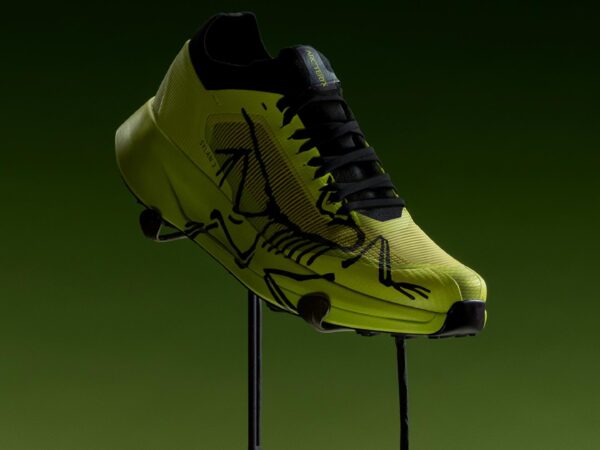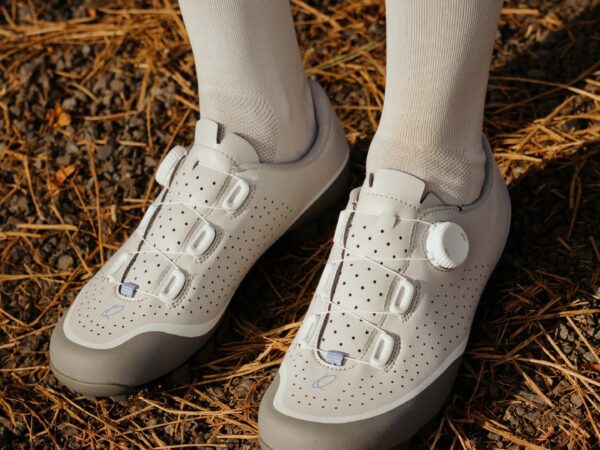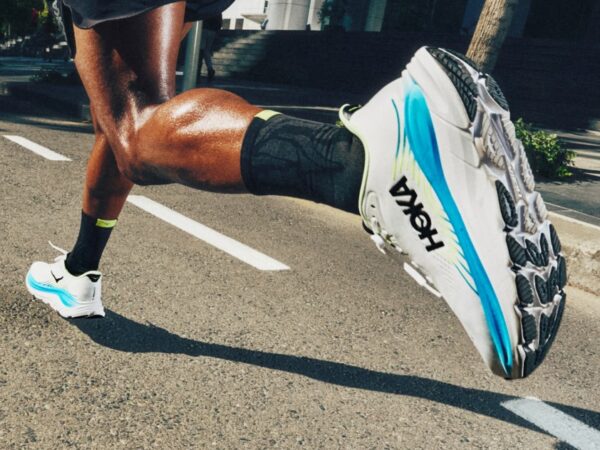

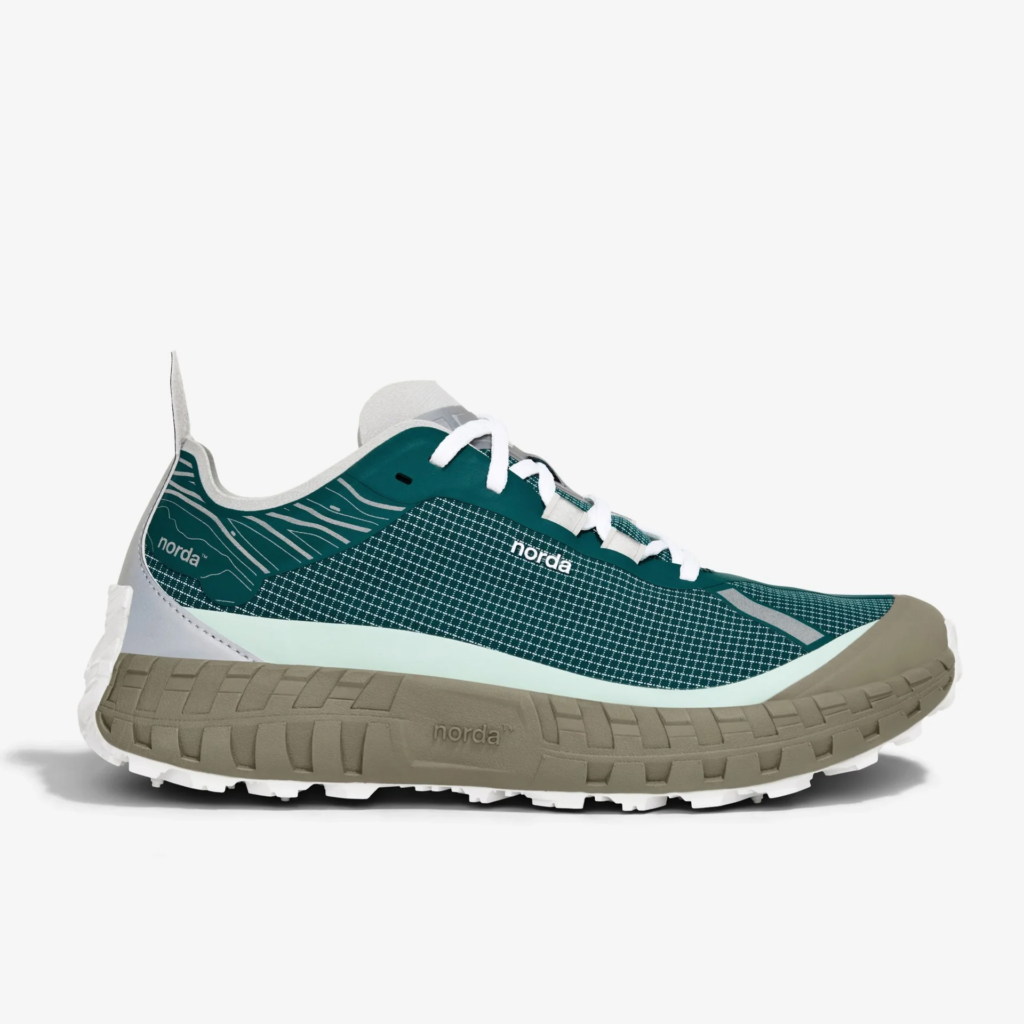
The Norda 001 and the Hoka Speedgoat do not compete for the same runner in any straightforward sense. One is a deliberately over-engineered, bio-based premium trail shoe built by a small Canadian brand with a specific philosophy about materials and longevity. The other is the best-selling trail running shoe in the world, refined across six generations, worn by everyone from first-time trail runners to Hardrock 100 finishers. Putting them side by side reveals something interesting about what trail running footwear has become — and what different buyers are actually optimising for when they spend serious money on shoes.
For full brand context, read our profiles on Norda and Hoka. And for a comparison at the more accessible end of the trail shoe spectrum, our Hoka Speedgoat vs Salomon Speedcross covers the mainstream head-to-head.
The Short Answer
The Norda 001 is the precision instrument. Lighter than the Speedgoat, built from bio-based Dyneema and castor-oil-derived foam, with a Vibram Litebase outsole tuned for fast and technical trail running. It is a shoe designed for runners who care deeply about both performance and what the shoe is made of — and who are willing to pay a significant premium for both. It is also a shoe with meaningful limitations in terms of cushioning and longevity that matter at longer distances.
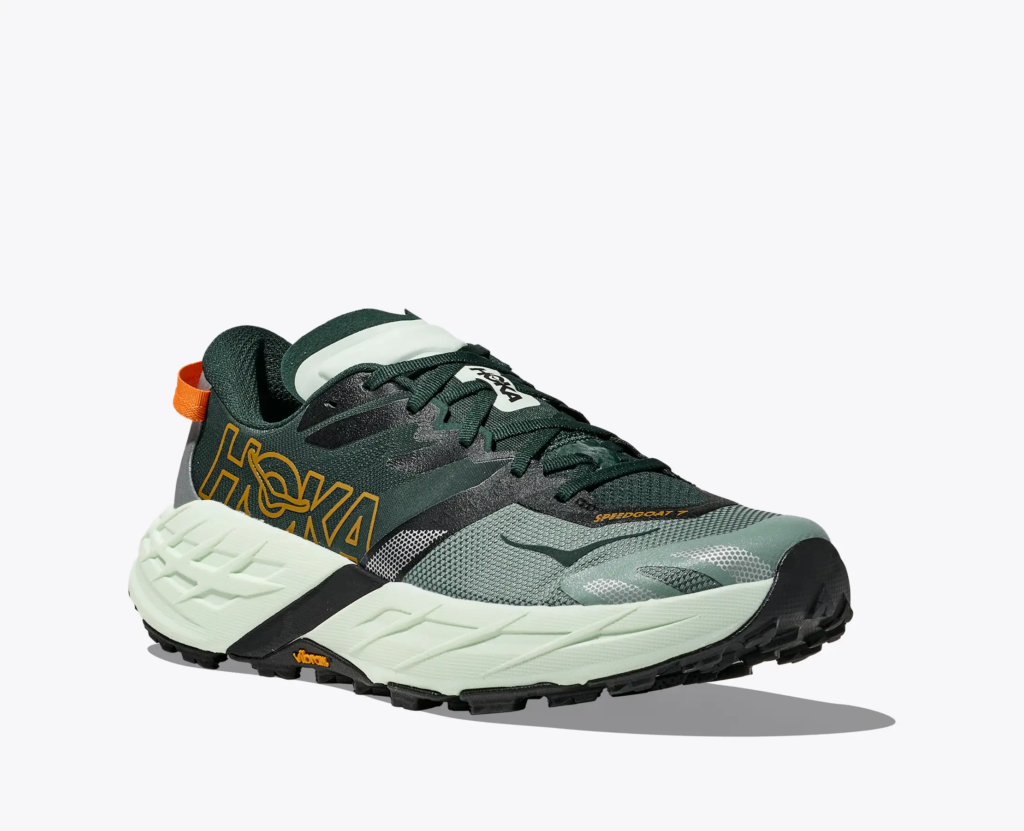
The Hoka Speedgoat is the reliable workhorse. Six generations of refinement, Vibram Megagrip that works across terrain types, enough cushioning to protect feet over hundreds of miles, and a price point that is still premium but significantly below the Norda. It is the shoe that most experienced trail runners would recommend to someone doing their first fifty-miler. It works. Consistently, predictably, across conditions.
Specs Side by Side
| Spec | Norda 001 | Hoka Speedgoat 6 |
|---|---|---|
| Drop | 8mm | 5mm |
| Stack height (heel / forefoot) | ~29mm / ~21mm | 40mm / 35mm |
| Weight (approx. size UK9) | ~240 g | ~310 g |
| Upper material | Bio-based Dyneema composite | Engineered mesh + overlays |
| Midsole | Algae-based Pebax foam (bio-based) | CMEVA (conventional) |
| Outsole | Vibram Litebase (3mm, lightweight) | Vibram Megagrip (5mm, full-coverage) |
| Waterproof option | Yes (Gore-Tex version) | Yes (GTX version) |
| Sustainability credentials | Bio-based materials, B Corp certified brand | Standard materials, partial recycled content |
| Price (approx.) | ~€275–295 | ~€155–175 |
The Price Gap: What It Means
€275 versus €155. The Norda 001 costs nearly twice as much as the Hoka Speedgoat. That gap demands justification — and the honest answer is that it is partially justified by materials and manufacturing, partially by brand positioning, and partially by the halo effect of a new brand building its reputation in a premium segment.
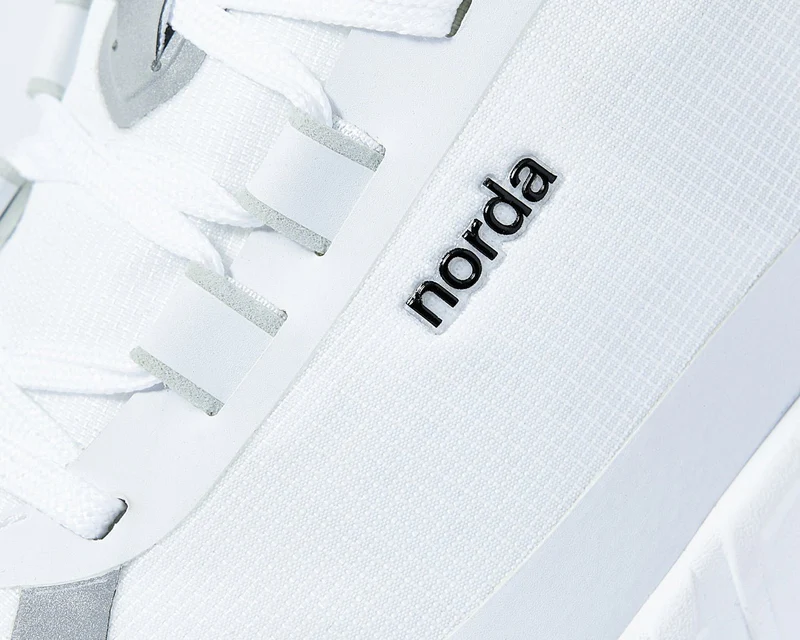
The bio-based Dyneema upper is genuinely more expensive to produce than conventional mesh. Dyneema is one of the strongest materials available by weight, and the bio-based composite version Norda uses requires more sophisticated supply chain management than standard footwear materials. The Pebax foam midsole derived from castor oil is similarly a premium material compared to conventional EVA. These costs are real. Whether they fully explain the price premium is a matter of perspective, but the Norda 001 is not a conventionally built shoe with a luxury markup — it is genuinely different at the materials level.
Weight and Speed
The Norda 001 at ~240g is meaningfully lighter than the Speedgoat at ~310g. That 70g saving matters for fast runners on technical terrain where every gram of rotational weight affects efficiency. The Norda’s lighter Vibram Litebase outsole (3mm versus the Speedgoat’s 5mm) contributes to the weight saving but also means less rubber coverage and slightly less durability on abrasive surfaces.
For competitive trail runners targeting fast times on technical courses, the Norda’s weight advantage is real. For runners prioritising endurance over pace, the weight difference is less decisive than cushioning and durability.
Cushioning: The Speedgoat’s Most Significant Advantage
The Speedgoat’s 40mm heel stack is dramatically more cushioned than the Norda 001’s ~29mm. This is not a marginal difference — it is the Speedgoat’s core design philosophy made tangible. For runs over 40-50km, for rocky technical terrain, and for runners with a history of foot or joint issues that benefit from impact absorption, the Speedgoat’s cushioning is a meaningful protective advantage that the Norda cannot match.
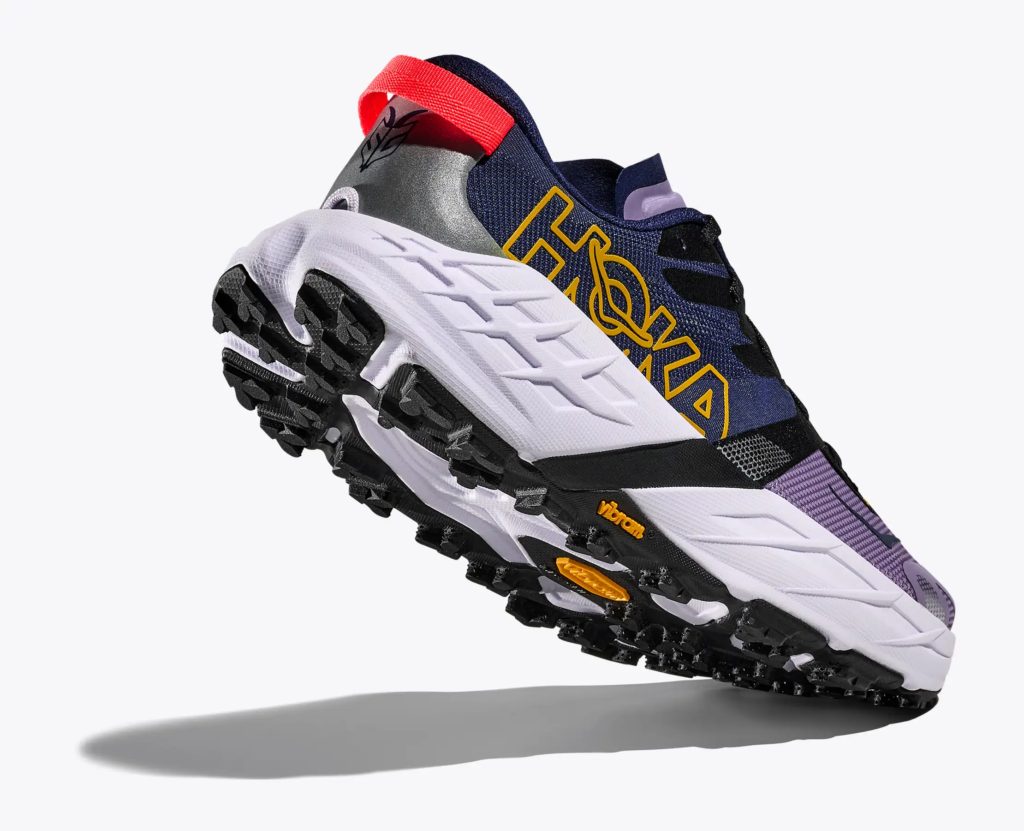
The Norda’s Pebax-based midsole is responsive and energy-returning in a way that conventional CMEVA is not — a genuine performance advantage for fast efforts. But it does not provide the same total impact absorption as the Speedgoat’s higher-volume midsole. Runners who have used the Norda 001 for ultra distances consistently note that foot fatigue builds more noticeably after 50km than in the Speedgoat.
Sustainability and Materials Philosophy
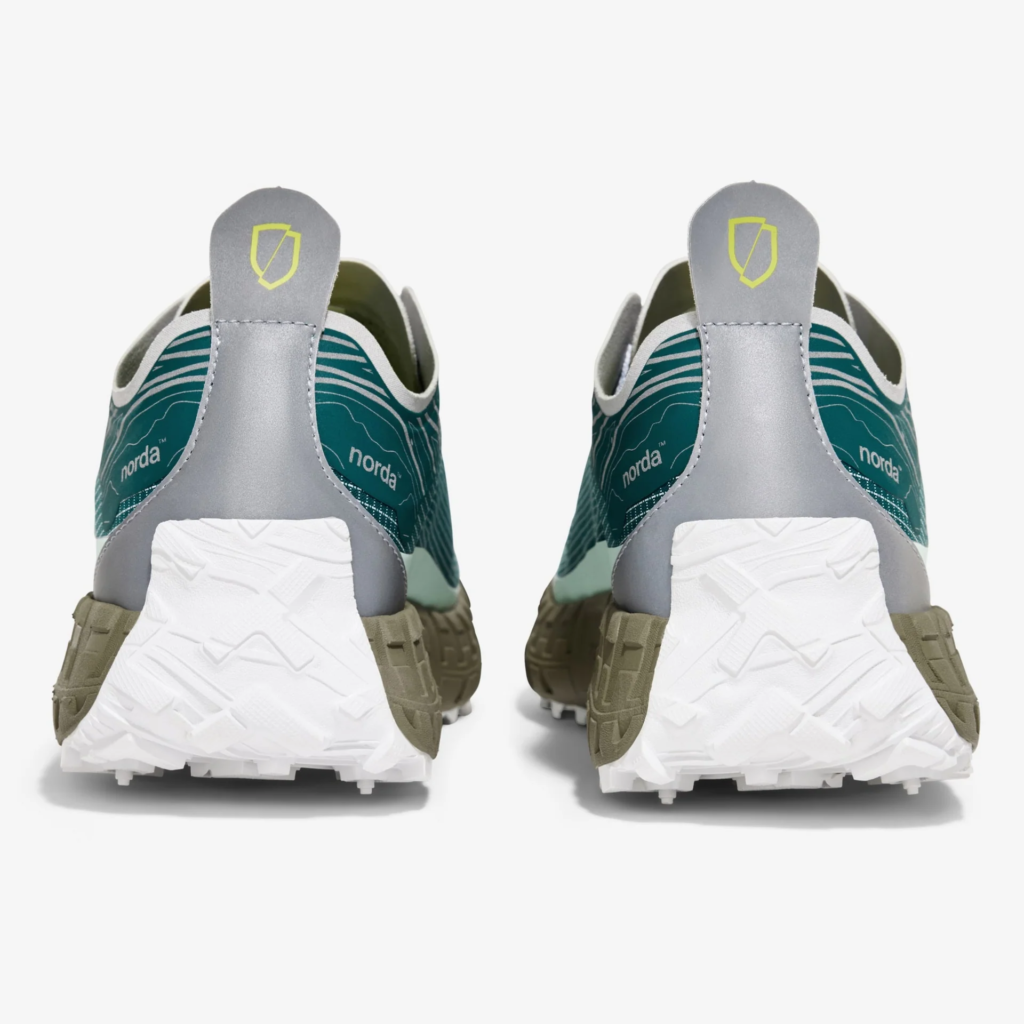
Norda’s materials story is the most coherent in trail running footwear. The brand was built around bio-based construction from the start — not as an add-on sustainability initiative but as a founding design principle. Dyneema upper, castor-oil-derived Pebax foam, Vibram outsole: every major component has a sustainability rationale. Norda holds B Corp certification, which requires third-party verification of social and environmental performance standards. This is not greenwashing; it is a genuine material and manufacturing commitment.
Hoka makes incremental sustainability progress — partial recycled content in some products, stated targets for emissions reduction — but the Speedgoat is a conventionally produced shoe with conventional materials. For runners who prioritise supply chain ethics as part of their purchasing decision, the Norda’s credentials are currently unmatched in mainstream trail running footwear.
Terrain and Use Case
The Norda 001 excels on technical trail terrain at pace: rocky singletrack, alpine routes, fast-moving mountain running where ground feel and responsiveness matter. The Vibram Litebase outsole grips well on rock and dry trail. In wet or muddy conditions, the lighter lug profile gives less security than the Speedgoat’s more aggressive Megagrip compound.
The Speedgoat performs well across a broader range of conditions and distances. It is the more forgiving shoe on less-than-perfect terrain, and it remains competitive in wet and technical conditions through the full coverage of its Megagrip outsole. It is also the shoe with the longer track record at ultra-distance — the Norda 001 is less than five years old; the Speedgoat has six generations of refinement behind it.
Verdict
Choose the Norda 001 if: budget is not the primary constraint; materials provenance and sustainability credentials matter to your purchasing decision; you run fast on technical terrain where the Pebax responsiveness and lighter weight are genuine performance advantages; or you want a shoe that makes a deliberate statement about what trail running equipment can be made from. Also consider the Gore-Tex version if you run regularly in wet alpine conditions.
Choose the Hoka Speedgoat if: you want a proven, versatile trail shoe across a wide range of terrain and distances; cushioning and joint protection for high-mileage training are priorities; budget is a significant factor; or you want the shoe that the largest number of experienced trail runners would recommend without qualification. The Speedgoat is not the more interesting shoe. It is the more reliable one.
These two shoes are not really competing for the same runner. The Norda is for the performance-conscious buyer who has specific values about materials and a specific use case in fast trail running. The Speedgoat is for everyone who wants a trail shoe that simply works, reliably, across conditions, for as long as you can wear it out. Both are excellent. Neither is the wrong choice for the right runner.
Explore the Norda trail shoe range at the Norda official website, and the full Hoka trail lineup at the Hoka official website.