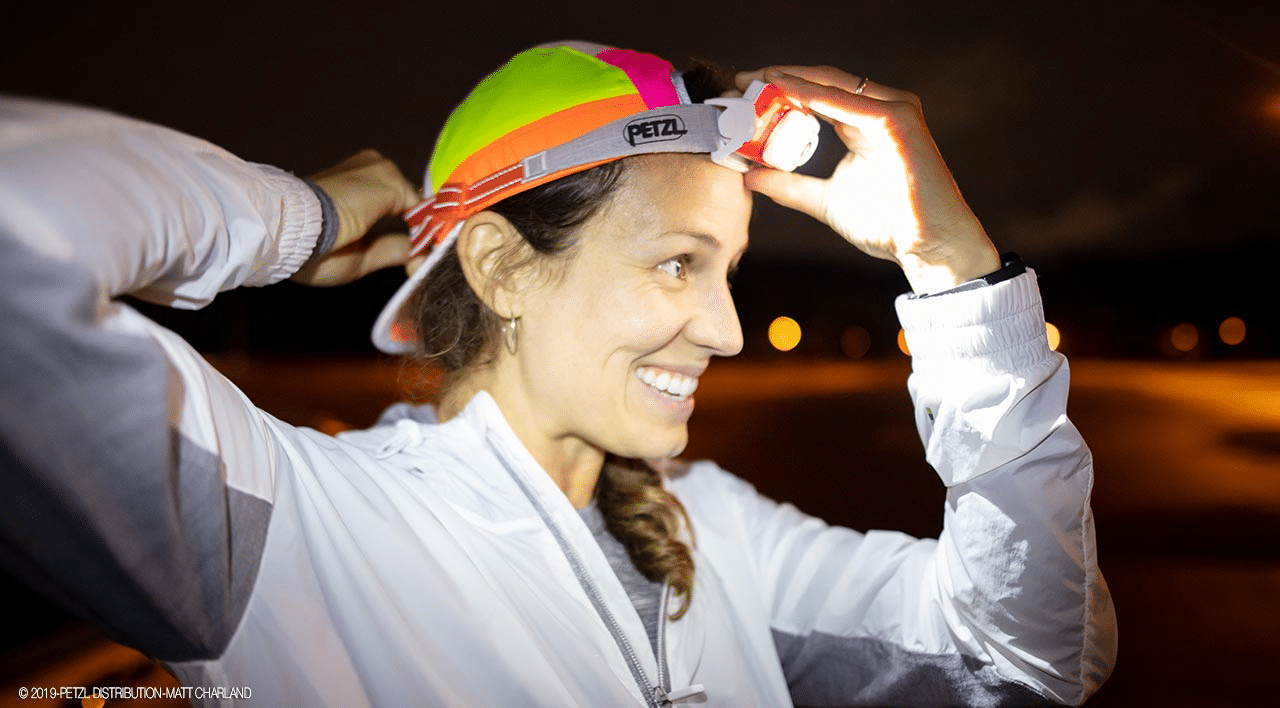
If you run at night — really run, not just jog cautiously down a lit path — your headlamp choices narrow quickly. Most lamps designed for hiking are too heavy, bounce too much, or sit too far forward on your head to feel natural at pace. The Petzl Swift RL and the BioLite Dash 450 are two of the best answers the market currently has for runners who take darkness seriously. They are also very different tools, shaped by very different engineering philosophies. Understanding those differences is the whole point of this comparison.
For broader context on each brand, read our full profiles on Petzl and BioLite before diving in here.
The Short Answer
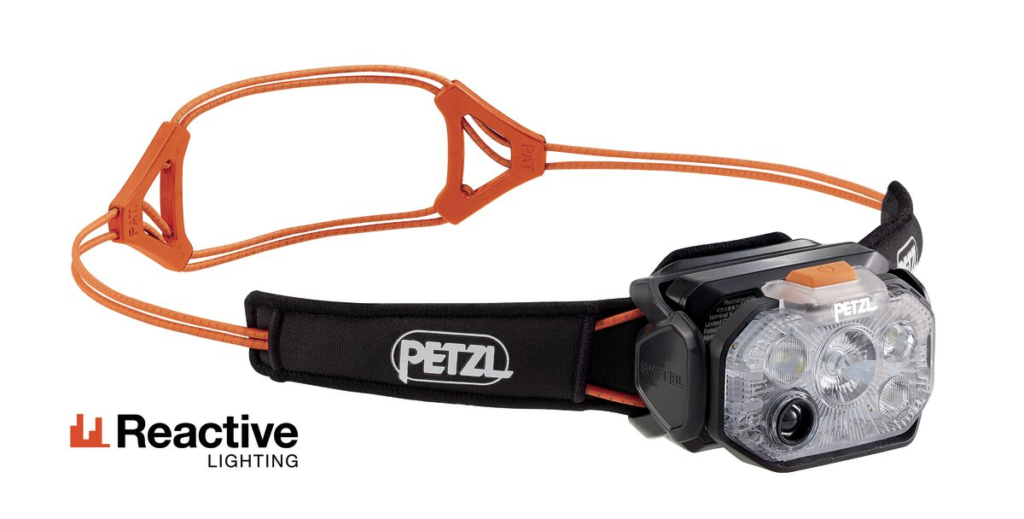
The Petzl Swift RL is the more powerful lamp. At up to 1,200 lumens with Reactive Lighting technology that adjusts output automatically based on ambient conditions, it is one of the most technically sophisticated running headlamps on the market. It is built for runners who push hard on technical terrain and want maximum light output with minimum manual adjustment.
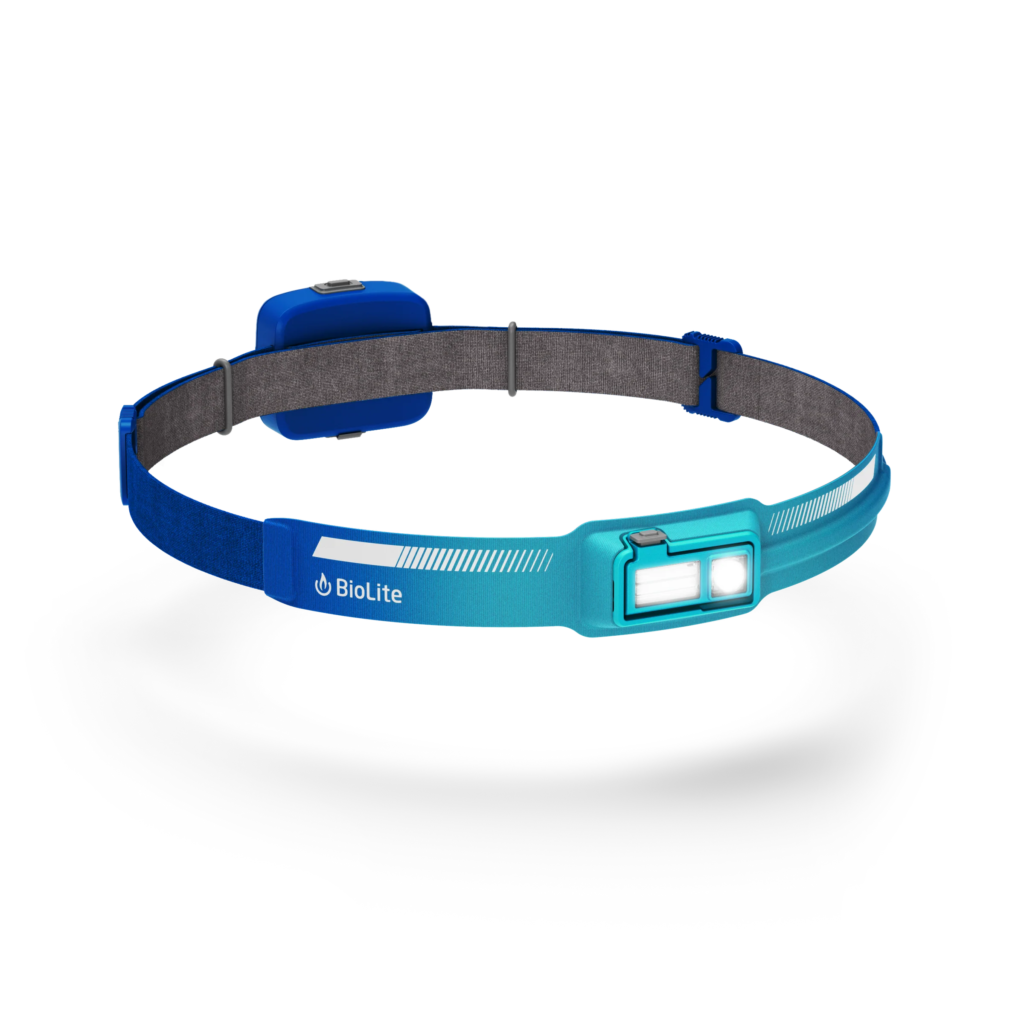
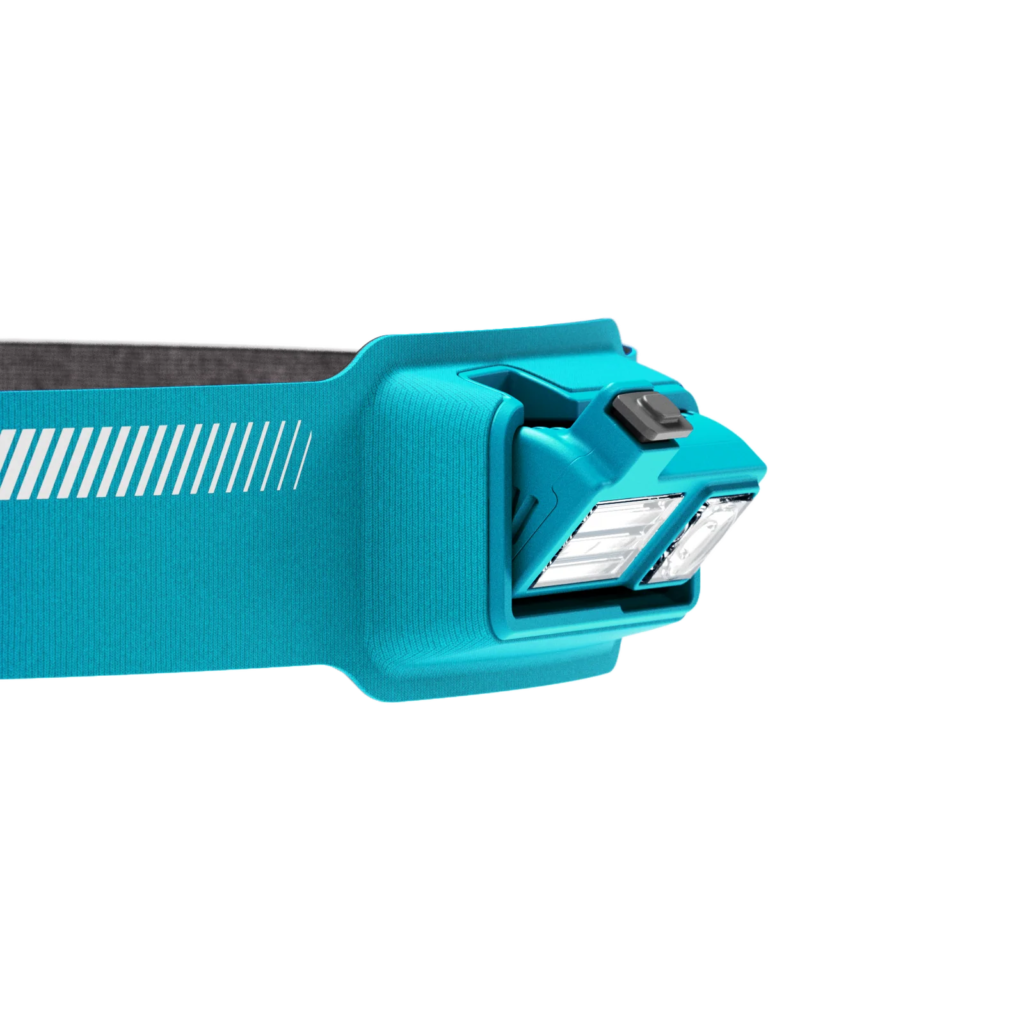
The BioLite Dash 450 is the more comfortable lamp. With a 10mm front profile, integrated electronics in the headband, rear-mounted battery for natural weight distribution, and a fit that genuinely disappears on your head, it is the lamp that gets out of the way and lets you focus on running. For road runners and trail runners who prioritise comfort and low-bounce design above raw lumen counts, nothing in its price bracket comes close.
Specs Side by Side
| Spec | Petzl Swift RL | BioLite Dash 450 |
|---|---|---|
| Max output | 1,200 lm | 450 lm |
| Reactive / adaptive lighting | Yes (Reactive Lighting) | No |
| Weight | ~100 g | ~35 g (lamp unit only) |
| Waterproofing | IPX4 | IPX4 |
| Battery | Integrated rechargeable | Integrated Li-Po (rear-mounted) |
| Pass-Thru charging | No | Yes (run from external bank) |
| Charging | USB (micro or USB-C depending on version) | USB-C |
| Front profile depth | ~25–30 mm | 10 mm |
| Rear safety light | No | Yes (integrated red) |
| Burn time (max) | ~2h (1,200 lm) | ~2h (450 lm) |
| Burn time (low) | Up to 15h | Up to 40h |
| Price (approx.) | ~€100–120 | ~€70–85 |
The Lumen Gap: Does It Actually Matter?
1,200 lumens versus 450 lumens. That is not a marginal difference. On a spec sheet, the Swift RL looks like it is in a completely different category. In practice, the story is more nuanced.
450 lumens is enough for most trail running scenarios at moderate to fast pace on reasonably well-defined trails. It illuminates terrain clearly at short to mid-range distances, picks up rocks, roots, and camber changes with adequate time to react, and does not leave you feeling like you are running in a cone of darkness. The Dash 450 is not dim. It is appropriately bright for its intended use case.
Where the gap becomes real is on technical terrain at pace, on routes with significant exposure, or in situations where you need to see further ahead to make navigation decisions on the move. Running across open moorland at 15km/h in full darkness, or descending a loose scree field at race pace — these are conditions where 1,200 lumens earns its place. The Swift RL’s Reactive Lighting system also means you get more light when you need it (looking up, scanning ahead) and less when you do not (looking down at close terrain), without touching a button. For experienced night runners on demanding terrain, this automation is genuinely useful.
For road runners and trail runners operating on marked routes at moderate pace, the Dash 450’s output is more than adequate. The lumen ceiling of the Swift RL is a meaningful advantage in specific scenarios — not in most runs.
Comfort and Fit: Where BioLite Changes the Conversation
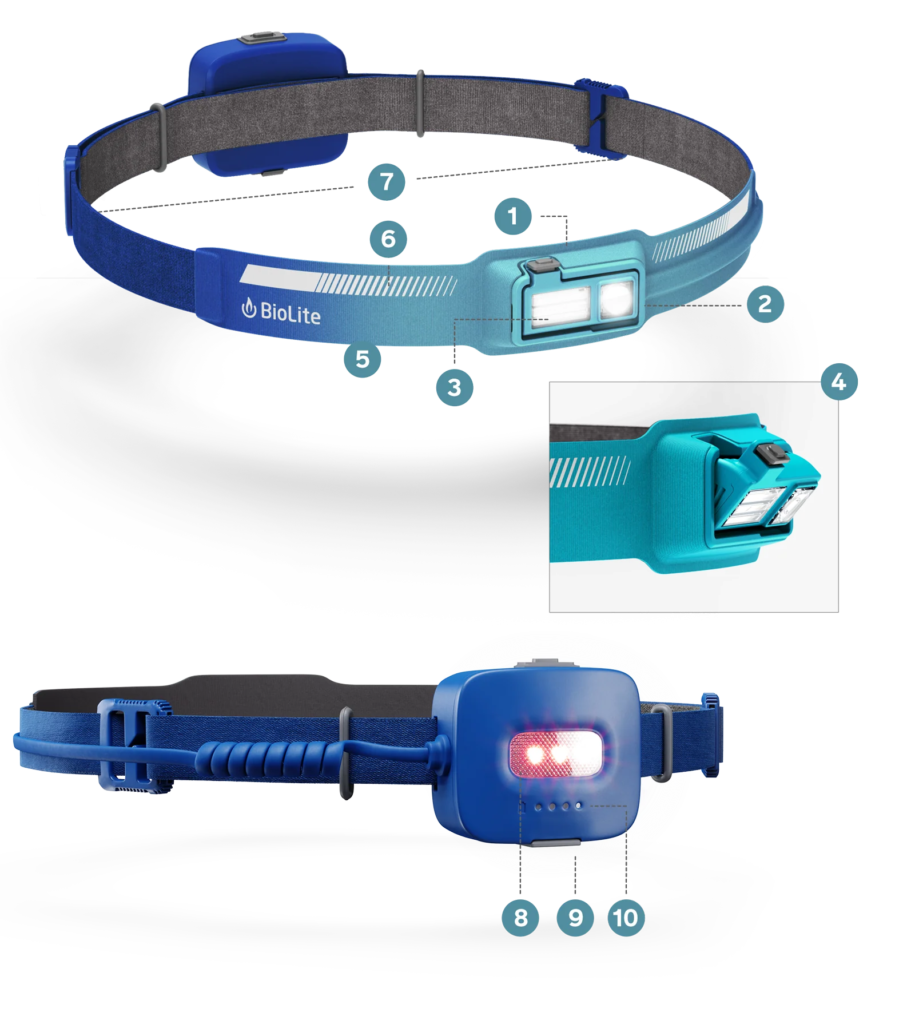
This is where the Dash 450 makes its strongest case, and it is an argument based on engineering rather than marketing. BioLite’s 3D SlimFit construction integrates all the electronics — LED array, circuitry, controls — directly into the performance fabric of the headband, reducing the front profile to just 10mm. The battery sits at the rear of the head, balancing the weight and eliminating the forward-heavy feel that characterises most headlamps including the Swift RL.
The result, in practice, is a lamp that runners consistently describe as feeling like it is not there. Not merely comfortable — absent. For runners who have always found headlamps slightly annoying even when they worked correctly, the Dash 450 is often the first lamp that genuinely changes that experience.
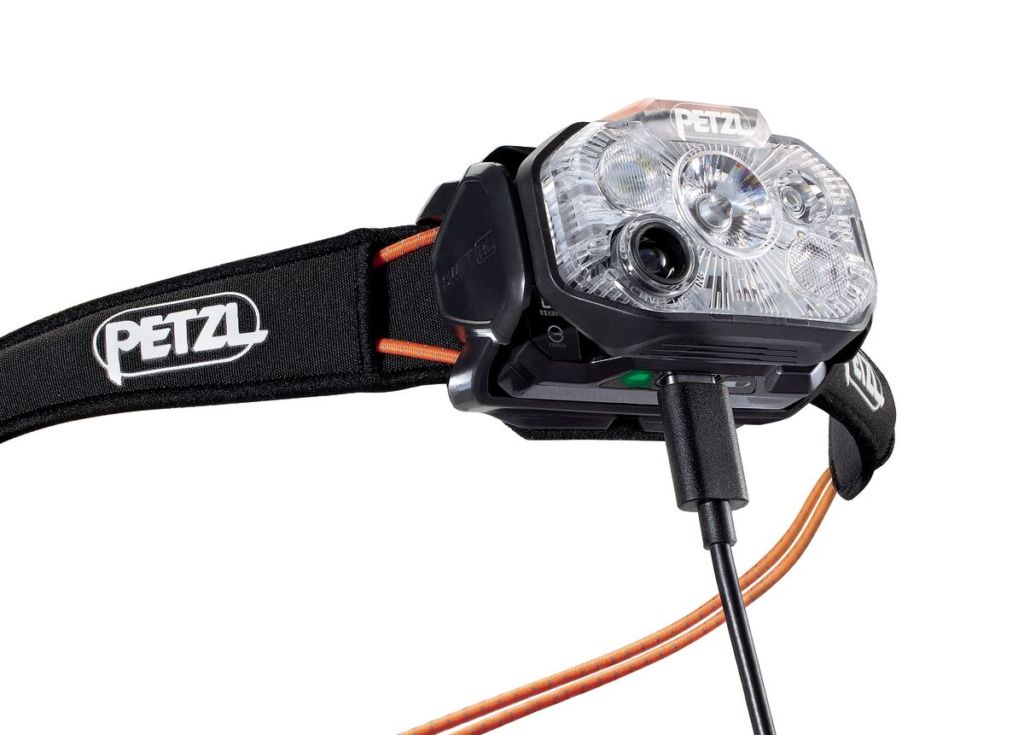
The Petzl Swift RL is not uncomfortable. It is well-fitted, available with both wide and slim headband options, and sits securely during dynamic movement. But it is a conventional headlamp design: a module on the front of your head, a battery inside that module, elastic straps holding it in place. At ~100g, it is heavier than the Dash 450 and carries that weight forward. Over a 3-hour night run, that difference is perceptible.
Pass-Thru Charging: BioLite’s Underrated Advantage
BioLite’s Pass-Thru+ system allows the Dash 450 to be powered directly from an external power bank via a lightweight run cord, bypassing the internal battery entirely. The practical implications are significant: you can run the lamp indefinitely as long as the external bank has charge, you can keep the bank inside your jacket in cold weather (where lithium batteries lose efficiency rapidly), and you can extend runtime on ultras or night races without carrying a bigger lamp.
The Swift RL has no equivalent. Its internal battery is the only power source, and when it runs flat, you are done. At maximum output the runtime is approximately two hours — which means a long night session requires careful mode management or a mid-run charge. Reactive Lighting helps by automatically lowering output when full power is not needed, extending useful runtime, but it is not a substitute for the flexibility of Pass-Thru.
Safety Features
The BioLite Dash 450 includes an integrated rear red safety light — a rear-facing LED on the back of the headband that makes you visible to drivers on shared roads. For road runners and mixed road/trail runners, this is a meaningful feature that removes the need to carry a separate rear blinker. The Swift RL has no integrated rear light.
Both lamps have lockout modes to prevent accidental activation in a bag or vest pocket. Both are IPX4 rated — splash resistant but not fully waterproof. For running in genuinely wet conditions at the level where full waterproofing matters, the Silva Explore 5 with its IP68 rating is the better choice.
Price and Value
The Swift RL retails at approximately €100–120, putting it firmly in the premium running headlamp bracket. The Dash 450 is typically €70–85 — a meaningful price difference for equivalent or better running-specific comfort.
On output per euro, the Swift RL wins decisively. On comfort per euro, the Dash 450 wins. Which metric matters more depends entirely on how you run and where.
Who Should Buy Which
Choose the Petzl Swift RL if: you run on technical mountain terrain at night, participate in trail races or ultras with significant night sections, or regularly push into demanding conditions where 1,200 lumens and Reactive Lighting genuinely change what you can do safely. It is also the better lamp if you want Petzl’s ecosystem — the Swift RL is compatible with helmet adapters and integrates with the broader Petzl sport range.
Choose the BioLite Dash 450 if: comfort and bounce-free design are your priority; you run on roads or well-defined trails where 450 lumens is sufficient; you value the rear safety light for road use; or you want Pass-Thru+ capability for extended efforts without carrying a bigger lamp. The Dash 450 is also the better choice for runners who have tried multiple headlamps and found conventional designs distracting or uncomfortable — the 3D SlimFit construction is genuinely different in a way that matters.
If you are undecided and your running is primarily short-to-medium trail at moderate pace, the Dash 450 is probably the more sensible starting point. The comfort advantage is immediately and consistently felt; the additional lumens of the Swift RL only make a real difference in specific scenarios that most runners encounter rarely, if ever.
For runners building a complete lighting kit — a primary lamp and a backup — the Silva Smini at 51.5g and 250 lumens makes an excellent ultralight companion to either of these. And for those who want to understand where each brand fits in the broader headlamp landscape, our comparisons of Petzl and BioLite cover the full range context.
Explore the full Petzl running headlamp range on the Petzl official website, and BioLite’s complete outdoor lighting lineup on the BioLite official website.