This article is a synthesis of publicly available technical documentation, specialist outdoor press, and verified consumer feedback. hill.camp does not conduct first-hand product testing.
There is a question that comes up every time someone stands in a gear shop weighing two down jackets and a synthetic mid-layer: does the fill actually matter, or is it just marketing? With PrimaLoft, the answer is unambiguous. This is not a brand name stamped onto generic polyester. It is a family of precisely engineered insulation technologies that started with a military brief in 1983 and has since become the benchmark against which every synthetic fill is measured.
More than 900 brands across the outdoor, ski, and activewear industries currently use PrimaLoft in their products. The reason is not brand recognition. It is performance consistency — and increasingly, a sustainability record that is starting to genuinely matter in an industry that has been slow to address its material footprint.
Where PrimaLoft Comes From
The origin story is more interesting than most ingredient brands admit. In 1983, the United States Army commissioned Albany International Corp., a technical textile company, to develop a synthetic insulation capable of replicating the thermal performance of natural goose down — but with one critical improvement: it had to retain its insulating properties when wet. Down collapses when saturated, loses loft, and stops working. In extreme cold, that failure can be life-threatening. The military needed something more reliable.
Albany International delivered. The resulting material — named PrimaLoft One — used ultra-fine synthetic microfibers arranged to mimic the structure of natural down clusters, trapping warm air in a dense network of tiny pockets while shedding water rather than absorbing it. By 1990, the technology had migrated from military procurement into the civilian outdoor market, and the first commercially available PrimaLoft garments appeared. The brand has been iterating ever since, building out a product range that now covers insulation for everything from alpine mountaineering to urban commuting.
How PrimaLoft Actually Works
The principle is the same one that makes any insulation layer function: trapped still air. When air is unable to circulate, it cannot carry heat away from the body. The insulation’s job is to create as many tiny pockets of immobile air as possible, using as little material weight as possible to do it. PrimaLoft achieves this through microfibers that are among the finest produced in the synthetic textile industry — fine enough that they arrange themselves in a three-dimensional matrix that closely resembles the branching structure of a natural down cluster.
The hydrophobic treatment applied to these fibers is the other critical element. Water molecules cannot bond effectively to the fiber surface, so moisture — whether from rain, snow, or perspiration — beads up and migrates away rather than saturating the fill. This is the fundamental advantage over natural down, which relies on the natural oils in the feather structure for water resistance and loses that protection rapidly once those oils are stripped by repeated washing or prolonged exposure to wet conditions.
The practical result: a PrimaLoft garment maintains roughly 95–98% of its insulating performance when wet. A comparable down jacket may retain as little as 30–40% of its loft — and therefore its warmth — in the same conditions.
The PrimaLoft Product Range
PrimaLoft does not sell a single product. It sells a tiered range of insulation technologies, each optimised for a specific performance context. Understanding the differences between them is the key to choosing correctly — both when buying gear and when evaluating what a brand has actually put inside its products.
PrimaLoft Gold
The flagship. PrimaLoft Gold is the highest-performing insulation in the range — maximum warmth, maximum compressibility, maximum water resistance. It is the product that comes closest to matching the loft and packability of high-fill-power down while retaining all the wet-weather performance advantages of synthetic fill. The Gold range includes several variants: a Down Blend option that combines 70% water-repellent goose down with 30% PrimaLoft fibers for a hybrid performance profile; an Active version optimised for moisture management during sustained effort; a Luxe version that prioritises softness and drape for a feel that approaches natural down; and an Aerogel variant that uses aerogel technology to provide exceptional thermal resistance even in genuinely extreme conditions. Gold Eco uses 55% post-consumer recycled fiber. Gold Active+, with four-way stretch construction, is designed for garments that need to move with the body without restriction.
PrimaLoft Silver
The versatile workhorse. Silver sits below Gold in terms of raw thermal performance and compressibility, but it covers a wider range of activities and conditions without the premium price point. It is breathable, supple, fast-drying, and performs well across the full spectrum of outdoor use — hiking, alpinism, skiing, trail running in cold conditions. The Silver range includes an Active version for high-output use, a Down Blend option, a Wool Blend that combines synthetic water resistance with the natural temperature regulation of wool, a Hi-Loft variant with a more generous fill volume for colder conditions, and multiple recycled-content options including a 100% PCR (post-consumer recycled) version. For most mountain athletes operating across variable conditions, PrimaLoft Silver represents the most honest performance-per-weight value in the range.
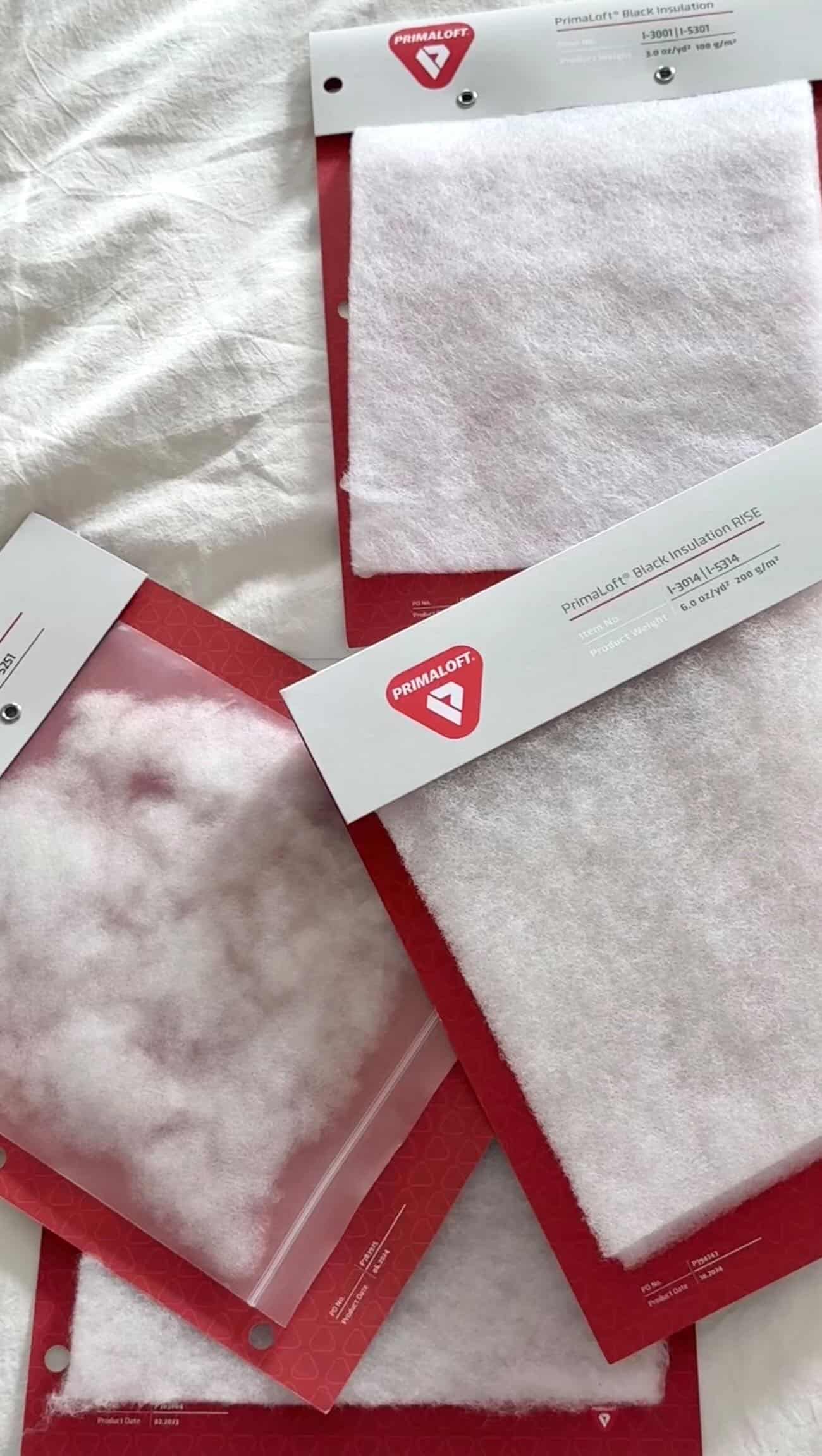
PrimaLoft Black
The accessible entry point. Black is less compressible and less thermally efficient than Gold or Silver, but it is reliable, durable, and significantly more affordable — which makes it the correct choice for everyday use, urban wear, ski gloves, and children’s outerwear where the technical ceiling is lower but the value requirement is real. The Black range includes a Hi-Loft version for more generous warmth, a Hi-Loft Ultra with enhanced shape recovery, a ThermoPlume variant that mimics the visual and tactile character of natural down clusters, and an Eco version built from recycled materials.
PrimaLoft BIO
The most consequential recent development in the PrimaLoft range. BIO is the first synthetic insulation designed to biodegrade — built from 100% post-consumer recycled fibers and developed over four years of research specifically to address the end-of-life problem that synthetic textiles have historically ignored. Under accelerated test conditions, PrimaLoft BIO degrades almost completely within a year. A standard polyester insulation in the same conditions remains essentially intact. Thermal and moisture performance are equivalent to the non-BIO equivalents. This is not a compromise product; it is a technically sound insulation that also happens to solve a problem the industry has been reluctant to confront.
PrimaLoft Active and ThermoPlume
Active is PrimaLoft’s dedicated high-output insulation — engineered for garments worn during aerobic effort where moisture management takes priority over maximum warmth. The fiber structure is optimised for breathability and rapid moisture transfer, and the material is incorporated into stretch fabrics that allow full freedom of movement. ThermoPlume is a different proposition: loose-fill clusters designed to behave like natural down, filling baffled chambers and creating the visual loft and soft hand of a traditional down jacket, but with synthetic wet-weather reliability and 100% recycled fiber content.
PrimaLoft vs. Down: The Honest Comparison
The comparison between PrimaLoft and natural down is not a competition with a universal winner. It is a question of conditions and priorities. Down’s advantages are real: at equivalent warmth levels, high-fill-power down is lighter and more compressible than any synthetic alternative. A 800-fill down jacket can be stuffed into its own chest pocket; a PrimaLoft jacket at the same warmth rating will take up more space and weigh more. Down also offers a wider thermal comfort range — a single jacket can feel appropriate across a broader spread of temperatures, which synthetic fills cannot quite match.
But the wet-weather failure mode of down is a genuine limitation, not a theoretical one. In the maritime climates of the Pacific Northwest, the Scottish Highlands, Patagonia, or the western Alps, a down jacket that gets saturated is a cold, heavy, useless object. PrimaLoft garments do not have this failure mode. They also dry faster, are easier to wash without specialist equipment, and are available in vegan and recycled-content versions for those for whom those factors matter. They are also consistently less expensive at equivalent warmth levels.
The practical guide: choose down for dry-cold conditions, alpine expeditions, and ultralight applications where weight and packability are primary constraints. Choose PrimaLoft for wet climates, high-output activities, multi-day trips where staying perfectly dry is unrealistic, and any situation where cost-to-performance ratio matters more than ultimate packability. Understanding this distinction also helps when reading our sleeping bag selection guide, where the same trade-off applies — and where the consequences of a wrong choice at minus fifteen degrees are considerably more serious than during a day hike.
PrimaLoft vs. GORE-TEX: Different Problems, Different Solutions
These two technologies are frequently compared as if they are alternatives, which reflects a misunderstanding of what each one does. GORE-TEX is a waterproof-breathable membrane — it goes in the outer shell layer of a garment and keeps water from penetrating while allowing moisture vapour to escape. PrimaLoft is an insulation fill — it goes in the mid-layer and creates warmth. They solve different problems and often appear in the same garment. A 3-in-1 ski jacket might use a GORE-TEX outer shell and a PrimaLoft inner layer. Burton, for example, uses GORE-TEX PRO in the hardshell outer layers of its [ak] collection and PrimaLoft in its insulated pieces — not as competing choices, but as complementary technologies occupying distinct functional roles.
For a deeper look at how Pertex fits into the same ecosystem as both a shell fabric and an insulation companion, our article on Pertex fabric technologies covers the full range of Pertex Quantum, Shield, and Shield Air constructions.
The Brands That Use PrimaLoft
The list covers most of the serious players in technical outdoor and ski apparel. Patagonia uses PrimaLoft Gold in its Nano Puff line — one of the most scrutinised and benchmarked lightweight insulation jackets in the industry. Millet uses Silver across its alpine and trail running insulation range. Vaude incorporates PrimaLoft into its softshell and insulated pieces. Rab uses it in gloves and technical mid-layers alongside its down-dominant sleeping bag program. Scott builds PrimaLoft into ski touring and freeride insulation. Black Diamond relies on it for gloves and belay jackets. Karpos, Picture, Rossignol, Salomon — the common thread is that these are brands making deliberate choices for specific performance reasons, not simply licensing a familiar label.
Burton deserves particular mention: the brand has built much of its mid-layer and insulated outerwear range around PrimaLoft, and its engineering team has been unusually transparent about why — particularly the wet-weather reliability that matters in the variable conditions of snowboard-specific use, where riders spend time sitting in lifts, hiking in the backcountry, and generating significant body heat during descents within the same session.
The North Face has also used PrimaLoft extensively in its ThermoBall range, a product line explicitly designed to replicate the loft and packability of down using a synthetic fill — one of the more commercially successful attempts to close the down/synthetic performance gap.
The Sustainability Record
PrimaLoft has been more aggressive than most ingredient brands in addressing its environmental footprint. Since 2020, 90% of its production incorporates at least 50% post-consumer recycled fiber — primarily derived from plastic bottles. The scale of that commitment is significant: hundreds of millions of bottles have been diverted from waste streams and converted into insulation fiber.
The P.U.R.E. manufacturing process (Produced Using Reduced Emissions) eliminates the hot-air drying stage from fiber production, reducing CO₂ emissions during manufacture without altering the material’s performance properties. PrimaLoft BIO addresses the end-of-life problem — which the industry has largely avoided — with a biodegradable formulation that performs identically to conventional PrimaLoft but degrades in conditions where standard polyester would persist essentially indefinitely.
None of this makes synthetic insulation a zero-impact material. It is still derived from petrochemical feedstock in its virgin form. But the trajectory is the right one, and the commitment to recycled content at production scale is more substantive than the headline-driven sustainability claims that characterise much of the outdoor industry’s environmental communication.
Where PrimaLoft Sits in a Layering System
PrimaLoft belongs in the mid-layer: between a moisture-wicking base layer and a weather-protective outer shell. Its job is warmth, not weatherproofing. The weight and thickness of the fill — measured in grams per square metre — determines how much warmth it delivers. Lighter fills (around 40–60 g/m²) are suitable for active use and mild cold; heavier fills (120–200 g/m²) are for static warmth in serious cold. Some garments use variable fill weights across different body zones, with more insulation at the core and less at the arms where freedom of movement and heat output are both higher.
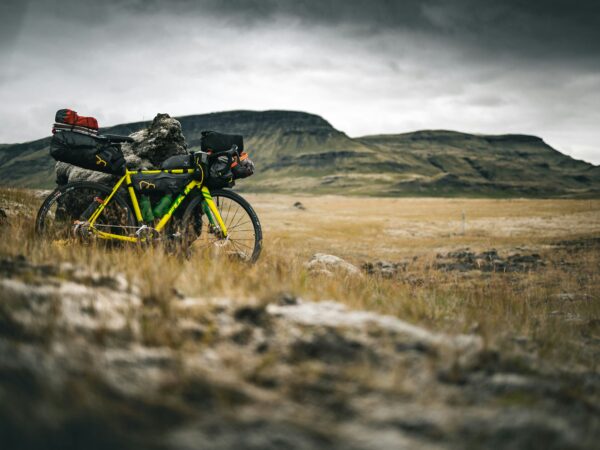
For bikepacking and extended outdoor travel, PrimaLoft Silver Active and Gold Active are the correct choices — both breathe well enough to function during effort and recover their warmth quickly when the pace drops. For trail running in cold or variable conditions, the ultralight Active variants in 40–60 g/m² weights offer meaningful protection without the bulk penalty that would compromise movement and ventilation.
Care and Maintenance
PrimaLoft is significantly easier to maintain than down. Machine wash at 30°C using a gentle liquid detergent — no fabric softener, which coats the fibers and degrades moisture management. Tumble dry on low heat or air dry flat; do not dry on a radiator. Unlike down, PrimaLoft does not require tennis balls in the dryer to restore loft, and it does not mat or clump after washing. The fiber structure is more robust than natural down and tolerates repeated washing cycles without significant performance degradation.
If the garment also has a DWR-treated outer fabric, periodic re-proofing with a spray-on DWR treatment will restore water beading on the shell. The PrimaLoft fill itself does not require separate treatment.
The Right Choice for the Right Conditions
PrimaLoft is not the answer to every insulation question. It is the answer to a specific set of them — and for those questions, it is currently the most technically credible answer available. Wet conditions, high-output activities, multi-day adventures where laundry is not an option, climates where precipitation is unpredictable: in all of these contexts, PrimaLoft’s combination of reliable warmth, moisture management, and progressive sustainability credentials makes it the rational default.
When conditions are reliably dry and cold, and when weight and packability are the primary constraints, high-fill-power down still has the edge. Understanding precisely where that line falls — for your climate, your activity, your pack weight tolerance — is the real skill. PrimaLoft makes that line easier to find by being consistently, predictably good on its side of it.
For the full current range of PrimaLoft products and technical specifications, the definitive reference is primaloft.com.