This review is a structured synthesis of 4 independent sources — technical launch coverage, an in-depth long-term test with owner comments, and a detailed hands-on review — assembled with AI assistance and edited before publication. hill.camp does not test products first-hand.
In this QUOC Gran Tourer III review, one thing stands out immediately: eight years is a long time to sit on one silhouette. QUOC launched the original Gran Tourer back in 2018 — read our full review of the original Gran Tourer — as one of the first shoes built specifically for gravel riding, when most of the market was still bolting mountain bike cross-country shoes onto drop-bar bikes and calling it a day. The Gran Tourer II followed with a dial closure and a stiffer sole. Now there’s a third generation, and QUOC is calling it the most evolved version of the shoe it has ever made. That’s the kind of claim every brand makes at launch. The question is whether the Gran Tourer III actually earns it.
Quick Specs
| Price | £170 / $250 / €230 |
| Weight | 712–736g per pair (size 45, testers vary) / 321g claimed per shoe, EU42 |
| Sizes | EU38–47 |
| Colors | Lilac Haze, Ash |
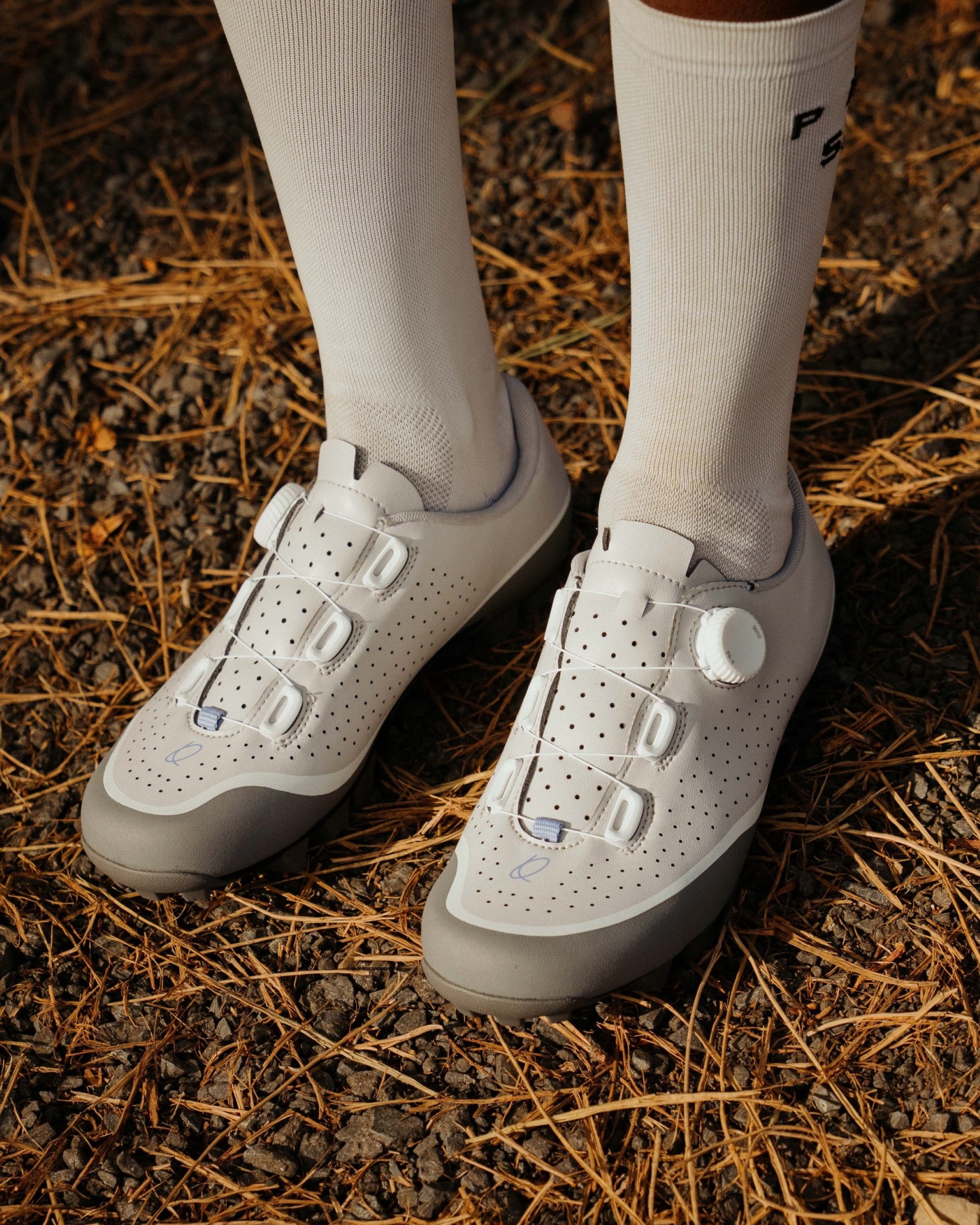
| Closure | QUOC Tech Dial III, metal-core laces, 10° rotational precision |
| Midsole | Nylon and glass-fibre composite |
| Outsole | Reformulated hybrid rubber, recessed SPD, replaceable toe studs |
| Upper | Matte microfibre, laser-cut perforations, jersey-lined collar |
| Cleat compatibility | 2-bolt SPD / MTB |
From Laces to a Third-Generation Dial: A Quick History
The original Gran Tourer built its reputation on a lace-up closure and a chunky, walkable sole at a time when that combination barely existed in gravel footwear. One long-term owner who put serious miles on the original shoe — including wet-weather testing in tropical conditions — praised the deliberate choice of laces over a dial, arguing that laces simply have less to go wrong mid-ride than a mechanical closure. That philosophy didn’t survive into later generations. The Gran Tourer II introduced a two-way dial and a stiffer sole, and the Gran Tourer III pushes further still, replacing the previous dial with the QUOC Tech Dial III and switching to metal-core laces that QUOC says don’t stretch, improving mid-ride adjustment precision. It’s a fair encapsulation of where the whole category has moved: what started as a simple, rugged shoe for exploring has become progressively more engineered, generation after generation.
Design: Two Halves, One Shoe
The Gran Tourer III reads as a shoe split into two distinct zones. Above the sole, the upper is light and delicate, built from a matte microfibre with laser-cut perforations for breathability, and finished with a 3M reflective wave print that separates the two-tone colourway. Below that line, things get considerably more rugged: stiff rubber, aggressive lugs for loose terrain, and a pair of replaceable toe studs borrowed from the pricier Gran Tourer XC — useful for extra grip in mud, even if most riders won’t need to swap them often.
One trade-off of that airy upper is water resistance. Testing found the perforations let moisture in fairly quickly in wet conditions, meaning shoe covers are recommended for damp rides — a departure from the more weatherproof reputation the original Gran Tourer built for itself. The upper also picks up oil stains and scuffs relatively easily, particularly in the lighter Lilac Haze and Ash colourways QUOC launched the shoe in.
Fit and Sizing: Room to Breathe, With a Caveat
QUOC widened the toe box for this generation, and testers with a tendency toward hot spots noticed the difference immediately, along with a bit of extra room around the heel. On a 100km test ride, that roominess translated into comfort as feet naturally swell over distance — exactly the kind of margin that matters on all-day rides rather than short efforts.
The catch is that « wider than before » doesn’t necessarily mean wide in absolute terms. One tester with narrower-than-average feet still found the shoe filled out at its widest point, and flagged that riders with genuinely broad feet should try the Gran Tourer III before buying rather than ordering on spec. That said, reader feedback on the review pushed back on this point directly — one rider with wide feet and bunions reported that after QUOC’s sizing team recommended a size based on detailed foot measurements, the shoes fit better than several dedicated wide-fit alternatives they’d previously tried. Fit on wide feet, in other words, seems to depend heavily on getting the sizing conversation right rather than trusting the stock chart — worth factoring in given hill.camp’s own gravel bike shoes buying guide flags fit as the single biggest variable across the category.
On the Bike: Sole, Grip, and That New Outsole
The nylon and glass-fibre composite sole was rated among the stiffest testers have used, while still retaining enough flex to keep walking and hike-a-bike sections comfortable rather than awkward. The reformulated hybrid rubber outsole — built to balance power transfer with a genuinely walkable tread — was consistently singled out as one of the shoe’s strongest features, offering confident grip when carrying the bike over muddy or loose ground.
The dial is a different story. Testing found the QUOC Tech Dial III’s « 10-degree rotational precision » translates in practice to needing more turns to achieve the same tightness a comparable Boa-style system would deliver in fewer clicks. Unlike Boa, turning the dial anti-clockwise releases tension across the whole system rather than incrementally, which meant one reviewer had to re-tighten partway through rides, and found the dial itself not especially grip-friendly with gloves on. Independent test scores backed this up, rating the closure system 5 out of 10 for performance and comfort — clearly the shoe’s weakest component, even in an otherwise strong package that scored 9/10 for quality, 9/10 for performance, and 9/10 for fit.
Weight and Value: Where It Sits in the Range
Weight figures vary slightly depending on who’s weighing the shoe — one tester recorded 712g per pair at size 45, another 736g for the same size — but both land lighter than the Gran Tourer II’s claimed 756g, a modest but real improvement. At £170, the Gran Tourer III positions itself below QUOC’s race-oriented Gran Tourer XC (£240), while undercutting some rivals: it’s lighter and airier for warm-weather riding than the Gore-Tex-equipped Shimano EX7 GTX, though that shoe holds a clear edge in foul-weather protection. Compared with the wider-fitting Fizik Vento Proxy Wide, the Quoc wins on walkability and off-bike style but leans less aggressively off-road. Riders on a tighter budget might also look at something like the Rockrider Race 900, which offers a comparably stiff sole for a fraction of the price, at the cost of ventilation and all-weather versatility.
Our Take
The Gran Tourer III is a clear, deliberate evolution rather than a reinvention — QUOC has kept what worked (that walkable, grippy outsole, the two-zone design language) and refined the parts that needed it (wider toe box, updated sole compound, lighter weight). The Tech Dial III is the one component that doesn’t quite match the rest of the shoe; it works, but it’s noticeably behind the best dial systems on the market, and it’s the detail most likely to frustrate riders who’ve used a tighter, more responsive closure elsewhere. Fit is also worth taking seriously before buying: the roomier toe box is real, but riders with genuinely wide feet should talk to QUOC’s sizing team or try a pair in person rather than assume « wider than the last generation » means « wide enough. » For riders whose gravel days involve as much walking, hiking, and café stops as pedalling, though, this remains one of the most distinctive-looking and comfortable shoes in the category — dial gripes aside.
Frequently Asked Questions
How does the QUOC Gran Tourer III differ from the Gran Tourer II?
The Gran Tourer III replaces the previous dial with the QUOC Tech Dial III and metal-core laces, widens the toe box, reformulates the rubber outsole for better grip and walkability, adds replaceable toe studs borrowed from the Gran Tourer XC, and trims weight slightly compared with the II’s claimed 756g per pair.
Is the QUOC Gran Tourer III waterproof?
No. Testing found the perforated upper lets moisture in fairly quickly in wet weather, and independent water resistance scoring rated it just 3 out of 10. Shoe covers are recommended for damp or rainy rides.
What sizes and colors does the Gran Tourer III come in?
The shoe is available in whole sizes from EU38 to EU47, launching in a Lilac Haze colourway with an Ash version released shortly after.
Does the QUOC Gran Tourer III fit wide feet?
It’s a mixed picture. One reviewer with narrow feet still found the shoe filled out at its widest point and recommends trying it in person if you have broad feet. However, at least one rider with wide feet and bunions reported an excellent fit after getting a size recommendation directly from QUOC’s sizing team, so it’s worth reaching out to the brand before ruling the shoe out.
How much does the QUOC Gran Tourer III cost?
The Gran Tourer III retails for £170 / $250 / €230, positioning it below QUOC’s race-oriented Gran Tourer XC.
QUOC’s full range and current colourways for the Gran Tourer III are available directly from quoc.cc.