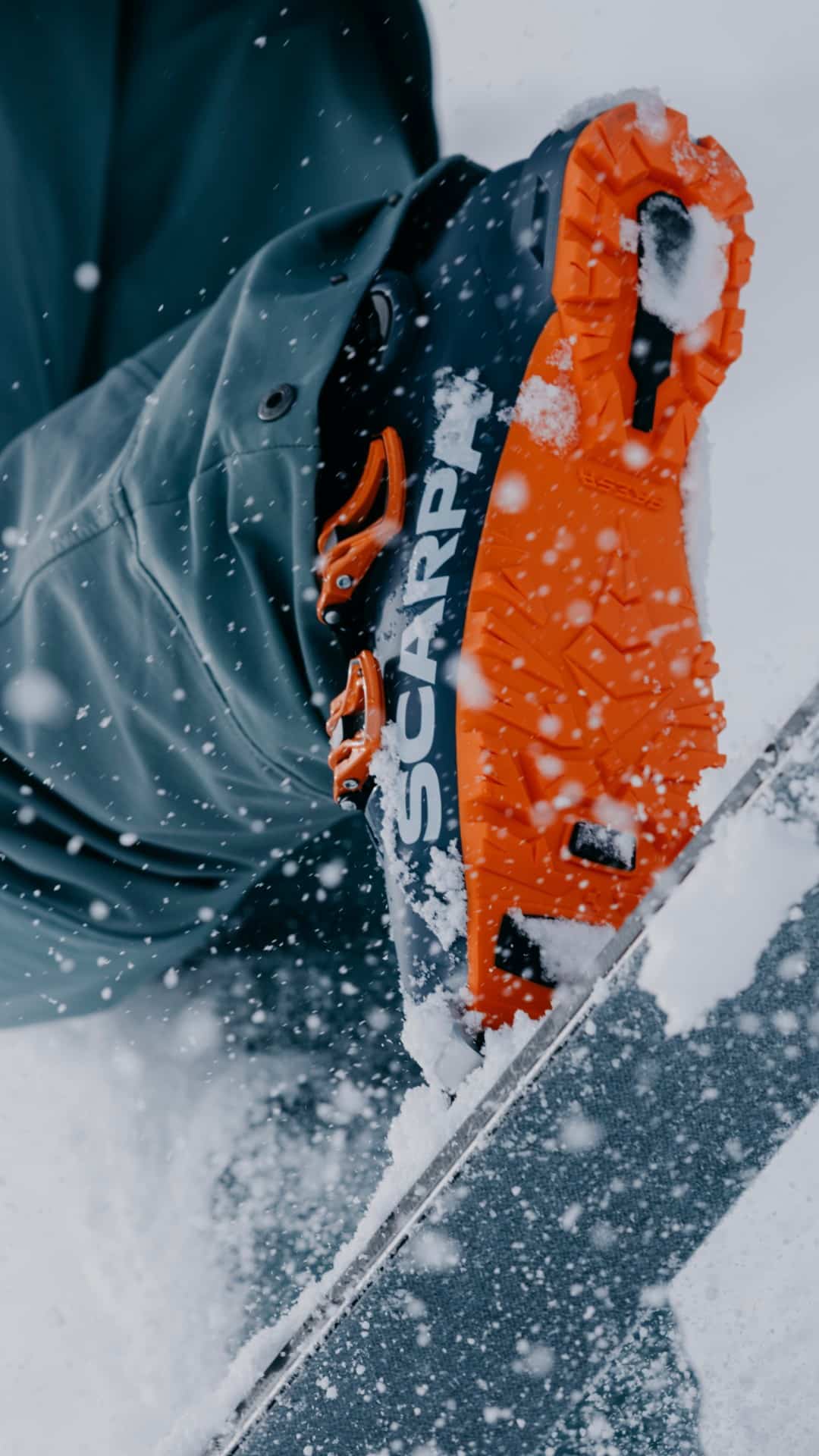
The name is an acronym, though most people never bother to unpack it. SCARPA stands for Società Calzaturiera Asolana Riunita Pedemontana Anonima — Associated Shoe Manufacturing Company of the Asolo Mountain Area. It is a name that tells you immediately where this brand comes from and what it was built to do. Founded in 1938 in Asolo, a small town in the Veneto foothills of the Dolomites, SCARPA began as a cooperative of skilled leather craftsmen gathered together with a single stated mission: to produce the best footwear anywhere. Nearly ninety years later, that mission is still the operating principle, and the factory is still in the same part of northern Italy where it started.
The brand shares a mountain homeland and a generation of origin with La Sportiva — both born from the same Dolomite-area shoemaking culture in the late 1930s, both still family-owned, both still manufacturing in Italy. The parallel histories are not a coincidence: the Veneto-Trentino region produced the finest mountain bootmakers in the world, and these two brands emerged from the same concentrated pool of craft expertise.
A Founding Story With an Unlikely Twist
SCARPA’s origin has a detail that stands out in the otherwise earnest world of outdoor gear history. The company was established in 1938 by Rupert Guinness, the 2nd Earl of Iveagh — a wealthy Anglo-Irish nobleman, heir to the Guinness brewing dynasty, and Rector of the University of Dublin. Guinness owned land in the Asolo area and recognised the exceptional shoemaking talent concentrated in the region. He hired the best craftsmen he could find and charged them with making the best shoes in the world. It is not the founding story one typically associates with a technical climbing boot brand.
Luigi Parisotto entered the picture in 1942, beginning as an apprentice at age eleven. He learned shoemaking from the inside, eventually founding a small workshop with his brothers in the early 1950s. In 1956, Luigi Parisotto and three brothers purchased SCARPA outright. Under their leadership, production expanded from 17 craftspeople to 50–60 pairs per day. The brand they inherited became the brand they defined. Today, SCARPA is owned and operated by the third generation of the Parisotto family — Sandro, Piero, and Cristina — with headquarters and factories still located in Asolo and Montebelluna, where the company has operated since inception.
The Only Brand That Covers Every Mountain Sport
SCARPA makes a claim that it states directly and that is difficult to dispute: it is the only company in the world that builds performance footwear for the full range of mountain sports. Skiing and ski mountaineering. Mountaineering and high-altitude expedition. Rock climbing and bouldering. Approach and hiking. Trail running. No other brand maintains a technically credible presence across all of these disciplines simultaneously, with genuine performance products in each category rather than token entries.
This breadth is both SCARPA’s most distinctive characteristic and its greatest technical challenge. The demands of a ski mountaineering boot are fundamentally different from those of a rock climbing shoe or a trail runner. Managing that range without producing mediocre products in any category requires genuine engineering depth — and it is where SCARPA’s Italian manufacturing heritage, which keeps all product development and production under direct family oversight, becomes a structural advantage rather than a romantic detail.
Iconic Products
The Maestrale and Maestrale RS are SCARPA’s most commercially significant products globally, consistently described as the best-selling alpine touring ski boots in the world. First introduced in the early 2010s and updated significantly in 2023, they define the benchmark for what a backcountry ski boot should be: light enough to tour effectively, stiff enough to ski demanding terrain, and warm enough for cold alpine conditions. The Maestrale is the more forgiving of the two — built for long days and all-mountain touring — while the Maestrale RS adds torsional rigidity and edge control for more aggressive skiers. Both have been carried on significant backcountry objectives across multiple continents and have outlasted multiple generations of competitors.
In rock climbing, the Instinct line is SCARPA’s reference performance platform. The Instinct VS, with its Velcro closure and curved asymmetric last, is among the most recommended all-around high-performance climbing shoes in independent reviews — precise enough for small holds and technical faces, versatile enough to be worn across a wide range of rock types and climbing styles. The Drago sits above it in the lineup for those who want a more specialist, stiffer edging shoe. For entry-level and intermediate climbers, the Origin has long been SCARPA’s most accessible climbing shoe — a flat, comfortable last that allows new climbers to learn the sport without the discomfort that overly aggressive downturned shoes impose.
In trail running, the Golden Gate Kima RT and Spin Ultra are the brand’s most prominent racing platforms. The Golden Gate Kima RT is particularly well regarded for technical mountain terrain — fast, precise, and with the kind of outsole grip that SCARPA’s climbing heritage naturally produces. The Ribelle Run line addresses the same performance-focused runner with a slightly different geometry. In hiking and mountaineering approach, the Zodiac Tech is one of the most technically capable approach shoes on the market — a hybrid that bridges the gap between a stiff mountain boot and a climbing shoe on alpine rock.
The Athletes
Shawn Raboutou, the Boulder, Colorado-based climber and the only person with two confirmed V17 (9A) boulder problems to his name, joined the SCARPA roster in 2023. He climbs primarily in the Drago LV and Instinct VSR — tools chosen for their precision on the kind of minuscule footholds that define problems at his grade. His presence on the team alongside other strong competition and outdoor climbers including Alex Puccio, Nathaniel Coleman, and Alannah Yip gives SCARPA a roster that is competitive at the absolute top of the sport.
Krissy Moehl, one of the most accomplished ultra-distance trail runners in North American history, is among SCARPA’s most prominent running ambassadors. A multiple-time winner of UTMB, Hardrock 100, and The Hurt 100, and a former holder of the Wonderland Trail FKT, she races primarily in the Golden Gate Kima RT and Golden Gate ATR. Her results over more than twenty years of competitive ultra-running give SCARPA’s trail running programme a credibility that goes beyond marketing.
SCARPA’s broader athlete programme, run out of both its Italian headquarters and its Boulder, Colorado North American office, spans climbing, mountaineering, ski mountaineering, and trail running. Since 2020, the brand has also operated the SCARPA Athlete Mentorship Initiative (SAMI), a programme pairing aspiring athletes from underrepresented communities with established professionals from the SCARPA team. Now in its fourth year, SAMI has graduated more than 30 mentees and is regarded as one of the more substantive diversity initiatives in the outdoor industry.
Manufacturing, Quality, and the Italian Advantage
Like La Sportiva, SCARPA keeps performance footwear manufacturing in Italy — in Asolo and Montebelluna, the same region that built the brand. In 1965, SCARPA became the first manufacturer from the Asolo region to export to the United States, shipped by an Italian-American in Boston who recognised that nothing else available in the American market matched what was being made in the Veneto foothills. That reputation for construction quality — durability, fit, and materials integrity over the long term — has remained SCARPA’s most consistent competitive argument across all the categories it operates in.
The Parisotto family’s direct ownership of both the business and the manufacturing process is, in an era of sprawling global supply chains, an unusual degree of accountability. When a SCARPA boot fails, the responsibility for that failure sits with the same family that has been building boots in the same region for seven decades. That structural reality produces a different kind of attention to detail than a brand separated from its manufacturing by thousands of kilometres and several layers of contract relationships.
SCARPA is not the loudest brand in the outdoor industry. It does not produce the most marketing noise, does not chase the fastest trend cycles, and does not build its identity around a single hero product or a single headline athlete. What it does, consistently, is make technically serious footwear across a wider range of mountain disciplines than any other brand — and make it in Italy, in the same region where it has been making it since 1938. For anyone who spends serious time in the mountains, across multiple seasons and multiple disciplines, that breadth and that consistency are worth paying attention to. Explore the full range on the SCARPA official website.