
The Cannondale Topstone and the Trek Checkpoint have been trading blows in the adventure gravel category for years. Both brands have a loyal following, both bikes have undergone significant updates in recent generations, and both aim at a similar type of rider: someone who wants a do-it-all gravel platform capable of long days, loaded touring, and the occasional fast road section. The details, however, tell a very different story.
This is our full head-to-head comparison. No brand cheerleading, no vague generalisations — just a straight assessment of what each bike does well and where each one falls short.

Brand Philosophy and Design Intent
The Cannondale Topstone Carbon is built around a proprietary idea: gravel compliance via actual suspension. The KingPin rear system and optional Lefty Oliver fork are Cannondale’s bet that small-travel, gravel-specific suspension is the future of the category. It is a polarising choice — the Lefty, in particular, remains unusual enough to divide opinion — but it is a genuine engineering commitment, not a marketing trick.
The Trek Checkpoint (Gen 3, third generation) took a different direction with its latest update. Rather than chase racing credentials, Trek repositioned the Checkpoint as a comfort-forward, adventure-focused platform, passing the race brief to the new Checkmate SLR. The result is a bike with a more upright, endurance-inspired geometry, a visible IsoSpeed decoupler for rear compliance, wider tyre clearance up to 50mm, and more mounting points than ever. It is, deliberately and unapologetically, a bike for long days rather than short races.
Our full Cannondale brand profile gives you more background on how the Topstone fits into Cannondale’s broader lineup.

Frame Materials and Construction
Both bikes are available in aluminium and carbon variants. The Topstone Carbon uses Cannondale’s Proportional Response construction, tuning the carbon layup per frame size to ensure consistent stiffness and compliance regardless of rider height. It includes the KingPin rear suspension pivot, a StashPort downtube storage compartment, and full internal cable routing. The frame accepts a 27.2mm internally routed dropper seatpost and is UDH compatible.

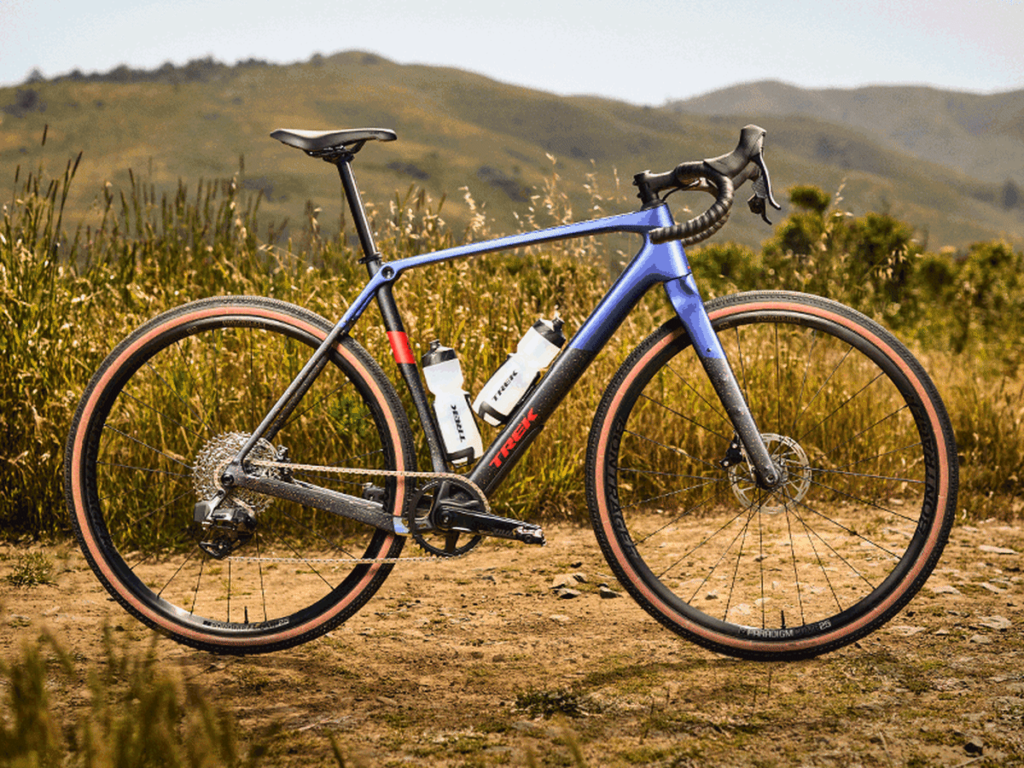
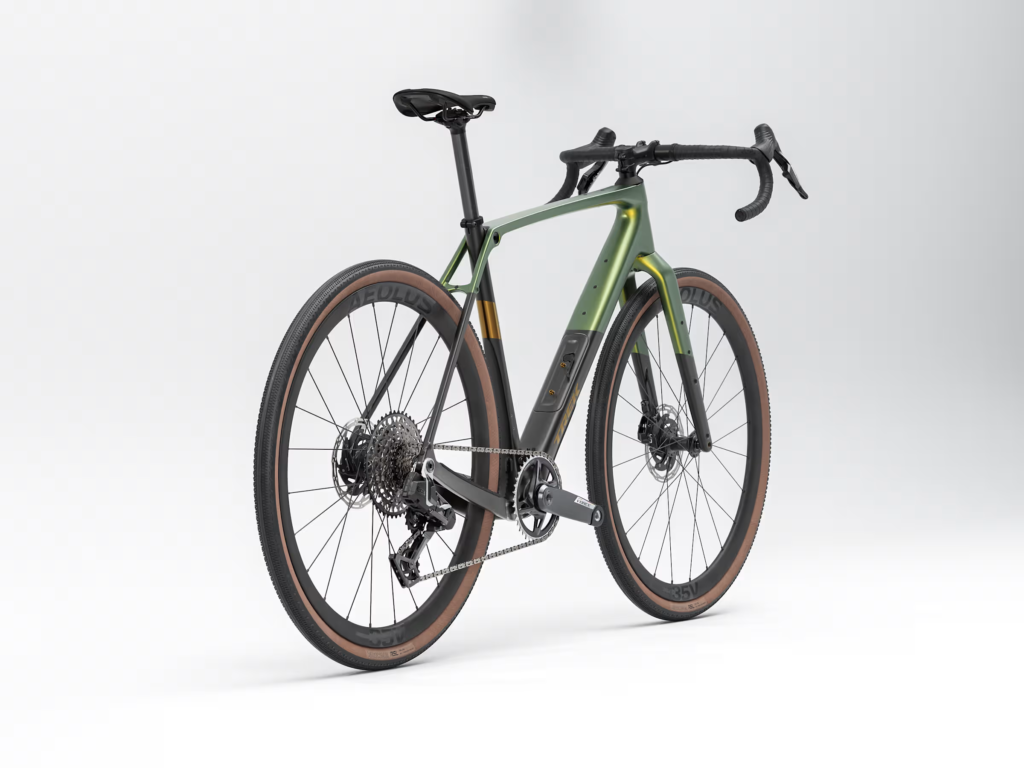
The Trek Checkpoint SL (carbon) uses Trek’s own OCLV carbon, and the Gen 3 redesign made the IsoSpeed decoupler — Trek’s passive rear compliance system — externally visible for the first time, mounted prominently around the seat clamp. The Checkpoint also gains an enlarged downtube storage compartment in this generation (significantly larger and more usable than on previous models), rear rack mounts, carbon fork with multiple cage mounts on each leg, and compatibility with a suspension fork up to 40mm of travel. The Checkpoint ALR (aluminium) version brings most of these features to a lower price point, with Trek’s hidden-weld construction giving an unusually clean look for an alloy frame.
Geometry and Riding Position
The Topstone Carbon’s 2025 geometry update steepened the seat tube angle to 73.1 degrees and increased the bottom bracket drop significantly, lowering the centre of gravity for a more planted feel. Cannondale’s OutFront geometry concept — a slack head tube paired with a generous 55mm fork rake — creates a longer front centre that inspires confidence at speed without sacrificing agility. The riding position leans slightly more toward the road-bike end of the gravel spectrum, which makes the bike feel livelier on fast mixed-surface rides.
The Trek Checkpoint Gen 3 went the other way. Handlebars are higher and closer to the rider than on the outgoing model, and the geometry stack-to-reach ratio is more typical of an endurance road bike than an aggressive gravel machine. The 72.3 degree head tube angle is a touch slacker than pure road, and combined with a 66mm trail figure and a short wheelbase of around 1,058mm, it produces a bike that feels predictable and easy to manage over long days, but is not going to inspire you to push hard into technical corners.
Compliance and Suspension
Both bikes address the fundamental gravel challenge — comfort over rough surfaces — through different mechanisms.
The Topstone Carbon uses actual suspension: KingPin rear system (up to 30mm travel) and Lefty Oliver front fork (30mm) on top builds. The suspension is passive and well-tuned for the small, repetitive impacts typical of gravel riding rather than big MTB-style hits. It is a real advantage on long corrugated tracks or washboard gravel, especially over multiple hours when fatigue accumulates.
The Checkpoint relies on Trek’s IsoSpeed decoupler — a passive system that allows the seat tube and top tube junction to flex independently of the bottom bracket shell, letting the rear end absorb vertical forces without affecting pedalling efficiency. It is a thoroughly proven system, used across Trek’s road and gravel range for years, and it works. The compliance it adds is meaningful, if less dramatic than full suspension. The Checkpoint also supports a suspension fork up to 40mm travel, which provides an upgrade path for riders who want more cushioning up front.
Tyre Clearance
Both bikes offer up to 50mm of tyre clearance in their Gen 3 / 2025 specifications. The Topstone Carbon goes to 52mm (frame, 1x) and 56mm on the fork. The Checkpoint Gen 3 goes to 50mm. Neither will feel restricted — 45mm tyres are very much within normal range for both — but the Topstone has a slight edge if you want to run the widest possible rubber.
Both bikes use 700c wheels. The Checkpoint is specified with 40mm to 42mm tyres across most builds, while the Topstone typically ships with 44mm WTB Raddler or similar at the carbon level.
Bikepacking and Mounting Points
The Gen 3 Checkpoint is remarkably well-equipped for adventure use. Multiple mounting points inside the front triangle for clean frame bag installation, an enlarged downtube storage compartment, rear rack mounts on the carbon SL model, triple cage mounts on the fork legs, and mudguard eyelets. Trek even includes an adventure top-tube bag with some builds. The Checkpoint accepts a dropper seatpost and is compatible with both 1x and 2x drivetrains, giving it unusual flexibility at the spec level.
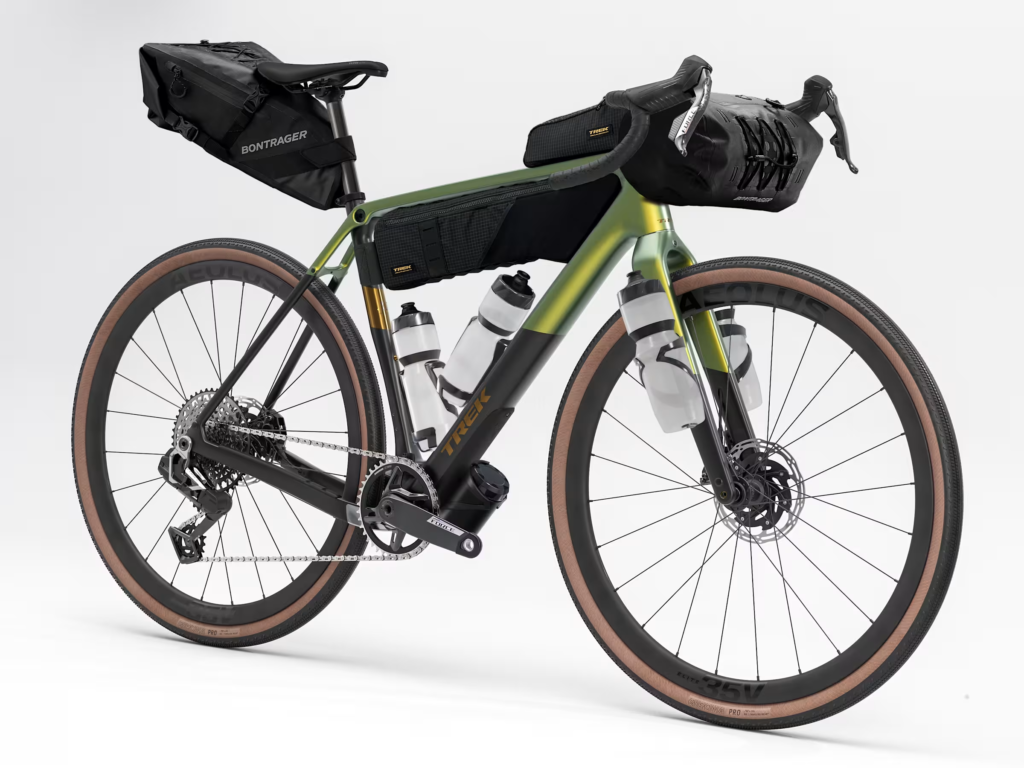
The Topstone Carbon is similarly capable: StashPort internal storage, multiple cage mounts on frame and fork, rear rack mounts, dropper post compatibility, and the same general mounting philosophy. The edge here arguably goes to the Checkpoint for its rear rack compatibility on the carbon model and the somewhat cleaner approach to internal frame bag mounting.
Drivetrain and Spec
Both bikes are available across a wide price range, from entry-level aluminium builds with mechanical groupsets to high-end carbon builds with wireless shifting. The Checkpoint SL line tops out with SRAM Force AXS or Shimano GRX Di2, while the Topstone Carbon goes up to SRAM Rival AXS and GX AXS on Lefty builds.
One practical difference worth noting: the Checkpoint is sold through Trek’s large dealer network, which means in-person service and support is accessible in most cycling markets. The Topstone is also dealer-sold, giving both bikes an advantage over direct-to-consumer brands when it comes to local support and warranty handling.
Comparison Table
| Feature | Cannondale Topstone Carbon | Trek Checkpoint SL Gen 3 |
|---|---|---|
| Frame material | Full carbon (Proportional Response) | OCLV carbon |
| Rear compliance | KingPin suspension (30mm travel) | IsoSpeed decoupler (passive) |
| Fork | Lefty Oliver 30mm / rigid carbon | Carbon (suspension fork compatible to 40mm) |
| Tyre clearance | 52mm frame (1x) / 56mm fork | 50mm |
| Wheel size | 700c | 700c |
| Dropper post compatible | Yes 27.2mm internal | Yes |
| Internal storage | StashPort downtube | Enlarged downtube hatch |
| Rear rack mounts | Yes | Yes (SL carbon) |
| 1x and 2x compatible | Yes | Yes |
| Retail channel | Dealer network | Dealer network (largest in the world) |
Cannondale Topstone Carbon: Pros and Cons
What it does well: Genuine suspension compliance on rough terrain via KingPin and optional Lefty. OutFront geometry is more dynamic and road-influenced than the Checkpoint, which appeals to riders who want pace as well as comfort. Size-specific Proportional Response construction. Wide tyre clearance on both frame and fork. Available through a dealer network with proper in-person support.
Where it falls short: The Lefty fork is a proprietary system that most bike shops cannot service — you need a Cannondale-authorised dealer or the ability to do it yourself. Lefty builds are notably heavier than the equivalent rigid gravel bikes. Some builds are specced with a 42T chainring that is underpowered for steep terrain with luggage. The suspension fork raises standover height, which affects fit for some riders.
Trek Checkpoint SL Gen 3: Pros and Cons
What it does well: The IsoSpeed decoupler provides genuine rear compliance without the weight and complexity of suspension. The Gen 3 geometry is more accessible and comfortable than its predecessor, making it genuinely easy to ride for long distances. Excellent mounting provisions for bikepacking and touring. Large dealer network means service and support is available almost everywhere. The Bontrager component ecosystem is solid and consistent across builds. Compatible with suspension forks up to 40mm, providing an upgrade path.
Where it falls short: The more upright, endurance-focused geometry makes it feel less lively than the Topstone on fast mixed-surface rides. It is not the bike you reach for when you want to push hard on a flat gravel sprint. The IsoSpeed provides compliance but not the same level of cushioning as actual suspension on heavily corrugated tracks. Top-spec SL 7 builds are expensive relative to some direct-to-consumer competitors at equivalent spec levels.
Who Should Buy Which?
Choose the Cannondale Topstone Carbon if you regularly ride on genuinely rough, rocky gravel and want the comfort benefit of actual suspension. The Topstone also has more road-influenced geometry, making it a better choice for riders who split their time between fast tarmac sections and rough off-road terrain and want the bike to feel responsive in both contexts.
Choose the Trek Checkpoint if long-distance comfort, practicality, and access to dealer support are your primary criteria. The Gen 3 Checkpoint is arguably the most approachable, fully-featured adventure gravel bike in its price range — excellent for loaded touring, multi-day rides, and riders who want a reliable, easy-to-live-with machine rather than a performance tool. The sheer scale of Trek’s dealer network is also a genuine advantage if you ride in areas where local service matters.
For more context on the Cannondale Topstone’s place in the lineup, visit our Cannondale brand page. And if you are also considering Canyon alternatives, our best gravel bike brands guide for 2026 covers the full landscape.
FAQ
What is the Trek IsoSpeed decoupler and how does it work?
IsoSpeed is Trek’s passive rear compliance system. It allows the seat tube and top tube junction to move independently of the bottom bracket, absorbing vertical forces before they reach the rider. There is no lockout, no maintenance, and no weight penalty beyond the hardware itself. It is one of the most proven compliance systems in the gravel market, having been used across Trek’s road and gravel range for over a decade.
Is the Cannondale Topstone’s Lefty fork reliable for long-distance touring?
The Lefty Oliver fork is a well-engineered system and reliable under normal gravel riding conditions. The main consideration for long-distance touring is servicing: Lefty forks require Cannondale-specific tools and knowledge. If you are touring in remote areas or regions with limited Cannondale dealer access, this is worth factoring into your decision.
Does the Trek Checkpoint come with mudguard mounts?
Yes. The Gen 3 Checkpoint includes full mudguard eyelets on both the fork and frame, making it practical for year-round and commuting use as well as adventure riding. This is one of the details that distinguishes it from more race-focused gravel bikes.
Can I fit a suspension fork to the Trek Checkpoint?
Yes. The Gen 3 Checkpoint is designed to accept a suspension fork with up to 40mm of travel. This provides a meaningful upgrade path for riders who want more front-end cushioning without buying a new frame.
Which bike is better for daily commuting?
The Trek Checkpoint has a slight edge here. Its more upright geometry, full mudguard compatibility, rear rack mounts, and large dealer service network make it marginally more practical as a daily rider. That said, the Topstone Alloy models are also well-suited to commuting use at competitive prices.
Which is better for fast gravel racing?
Neither, frankly — both have been repositioned away from outright race performance in their latest versions. Trek launched the Checkmate SLR specifically for racing, while Cannondale’s SuperX covers that brief. If gravel racing is your priority, look at those models instead. Between the two bikes compared here, the Topstone Carbon’s OutFront geometry makes it the quicker-feeling option on mixed surfaces.