hill.camp does not test products first-hand. This review is a structured synthesis of six independent sources — specialist field tests from both the US and French trail running press, a long-term owner test, and a dedicated buyer’s-guide outlet — assembled with AI assistance and edited before publication. Sources are selected and verified by runners who follow this equipment closely. That process surfaced a genuine split of opinion on this shoe, which we’ve flagged openly below rather than smoothing it over.
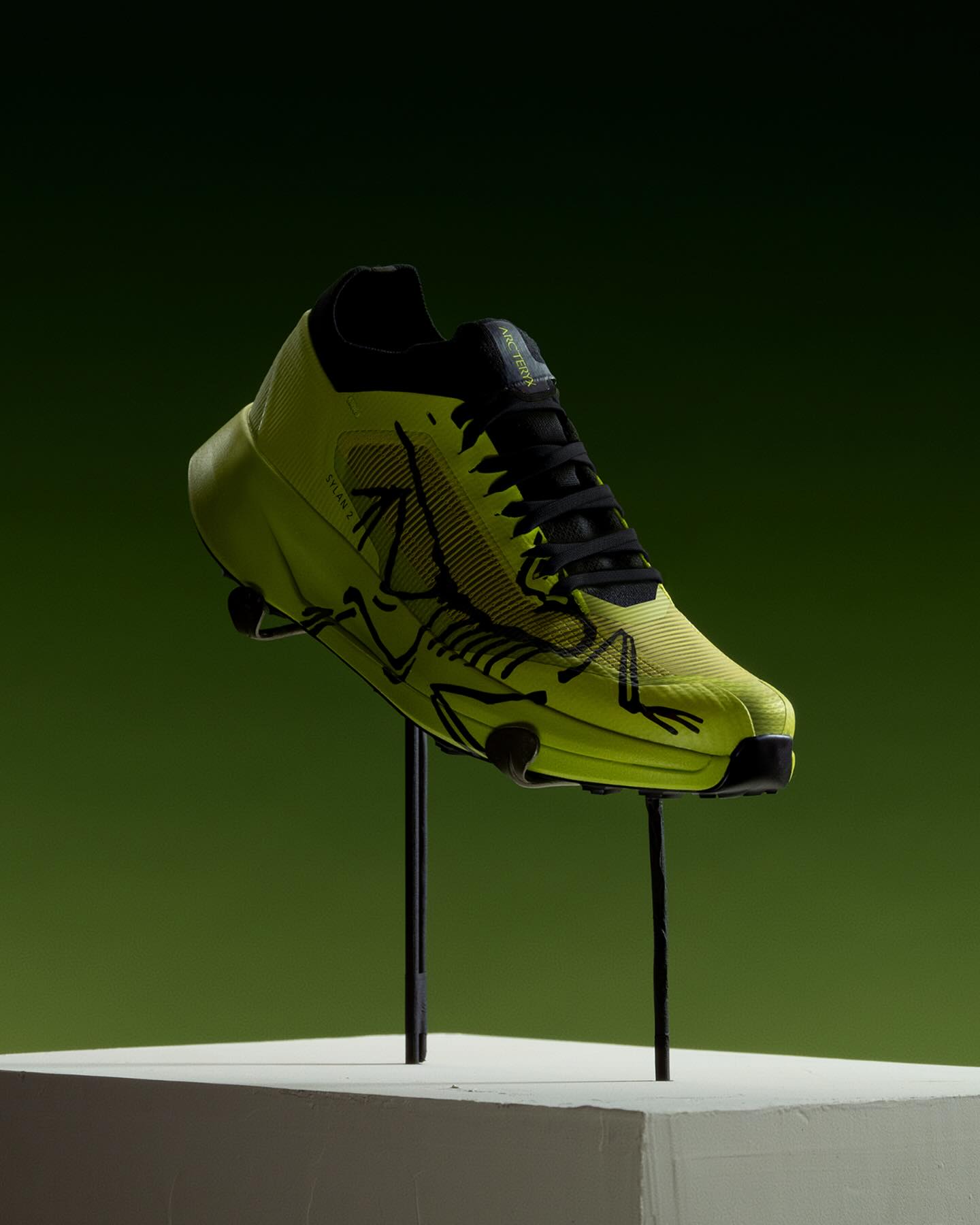
Arc’teryx spent a year listening to what didn’t quite work on the original Sylan, and the Sylan 2 is the result: a full carbon-plate overhaul aimed squarely at speed on technical mountain terrain. On paper, it’s a compelling package — supercritical foam, a forked carbon plate, a sock-like knit collar, and a Vibram Megagrip Litebase outsole, all for $220 / 220€. In practice, this Arc’teryx Sylan 2 review found that our six sources agree on far less than you’d expect from a shoe this well-reviewed, particularly when it comes to stability, fit, and exactly how technical a trail it can handle. Here’s what actually held up under six different pairs of feet.
| Spec | Detail |
|---|---|
| Price | $220 / 220€ |
| Weight | ~268–283g (men’s US 9) / ~226–231g (women’s) |
| Stack height | 31–32mm heel / 25–26mm forefoot |
| Drop | 6mm |
| Upper | Engineered woven/jacquard knit with integrated sock-style gaiter collar, TPU overlays |
| Midsole | Supercritical foam (Pebax core, TPEE rim) with forked, three-quarter-length carbon plate and forefoot rocker |
| Outsole | Vibram Megagrip Litebase, stepped multi-height lugs (~3.5–4.5mm) |
| Wide sizing | Not available |
| Best for | Fast trail running and racing on rolling-to-technical terrain |
Ride and Performance: A Genuinely Fast, Firm Shoe
On the core question of how the Sylan 2 feels underfoot, our sources are largely in agreement. The combination of supercritical foam, the forked carbon plate, and a refined forefoot rocker produces a firm, propulsive ride that rewards a faster cadence rather than a shuffle. Multiple testers independently described a distinct « pop » at toe-off, with one comparing the sensation to being projected forward and upward more aggressively than other carbon-plated trail shoes they’d worn. The consensus is that this is not a shoe built for easy, zone 2 recovery miles — one tester developed heel discomfort on a slow first run before adapting to the plate over subsequent efforts, and several outlets explicitly steer casual or easy-paced runners elsewhere.
Where sources diverge slightly is on how much cushioning sits under that plate. One tester found the moderate stack close to ideal, absorbing downhill impact well without ever feeling squishy. Another felt the midsole lacked character compared to the previous-generation Sylan Pro, describing it as competent rather than exciting, though it grew on her with more miles. A third noted the ride trades ground feel for efficiency — you get the plate’s stability and rebound, but small trail irregularities register less clearly than they would in a lower, softer shoe.
Stability: The Sharpest Disagreement in This Review
This is where the sources genuinely split, and it’s worth stating plainly rather than picking a side to make the review tidier. One US-based long-term tester reported that the wider platform, forked plate, and more secure upper gave the Sylan 2 a planted, confidence-inspiring feel on roots, scree, wet rock, and loose descents — specifically calling out that it stayed composed in exactly the fast, technical downhill situations where lighter racing shoes usually start to feel twitchy, and that this was the single biggest improvement over the original Sylan.
Two other independent testers reached close to the opposite conclusion. One reported the shoe repeatedly rolling forward on descents when landing in ruts or on roots, describing frequent near-rolled ankles on off-camber terrain and concluding the Sylan 2 is not meaningfully more stable than the original version — possibly less so. A separate French-language field test reached a similar verdict from a different angle: the plate and rocker work best when the trail lets you run freely, but the shoe loses composure and demands much more attention to foot placement once terrain turns genuinely broken or alpine.
A fourth source’s take reads as a plausible bridge between the two: strong sole-level stability from the plate itself, undermined somewhat by an upper that runs so narrow it limits confident foot placement for anyone without a slim foot. If your trails are rolling, hard-packed, or moderately technical, this disagreement may not matter much to you. If you’re buying this specifically for steep, off-camber mountain terrain, treat the « much more stable now » claim with some skepticism until you’ve tested it on your own local trails.
Fit and Sizing: Proceed Carefully, and Expect Some Contradictions
Fit is the second area where sources don’t line up cleanly, and it’s the complaint that shows up most consistently across the board in some form. A majority of testers flagged a narrow toe box as a real limitation: one reported that it caused painful pinky-toe blistering on a wider-than-average foot after roughly five miles, to the point of ruling the shoe out for real distance regardless of how well everything else fit. A French-language tester made a near-identical observation, noting the toe box became noticeably pointier and lower-volume than the original Sylan, with toes rubbing against the upper on longer descents. One US buyer’s-guide outlet reached a different conclusion, describing the toe box as performance-snug but with adequate room for toe splay, and reporting no toe-box pressure at all compared to the original — a direct contradiction worth knowing about before you buy based on any single review, including this one.
Sizing itself is similarly inconsistent across testers. One source found the shoe ran large and sized down half a size from their usual US size. Two reviewers at a separate outlet both sized down more aggressively — one going a full US size down when working from Arc’teryx’s EU sizing, the other finding her usual half-size too long and recommending a half size down or more. Meanwhile, two other testers with narrower-than-average feet found the shoe fit true to size. Given that spread, if you have a wide or higher-volume foot, several sources independently suggest trying the shoe on in person or checking Arc’teryx’s sizing chart carefully rather than ordering your usual size online.
Entry is a smaller but consistent complaint: the integrated bootie collar and stiff heel make the shoe genuinely fiddly to put on, with multiple sources recommending you unlace it fully rather than trying to shoehorn your foot in. Once on, though, midfoot lockdown draws consistent praise — nobody in this set of reviews complained about a sloppy or insecure midfoot fit.
Upper, Collar and Lockdown
The redesigned woven or jacquard-knit upper is one of the more consistently well-received elements of the shoe. Testers across the board praised the low-profile integrated gaiter collar for keeping trail debris out without needing a separate gaiter, and several noted the upper stays breathable and dries quickly even after unexpected rain. One tester who had struggled with rubbing at a similarly constructed collar seam on a competing shoe reported no such issue here.
The tongue and lacing draw more mixed reactions, and again the sources don’t fully agree. One long-term tester specifically praised the amount of padding in the collar along with a small lace garage to tidy excess lace. Another reviewer at a separate outlet described the flat-knit tongue as thin and under-padded, reporting that lacing pressure became noticeable on descents and that the laces themselves wouldn’t stay tied even double-knotted — a functional complaint that outlet raised about the previous Sylan generation as well. Heel bolsters split opinion too: one tester found them distracting and a source of Achilles pressure, while a separate field test flagged a related but distinct issue — potential friction against the Achilles tendon specifically when wearing low-cut socks with the integrated collar.
Traction and Outsole
The Vibram Megagrip Litebase outsole, with its stepped 3.5–4.5mm lug pattern, is generally well-liked, though not unanimously improved from the previous version. Several testers highlighted confident grip across a genuinely wide mix of surfaces — dry and wet rock, gravel, dirt, and even brief exposure to mud — without feeling overly aggressive or noisy on hardpack and road sections in between. One tester who expected the relatively shallow lugs to struggle in notoriously muddy UK conditions came away pleasantly surprised.
The one dissenting voice here is notable: a French-language field test that directly compared the Sylan 2 against its predecessor found the new, shallower, more widely spaced lug pattern actually lost some braking traction on wet, muddy, decomposed trail surfaces relative to the original Sylan, even while it held up well on dry rock and rooty terrain. If soft, wet, technical terrain is your primary use case, this is worth weighing against the more uniformly positive traction reports from drier climates.
Durability
Early-life durability reports are broadly positive. Testers who put 100-plus miles on their pairs reported the woven upper looking essentially new, with the outsole rubber wearing predictably and the midsole retaining its liveliness rather than packing out. The one recurring cosmetic complaint is superficial paint wear along the midsole’s edges from rock contact — a purely cosmetic issue, but one that stood out to at least one reviewer given the shoe’s premium price point.
Arc’teryx Sylan 2 vs the Competition
Sources frame the Sylan 2’s competitive set a little differently depending on which trait they weighted most heavily. Against the La Sportiva Prodigio Pro, one tester described the Prodigio Pro as the more energetic, better-rounded shoe overall, with a more accommodating fit for wider feet, while reserving the Sylan 2 for runners who specifically want more underfoot armor on technical ground. Against the Brooks Cascadia Elite, the framing was one of different missions entirely: the Cascadia Elite as a plush, high-stack ultra cruiser, the Sylan 2 as the firmer, more precise tool for shorter, faster technical efforts. European testers positioned the Sylan 2 instead against shoes like the Adidas Terrex Agravic Speed 2 and Brooks Catamount 4 — non-technical to moderately technical racers in the 30–50km range — which is a notably narrower remit than the up-to-100-mile recommendation offered by two of the US sources. That gap in how technical and how long a race the Sylan 2 can actually handle tracks closely with the stability disagreement above, and is worth keeping in mind when matching the shoe to your own race calendar.
Our Take
The Arc’teryx Sylan 2 is a genuinely fast, well-built carbon racer, and every source agrees on that much: the plate-and-foam combination delivers real propulsion, the outsole grips confidently across most conditions, and the build quality holds up over real mileage. Where we’d push back on some of the more enthusiastic coverage is the idea that this shoe has definitively solved stability and fit — two independent, detailed field tests report the opposite, specifically on off-camber and technical terrain, and the fit complaints are frequent and specific enough (pinky-toe blistering, sizing all over the map) that we wouldn’t buy this shoe online without checking a sizing chart first, or trying it on if you know you run wide. If your trails are rolling to moderately technical and you have a narrow-to-standard foot, the Sylan 2’s speed will likely outweigh its quirks. If you’re buying it specifically to move fast on genuinely rough, off-camber alpine terrain, we’d weigh the more skeptical reviews here just as heavily as the glowing ones before you commit $220.
Arc’teryx Sylan 2 Review: Frequently Asked Questions
Is the Arc’teryx Sylan 2 true to size?
Opinions differ sharply. Some testers with narrow feet found it true to size, while others sized down half a size to a full size, and one source found it ran large. Given the spread, checking Arc’teryx’s specific sizing chart or trying the shoe on is a safer bet than assuming your usual size.
Does the Arc’teryx Sylan 2 come in wide sizing?
No. It’s only offered in standard width, and multiple testers specifically flagged the narrow toe box as a problem for wider feet, including one report of blistering on longer runs.
Is the Sylan 2 good for technical mountain trails?
This is genuinely contested. One long-term US tester rated it among the more stable plated shoes he’s run on technical, off-camber terrain, while a French field test and a separate US outlet both reported instability and ankle-roll risk on the same type of terrain. Runners buying specifically for steep, broken mountain trails should weigh both perspectives.
How does the Sylan 2 compare to the original Arc’teryx Sylan?
It’s lighter, adds a carbon plate and supercritical foam the original lacked, and most testers found the midfoot and heel lockdown noticeably improved. Traction is a partial exception — one source found the new, shallower lug pattern lost some grip in mud and wet conditions compared to the original.
Is the Arc’teryx Sylan 2 good for recovery runs or easy training?
No. Every source that addressed pace agreed this is a firm, propulsive shoe built for tempo efforts, workouts, and racing rather than easy or zone 2 mileage, and one tester specifically developed heel discomfort after using it for a slow first run.
This Arc’teryx Sylan 2 review is meant as a starting point, not the final word — for anyone weighing whether it fits their own trails and foot shape, full specs, sizing guidance, and availability are on Arc’teryx’s official site.