hill.camp does not test products first-hand. This comparison is a structured synthesis of sixteen independent sources covering both shoes — multi-tester long-form reviews from the US trail running press, a lab-and-field test from an outlet that buys its own shoes, French retailer field tests and buyer’s guides, long-term gear tests and owner feedback — assembled with AI assistance and edited before publication. Very few reviewers test both models in the same conditions: none of our sources ran the Genesis 2 and the Speedgoat 7 back to back, and the only direct head-to-head we found pits the Speedgoat 7 against the first-generation S/Lab Genesis. Read the verdicts below as a synthesis, not a lab duel.
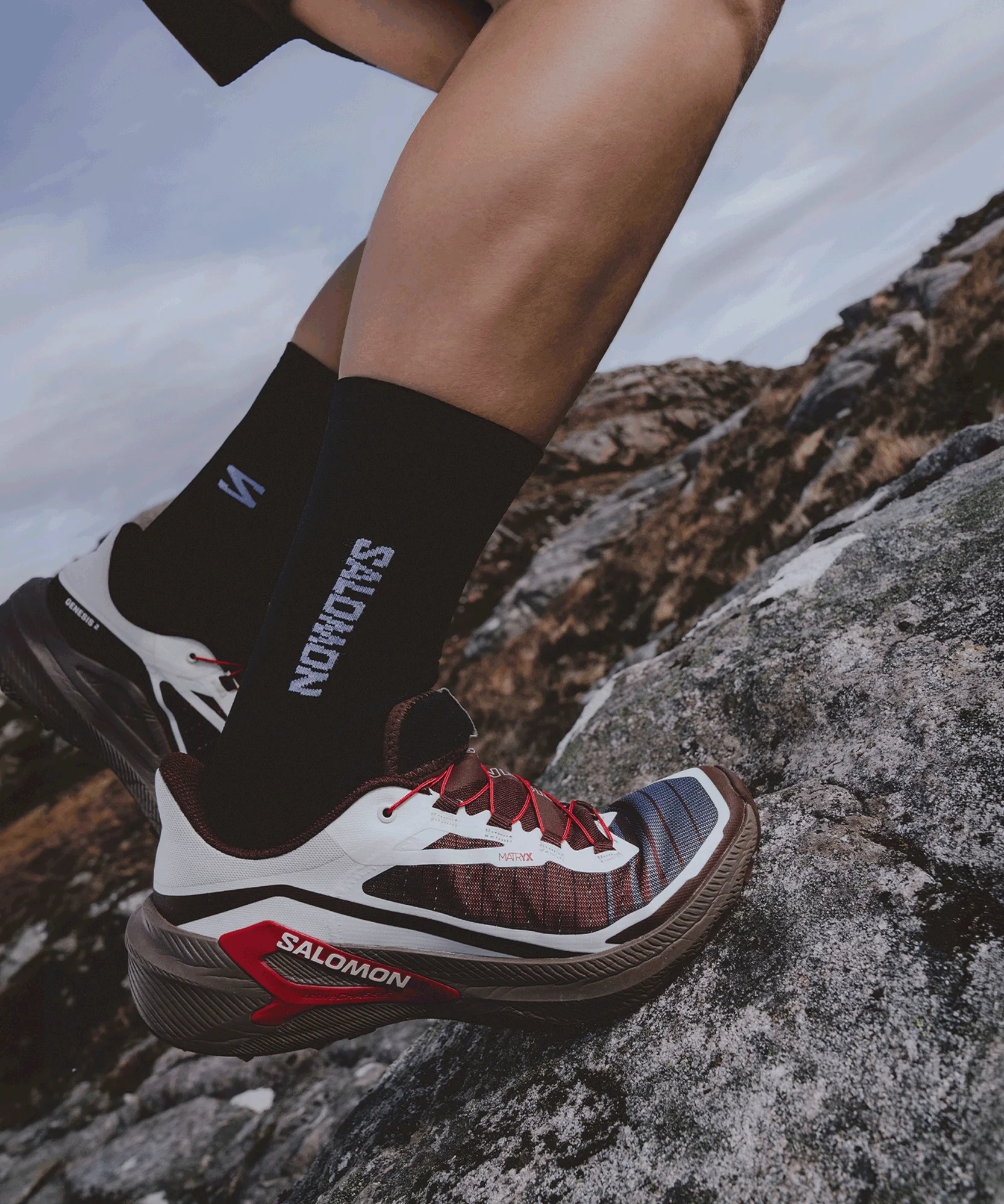
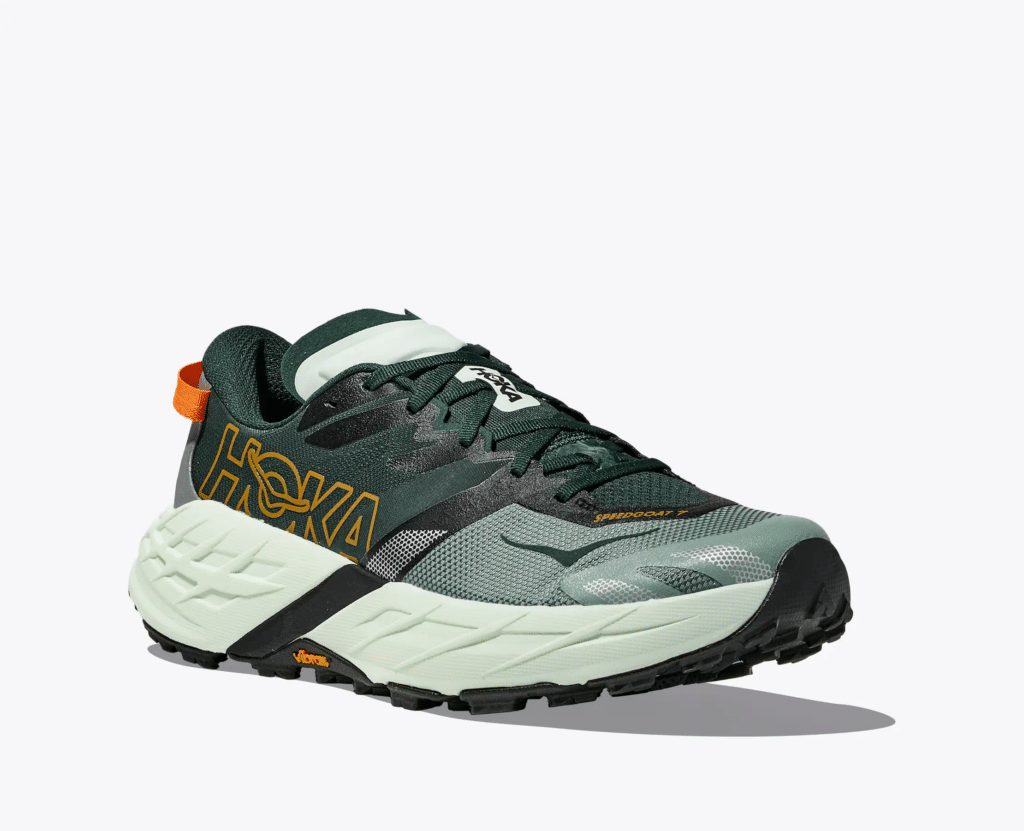
On paper, the Salomon Genesis 2 vs Hoka Speedgoat 7 matchup looks almost too neat. Two French-rooted brands from the same corner of the Alps, two do-it-all mountain shoes, two prices within $15 of each other, and two claimed weights within a few grams. Under the foot, they could hardly be more different. The Speedgoat 7 stacks roughly 37 mm of supercritical foam under your heel with a low drop and a rocker; the Genesis 2 keeps you about 3 mm lower at the heel and 7 mm lower at the forefoot, with an 8 mm drop and a firm EVA midsole. One isolates you from the trail. The other wants you to read it.
We have already covered the Salomon in depth in our Salomon Genesis 2 review. Here is how it stacks up against the trail shoe that, for a decade, every other brand has been chasing.
Quick Specs
| Salomon Genesis 2 | Hoka Speedgoat 7 | |
|---|---|---|
| Price | $150 / €150 | $165 / €165 |
| Claimed weight (men’s) | ~272 g | 275 g |
| Stack height (men’s) | 34 / 26 mm | ~37 / 32–33 mm (sources vary, see below) |
| Drop | 8 mm | 4–5 mm |
| Midsole | optiFOAM EVA | Supercritical EVA |
| Plate | None (activeCHASSIS for stability) | None (wide base + MetaRocker) |
| Outsole | All Terrain Contagrip, ~4 mm lugs | Vibram Megagrip with Traction Lugs, 4.5–5 mm |
| Upper | Matryx (polyamide + aramid) | Recycled woven textile with TPU overlays |
| Lacing | Quicklace | Traditional laces |
| Wide version | Reported by a reader, unconfirmed | Yes |
| Best for | Technical, rocky, off-camber mountain trails | Long days, big vertical, maintained trails |
A Word on the Speedgoat 7’s Numbers
The Speedgoat 7’s geometry is reported in a frustrating number of ways. Believe in the Run lists 37/33 mm and a 4 mm drop for men. The Running Channel gives 37/32 mm and 5 mm. OutdoorGearLab measured a 36 mm heel and a 5 mm drop in its own lab, and CleverHiker also lists a 37 mm heel and 5 mm drop. Women’s Running quotes 35/31 mm and 6 mm — figures that match the women’s stack Believe in the Run gives. Two French sources are further off: one retailer guide lists 32/28 mm and describes a « dual-density CMEVA » midsole, which is the compound the Speedgoat 6 used and the 7 replaced, and one buyer’s guide gives an 8 mm drop. We treat those last two as errors. The consensus for a men’s shoe is a heel around 36–37 mm and a drop of 4–5 mm.
Two Shoes, Two Philosophies
The Speedgoat is named after Karl Meltzer, the ultrarunning legend who inspired it, and it embodies the maximalist idea that made Hoka famous: put a lot of foam under the foot so long, rocky miles hurt less. Our history of how two former Salomon employees founded Hoka explains where that idea came from. After a Speedgoat 6 that several testers found stiff and « speedboaty », the 7 swaps the old CMEVA for supercritical EVA and refines the upper — Believe in the Run’s Taylor Bodin summed it up as a sigh of relief rather than a revolution.
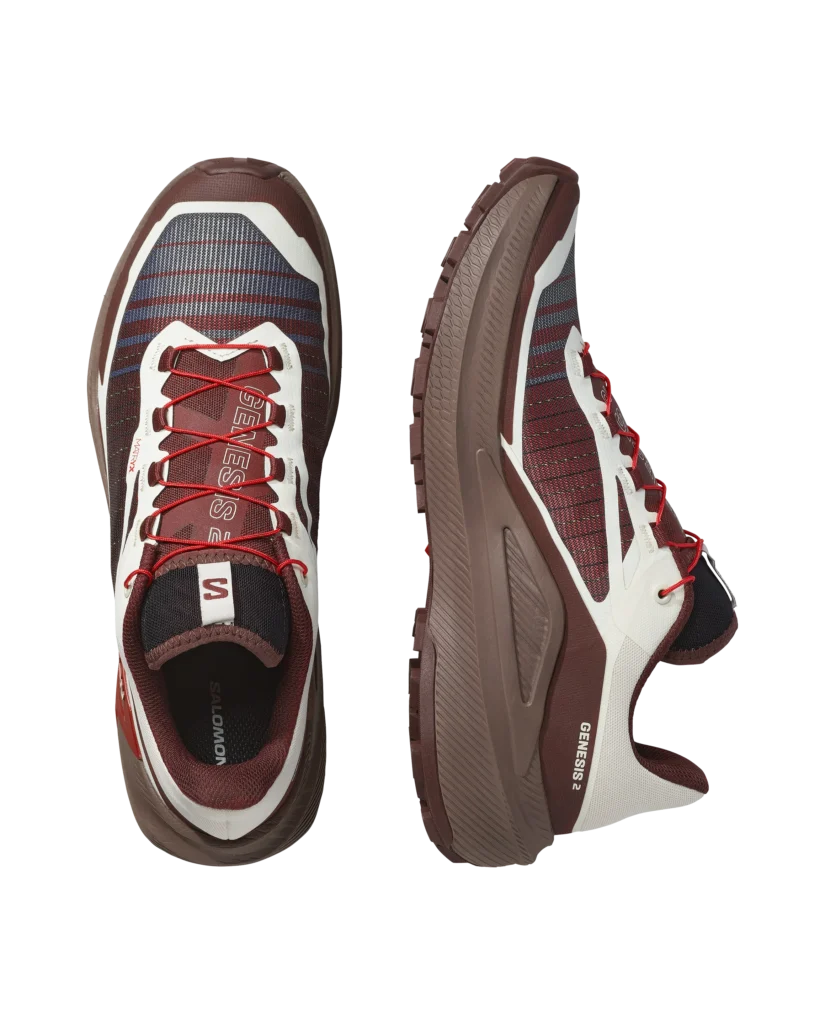
The Genesis line is Salomon’s answer from the other side of the debate: moderate stack, high drop, stability built into the midsole, and a tough woven upper. It sits below the S/Lab range at a deliberately accessible price. If the Speedgoat asks how much the trail can be filtered out, the Genesis asks how precisely you can place your foot on it.
Cushioning and Ride
This is the clearest difference, and it is not close. The Speedgoat 7’s new foam won almost universal approval: OutdoorGearLab found it softer and more energetic than the 6 and quicker to break in (the old foam took about 50 miles to soften), and Believe in the Run’s Allison Mercer was surprised to find a shoe with that much stack feeling responsive at faster paces. Hoka’s MetaRocker geometry adds a noticeable roll-through from landing to toe-off.
The Genesis 2 is firm by design. Testers describe its optiFOAM as medium-firm, more lively than expected for a basic EVA, but focused on control rather than comfort. Better Trail rated its cushioning 3/5 and found it thin for long efforts on sharp terrain; RoadTrailRun considered it fine for almost any distance. Neither source calls it plush.
Edge: Speedgoat 7, for anyone who prioritises cushioning and a smoother ride. If you like a firmer, more connected feel, that « advantage » is exactly what you will not want.
Stability on Technical Terrain
Here the verdict flips. Stability is the most consistently praised trait of the Genesis 2 across our sources: Better Trail gave it a 5/5 with zero ankle rolls on talus, the French retailer’s four testers were unanimous on its predictability on descents, and RoadTrailRun credits the integrated activeCHASSIS for keeping things steady when form deteriorates late in long runs.
The Speedgoat 7 is stable on maintained trails thanks to its wide base — RoadTrailRun measured it at 98 mm at the heel and 120 mm at the forefoot, against 93 mm at the heel for the Genesis 2. But height has a cost. OutdoorGearLab scored its stability 7.3/10 and noted the foam compressing and shifting on steep off-camber terrain and side-hills; its tester said he would not choose it for sustained technical scrambling. CleverHiker likewise suggests something burlier for technical trails, and Allison Mercer still felt a bulky, « tugboat » shape when she wanted agility. The French retailer’s head-to-head, though run against the first-generation S/Lab Genesis, lands in the same place: the Hoka lacks fine ground connection in unstable scree.
Edge: Genesis 2, clearly, once the trail gets rocky, steep or off-camber.
Traction
The Speedgoat 7 runs Vibram Megagrip with Traction Lugs — small knobs on the side of each lug — and it remains one of the line’s defining strengths. OutdoorGearLab rated it 4/5 on loose trail and slick rock, with wet-rock grip described as strong. Both Believe in the Run testers called it confidence-inspiring in every condition a strange winter threw at them. Its limit is mud: OutdoorGearLab gave it 3/5 there, blaming lug spacing and the wide platform, and found steep wet grass merely functional.
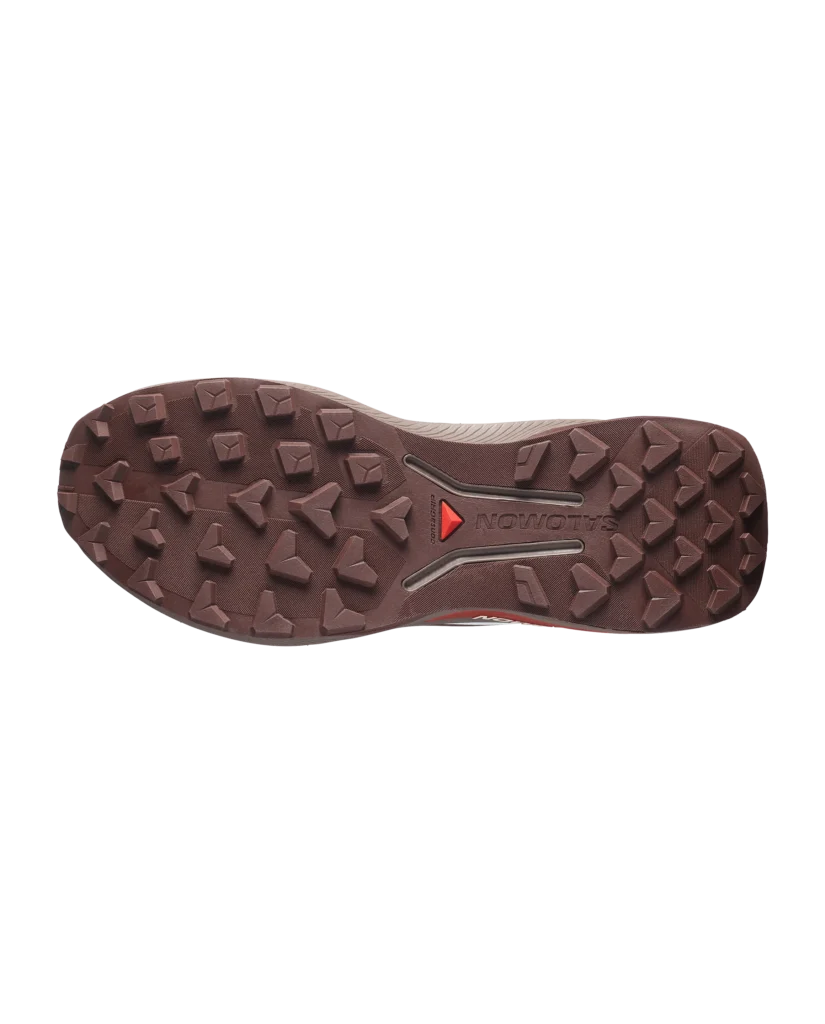
The Genesis 2’s All Terrain Contagrip performed well on mud, roots and loose rock for the French retailer’s testers, including wet grassy slopes at Courchevel. Better Trail flagged the trade-off: the compound sits at the durable, firm end of the spectrum and lacks the stickiness of Megagrip on rock. Our explainer on why so many trail shoes use Vibram’s yellow-badge rubber covers why that difference matters.
Edge: Speedgoat 7 on wet and dry rock; Genesis 2 slightly ahead in mud and on wet grass. Overall, the Vibram compound gives the Hoka the more trustworthy grip on the widest range of hard surfaces.
Underfoot Protection
Neither shoe has a rock plate, but they protect in completely different ways. The Speedgoat 7 relies on sheer foam volume, and OutdoorGearLab rated it one of the most protective shoes in its lineup on sustained rocky terrain (8.2/10). The Genesis 2 is where our sources split: RoadTrailRun scored rock protection 9/10, but Believe in the Run’s John Calabrese felt debris poking through even on fire roads, and Better Trail tied fatigue on sharp terrain to the 26 mm forefoot.
Toe protection runs the other way. The Genesis 2’s toe bumper won praise from the retailer’s testers in rocky terrain, while Believe in the Run found the Speedgoat’s toe cap rough on some downhills, partly because of its pointy toe box.
Edge: Speedgoat 7 underfoot; Genesis 2 for toe protection.
Fit and Sizing
Neither shoe is the answer for broad feet. The Speedgoat 7’s toe box is narrow and pointed — a long-standing trait of the line, flagged again by Believe in the Run and OutdoorGearLab, with pinky-toe rubbing reported. RoadTrailRun found it narrower than many other Hoka trail models. OutdoorGearLab says it runs about half a size short, and Taylor Bodin suggests sizing up a half size if you are between sizes. The good news: Hoka sells it in a wide version, which is confirmed across several sources.
The Genesis 2 is roomier than its predecessor and, according to most US testers, wider than typical for Salomon — but a French retailer still lists a fairly narrow forefoot among its drawbacks. Most testers found it true to size. A Wide version is mentioned by one RoadTrailRun reader, which we have not been able to confirm.
Two smaller details: the Speedgoat keeps the thin, minimal tongue Allison Mercer has disliked since the Speedgoat 4, while the Genesis 2’s padded tongue and collar drew no complaints. And lacing is a matter of taste — Quicklace is fast but drew fraying reports at Believe in the Run; Hoka’s traditional laces give finer adjustment.
Edge: roughly even. The Genesis 2 is the more forgiving standard fit; the Speedgoat 7 wins for anyone who needs a confirmed wide option.
Weight
This is the most surprising part of the comparison. Despite several extra millimetres of foam, the Speedgoat 7 lands within a few grams of the Genesis 2. Hoka claims 275 g for a men’s shoe (Believe in the Run specifies a US M10); OutdoorGearLab weighed a US 10.5 at 9.98 oz, about 283 g. The Genesis 2 is claimed at around 272 g, with real-world measurements ranging from 264 g (US 9) to 312 g (US 10) depending on source. One French buyer’s guide gives the Speedgoat 7 as 252 g in its table and 270 g in a 42 in its text — another sign its spec sheet should be read with caution.
Edge: draw — which, given the stack difference, is a quiet win for the Hoka.
Durability
The Genesis 2’s Matryx upper has the stronger record: minimal wear reported after 50 miles, 150 miles and roughly 200 km across three sources. The Speedgoat 7’s recycled woven upper is described as durable and abrasion-resistant by OutdoorGearLab, and Believe in the Run called every other durability sign positive — but Taylor Bodin’s pair started to delaminate before 50 miles. He was careful to say it might be his sample alone. Lace fraying on the Genesis 2 is the equivalent caveat on the Salomon side.
Edge: Genesis 2, on current evidence.
Road Sections and Long Distances
If your runs start from the front door, the Speedgoat 7 is the better companion. Allison Mercer was genuinely surprised by how light and natural it felt on pavement — a compliment she normally reserves for Hoka’s road-to-trail Challenger. The Genesis 2, by contrast, felt firmer and less pleasant on asphalt to the French retailer’s Lyon tester.
For ultras, the balance also tips toward Hoka. OutdoorGearLab named the Speedgoat 7 its top pick for long trail runs, and a French ultra buyer’s guide includes it among its 2026 recommendations. The Genesis 2 can go long — one French tester covered 55 km in the mountains without discomfort — but Better Trail would not choose it for ultras, and the firm ride suits runners already used to moderate stacks. If you want a Salomon for very long efforts, the S/Lab Genesis 2 or the plusher Ultra Glide 4 are the more natural picks.
Edge: Speedgoat 7.
The Drop Question
A 3–4 mm drop difference sounds small, but it changes how the shoe loads your calves and Achilles. The French retailer’s head-to-head points out that moving from an 8 mm shoe to a lower-drop one like the Speedgoat calls for a gradual transition, starting with shorter easy runs before taking it into a long race. If you currently train in 8–10 mm shoes, the Genesis 2 is the lower-risk switch; if you are already in low-drop shoes, the Speedgoat will feel familiar.
Head-to-Head Summary
| Criterion | Advantage | Why |
|---|---|---|
| Cushioning | Speedgoat 7 | More stack, livelier supercritical foam |
| Technical stability | Genesis 2 | Lower stack, integrated chassis, consistent praise |
| Traction on rock | Speedgoat 7 | Vibram Megagrip with Traction Lugs |
| Traction in mud | Genesis 2 (slight) | Speedgoat’s wide platform limits bite |
| Underfoot protection | Speedgoat 7 | Foam volume; Genesis 2 protection disputed |
| Fit | Even | Genesis 2 roomier as standard; Speedgoat has a confirmed wide |
| Weight | Draw | Within a few grams |
| Durability | Genesis 2 | Matryx upper, consistent long-term reports |
| Road and ultra distances | Speedgoat 7 | Smoother on pavement, top pick for long runs |
| Price | Genesis 2 | $15 / €15 cheaper |
Our Take
These two shoes are not really competing for the same run. Choose the Hoka Speedgoat 7 if your big days are long, high-vert efforts on maintained mountain trails, if you want maximum protection and a smooth rolling ride, if your routes mix in pavement, or if you need a wide fit. It is the better ultra shoe of the two, and its Vibram grip remains a benchmark.
Choose the Salomon Genesis 2 if your running happens on rough, rocky, off-camber terrain where foot placement matters more than cushioning, if you prefer a higher drop, and if you want an upper built to outlast the midsole. It is cheaper, more precise and more stable when the trail gets ugly — at the cost of a firmer ride and less underfoot protection on long, sharp sections.
Plenty of runners will reasonably own both: the Speedgoat for long days and recovery miles, the Genesis for technical mountain sessions. If you can only have one, let your terrain decide, not the logo. For more options on either side, see our best trail running shoes of 2026, and for earlier Speedgoat match-ups, read our Speedgoat vs Speedcross face-off and Norda 001 vs Hoka Speedgoat.
FAQ
Which is better for ultramarathons, the Genesis 2 or the Speedgoat 7?
The Speedgoat 7 for most runners. Its higher stack and softer supercritical foam provide more protection over long distances, and OutdoorGearLab named it a top pick for long trail runs. The Genesis 2 can handle long days if you are used to firm, moderate-stack shoes.
Which shoe is more stable on technical trails?
The Genesis 2. Its lower stack and integrated activeCHASSIS make it more precise on rocky, off-camber terrain. Testers found the Speedgoat 7 less confident on steep side-hills and technical scrambling because of its higher centre of gravity.
Which has better grip?
The Speedgoat 7’s Vibram Megagrip outsole grips better on wet and dry rock. The Genesis 2’s Contagrip holds up well in mud and on wet grass, where the Speedgoat’s wide platform is less effective.
Are they the same weight?
Almost. Hoka claims 275 g for a men’s Speedgoat 7, and the Genesis 2 is claimed at around 272 g. Real-world weights vary by size and source, but the difference is negligible despite the Speedgoat’s thicker midsole.
What is the drop difference?
The Genesis 2 has an 8 mm drop. Most sources list the Speedgoat 7 at 4–5 mm for men. If you are moving from a higher-drop shoe to the Speedgoat, build up gradually.
Which is better for wide feet?
Neither is wide in its standard version. The Speedgoat 7 has a narrow, pointed toe box but is sold in a wide width. The Genesis 2 is roomier than its predecessor, though still not a wide shoe.
Can I run on the road in them?
The Speedgoat 7 handles road sections surprisingly well, according to Believe in the Run. The Genesis 2 is firmer and less comfortable on asphalt, so keep it for short links between trails.
Both shoes are available from specialist retailers and directly from the brands: see Salomon’s trail running range and Hoka’s Speedgoat collection. For the full story behind each brand, read our Salomon brand history.