hill.camp does not conduct first-hand product testing. This Speedland GS:BLK review is a synthesis of independent field tests, specialist press articles, and verified consumer feedback gathered from multiple sources. All technical data and performance observations are drawn from those sources and attributed accordingly.
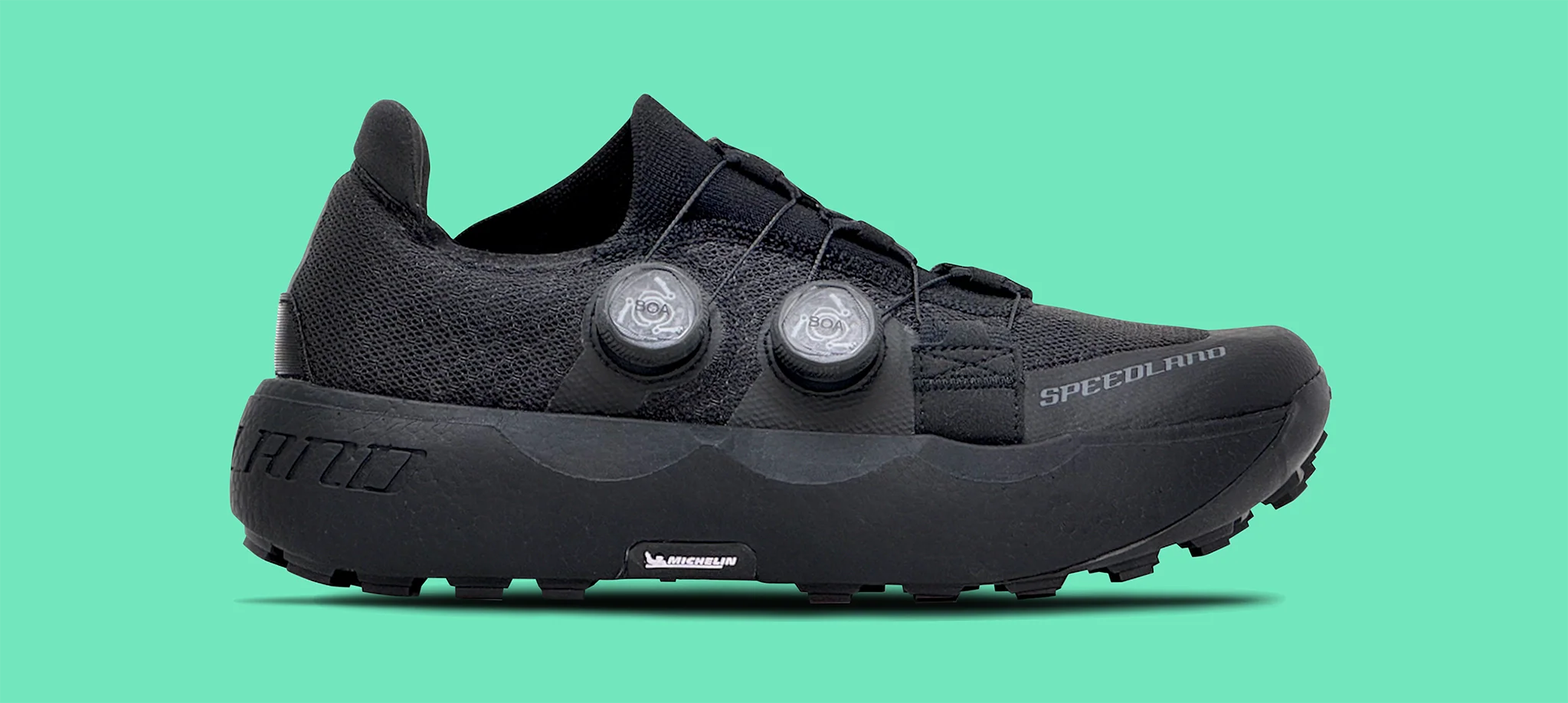
If the SL:PDX was Speedland declaring what it stood for, the GS:BLK is Speedland settling into what it does best. This is the long-distance arm of the brand — the GS line, where the stack gets taller, the foam gets deeper, and the target shifts from fast technical 50Ks to genuine ultra mileage. The BLK arrives as a blacked-out, matte-and-gloss version of a platform that has been refined across several commissions, and the most honest thing you can say about it up front is this: it is not a reinvention, and it does not pretend to be. The more interesting question is who this shoe is actually for — because across three independent testers, the answer turns out to depend heavily on the shape of your foot and the ground you run on.
Quick Specs
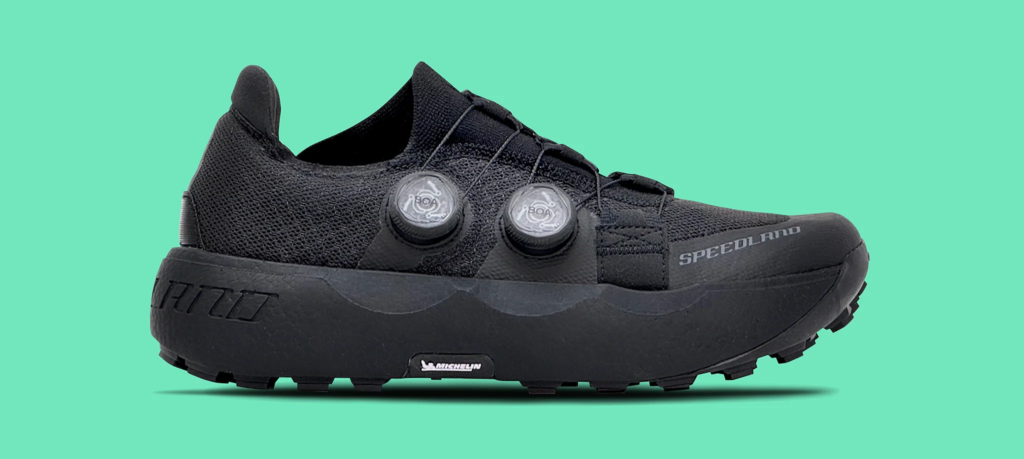
| Spec | GS:BLK |
|---|---|
| Stack height (heel / forefoot) | 42 mm / 35 mm (some testers measure ~39/32) |
| Drop | 7 mm (rides flatter than the number suggests) |
| Weight (US M9 / 9.5) | 10.6–10.7 oz / 301–304 g |
| Upper | Spacer mesh + high-tenacity fiber, PerformFit Wrap |
| Fit system | Dual BOA Li2 dials |
| Midsole | Beaded 100% HTPU base + removable OBC/EVA/nylon drop-in core |
| Plate | Optional Carbitex GearFlex (sold separately, ~$35) |
| Outsole | Michelin OC1 Fiber Lite, 6.5 mm cuttable lugs |
| Best for | Long runs & ultras on soft, muddy or mixed terrain — higher-volume feet |
| MSRP | $275 |
Where the GS:BLK Fits in the Speedland Range
A quick clarification, because Speedland’s naming convention confuses almost everyone. The GS (Grand Sport) line is the brand’s high-stack, long-distance platform, distinct from the lower, shorter-distance GL family. Within the GS line, many models are functionally the same shoe in a different colorway — the GS:PDX and GS:CCD, for instance, are essentially identical. The BLK breaks that pattern slightly: it is built on the same chassis as the CCD and PDX, but carries 6.5 mm lugs — 2 mm longer than its siblings, matching the deeper GL tread. In practice, one long-time owner who has run multiple GS models up to 400-mile distances reported the BLK feels essentially the same underfoot as the CCD, just with more bite. The mint-colored GS:PDX, by comparison, runs shallower 4.5 mm lugs, so if you do not need deep, aggressive tread, the BLK may be more shoe than you want. So if you have read about any recent GS shoe, you already know most of this one.
If you are new to the brand entirely, our Speedland brand story explains the « equipment, not footwear » philosophy behind all of this, and the SL:PDX review covers where it all began.
The Ride: Stable, Bouncy and Flatter Than the Numbers
Underfoot, the GS:BLK runs a two-part midsole: a beaded 100% HTPU superfoam base that acts as the durable carrier, and a thick removable drop-in core (a supercritical OBC/EVA/nylon blend) that adds plush responsiveness. The HTPU is comparable in concept to the expanded-bead E-TPU foams Salomon uses in its Aero models — soft and energetic, though because the drop-in core sits on top rather than the whole midsole being beaded, you do not get the full trampoline bounce of those Salomon shoes. What you get instead is a smooth, protective, surprisingly fun ride that flexes and contours well over uneven ground, helped by a rockered platform and a protective toe bumper. One useful detail for heavier runners: testers report no bottoming-out under load, so the foam holds up where lighter EVA-based shoes would pack down.
One quirk worth flagging: despite a stated 7 mm drop, multiple testers found the GS:BLK rides flatter than that number implies, with less of the heel support you would expect when grinding up a steep climb. It is not a flaw so much as a character note — the ride is balanced and adaptable rather than heel-propped — but if you specifically want a pronounced drop underfoot on long climbs, this may surprise you. The wide platform front to back also helps balance out the shoe’s weight, so despite tipping the scales above 10.5 oz, it moves more nimbly through technical zigzags than the spec sheet suggests.
The Fit: Brilliant for the Right Foot, Fiddly for the Wrong One
The headline strength is the one every Speedland shares: the dual BOA Li2 fit system. Two independent Li2 dials drive the PerformFit Wrap’s three overlays, letting you tighten for a technical descent and loosen for comfort on the flats without ever breaking stride, and — because the dials are bidirectional — without fully releasing the system to readjust. For ultra distances this is more than a gimmick: when feet swell late in a long effort and fingers stop cooperating, micro-adjusting a dial beats sitting down to retie laces. The platform is also genuinely wide and stable, accommodating very wide feet (a 4E-width runner reported a comfortable fit) while still cinching down via the BOA. One owner described the strapped, sock-liner construction as feeling less like a shoe and more like a running sandal with a built-in bootie.
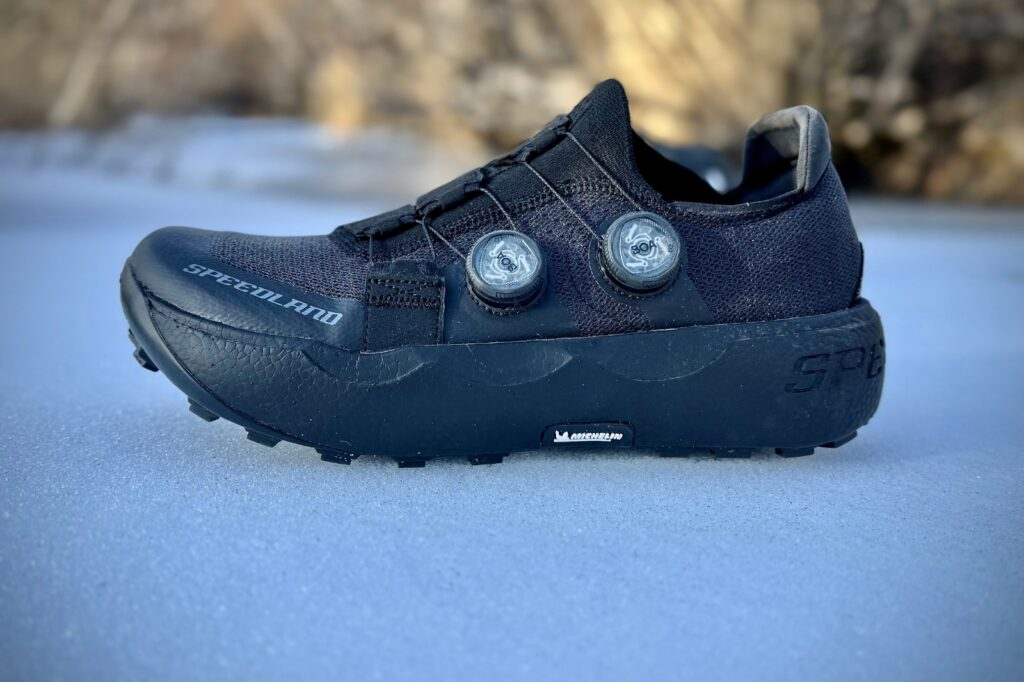
But here is the caveat that does not show up in spec sheets, and it is the most important fit note in this review: the BOA dials can physically dig into the side of your foot on uneven terrain. The dials are rigid, and when the shoe tilts or twists over technical ground, one tester with a medium-to-low volume foot found the upper dial jutting into the side of his foot persistently enough that he would hesitate to reach for the shoe on technical trails at all — even though foothold and security themselves were excellent. Tellingly, Speedland relocated this dial on Avery Collins’ SVT commission, almost certainly for this exact reason. The key variable is foot volume: Speedland shoes are designed around higher-volume feet, and for those runners this is likely a non-issue. If you have a medium or low-volume foot, you may have to crank the dials harder, which angles them inward — and you may also fight a voluminous heel (one tester added felt padding to stop heel slippage). This is precisely why these shoes reward trying before buying.
That removable drop-in core is also what lets you slot in the optional Carbitex GearFlex plate, sold separately for around $35 — which raises a fair point one reviewer made: if a modular performance plate can cost $35, why is the rest of the trail-shoe industry not doing this on sub-$200 shoes? Worth noting, though, that lighter runners may not need it at all; one tester found the shoe protective enough without the plate and felt it only added stiffness and weight for his build.
The Outsole Problem Nobody Should Ignore
Here is where the honesty has to kick in, because it is the most debated finding in this review. The GS:BLK’s traction is genuinely excellent on the terrain it was built for — the 6.5 mm Michelin lugs bite hard into mud, snow and loose dirt, and on soft or loose-technical ground the shoe shines. The lugs flex and grab well as the shoe contours both up and down steep grades. But that same aggression makes it feel like overkill on dry, buffed-out singletrack, where Believe in the Run found the lugs excessive for everyday training. And on durability and wet rock, opinions split sharply. A highly experienced Speedland owner — someone who has raced these shoes to 400 miles and owns eight pairs across the GL and GS lines — called the Michelin outsole one of the worst in the business: poor wet traction, and a tread life that caps practical hard-trail use at roughly 250–300 miles. His verdict was blunt: it is the single thing keeping the GS:BLK from being the best shoe on the market.
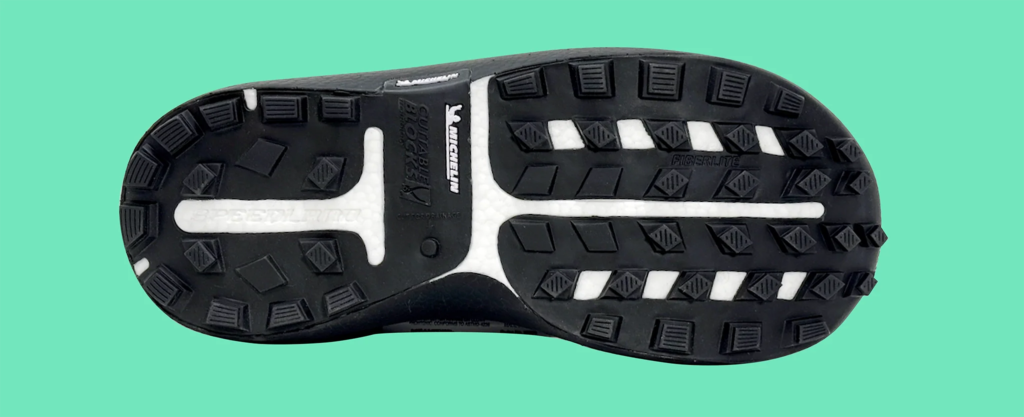
That is a striking criticism for a $275 shoe, and it deserves context rather than burial — because not every tester agrees. A third independent reviewer reported consistently good wet grip across past Speedland models and no traction problems on the BLK at all. The HTPU foam, meanwhile, is described as the best in the business, firm and sturdy and likely to outlast the outsole itself, which means the durability ceiling here is set by the rubber rather than the foam — the reverse of most shoes. Speedland’s own customers report 50-mile rim-to-rim-to-rim efforts in the Grand Canyon with zero issues, and on other GS models some runners have logged 800 miles before retirement. The honest synthesis: traction quality appears to vary with conditions and expectations, but if your trails are rocky, dry or frequently wet, the outsole is the component most likely to disappoint, and tread life is a legitimate question at this price.
The Other Trade-Offs
A few smaller gripes recur. The upper runs warm — the spacer mesh prioritizes durability and structure over ventilation, the all-black colorway will only make hot-weather running warmer, and at least one runner resorted to cutting the toe open with a knife to survive a hot southern race (Speedland’s thinner-uppered TMT model exists partly as the cooler alternative). The shoe likely needs a short break-in, not for the HTPU base but for the polymer drop-in core to mold to your foot. And there is the honest caveat that this is not a major departure from previous Speedlands — if you already own a recent GS, the BLK is refinement and aesthetics, not revolution. It is also, by every account, a heavy shoe. On the plus side, the newly added gaiter attachments (a front loop plus rear Velcro) are a genuinely welcome touch for anyone running technical or snowy terrain, and the squared-off heel crash pad is stable and reassuring on long descents.
For a sense of how this premium-but-polarizing proposition stacks up against other high-end trail options, our Norda 001 vs Hoka Speedgoat comparison and our roundup of the 10 best trail running shoes in 2026 are useful reference points.
Our Take
The GS:BLK is a very good ultra-distance trail shoe whose appeal hinges almost entirely on fit. Everything about the ride is excellent — stable, protective, bouncy in a controlled way, durable underfoot, and genuinely fun over long efforts on soft, muddy, snowy or mixed mountain terrain. If you have a higher-volume foot, the dual BOA system delivers a fit few shoes can match, and you will likely fall for this shoe the way Speedland’s devotees do. But the honest caveats are real and they are profile-dependent. If you have a medium or low-volume foot, the rigid BOA dials can dig into the side of your foot on technical ground — enough that one experienced tester would leave them on the shelf for that terrain, and enough that we would strongly urge trying before buying. And the Michelin outsole divides opinion, with at least one heavy user citing mediocre wet grip and a 250–300 mile tread life that stings at this price. This is not a general-purpose, buy-it-off-the-shelf shoe; it is a specific tool for a specific runner. Get the fit right and it is a joy. Get it wrong and no amount of clever engineering will save it. You can see the GS:BLK and the rest of the lineup on Speedland’s official website.
Frequently Asked Questions
What is the difference between the GS:BLK and other Speedland GS models?
The GS:BLK shares its chassis with GS models like the CCD and PDX, but it carries 6.5 mm lugs — 2 mm longer than those siblings, matching the deeper GL tread for more aggressive grip. The mint GS:PDX, by contrast, uses shallower 4.5 mm lugs. Owners report the BLK feels essentially the same underfoot as the CCD, just with extra bite on soft terrain. Beyond that, the BLK is mainly an all-black aesthetic update rather than a structural redesign.
Is the GS:BLK suitable for narrow or low-volume feet?
This is the single most important fit question. Speedland shoes are designed around higher-volume feet, and the GS:BLK has a notably voluminous heel. Runners with medium or low-volume feet may have to tighten the BOA dials harder, which can angle the rigid dials inward so they dig into the side of the foot on uneven terrain — a real comfort issue for some testers. If you have wide or high-volume feet, this is likely a non-issue. Either way, try before you buy.
Is the GS:BLK good on wet or rocky trails?
Opinions diverge. The aggressive Michelin lugs excel on mud, snow and loose dirt, and some testers report good wet grip. But one experienced owner flagged poor wet-rock traction and a tread life of roughly 250–300 miles of hard use. If you run mostly on dry, rocky or frequently wet trails, the outsole is the component most likely to disappoint at this price point.
Does the 7 mm drop feel like a 7 mm drop?
Not quite. Several testers found the GS:BLK rides flatter than its stated 7 mm drop suggests, with a balanced, adaptable feel rather than a pronounced heel-to-toe ramp. This is partly down to the shape of the drop-in core. It is not a problem for most runners, but if you specifically want noticeable heel support on long climbs, be aware the ride feels more level than the number implies.
Does the GS:BLK come with a carbon plate?
No. The optional Carbitex GearFlex plate is sold separately for around $35. The drop-in core midsole is removable, so you can add or remove the plate depending on whether you want extra propulsion and protection for racing or a more natural feel for training. Lighter runners may find the shoe protective enough without it.
Who is the GS:BLK best for?
Mid-to-ultra distance runners with higher-volume feet who spend most of their time on soft, muddy, snowy or mixed mountain terrain and who prize a secure, adaptive fit. It is not the ideal choice for narrow-footed runners, for dry groomed singletrack, or for those prioritizing outsole longevity and wet-rock grip.