hill.camp does not conduct first-hand product testing. This Speedland SL:PDX review is a synthesis of independent field tests, specialist press articles, and verified consumer feedback gathered from multiple sources. All technical data and performance observations are drawn from those sources and attributed accordingly.
Every brand has a shoe that explains it. For Speedland, that shoe is the SL:PDX — the model that arrived in 2021, sold its entire first run of 1,200 pairs at a then-shocking $375, and dared the trail running world to call it ridiculous. Plenty did. Several years and many commissions later, the SL:PDX is no longer the most expensive shoe on the shelf, and the technologies it introduced — dual BOA dials, a Dyneema upper, a removable Carbitex plate, cuttable Michelin lugs — have aged from gimmick to genuine reference point. So the interesting question is no longer « is it too expensive? » It is: when five independent reviewers put real miles on this shoe, what did they actually agree on?
Quick Specs
| Spec | SL:PDX |
|---|---|
| Stack height (heel / forefoot) | 28 mm / 23 mm |
| Drop | 5 mm |
| Stated weight (US M9) | 10.3 oz / 292 g (9.9 oz trimmed) |
| Measured weight (independent) | ~304–309 g |
| Upper | Knit Dyneema, moccasin-stitched |
| Fit system | Dual BOA Li2 + PerformFit Wrap |
| Midsole | Pebax SCF + EVA base |
| Plate | Removable Carbitex carbon (asymmetric flex) |
| Outsole | Michelin, 7 mm cuttable lugs (down to ~3–4 mm) |
| Best for | Technical trail, sub-50K to short ultra |
| MSRP | $375 |
The Fit Everyone Agrees On
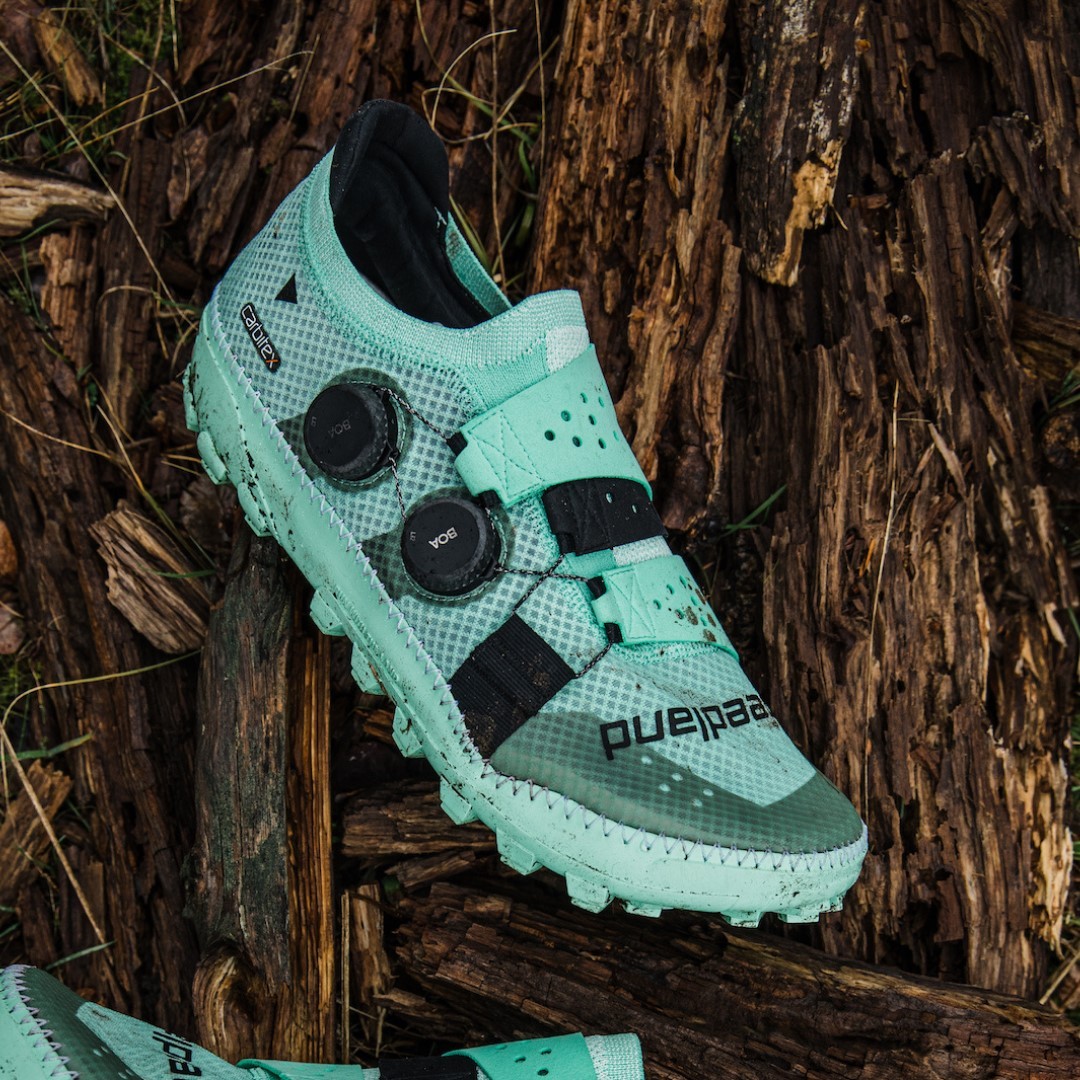
If there is one point where every reviewer converges, it is the fit. Believe in the Run called the upper possibly the best they had ever experienced in any shoe. Canadian Running described a sock-like integration with the foot unmatched by anything its tester had worn. The mechanism behind that praise is the dual BOA Li2 system: two independent dials — one at the midfoot, one at the forefoot — working with three layered PerformFit Wrap straps. Unlike a single-dial setup (the La Sportiva Cyklon is the usual comparison), the SL:PDX lets you slacken the forefoot while keeping the heel locked, which is why wide-footed and narrow-footed runners alike report a genuinely personal fit.
The Li2 dials are also multidirectional, meaning you can add or release tension click by click without popping the whole system open. Multiple testers described the same habit: cinching down before a climb, then loosening for the descent, all without breaking stride. It is the clearest expression of Speedland’s « equipment, not footwear » pitch — the shoe adjusts to the run the way a cyclist adjusts a bike. The Dyneema knit upper underneath gets equal credit: soft and sock-like, yet so abrasion-resistant that Blister reported zero creasing across the toe box after 150 hard miles.
The Modular Heart: Plate, Foam and Lugs
The SL:PDX midsole is built in layers: a thin EVA base, a removable Carbitex carbon plate, and a contoured Pebax SCF unit that doubles as the sock liner. The plate is the headline act. It flexes asymmetrically — pliable downward so it conforms over rock and root, stiff upward for toe-off — and it firms up the faster you run. Reviewers were split on how much propulsion they actually felt. Believe in the Run found the pop real but not extreme, valuing the plate more for its reactive stability across uneven ground. WearTesters felt little spring at all, since the plate sits beneath the foam rather than embedded in it, but valued it as rock protection. The consensus: think of the Carbitex less as a road-style super-shoe spring and more as a tunable stone guard that adds confidence on technical terrain. This matches the broader research on the subject, which we cover in our guide to whether carbon plate trail shoes actually work off-road.
The Michelin outsole is the other talking point — high-performance rubber with 7 mm lugs you can trim toward 3–4 mm for firmer or faster ground. In practice, almost no reviewer cut theirs, partly out of reluctance to take a knife to a $375 shoe, and partly because the uncut tread gripped well across wet rock, mud and dry hardpack alike. The Dyneema upper is sewn to that single-piece outsole with moccasin stitching rather than glue, which both improves durability and lets Speedland disassemble and recycle the shoe at end of life. If the material science here interests you, our guide to Dyneema explains why a fabric originally made for ship sails ended up wrapping premium running shoes.
Where the SL:PDX Runs Out of Road
Here is where an honest review has to slow down, because the most consistent criticism across sources is also the most important: this is not a 100-mile shoe, despite Speedland’s stated 100-mile ceiling. Blister found the midsole comfort dropped off sharply past 30 miles, with or without the plate, and noted that the stiff Carbitex actually caused forefoot blisters on efforts over four hours. Canadian Running and several Believe in the Run testers independently flagged the same doubt about very long distances, and admitted no tester had completed a true ultra in them at the time of writing. The shoe feels happiest dancing over technical terrain at pace — for 50K and short ultras it is superb, but for a genuine 100-miler your money is better spread across more cushioned options. If your real target is ultra distance, Speedland’s own answer is the high-stack GS:BLK, built specifically for the long haul — our review covers where it succeeds and where it stumbles.
A few smaller gripes recur. The one-piece Michelin outsole acts a little like a canoe in water crossings — drainage is mediocre unless you cut the optional ports from the outset, which most reviewers recommend doing if you expect wet trails. Blister found the shoe slightly bottom-heavy, since all that dense rubber sits low. WearTesters struggled to get perfect heel lockdown on steep descents, because the BOA wrap doesn’t pull you into the heel counter the way traditional lacing does. And two separate reviewers raised durability questions not about the Dyneema or the outsole, which seem near-bombproof, but about the flimsier PerformFit straps and the BOA dials themselves, which can collect trail debris and, if they fail, render the shoe unwearable. If you want to see how Speedland’s maximalist approach stacks up against the opposite philosophy, our Norda 005 vs Speedland SL:PDX comparison pits this shoe against a plateless, featherweight rival, and our Norda 001 vs Hoka Speedgoat face-off is another useful reference point on premium trail trade-offs.
The Price Question
No SL:PDX review can dodge the $375. The fairest framing came from Believe in the Run’s dollar-per-mile math: a Nike Alphafly costs nearly as much and is expected to last a couple hundred miles, while Speedland claims 400–500 for the SL:PDX, and several reviewers’ real-world pairs backed that up — Canadian Running cited peers approaching 1,000 km on a single pair. So on durability the premium is at least defensible. What it doesn’t escape is accessibility. Every reviewer, even the ones who loved it most, conceded they could not personally justify the spend, and Speedland itself is candid that the shoe is not for everyone. It is a luxury instrument that performs to its price — which is a different claim from being good value.
Our Take
The SL:PDX is not the quiver-killer Speedland’s « up to 100 miles » marketing implies, and pretending otherwise would do you a disservice. What it is, on the evidence of five independent testers, is one of the best-fitting and most thoughtfully engineered sub-ultra trail shoes ever made — a shoe that genuinely delivers on the equipment premise for technical running at 50K and below. The fit is in a class of its own, the Dyneema upper is close to indestructible, the modularity is real rather than marketing, and the durability mostly justifies the dollar-per-mile case. The caveats are equally real: it fades on very long efforts, it drains poorly out of the box, and the BOA system is a single point of failure you should respect. If you run technical trails often, run them seriously, and the price genuinely doesn’t make you flinch, the SL:PDX rewards the splurge. If you are chasing a hundred-mile buckle, look elsewhere — or own this alongside something softer. You can see the current SL:PDX and the rest of the lineup on Speedland’s official website.
Frequently Asked Questions
Is the Speedland SL:PDX worth $375?
It depends entirely on how you value it. On a dollar-per-mile basis the case is defensible: Speedland claims 400–500 miles of life and several independent reviewers reported pairs approaching 1,000 km, far longer than a typical carbon race shoe. But every reviewer also admitted the price puts it out of reach for most runners. It is a luxury piece of equipment that performs to its price, which is not the same as being good value for the average buyer.
Can the SL:PDX handle 100-mile races?
Despite Speedland’s stated 100-mile ceiling, the consistent finding across independent tests is that comfort falls off past roughly 30 miles, and the stiff Carbitex plate caused forefoot soreness or blisters on very long efforts for some testers. It excels at 50K and short ultras on technical terrain. For a genuine 100-miler, most reviewers suggested a more cushioned shoe — Speedland’s own GS:BLK being the brand’s purpose-built long-distance option.
Do you have to cut the lugs and remove the plate?
No. Both are optional. The 7 mm Michelin lugs can be trimmed toward 3–4 mm for firmer ground, but the cut is permanent and most reviewers chose to leave theirs intact. The Carbitex plate, by contrast, is fully removable and reversible — you can run it plated for protection and propulsion or unplated for a softer, more minimal feel, and swap it mid-run if you like.
How is the heel lockdown and fit?
The overall fit is the SL:PDX’s standout quality — the dual BOA Li2 dials and Dyneema sock-like upper drew near-universal praise as among the best in any trail shoe. The one caveat is heel lockdown on steep descents: because the BOA wrap doesn’t pull you into the heel counter like traditional laces, some runners experienced slight forward sliding downhill, which often improved as the midsole molded to the foot.
What is the SL:PDX best used for?
Technical trail running at fast paces, from short distances up to roughly 50K or a short ultra. Reviewers were unanimous that it shines on rugged, varied terrain — wet rock, mud, roots, scree — but is wasted on road or gravel, and that drainage benefits from cutting the optional outsole ports if you expect water crossings.