When the objective requires carrying everything — tent, sleeping bag, four days of food, technical layers, and a stove — the pack choices narrow quickly. The Osprey Aether and the Gregory Baltoro are the two packs that consistently appear at the top of serious expedition recommendations in the 70–85 litre bracket, and for good reason. Both are the result of decades of iteration on what it means to carry a heavy load for multiple consecutive days without destroying your body in the process. They are not identical solutions to that problem, and the differences matter.
Read our full profiles on Osprey and Gregory for broader context on each brand.
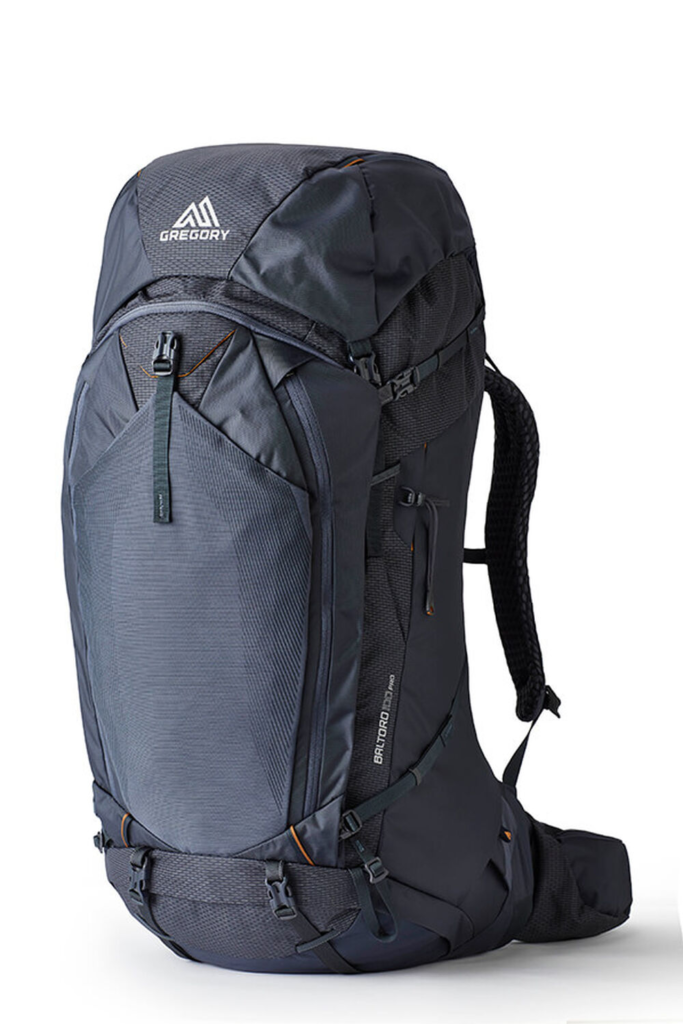
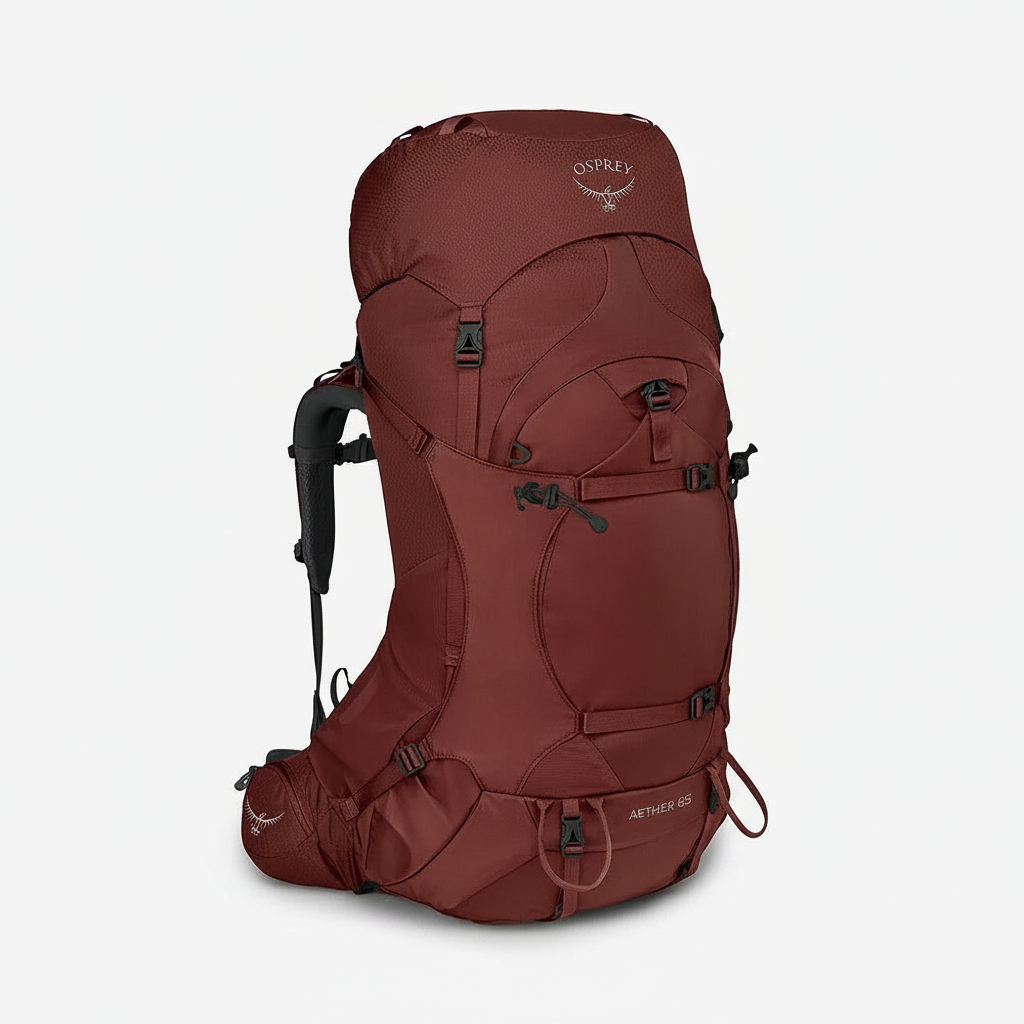
The Short Answer
The Osprey Aether is the more versatile expedition pack. Its AirSpeed suspension system balances ventilation with load transfer at heavy weights, and the overall design is well-suited to the kind of general purpose multi-day and multi-week backpacking most expedition users actually do. It fits a wide range of body types and carries predictably.

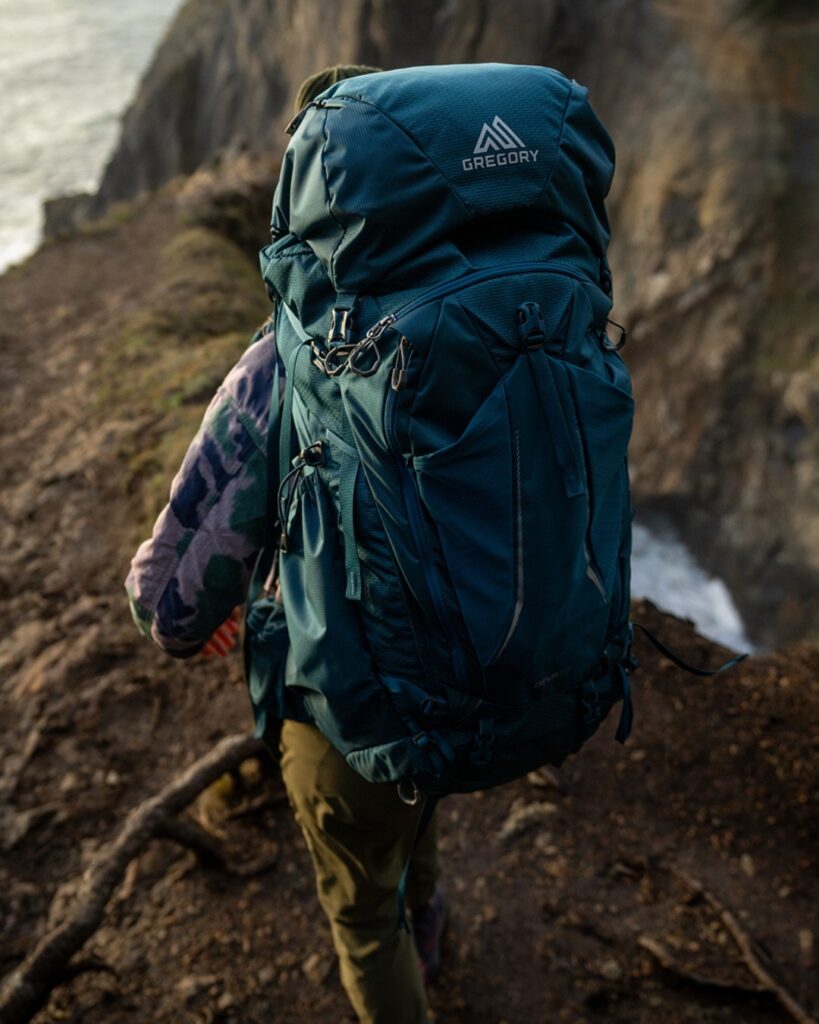
The Gregory Baltoro is the more precisely fitted pack. Gregory’s Response A3 suspension system adapts to body movement in three dimensions, the Auto-Fit hip belt moulds to individual pelvic geometry, and the overall carry feel at maximum load is more personalised than the Osprey. For users who can take the time to fit the Baltoro properly, it often delivers a more comfortable carry under heavy weight.
Specs Side by Side
| Spec | Osprey Aether 65 | Gregory Baltoro 75 |
|---|---|---|
| Capacity | 65 L | 75 L |
| Weight | ~2.0 kg | ~2.5 kg |
| Suspension system | AirSpeed tensioned mesh | Response A3 (3-axis pivot) |
| Hip belt | Padded, adjustable | Auto-Fit moulded, pivoting |
| Torso adjustment | Fixed (multiple sizes available) | Adjustable across sizes |
| Ventilation | Good (mesh gap) | Moderate (contact system) |
| Front panel access | U-zip | U-zip |
| Women’s version | Yes (Ariel) | Yes (Deva) |
| Rain cover included | Yes | Yes |
| Price (approx.) | ~€290–330 | ~€320–370 |
Suspension: The Central Difference
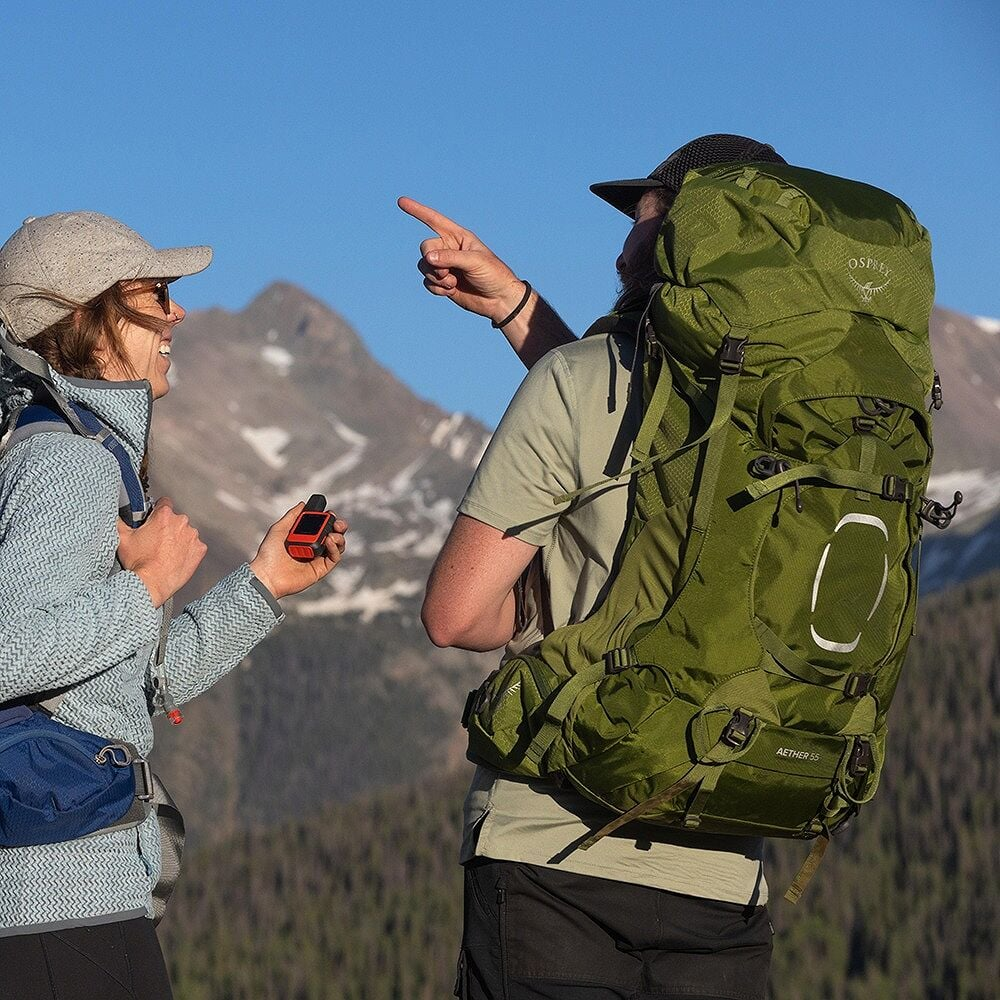
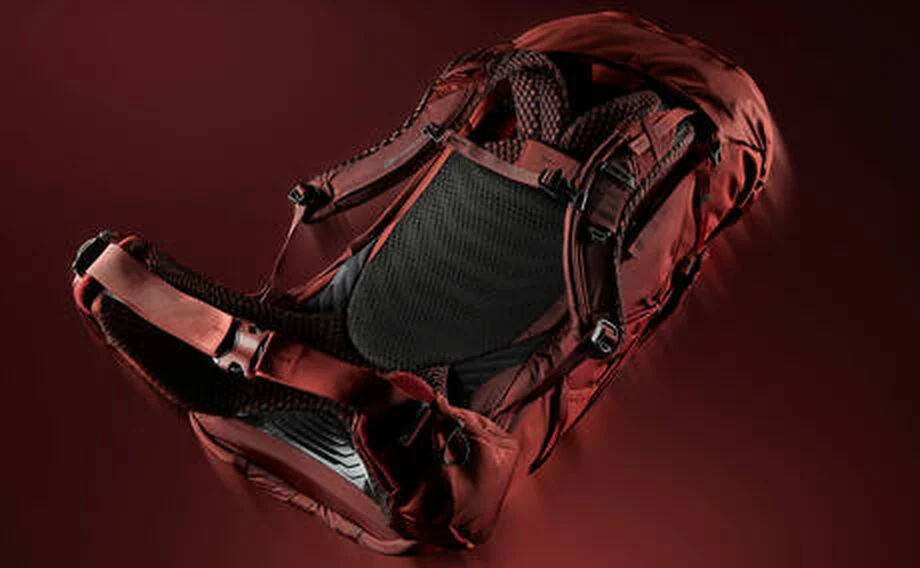
The Osprey Aether uses the AirSpeed suspension system, a tensioned mesh back panel that holds the pack away from the spine for ventilation while maintaining load transfer through a structured frame. It is a more load-capable implementation of the Anti-Gravity concept found in the Atmos, with a stiffer frame that handles heavier weights more effectively. The result is a pack that breathes well and carries high loads competently, if not as precisely as the Gregory.
Gregory’s Response A3 suspension pivots in three axes — vertical, lateral, and rotational — allowing the hip belt to follow the natural movement of the pelvis through the gait cycle. Combined with the Auto-Fit hip belt, which uses a memory foam-like material that conforms to individual pelvic shape over the first few hours of use, the Baltoro’s suspension system produces a carry that feels genuinely personalised rather than generically supportive. The trade-off is weight: the more complex suspension adds to the Baltoro’s overall pack weight, which at 2.5kg is notably heavier than the Aether’s 2.0kg at a comparable capacity.
Organisation
The Baltoro has the edge in organisation. Gregory’s design philosophy emphasises accessibility: the front U-zip panel gives full access to the main compartment without full unpacking, hipbelt pockets are large enough for a smartphone and snacks, and the lid organisation is among the most thoughtfully laid out in the category. For expedition use where accessing gear at the bottom of a 75L pack mid-route matters, the Baltoro’s organisation system is worth the minor weight penalty.
The Osprey Aether is well-organised but slightly more conventional in its approach. The same features are present — front access, lid pockets, hipbelt pockets, sleeping bag compartment — but the layout is less precisely thought through than the Gregory. For most users this will not matter; for expedition users who know exactly what they need to access and when, the Gregory’s attention to pocket detail is meaningful.
Weight
500g is the difference between these packs at comparable capacities. On a long expedition where base weight matters — and where the pack itself is often the single heaviest item in the kit — 500g is not trivial. For ultralight-oriented backpackers, neither of these packs is the right choice anyway (both are firmly in the fully-featured expedition category). For expedition users who prioritise carry comfort and organisation over pack weight, the Baltoro’s additional 500g is the cost of its superior suspension and organisation.
Fit and Women’s Versions
Gregory’s Deva (women’s Baltoro equivalent) is widely regarded as one of the best-fitting women’s expedition packs available, largely because of the same Auto-Fit hip belt technology applied to female-specific pelvic geometry. Osprey’s Ariel applies the AirSpeed system to a women’s-specific torso and shoulder geometry. Both are genuine women’s designs rather than scaled men’s packs.
The Baltoro’s adjustable torso system gives it a fitting advantage over the Aether’s fixed-torso approach (multiple sizes are available for the Aether, but they cannot be adjusted once purchased). For expedition users who are between torso sizes or who expect their body to change over the course of a long trip, the Baltoro’s adjustability is a practical advantage.
Verdict
Choose the Osprey Aether if: ventilation matters in your trekking conditions; you want a lighter pack at comparable capacity; your torso size is clearly within one of Osprey’s available sizes; or you prefer the predictability and wide availability of Osprey’s service and warranty network. The Aether is a superb expedition pack that will serve the majority of multi-day and multi-week backpackers without reservation.
Choose the Gregory Baltoro if: carry comfort under heavy loads is the absolute priority; you want the most precisely fitted hip belt system in a mainstream expedition pack; organisation and accessibility under expedition conditions matter to your use case; or you are willing to carry the extra 500g in exchange for what Gregory’s suspension system delivers. For serious multi-week expeditions in cool conditions where every aspect of the carry experience is scrutinised, the Baltoro earns its premium.
For mid-range multi-day packs in the 50–65L bracket, see our Osprey Atmos vs Deuter Aircontact comparison. And if you are selecting a sleeping system to go inside either of these packs, our sleeping bag guide covers the key decisions.
See the full Osprey expedition pack range on the Osprey official website, and the complete Gregory lineup on the Gregory official website.