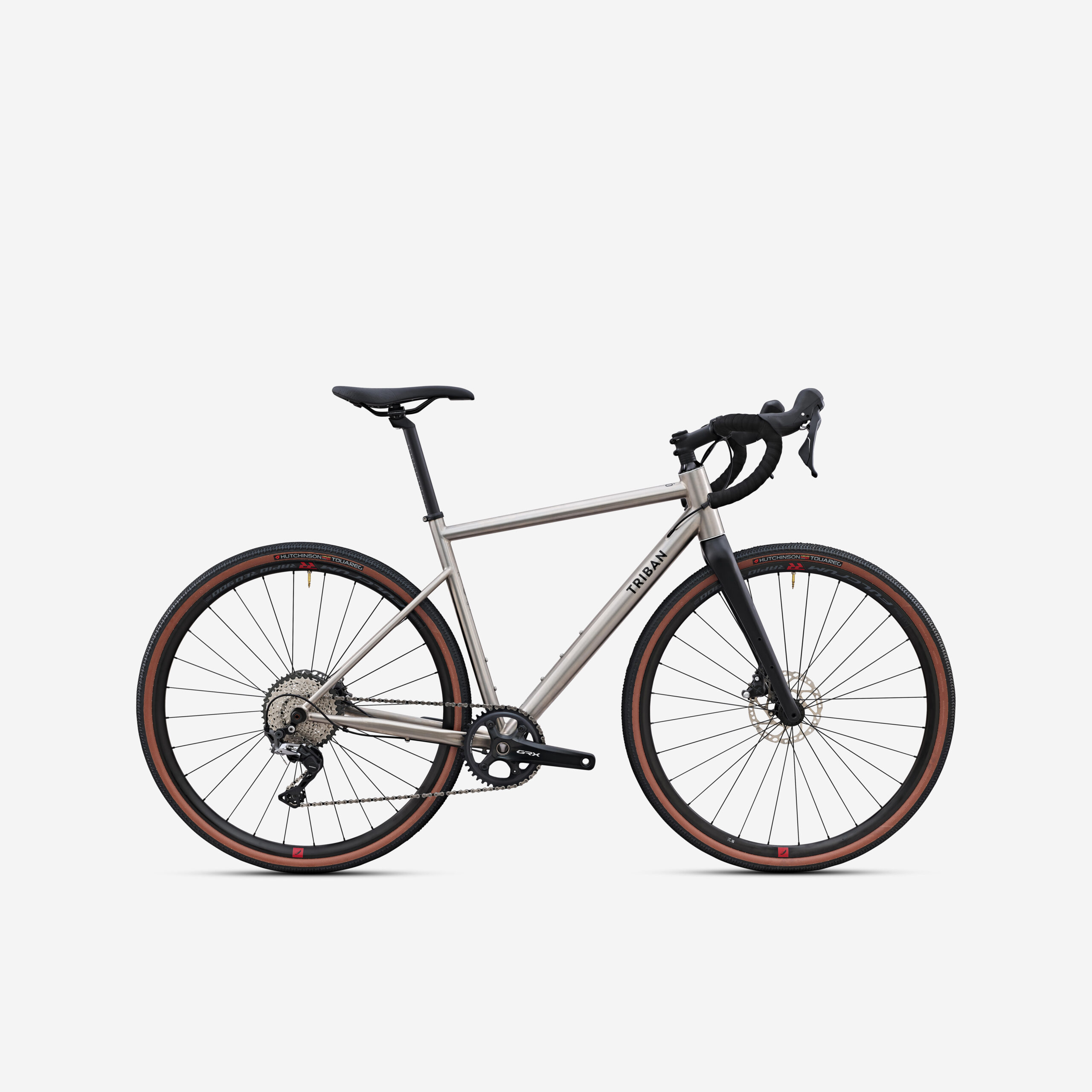
Titanium has the best reputation money can buy in cycling. Ask around and you’ll hear the same words on repeat: forever bike, magic ride quality, timeless. A titanium gravel bike costs roughly double what the same frame would in steel, and buyers rarely seem to regret it. But strip away the mystique and a harder question remains — does titanium actually ride better, or are we mostly paying for a feeling? We went through vibration lab data, owner testimonials, a plagiarism-scarred field test, and a few unapologetically pro-titanium brand pitches to find out.
A Brief, Slightly Accidental History
Titanium’s origin story has nothing to do with bikes. The element was discovered in Cornwall in 1791 and later named after the Titans of Greek mythology. It became a Cold War material first — the US and USSR both used it heavily in aerospace and naval construction, which created a global supply shortage and kept it out of consumer hands for decades. Early attempts at titanium bike frames in the 1960s and 70s flopped because pure titanium was simply too soft. It wasn’t until builders started alloying it — typically blending in aluminum and vanadium — that it became viable as a frame material at all. That alloying breakthrough is the entire reason titanium bikes exist today.
What Titanium Actually Brings to the Table
Set the mythology aside and titanium does have real, measurable properties that matter for a gravel bike:
- Corrosion resistance. Titanium doesn’t rust. Unlike steel, it needs no paint or coating to survive wet, salty, or muddy conditions indefinitely.
- Fatigue resistance. A well-built titanium frame has an unusually high fatigue-to-strength ratio, meaning it can absorb years of repeated stress without weakening the way aluminum eventually does.
- A favorable strength-to-weight ratio. Titanium doesn’t need the thick tubing steel does to hit the same strength target, which lets builders keep frames reasonably light without sacrificing durability.
- Natural vibration damping. Titanium absorbs high-frequency road buzz in a way aluminum generally doesn’t, which is where most of its comfort reputation comes from.
None of that is marketing spin — it’s basic materials science. The debate starts when you ask how much any of it actually matters once the bike is fully built up.
Does Titanium Actually Ride Better Than Carbon? The Lab Says: Barely
This is where things get genuinely interesting, because someone actually measured it instead of just riding both bikes and reporting a feeling. Vibration testing conducted by CyclingAbout’s Comfort Lab compared a titanium benchmark bike against a carbon Argon 18 Subito, first with each bike’s stock components, then with identical comfort-oriented parts — a Redshift ShockStop stem and seatpost — swapped onto both.
The initial result matched expectations: the carbon bike felt noticeably harsher. But once the same comfort components were fitted to both bikes, the vibration data came back essentially identical, with the carbon bike only measurably rougher on fast, high-speed gravel. A second round using carbon seatposts on both bikes again showed no measurable comfort difference at all. The tester’s own conclusion was blunt: frame material, once you control for the components actually doing the vibration damping, becomes close to irrelevant.
That doesn’t mean the two bikes felt identical to ride. The same tester described titanium as feeling « springier » and more forgiving, while carbon felt faster, stiffer, and more « muted » — a subjective distinction that shows up again and again across owner reports, even when the objective vibration numbers converge.
What Owners Actually Say (And Why They Disagree With Each Other)
A long-running r/gravelcycling thread of riders who own both materials tells a similarly split story. Several owners flatly said they don’t believe in titanium’s « magic ride feel » and attribute nearly all of the comfort difference to geometry, tire choice, and seatpost flex rather than the frame tubing itself. One rider who has owned Moots and Litespeed titanium frames alongside multiple carbon bikes put it plainly: buy titanium for its longevity and corrosion resistance, not because you expect a transformative ride.
Others disagreed just as confidently, describing titanium as noticeably smoother over chattery terrain and carbon as comparatively « brutal » by contrast — though frequently while admitting their two bikes weren’t built with matching geometry or components, which makes a clean comparison difficult. The recurring theme, even among titanium’s biggest fans in that thread, is that frame material is one variable among several, and rarely the dominant one.
Where Titanium Genuinely Pulls Ahead: Durability
Durability is the strongest, least disputed argument for titanium — and it comes with real-world backing. After a 2023 Unbound Gravel DNF where thick mud tore off a rear derailleur and cracked a carbon seatstay in the process, one gravel racer switched permanently to titanium, citing its ability to absorb impacts and abrasion that would visibly damage a carbon frame. Scuffs buff out. There’s no coating to chip. And unlike aluminum, titanium doesn’t fatigue and weaken meaningfully over the kind of timescale most riders own a bike.
That said, « unbreakable » is the wrong takeaway. Titanium frames aren’t immune to cracking — they’re just more likely to fail at the weld than along the tube. One rider on that same Reddit thread mentioned a well-known German titanium brand having a cracked frame in for repair the same week his own titanium bike was being inspected, and separately reported his own frame splitting for no obvious reason. Titanium’s high notch sensitivity means a poorly executed weld is a genuine weak point, regardless of how strong the raw tubing is. Build quality matters as much as material here — arguably more.
Where Titanium Doesn’t Win
A few areas where the « titanium is simply the best » narrative doesn’t hold up under scrutiny:
- Weight. Titanium sits closer to carbon than steel does, but it’s still typically heavier than a comparable carbon frame. In a seven-bike field test, a titanium gravel bike came in at 21.6 pounds — nearly two pounds heavier than the next heaviest bike in the group, despite a fairly light claimed frame weight. If you’re chasing the lowest number on the scale, carbon still wins.
- Price. A survey of steel-and-titanium frameset pairs from the same brands found titanium running roughly 130 percent more expensive on average — sometimes well over double. That premium is real and consistent across the market, not an occasional outlier.
- Environmental footprint. A widely cited tubing-industry study found that producing titanium tubing generates roughly three times the CO₂ of equivalent steel tubing. It’s a detail brand marketing rarely mentions, and one worth knowing if that factors into your buying decision.
- Consistency. Because titanium is difficult to work with — it must be welded in an inert atmosphere and is unforgiving of shortcuts — quality varies enormously between builders. A cheap titanium frame can ride like a mediocre steel one; the material alone guarantees nothing.
The Uncomfortable Conclusion: Components and Geometry Usually Matter More
Every rigorous source we looked at — the lab-tested vibration data, the more skeptical owner accounts, even a bikepacking-focused long-form piece that set out to explain titanium’s appeal and ended up mostly explaining its price — converges on the same point. If you built two otherwise-identical gravel bikes, one in titanium and one in top-grade steel, with matched geometry, tires, and finishing kit, very few riders would be able to reliably tell them apart in a blind test. The real, decisive variables are tire volume and pressure, seatpost and stem flex, saddle choice, and frame geometry — not the metal the tubes are drawn from.
That doesn’t make titanium a bad choice. It makes it a specific choice, for specific reasons that have less to do with outright ride quality and more to do with what you value in ownership: no rust, high resistance to abuse, a frame likely to outlast several component refreshes, and — worth being honest about — a distinctive brushed finish that a lot of riders simply find beautiful.
Who Should Actually Buy One
Titanium tends to make sense if you’re riding long distances or multi-day bikepacking trips where durability under abuse matters more than shaving grams, if you want a bike you genuinely intend to keep and rebuild for a decade or more, or if you ride in wet, muddy, or coastal conditions where corrosion resistance has real payoff. If your fit and geometry priorities point toward a race-oriented, lightest-possible setup, or your budget is the primary constraint, carbon or aluminum will get you further for less money. And if you’re simply choosing based on frame material alone without also thinking hard about tire width and component flex, you’re optimizing the wrong variable regardless of what you pick.
Our Take
The evidence doesn’t support the idea that titanium possesses some inherent, unmatchable ride quality — the lab data and the more honest owner accounts both point toward geometry and components doing most of the real work. What titanium does offer, reliably and without much dispute, is exceptional long-term durability, genuine corrosion immunity, and a look that ages better than almost anything else on two wheels. If those are the things you actually want from a gravel bike, the premium is defensible. If you’re buying titanium purely chasing a mythical ride feel that will make every ride better than carbon or steel, you’re likely to end up disappointed — or at best, unable to explain what exactly you’re feeling that a well-specced steel bike couldn’t also deliver.
FAQ
Is a titanium gravel bike actually more comfortable than carbon?
Lab vibration testing suggests the difference is small to negligible once both bikes are fitted with comparable comfort-oriented components like a flexible seatpost and appropriate tire width. Subjectively, many riders still describe titanium as « springier » and carbon as « stiffer » or more « muted, » but this is a feel difference more than a measurable comfort gap.
How much heavier is a titanium gravel bike than a carbon one?
It varies by build, but titanium frames typically add somewhere around one to two pounds compared to a comparable carbon frame. In at least one multi-bike field test, a titanium gravel bike ended up as the heaviest in the group at 21.6 pounds complete.
Can a titanium frame crack?
Yes. While titanium resists corrosion and general abuse extremely well, it has high notch sensitivity, which makes weld quality critical. Poorly executed welds are a genuine failure point, and cracked titanium frames — even from reputable brands — are not unheard of.
Why does titanium cost so much more than steel or aluminum?
Titanium requires specialized welding in an inert atmosphere, is harder on cutting tools, and demands more skilled labor than steel or aluminum fabrication. On top of that, raw titanium tubing itself carries a significant material cost premium — together these push finished framesets to roughly double the price of a comparable steel equivalent.
If you’re weighing a titanium build seriously, it’s worth studying a specialist builder’s own technical claims directly — Litespeed, one of the longest-running titanium frame makers in the sport, publishes detailed material and weight data on their official site.