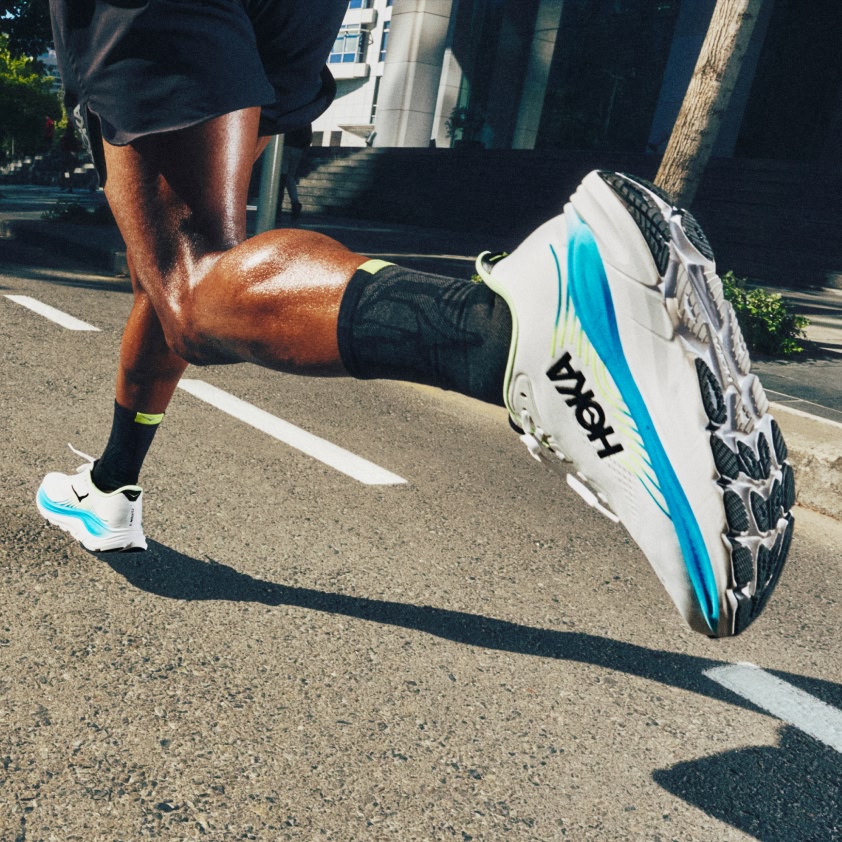
hill.camp does not test products first-hand. This review is a structured synthesis of 10 independent sources — specialist field tests, retailer panels, verified owner feedback and manufacturer specifications — assembled with AI assistance and edited before publication. Sources are selected and verified by runners who follow this equipment closely. That method lets us cross-reference more testing than any single reviewer could, and to flag where sources contradict each other instead of smoothing it over.
The Hoka Clifton has spent eleven years being the shoe nobody needed to think about. It cushioned, it rolled forward, it sold in volumes that kept the rest of the range afloat. The eleventh version arrives on July 1, 2026 at the same $155 the Clifton 10 launched at, and by every account we gathered, it changes almost nothing below the foot. Same CMEVA midsole, same 42mm/34mm stack, same 8mm drop, same MetaRocker geometry with the rearfoot Active Foot Frame carried straight over. What moved is the upper, the sockliner, and the tongue.
What makes this launch strange is timing, not spec. Hoka released the Clifton Pro in the same window, a shoe that costs ten dollars more and runs a genuinely newer supercritical foam. Two reviewers in our source set said the quiet part out loud: it is hard to make the case for the 11 when its own sibling undercuts it on value. We will get to that. First, what actually changed.
Hoka Clifton 11 Review: Quick Specs
| Weight | ~256–283 g / 9.0–9.9 oz depending on size and source (men’s); ~230–242 g / 8.1–8.5 oz (women’s) |
| Stack height | 42 mm heel / 34 mm forefoot (men’s); 38 mm / 30 mm (women’s) |
| Drop | 8 mm advertised; independent lab calipers measured closer to 10 mm |
| Midsole | CMEVA (compression-molded EVA), unchanged from the Clifton 10 |
| Upper | New engineered mesh, 3D silicone touchpoints, double-lace lock, non-gusseted tongue |
| Outsole | Durabrasion rubber in high-impact zones, exposed foam through the midfoot |
| Geometry | MetaRocker with rearfoot Active Foot Frame |
| Fit | True to size; standard, wide and X-wide available |
| Intended use | Daily training, easy and recovery miles, walking, long days on feet |
| Retail price | $155 / €160 |
| Release | July 1, 2026 (some retailers list July 16) |
The Upper: The One Genuine Update
Every source we gathered agrees on where Hoka spent its budget this cycle: above the foam, not in it. The Clifton 10’s jacquard knit is out, replaced by an engineered mesh with 3D-printed silicone touchpoints across the saddle for structure without added rigidity. Testers who ran both generations back to back describe the new upper as softer and more finished against the foot, with breathability that holds up on hot, humid runs and enough interior comfort to go sockless.
The tongue gets a double-lace lock, which multiple independent testers single out as an actual functional improvement rather than a cosmetic one — it keeps the tongue centered through a full run instead of drifting to one side. The heel side of the story is more nuanced. Hoka added padding to the collar and shortened the heel flare so it curves away from the Achilles rather than digging in, which several testers with sensory sensitivities specifically praised. But that same padding is part of why the shoe’s weight crept up in some early reports, before other testers measured it lighter than the 10 on their own scale. We will untangle that contradiction below, because it matters more than it looks.
The CMEVA Midsole: Same Foam, Different Verdicts
Hoka’s own spec sheet says the midsole carries over unchanged — same compression-molded EVA, same density, same stack. Several sources take that at face value and describe the ride as functionally identical to the Clifton 10. Others do not. A UK retailer test team found the Clifton 11 noticeably softer standing in it than the 10, and reported that the difference persisted even after swapping insoles between the two pairs — which should not happen if the foam itself is truly unchanged. A separate reviewer independently reached the same conclusion from a different angle, describing a smoother, more relaxed ride on easy miles and crediting it to the new sockliner sitting closer to the foot rather than any change in the EVA itself.
We are flagging this rather than resolving it. It is entirely plausible that a softer open-cell PU sockliner changes initial ground contact enough to read as a different midsole, without the CMEVA underneath actually changing. But it is worth knowing that « unchanged foam » and « feels different underfoot » are not, in this case, in tension — both can be true, and multiple unconnected testers landed on the second point independently.
What is not in dispute is the character of that foam. CMEVA is dense, protective and durable rather than lively. A lab that put the shoe through compression testing measured poor energy return at both heel and forefoot, describing the ride as dull rather than bouncy — in line with the Clifton 10 and clearly behind more modern super-trainer foams. Field testers used softer language for the same finding: dependable, consistent, not exciting. If you want a daily trainer that gives something back on toe-off, this is not that shoe, and none of our sources claim otherwise.
What the Lab Numbers Actually Say
One of our sources runs a standardized lab methodology — compression rigs, 3D scanning, calipers — rather than road impressions, and its numbers are worth isolating because they catch things a runner’s feet cannot. Good cushioning overall (excellent at the heel, solid at the forefoot until higher forces, where protection drops off). Good stability, helped by a wide outsole and firm forefoot, but measurably less stable than the Clifton 10 because of the softer heel and the tongue change below. Poor energy return across the board, which lines up with every field tester’s description of a flat, protective ride.
The most interesting finding is the drop. Hoka advertises 8mm, and every retail source repeats that number without independently verifying it. The lab measured the actual heel and forefoot stack with calipers and got a heel-to-toe drop closer to 10mm — a two-millimeter gap between the marketing spec and the physical shoe. That is not a scandal; advertised drop numbers are notoriously rounded across the industry. But if you are choosing the Clifton 11 specifically because you have calibrated your gait to an 8mm shoe, it is worth knowing that the number on the box and the number under your foot are not quite the same thing.
The same lab also flagged something no retail review mentioned: the Clifton 11 drops the semi-gusseted tongue construction the Clifton 10 used. That saves weight, which is part of why some testers measured this version lighter than the 10 — but it is also, by the lab’s own measurement, part of why the shoe scores lower on stability than its predecessor. A reviewer testing purely by feel independently flagged the same tongue as a weak point, calling out the lack of a gusset as the one real design regression in an otherwise well-executed update. Two sources, two different methods, same conclusion.
Weight: Why the Numbers Don’t Match
Reported weights for this shoe range from roughly 256g to 283g in men’s sizing, depending on which source you read — and the gap is too large to hand-wave away as normal test variance. Part of it is genuinely different shoe sizes: a US men’s 9 will always weigh less than a US men’s 10, and our sources tested across that range without always specifying which. Part of it is real disagreement even where sizes roughly line up: one tester measured a 6% weight drop against the Clifton 10 on his own scale, while another reported the opposite direction with added collar and tongue padding pushing the number up.
Our honest read: the Clifton 11 is not dramatically heavier or lighter than the 10 in either direction. It sits in the same general class — a solid, mid-pack daily trainer weight, not a lightweight one — and the small shifts reported by individual testers likely owe more to sample variation and size than to any deliberate weight target from Hoka.
Outsole and Durability
The rubber strategy carries over from the 10: Durabrasion compound in the heel and forefoot impact zones, exposed foam through the midfoot to save weight. One reviewer specifically noted the 11 ships with slightly less rubber coverage than the 10, though not enough to worry about on wet roads or accelerated wear in normal conditions. A separate tester who has now run two generations of this outsole construction flagged the exposed midfoot section as the shoe’s one unresolved durability question — fine on well-maintained roads and mixed easy-run surfaces across a training block, but the first place to show wear if your gait scuffs or your routes lean toward rough tarmac.
On expected mileage, sources that gave a concrete number landed around 600–800km before the CMEVA foam shows serious fatigue, depending on runner weight and gait — broadly in line with what the Clifton line has delivered for years. Nobody in our source set reported premature outsole failure; the durability conversation here is about the exposed-foam trade-off, not about the shoe falling apart early.
Fit and Sizing
This is the one area where every source agrees without qualification: the Clifton 11 runs true to size, built on the same last as the Clifton 10. Lab measurements confirm the length, forefoot width and arch fit all track closely to reference sizing, with one specific improvement over the 10 — more room over the toes, fixing what had been a slightly low forefoot height in the previous version. Runners coming from Brooks, Topo, Altra or Saucony are generally advised to go half a size up in Hoka; if you already own Hokas, stick with your usual size.
Standard, wide and X-wide are all available for men and women, which remains a genuine point of difference against most competitors at this price. The midfoot lockdown is secure without pressure points, heel counters are padded but not rigid, and nobody in our source set reported Achilles rubbing — the redesigned heel flare appears to do its job.
Hoka Clifton 11 vs Clifton 10: What Actually Changed
- New engineered mesh upper, replacing the Clifton 10’s jacquard knit
- Double-lace lock added to the tongue for better midfoot hold
- Softer, premium open-cell PU sockliner
- Non-gusseted tongue construction, dropping the Clifton 10’s semi-gusset
- Shortened heel flare curving away from the Achilles
- Reflective details added for low-light visibility
- Slightly reduced outsole rubber coverage
- Same CMEVA midsole, same 42/34mm stack, same advertised 8mm drop, same MetaRocker and Active Foot Frame geometry
Read that list again and the pattern is obvious: everything that changed sits between the foot and the lace, and everything underfoot is identical on paper. Multiple sources independently used the same word for this kind of release — a tune-up rather than a reinvention — and after last year’s more dramatic Clifton 10 overhaul (new drop, new last, new Active Foot Frame), that restraint reads as a deliberate choice rather than a lack of ideas.
The Clifton Pro Problem
Here is the part of this release that nobody at Hoka is likely to put in a press release. The Clifton Pro launched in the same window, at roughly ten dollars more, running a newer supercritical foam that multiple sources describe as more energetic and more cushioned than the CMEVA in the 11. One reviewer put it bluntly: the Pro can do essentially everything the 11 can, in a better package, for a marginal price difference — and questioned why anyone shopping in this range would choose the standard Clifton over it. A second, independent source raised the same tension without prompting, noting that the two shoes arriving together made it feel unfair to judge the 11 on its own terms.
We think this criticism is fair but incomplete. The Clifton 11 still has a real reason to exist: wider availability, wide and X-wide sizing the Pro may not fully match, a more conservative aesthetic that plenty of buyers — including the medical professionals and retail workers who log all-day miles in these — actively prefer, and a firmer, more predictable ride that some runners genuinely like better than a bouncier supercritical foam. But if your decision is purely value-for-money and both shoes are sitting on the same shelf, the $10 gap is not nothing, and it is the single most legitimate question a shopper should ask before buying the 11 over its sibling.
Who the Clifton 11 Is For
The consensus across our sources points to a specific runner: someone who wants one dependable shoe for daily training, easy runs, recovery days and long, slow miles, who is not chasing tempo work or race-day speed out of the same pair. It also does double duty as an all-day walking and standing shoe — several sources tested it explicitly in that role and rated it highly for museum days, retail shifts and hospital rounds, though wet cobblestones and polished floors are where the traction shows its limits.
Skip it if you want energy return, a single shoe to cover tempo and easy days alike, or a livelier daily trainer — the Altra Torin 9 is worth a look if you are open to zero-drop and want more midsole feedback, while the Mount to Coast C1‘s dual-layer midsole gives a firmer push-off feel some testers preferred outright. And if the CMEVA’s firmness is your main hesitation, the Clifton Pro or the plusher Hoka Bondi 9 sit right next door in the same lineup.
Our Take
The Clifton 11 does exactly what it set out to do, and not one thing more. The upper is a genuine, felt improvement — softer, better ventilated, better locked down through the double-lace system — and the fit fixes a real complaint from the 10 by adding room over the toes. Underfoot, nothing has moved, for better and worse: the CMEVA remains protective, predictable and durable, and it remains one of the least dynamic foams in its price bracket. Scores across our sources cluster in a solid but unspectacular range, and the recurring theme is « reliable » rather than « exciting » — which, for a shoe with this specific job description, is close to the intended outcome.
Our honest recommendation: if you already own and like the Clifton 10, there is no urgent reason to upgrade — the changes are real but incremental, and a discounted 10 may be the better buy. If you are new to the line or your current pair is worn out, the 11 is a safe, well-fitting choice, provided you go in accepting a firm, low-energy-return ride rather than expecting the bounce of a modern super-trainer. And before you check out, put the Clifton Pro in the same cart — at this price gap, it deserves five minutes of your attention. Full specs and colorways are on the official Hoka website.
Frequently Asked Questions
What’s different between the Hoka Clifton 11 and Clifton 10?
Almost everything below the foot carries over unchanged: the CMEVA midsole, the 42mm/34mm stack, the advertised 8mm drop, and the MetaRocker with Active Foot Frame geometry. The real changes are in the upper — a new engineered mesh, a softer sockliner, a double-lace lock on the tongue, a shortened heel flare, and reflective details. The tongue also loses its semi-gusset construction, which several testers flag as a minor step back for stability even as it helps trim weight.
Is the Hoka Clifton 11 good for walking as well as running?
Yes — several of our sources tested it specifically as an all-day walking shoe and rated it highly for that use, citing the plush collar, roomy forefoot and rocker geometry that reduces effort over long standing or walking days. The main limitation is traction on wet, polished or cobbled surfaces, where the outsole compound is only average.
Should I buy the Clifton 11 or the Clifton Pro?
If budget and value-for-money are your main concern, the Clifton Pro’s newer supercritical foam and roughly $10 price difference make it hard to ignore, and at least two of our sources recommend it over the 11 outright. Choose the 11 instead if you specifically want a firmer, more predictable ride, need wide or X-wide sizing, or prefer its more understated look for everyday and work wear.
Does the Clifton 11 run true to size?
Yes, consistently across every source we reviewed, built on the same last as the Clifton 10. It’s available in standard, wide and X-wide for both men and women. Runners coming from Brooks, Topo, Altra or Saucony are generally advised to size up half a size in Hoka.
How many kilometers does the Hoka Clifton 11 last?
Sources that gave a concrete figure suggest 600–800km before the CMEVA foam shows serious fatigue, depending on runner weight and gait — in line with the Clifton line’s long-standing reputation for durability. The outsole’s exposed midfoot foam is the one area to watch if your gait or routes are particularly abrasive.
Is the Clifton 11 suitable for marathon training?
Yes, for training at easy to moderate paces and long runs — that is precisely the role sources agree it fills best. It is not built for tempo work, speed sessions or race-day pace; the CMEVA foam’s low energy return means most runners will want a livelier shoe, whether that’s the Clifton Pro or a plated race shoe, for anything faster than steady marathon effort.