hill.camp does not conduct first-hand product testing. This guide is a synthesis of independent field tests, specialist press reviews, and verified consumer feedback gathered from multiple sources including RunRepeat, OutdoorGearLab, Runner’s World UK, and Widermag. All technical data and performance observations are drawn from those sources.
There is no single best trail running shoe. There is only the best trail running shoe for you — for your terrain, your gait, your distance, your feet. That said, some shoes consistently rise above the noise. They appear across multiple independent test panels, earn the trust of lab testers and long-distance runners alike, and deliver on terrain that exposes every weakness. This is that list for 2026.
We cross-referenced five major independent sources to build a selection that covers the full spectrum of trail running: from technical mountain terrain to runnable singletrack, from budget-friendly beginners to sub-250g supershoes. Ten shoes. Ten different answers to the same question.
The 10 Best Trail Running Shoes in 2026
| # | Shoe | Best for | Weight | Drop | Price |
|---|---|---|---|---|---|
| 1 | Saucony Peregrine 16 | All-around versatility | 271g | 4mm | ~$150 |
| 2 | Hoka Speedgoat 7 | Do-it-all, women’s pick | 283g | 5mm | ~$165 |
| 3 | Salomon Speedcross 6 | Mud & soft terrain | 311g | 12mm | ~$150 |
| 4 | Merrell Agility Peak 6 | Technical terrain | 286g | 6mm | ~$165 |
| 5 | HOKA Tecton X 3 | Supershoe / ultra racing | 275g | 5mm | ~$275 |
| 6 | Salomon Genesis | Endurance & all-distance | 269g | 8mm | ~$150 |
| 7 | New Balance Hierro V9 | Long-distance cushioning | 293g | 4mm | ~$140 |
| 8 | ON Cloudultra 3 | Training & long-haul comfort | 285g | 6mm | ~$200 |
| 9 | Altra Lone Peak 9 | Wide feet, zero-drop | 320g | 0mm | ~$145 |
| 10 | ASICS Gel Venture 10 | Best value / beginners | 322g | 10mm | ~$80 |
1. Saucony Peregrine 16 — Best Overall Trail Running Shoe
Weight: 271g | Drop: 4mm | Stack: 32mm heel / 28mm forefoot | Price: ~$150
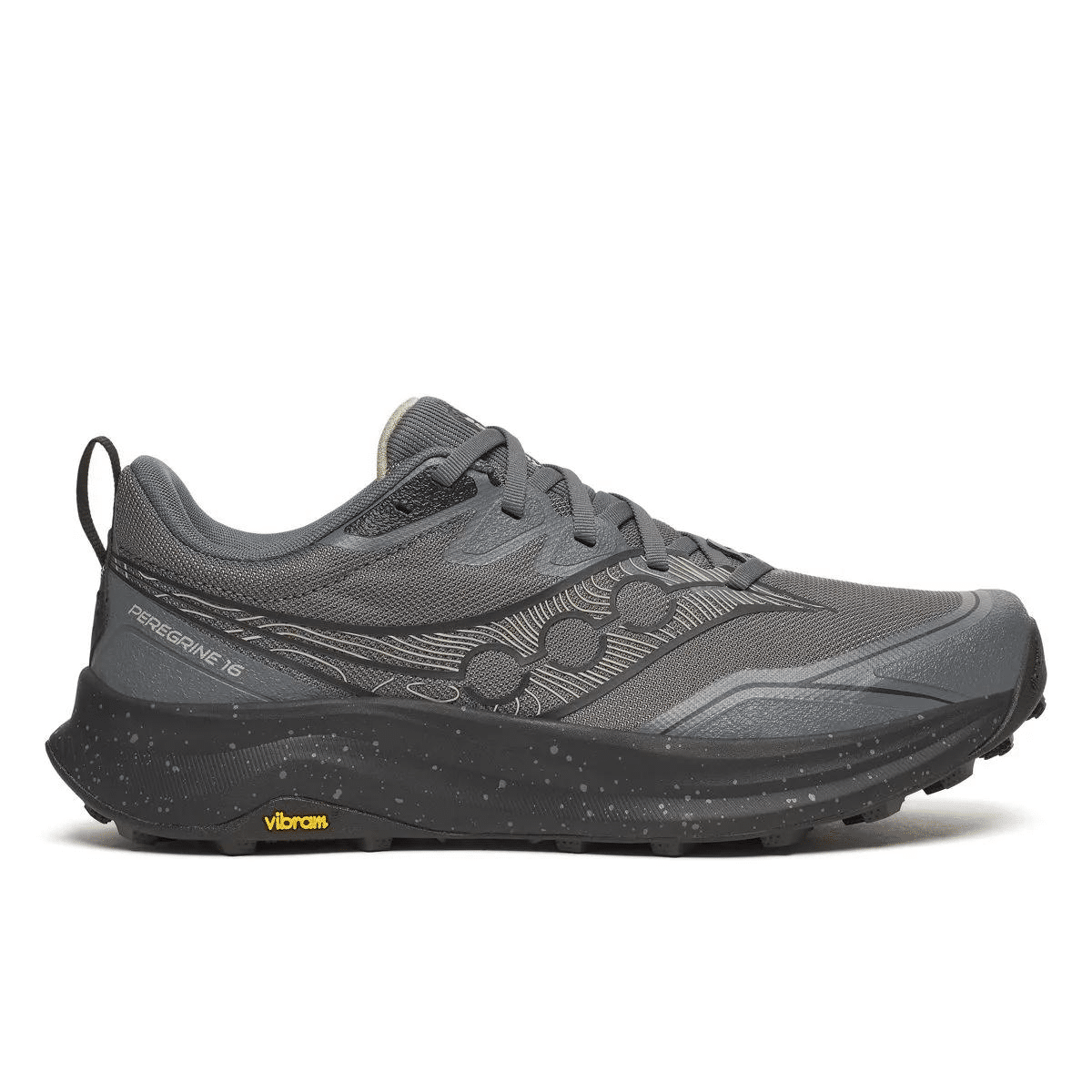
The Peregrine line has been a trail staple for years. Version 16 is the one that finally gets everything right at once. The updated Vibram Megagrip outsole with 4mm lugs — the Peregrine’s longest-standing weakness according to OutdoorGearLab testers — now grips confidently on both wet rock and loose dirt. A more generous dose of Pwrrun foam extends comfort on longer efforts without dulling the precise, technical feel the series is known for.
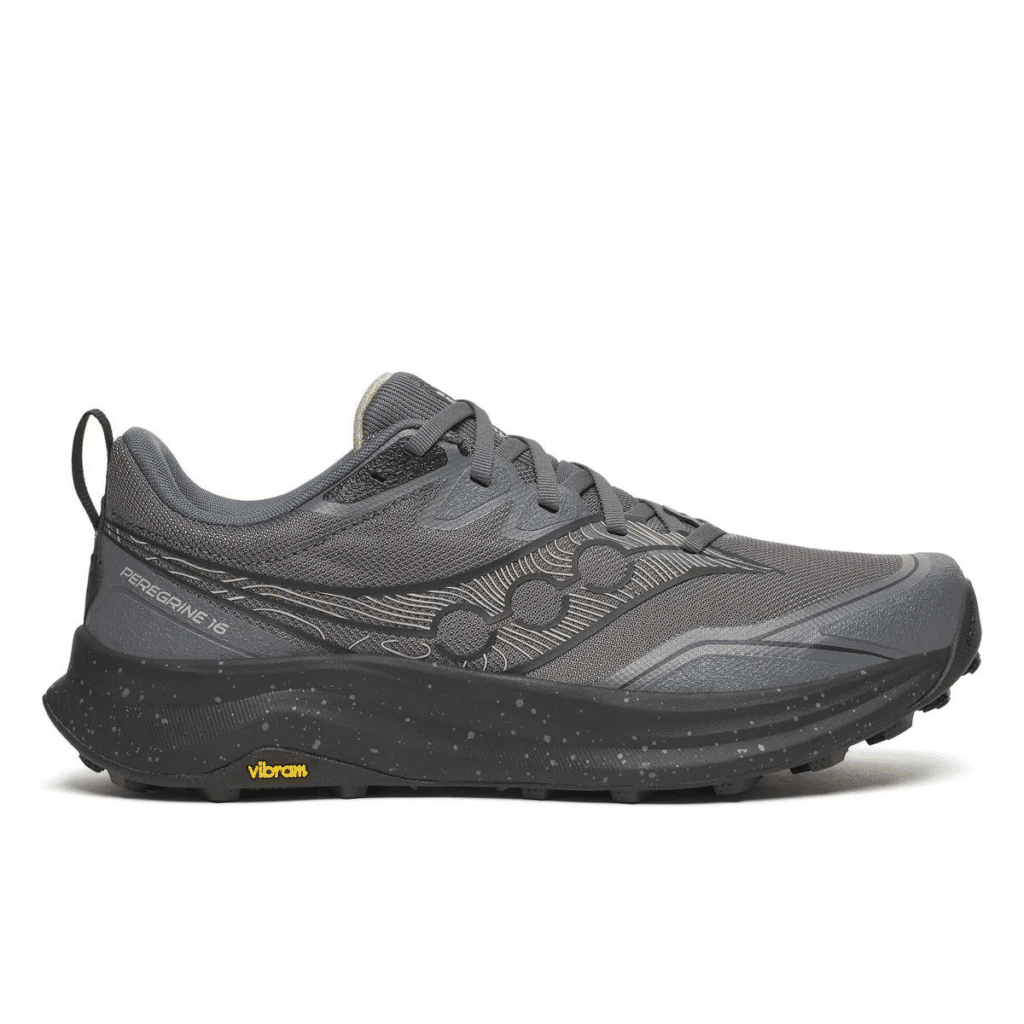
Runner’s World UK testers praised its grip on both super technical terrain and muddy surfaces, noting it as nimble and stable despite the added stack. A rock guard plate provides protection without the stiff, cement-brick feel that plagues lesser implementations. The midfoot lockdown is secure, the forefoot has room to breathe, and the heel is snug enough for fast descents.
If you want one trail shoe for the widest range of conditions, the Peregrine 16 is the answer almost every tester panel agrees on. It does not specialize in anything — and that is exactly the point.
Best for: trail runners who want a single shoe for everything from casual singletracks to technical ridgelines. Not ideal for those who need deep mud traction or maximum cushioning for long ultras.
2. Hoka Speedgoat 7 — Best Do-It-All Trail Shoe
Weight: 283g | Drop: 5mm | Stack: ~37mm | Price: ~$165
The Speedgoat is the best-selling trail running shoe in the world for a reason. Version 7 earns the top spot in OutdoorGearLab’s women’s category and sits near the top across every other panel. This iteration gets back to what made the line popular in the first place: a balanced combination of cushioning, traction, and stability that works across most terrain types without requiring much thought.
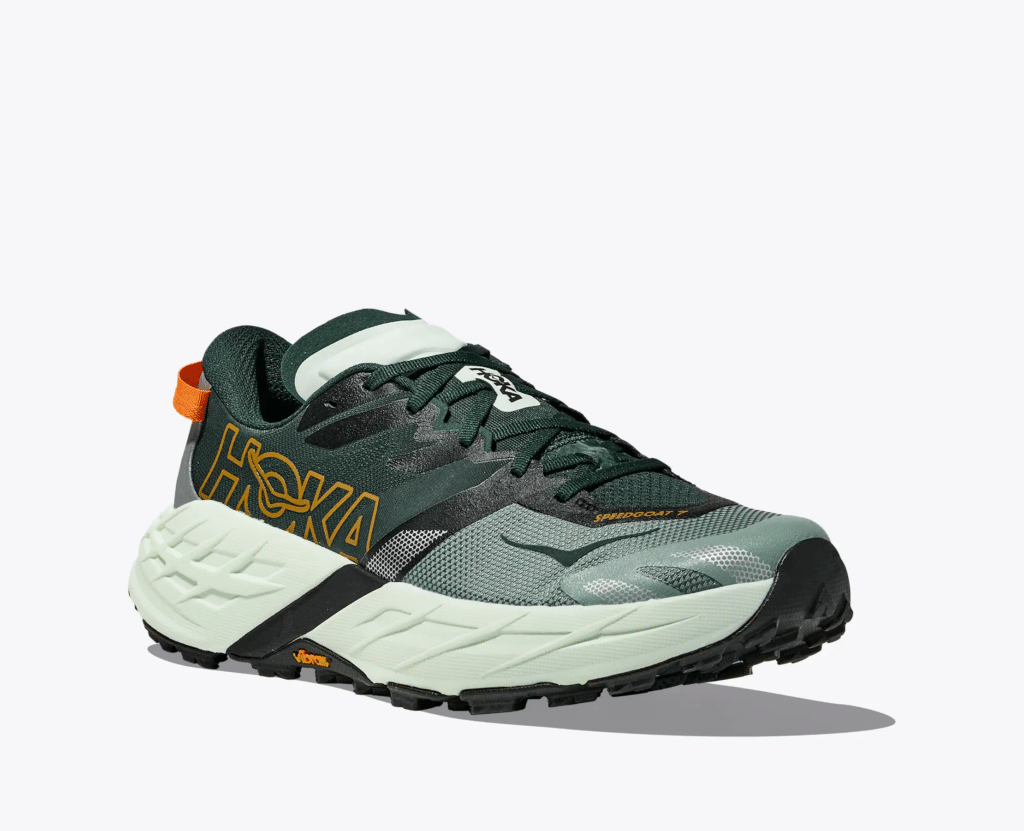
Both male and female testers at OutdoorGearLab noted how light the shoe felt underfoot relative to its stack, making it an easy choice for longer runs. The Vibram Megagrip outsole inspires confidence on technical descents. The fit is inherently stable without being stiff. It performs well right out of the box and continues to deliver consistently across varied terrain and conditions.
The Speedgoat 7 is not the flashiest option here and it is not designed to be. It is the shoe you reach for when you want a reliable result without analysis paralysis. We have covered its rivalry with the Salomon Speedcross in depth — two philosophies, two different answers — in our Hoka Speedgoat vs Salomon Speedcross comparison. And for those considering premium alternatives, our Norda 001 vs Hoka Speedgoat breakdown puts the Speedgoat’s value proposition in sharper relief.
Best for: runners of all levels who want a trustworthy, versatile shoe for daily training and moderate technical terrain. The tongue is a touch minimal and the profile may not suit every foot shape.
3. Salomon Speedcross 6 — Best for Mud and Soft Terrain
Weight: 311g | Drop: 12mm | Stack: 36.5mm | Price: ~$150
Nothing in the OutdoorGearLab men’s lineup matches the Speedcross 6 on soft surfaces. The Mud Contagrip outsole with its deep arrow-shaped lugs bites into wet grass, loose soil, and sustained mud sections with a grip that runners who have experienced it tend to become evangelical about. The lugs grip, pull, and shed cleanly between strides — which is exactly what you need when you’re climbing a saturated alpine slope and every step counts.
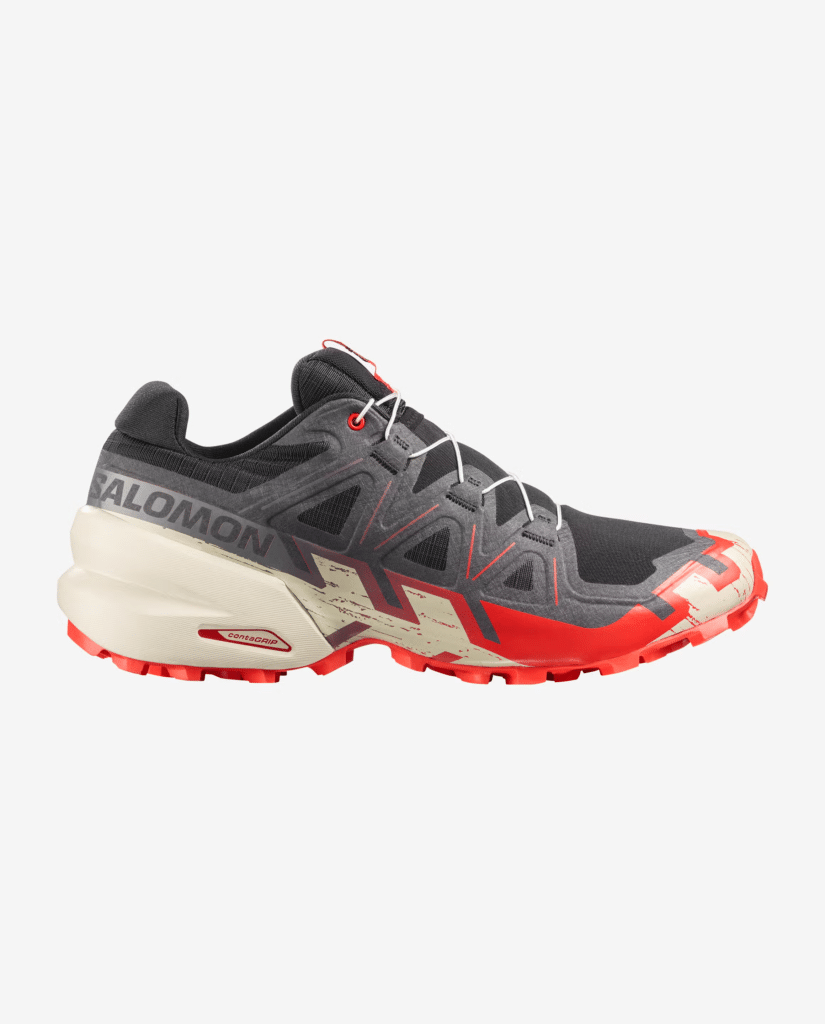
The Quicklace system is one of the best closure mechanisms in trail running: one pull, tuck the excess into the lace garage, move. The midsole is more comfortable than the shoe’s aggressive appearance suggests, and several OGL testers reported wearing it as a daily shoe beyond the trail. RunRepeat lab data confirms the outsole’s traction with a 0.70 wet friction coefficient — well above average.
The trade-off is clear: on dry hardpack, the cleat-like lugs create a disconnected, imprecise feel. The 12mm drop is the highest on this list and will not suit every runner’s biomechanics. But on the terrain it was designed for, the Speedcross 6 is in a class of its own. We have mapped it against its most direct rivals — see our Speedgoat vs Speedcross comparison and the Altra Lone Peak vs Speedcross face-off for a fuller picture of where it sits.
Best for: runners who regularly face mud, soft soil, wet grass, and winter conditions. Not the right tool for technical rocky terrain or dry hardpack running.
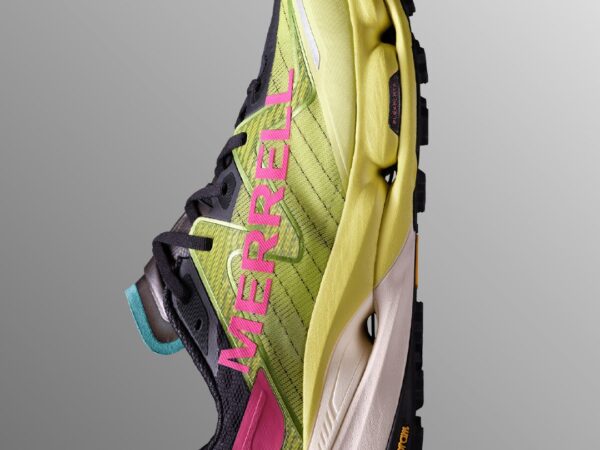
4. Merrell Agility Peak 6 — Best for Technical Terrain
Weight: 286g | Drop: 6mm | Stack: 36mm heel | Price: ~$165
When the ground gets serious — loose rock, off-camber slopes, rooty singletrack — the Merrell Agility Peak 6 is what you want under your feet. Its Vibram Megagrip outsole with 5mm Traction Lugs using rounded chevron and butterfly patterns delivers a 0.64 wet friction coefficient in RunRepeat’s lab, and the FlexConnect grooves allow the outsole to actively wrap around obstacles rather than skating over them.
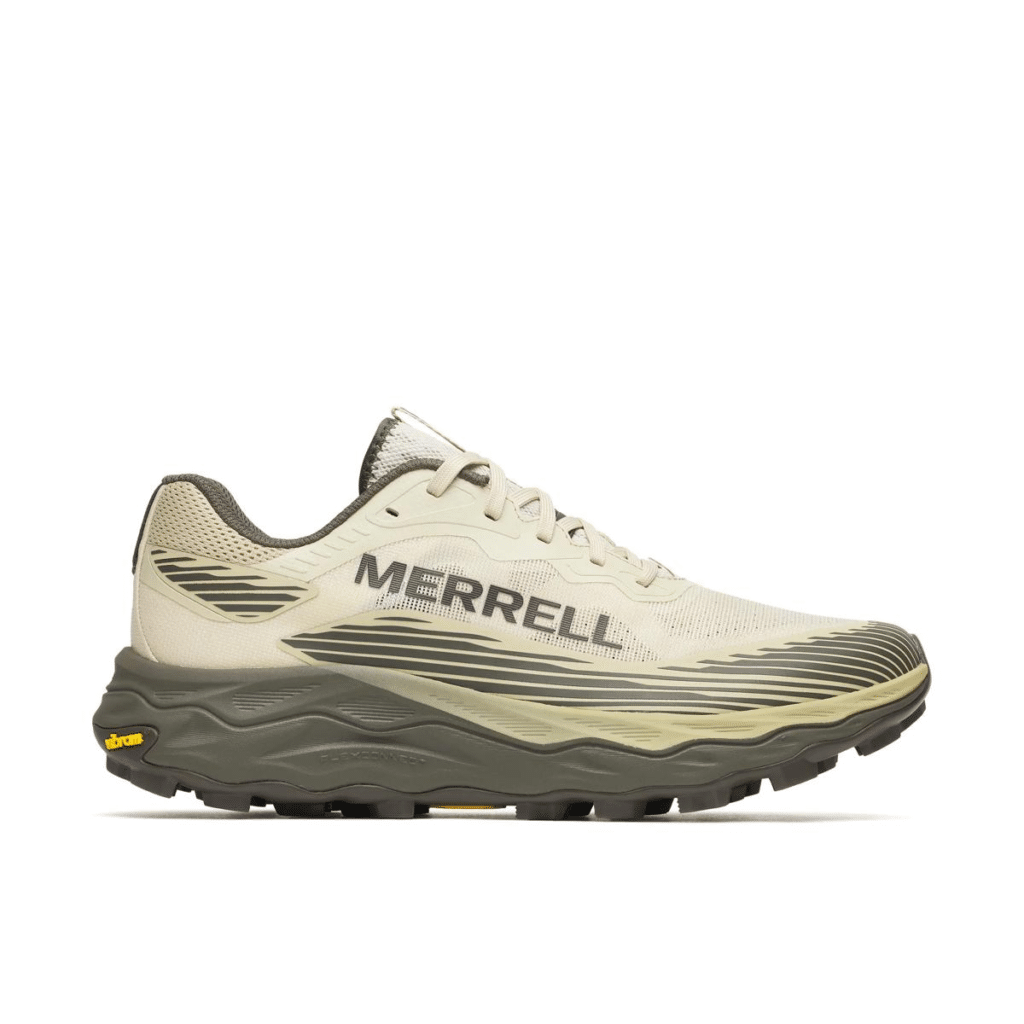
A long rock plate runs from midfoot to toe, guarding against the jarring impact of sharp debris. The platform is wide — 115.5mm in the forefoot, 97.7mm at the heel — and the torsional rigidity rating comes in at 4/5, making ankle rolls significantly less likely on demanding terrain. The new outsole design also improved flexibility by 15% over the previous version, which means the protection no longer comes at the cost of natural foot movement.
The FloatPro midsole is EVA-based and unremarkable in terms of energy return or plush feel. This is not a shoe for runners who prioritize bounce. It is a shoe for runners who need to trust every step on terrain where a misstep has consequences.
Best for: technical trail runners, hikers, and mountain runners who need reliable traction and foot protection on demanding terrain. The narrow toebox limits toe splay and shock absorption is below average.
5. HOKA Tecton X 3 — Best Trail Supershoe
Weight: 275g | Drop: 5mm | Stack: 37.8mm heel / 30.9mm forefoot | Price: ~$275
The Tecton X 3 is what happens when road supershoe technology meets serious trail engineering. RunRepeat’s lab recorded energy return scores of 69.9% at the heel and 70.2% at the forefoot — numbers that belong in a road racing shoe conversation, not a trail shoe. The PEBA foam midsole is paired with a parallel dual-plate design that adds rigidity (30% stiffer than average) without sacrificing cushioning. The 37.8mm stack absorbs impact while the plates convert energy into forward propulsion.
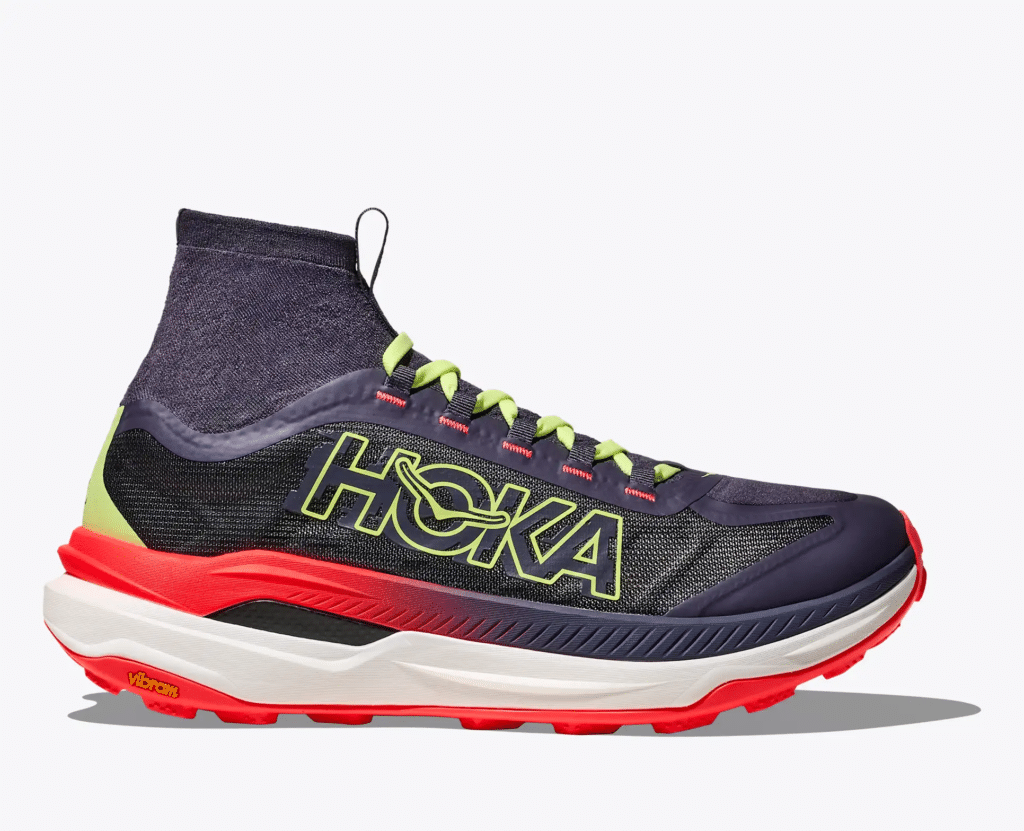
Hoka is a brand that built its identity on the premise that more foam was the answer. That story is told on hill.camp in our Hoka brand history. The Tecton X 3 is the most performance-focused expression of that philosophy applied to off-road racing. The Vibram outsole with 4mm lugs scores excellent traction across terrain types, and the MATRYX upper is premium in both fit and breathability.
The price is real: $275 puts this in a different category than everything else on this list. The fit is narrow, eliminating it for wide-footed runners. And the ankle gaiter design will not work for everyone. But for runners targeting ultra-distance events who want to preserve their legs across big mileage, the Tecton X 3 is the most technically impressive trail shoe available in 2026.
Best for: experienced trail runners targeting ultra-distance races or runners who want maximum energy return on moderate terrain. Not for wide feet, not for tight budgets, not for highly technical rocky terrain.
6. Salomon Genesis — Best for All Distances and All Terrains
Weight: 269g | Drop: 8mm | Stack: 34mm heel / 26mm forefoot | Price: ~$150
The Genesis occupies a useful position in the Salomon lineup: the trickle-down from the S/Lab Genesis racing model, with more durability, more structure, and broader terrain capability. It inherits the Matryx upper — stiff, abrasion-resistant, and surprisingly water-resistant — and the Contagrip outsole with 4mm lugs that bites reliably on both ascents and descents across varied surfaces.
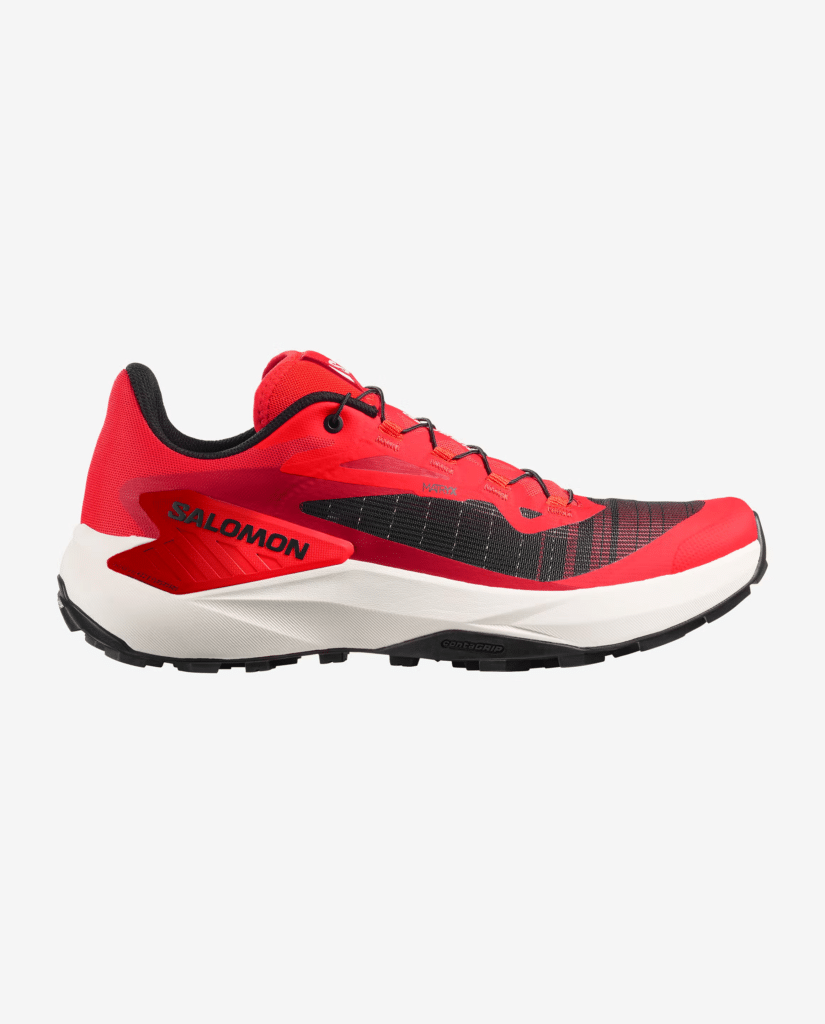
Widermag testers found it particularly strong on descents, where the lateral reinforcement, stability, and protection make it possible to run downhill without thinking about the foot placement. The firmer midsole relative to the S/Lab version makes it a better daily trainer. The Energy Foam cushioning and Active Chassis provide enough dynamism to keep the shoe from feeling like a plodding trainer. Runner’s World UK awarded it their stability category pick, noting how the foot sits down into a scooped midsole that resists the tippy feeling common with taller stacks.
Salomon’s roots are in Annecy and trail running is baked into the brand’s DNA from the very beginning — a story we cover in our Salomon brand history. The Genesis is a distillation of that experience into an accessible, versatile platform for runners of all levels and distances.
Best for: runners who want a single shoe that handles training, racing, and everything in between, on moderate to technical terrain. The Quicklace system requires some adjustment, and traction loses effectiveness on very slippery wet rock.
7. New Balance Fresh Foam X Hierro V9 — Best for Long-Distance Cushioning
Weight: 293g | Drop: 4mm | Stack: 42mm heel / 38mm forefoot | Price: ~$140
The Hierro V9 sits in an interesting position: a shoe designed for runners who want road shoe comfort on trails. The dual-density Fresh Foam X midsole — 42mm at the heel, 38mm at the forefoot — delivers some of the highest cushioning figures in this roundup. RunRepeat’s lab data places its shock absorption at 131 SA at the heel and 124 SA at the forefoot, both above average, making it one of the more protective options against impact fatigue on long days.
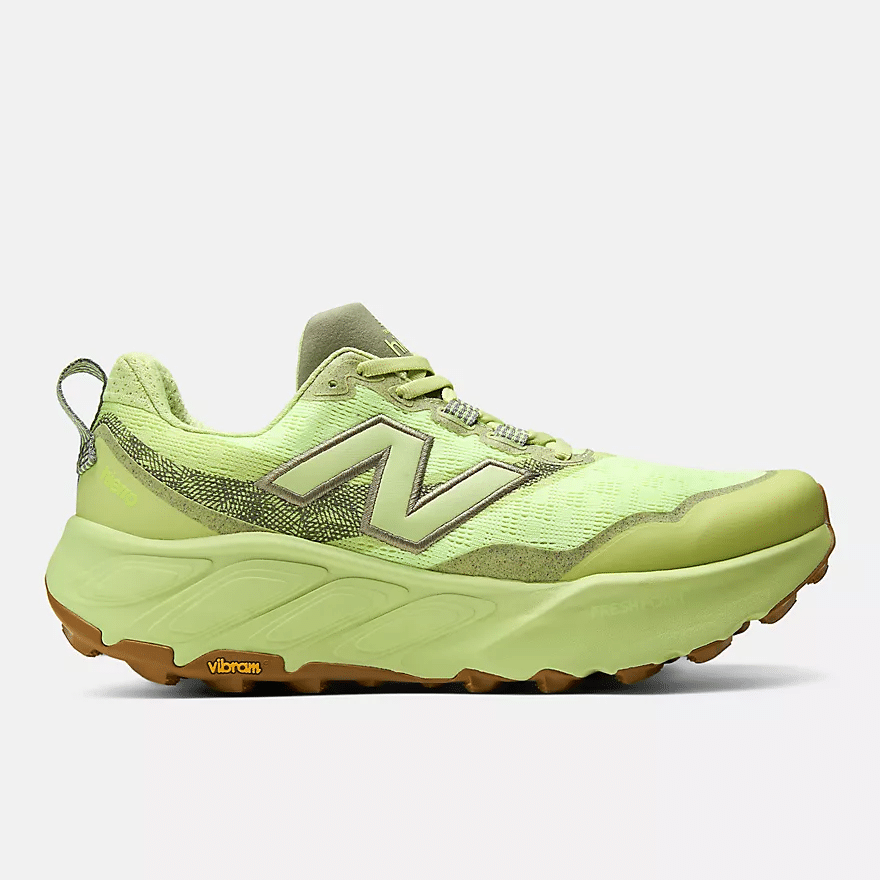
The gold-standard Vibram Megagrip outsole with 4.5mm lugs handles most trail conditions confidently. The updated lacing system controls on-the-run slippage. Widermag testers highlighted its pare-pierre (rock guard) as particularly effective for protecting the foot on rough terrain at low energy levels. Runner’s World UK testers awarded it their cushioning category pick, emphasizing its ability to keep legs turning over during long efforts without the aggressive, purpose-built feel of a technical shoe.
Sizing runs small — going a full size up from your normal size is advised. The shoe is not nimble on technical mountain terrain, and the narrow forefoot of earlier versions has been somewhat addressed but remains an issue for wide-footed runners.
Best for: long-distance trail runners, ultra runners, and heavy runners who prioritize cushioning and impact protection on moderate terrain. Not for highly technical or very muddy trails.
8. ON Cloudultra 3 — Best for Daily Training and Endurance
Weight: 285g | Drop: 6mm | Stack: ~34mm | Price: ~$200
The Cloudultra 3 occupies the space between performance and comfort that makes it genuinely useful for high-volume training. Where the Cloudultra Pro targets speed with a fiberglass plate and a more pronounced rocker, the Cloudultra 3 uses a nylon plate and a more grounded geometry to deliver something more stable, more precise, and more consistent across a wider range of terrain types.
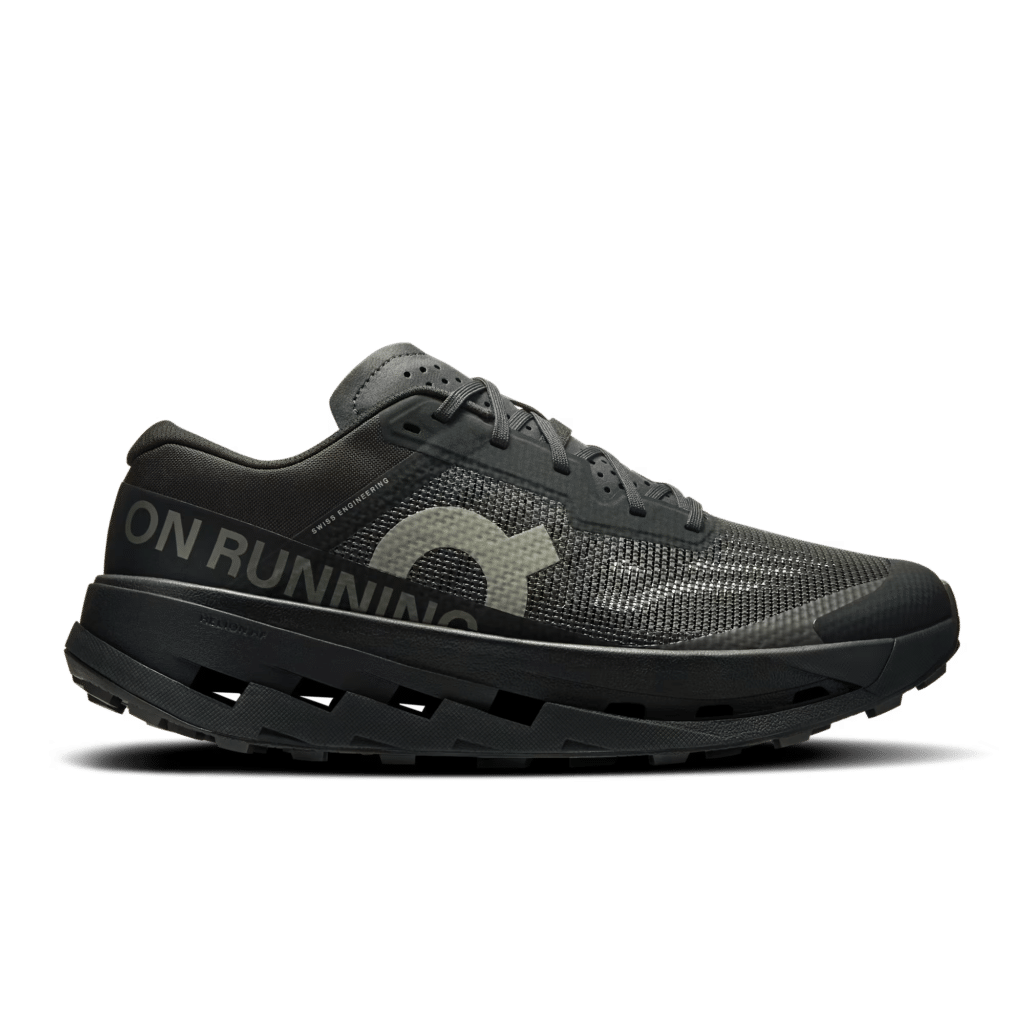
Widermag testers ran it on both rolling singletrack and technical sections without issues. The mesh upper is notably well-ventilated — a rarity at this cushioning level — and no tester reported pressure points or hotspots. The shoe is not particularly dynamic but the cushioning is structured enough to support efficient forward motion rather than simply absorbing energy into a dead foam. For runners who log high weekly mileage on trail and need a shoe that works five days a week, the Cloudultra 3 is a reliable tool.
The price point is a legitimate obstacle. At around $200, it costs more than most versatile trail shoes without delivering the supershoe performance numbers of the Tecton X 3. The weight — which Widermag testers noted as a negative — is real for runners who prioritize efficiency.
Best for: high-volume trail runners who want a comfortable, stable daily trainer for moderate to technical terrain. Not for runners targeting race-day performance or operating on a budget.
9. Altra Lone Peak 9 — Best for Wide Feet and Zero-Drop
Weight: 320g | Drop: 0mm | Stack: 23.3mm | Price: ~$145
Nine versions in and the Lone Peak is still the reference for zero-drop trail running. The completely flat platform forces a more natural midfoot or forefoot strike pattern that, for runners adapted to it, means more muscle activation, better proprioception, and reduced pressure on the Achilles and calves over long distances. The foot-shaped toe box — the widest on this list at 98.5mm — gives toes room to splay and spread on impact, which matters significantly on descents and at ultra distances.
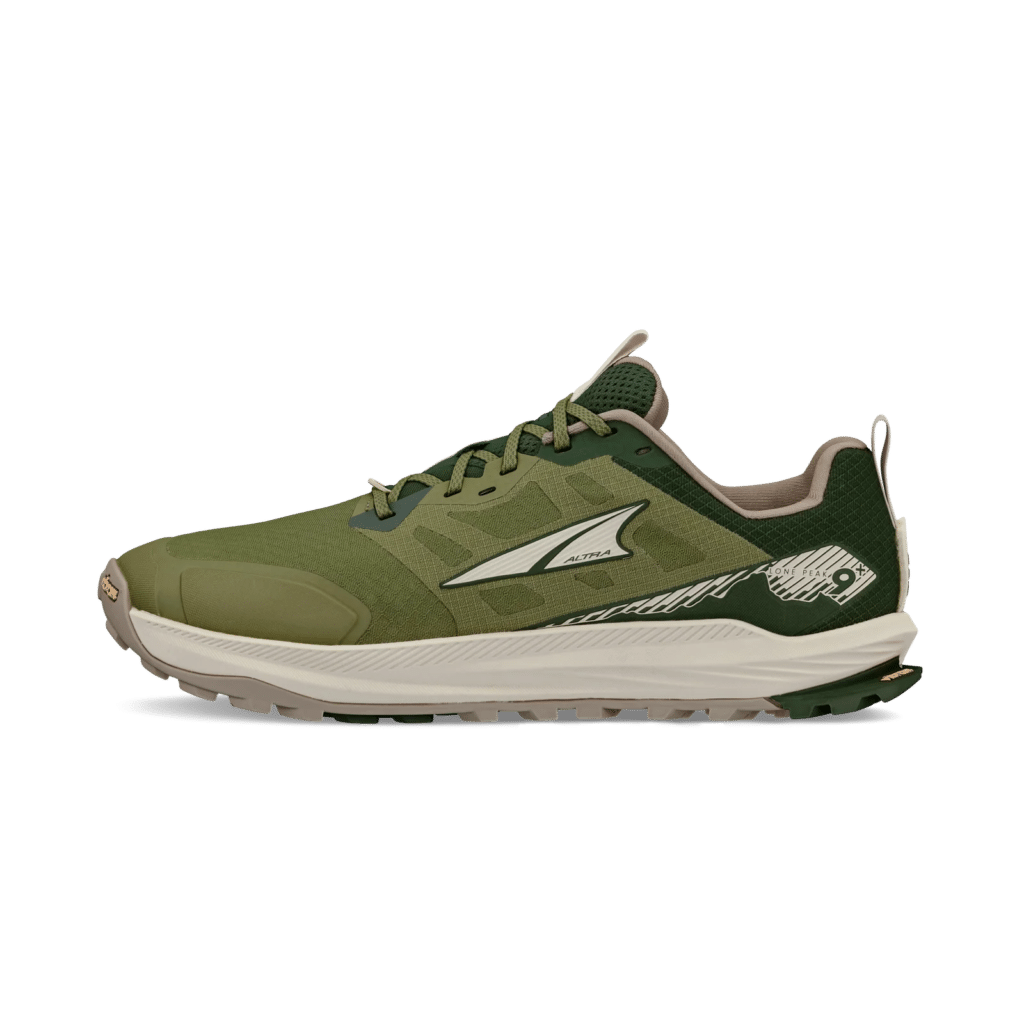
Version 9 adds an improved outsole compound and a more durable ripstop upper. OutdoorGearLab testers noted the improved confidence on tricky terrain, and Runner’s World UK found the Vibram Megagrip outsole was a genuine upgrade over previous iterations. The low 23.3mm stack keeps the shoe close to the ground, which improves stability on uneven surfaces but reduces protection from sharp debris.
The zero-drop platform requires adaptation — runners transitioning from a conventional drop shoe should approach it gradually. It is also a heavier shoe relative to its stack height, and not built for speed. The Lone Peak 9 is built for distance, comfort, and the kind of all-day reliability that matters on thru-hikes and 100-mile races. Our Altra Lone Peak vs Salomon Speedcross comparison explores what separates these two philosophies in detail.
Best for: runners with wide feet, runners comfortable with zero-drop, thru-hikers, and ultra-distance runners prioritizing all-day comfort over pace. Not for heel strikers or runners new to low-drop footwear.
10. ASICS Gel Venture 10 — Best Value Trail Running Shoe
Weight: 322g | Drop: 10mm | Stack: 35.3mm | Price: ~$80
At around $80 — roughly half the price of the average trail shoe on this list — the Gel Venture 10 delivers more than it has any right to. RunRepeat’s lab found its upper resisted their Dremel test with a 4/5 durability score. The outsole wore down only 0.6mm in abrasion testing, beating the average. The midsole is 16% more flexible than average, making it easy and comfortable to move in. The toebox height is the highest in RunRepeat’s entire trail database at 30.6mm, giving toes genuine room even over long distances.
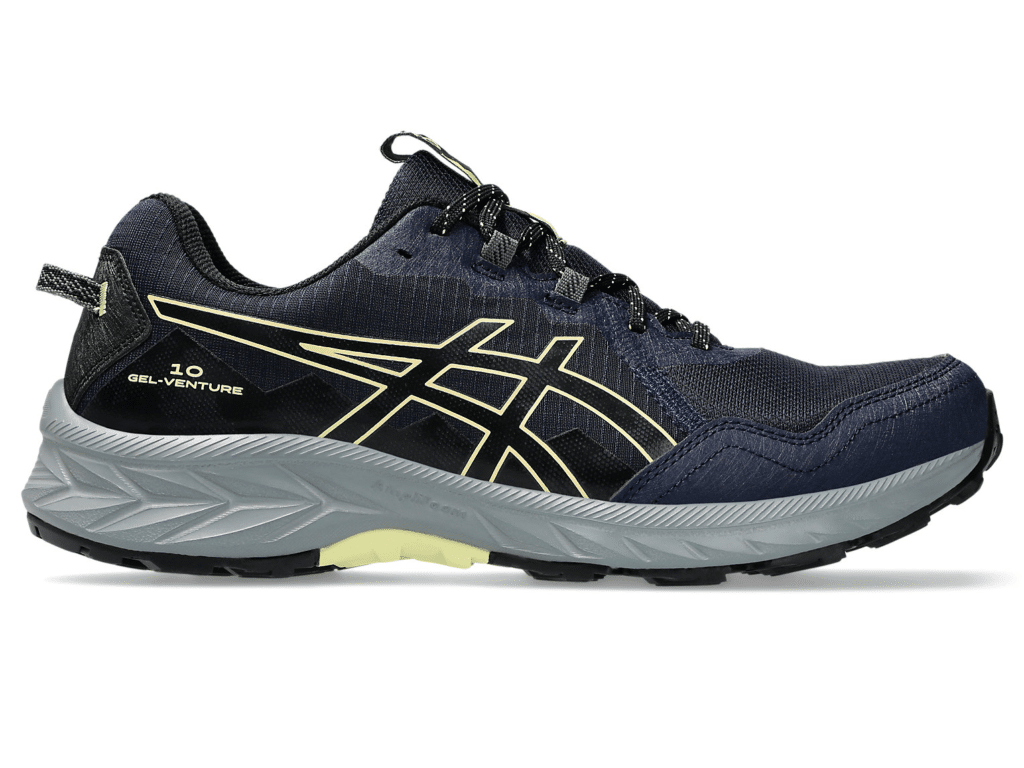
The shoe is not fast. Energy return is low, shock absorption is below average for a cushioned shoe, and the weight puts it in the heaviest tier of this list. It is designed for beginners, hikers, casual trail runners, and anyone who needs a reliable, durable, affordable shoe that handles light to moderate terrain without drama. The ventilation is genuinely good — a 4/5 breathability rating in lab testing — and the upper durability is competitive with shoes costing three times as much.
Best for: beginner trail runners, hikers, anyone on a tight budget, and casual outdoor enthusiasts who want durability and comfort without a significant financial commitment. Not for technical terrain, speed work, or runners who need significant cushioning or energy return.
How to Choose Your Trail Running Shoe
Before picking a shoe from this list, answer three questions honestly.
What terrain will you actually run on?
This is the question most runners answer incorrectly because they imagine their aspirational terrain rather than their typical terrain. Hard-packed trails, gravel paths, and light forest tracks require shallow lugs (under 3mm) and a versatile platform. Rocky, rooty singletrack and technical mountain terrain demand deep lugs (4mm+), rock plates, and reinforced uppers. Mud requires the deepest, most widely spaced lugs possible — the Speedcross 6 exists for exactly this reason. Most runners operate primarily in the middle range and would be well served by the Peregrine 16, Genesis, or Speedgoat 7.
How far are you going?
Distance changes everything. A technical shoe with minimal cushioning that feels precise and alive at 10km becomes a liability at 80km when foot fatigue sets in and every rock underfoot registers. Ultra-distance running demands shock absorption, foot volume accommodation (feet swell), and midsoles that maintain their properties over hours of use. The Hierro V9, Cloudultra 3, and Tecton X 3 are built with this in mind. For shorter, faster efforts on moderate terrain, the Peregrine 16 and Salomon Genesis are more appropriate tools.
What are your feet actually shaped like?
Foot shape is not vanity — it is biomechanics. Wide feet in a narrow shoe leads to blisters, black toenails, and pressure points that compound over distance. The Altra Lone Peak 9 is the widest shoe on this list and the clearest recommendation for wide-footed runners. The Topo Ultraventure 4, while not covered in depth in this guide, is another strong option in that direction. Conversely, narrow shoes like the HOKA Tecton X 3 lock in the foot for efficiency but exclude a significant portion of the population. Know your foot before you commit.
Key Technical Concepts: What the Numbers Mean
Lug depth and traction
Lug depth is the single most important specification for terrain matching. Lugs under 3mm are designed for hard-packed and gravel terrain. Between 3 and 4mm covers most moderate trail conditions. Above 4mm — the Speedcross 6 at 5.8mm, the Merrell Agility Peak 6 at 5mm — is technical and soft ground territory. Deeper lugs are made from softer rubber for better grip, which means faster wear. RunRepeat’s lab tests both friction coefficient and outsole durability, and those numbers are more reliable than brand marketing claims.
Drop and strike pattern
Drop — the height difference between heel and forefoot — shapes how your foot strikes the ground. High drop (8-12mm) suits heel strikers and beginner runners. Low drop (0-4mm) encourages midfoot and forefoot striking, requires adaptation, and suits experienced runners with developed foot and ankle strength. The Altra Lone Peak 9 at 0mm and the Saucony Peregrine 16 at 4mm are the lowest on this list. The Salomon Speedcross 6 at 12mm is the highest. Changing drop by more than 4mm at once risks injury — be gradual.
Cushioning and stack height
Stack height is the total foam thickness under the foot. More foam means better impact protection but reduced ground feel and proprioception. The Hierro V9 at 42mm heel is maximalist territory. The Lone Peak 9 at 23.3mm is minimalist. Most runners in the moderate range (25-35mm) will find the best balance between protection and trail sensitivity. Note that midsole softness and shock absorption are different measurements — a soft foam can have poor shock absorption, and a firm foam can be highly protective. RunRepeat’s SA scores provide the clearest objective measure.
Trail Running on hill.camp
Trail footwear is one of our core focuses. For runners interested in exploring beyond this guide, our brand pages and head-to-head comparisons go deeper into the philosophies behind these shoes. The Hoka brand story explains how maximalist trail running shoes came to exist. The Salomon brand history traces the origin of the most iconic trail brand in the world. Our Speedgoat vs Speedcross comparison and Lone Peak vs Speedcross face-off put the philosophical differences between trail shoe schools of thought into concrete terms.
For runners interested in what a newer, independent brand is doing with trail footwear technology, our reviews of the Mount to Coast T1 — a Kevlar-reinforced, Vibram-soled trail shoe from a brand that is rethinking what a trail shoe should be — and the broader Mount to Coast brand overview are worth reading alongside this guide.
The best trail running shoe is the one that matches your terrain, your distance, and your feet. These ten get you there. The rest is miles.
For the complete current lineup from each brand, visit Salomon, Hoka, Saucony, Merrell, New Balance, On Running, Altra, and ASICS.