hill.camp does not test products first-hand. This review is a structured synthesis of 5 independent sources — specialist field tests, retailer panels, verified owner feedback and manufacturer specifications — assembled with AI assistance and edited before publication. Sources are selected and verified by runners who follow this equipment closely. That method lets us cross-reference more testing than any single reviewer could, and to flag where sources contradict each other instead of smoothing it over.
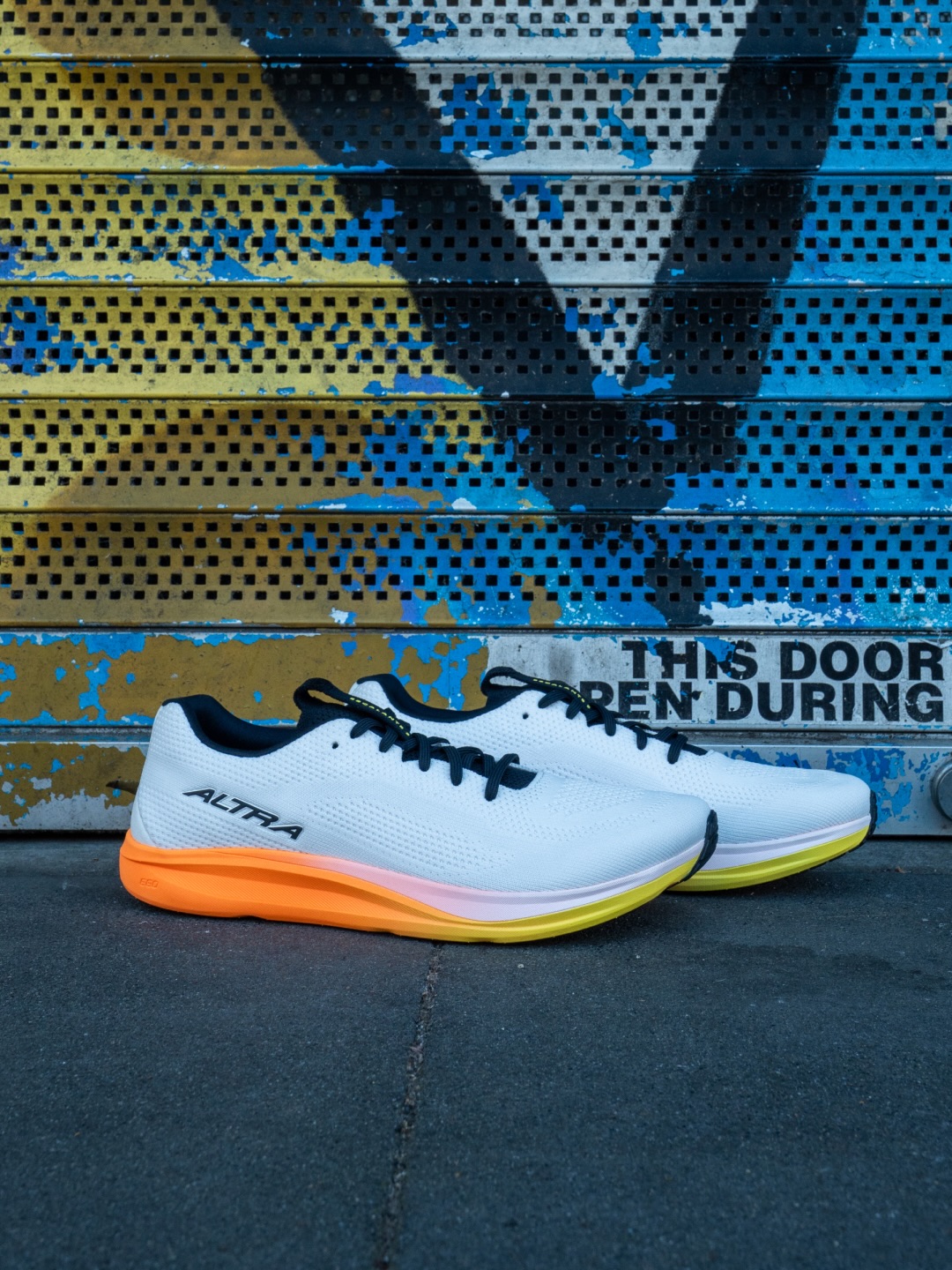
Altra took two and a half years to update the Escalante, and then changed almost nothing. The midsole foam is the same. The stack height is the same. The knit upper, the last, the 24 mm platform — all carried over. What you get instead is a new sockliner, a new strobel board, more outsole rubber, and a revised tongue and collar. In an industry that ships a new model every twelve months whether anyone asked or not, that restraint is either admirable discipline or a thin excuse for a new SKU, and which one you land on says a lot about what you wanted from this shoe in the first place.
Altra Escalante 5 Review: Quick Specs
| Weight | ~275 g / 9.7 oz (men’s); ~221 g / 7.6–7.8 oz (women’s) |
| Stack height | 24 mm heel / 24 mm forefoot |
| Drop | 0 mm (zero-drop) |
| Midsole | Altra EGO (CMEVA), unchanged from the Escalante 4 |
| Upper | Engineered knit, revised tongue and heel collar |
| Toe box | Standard FootShape |
| Outsole | Increased rubber coverage |
| Intended use | Daily training up to ~10 miles, speedwork, walking, gym |
| Retail price | $140 / £125 / C$180 |
| Release | July 2026 |
One clarification worth making up front, because the published coverage disagrees. At least one retailer describes the Escalante 5 as moving to a new EGO Pro compound with improved energy return. The weight of evidence points the other way: multiple specialist outlets identify the midsole as the same Altra EGO — a compression-moulded EVA — carried over unchanged, and Altra’s own representatives have been quoted saying that customers explicitly asked for the previous foam to stay. We have gone with the latter, because it fits both the ride reports and the logic of the update. If you are buying the 5 expecting a livelier midsole than the 4, you will be disappointed.
What Actually Changed
The update list is short and almost entirely about comfort and longevity rather than performance.
The outsole. This is the most substantive change. The Escalante 4 wore through quickly in high-friction zones, a complaint that surfaced consistently. The 5 adds meaningfully more rubber coverage, and early testing reports reliable grip on wet roads with minimal wear after several runs. Long-term durability is unproven, but the direction is right and the problem it addresses was real.
The tongue and collar. The 4 drew complaints about a thin tongue causing lace bite and premature wear at the heel. The 5 uses a thicker chenille-lined tongue and a revised collar. Testers report it stays in place despite not being gusseted, and that the laces can be tightened without immediate pressure across the top of the foot. Heel hold is reported as secure without bulk.
The strobel and sockliner. Both now use TPEE, bringing the Escalante in line with the rest of Altra’s range. It is a small change that adds a degree of underfoot softness on a shoe that does not have much foam to spare.
That is the complete list. No new foam, no new geometry, no change to the last. Altra’s co-founder has been quoted describing a deliberate policy of only releasing a new model when there is something worth releasing — a reasonable philosophy, though it does invite the question of whether these three changes clear that bar. Our view is that the outsole alone probably justifies it for anyone who wore through a pair of 4s, and does not justify it for anyone else. It is worth noting the contrast with the Torin 9, which arrived the same summer with an entirely new midsole compound and a Vibram outsole — the same philosophy applied to a shoe Altra evidently felt needed more work.
The Ride: Grounded, Responsive, and Deliberately Dated
The Escalante 5 runs the way a 2017 shoe runs, and that is the point. Altra EGO is a compression-moulded EVA — old technology by current standards, and nothing like the supercritical TPEE and PEBA foams that define the modern trainer market. There is no trampoline effect. What you get instead is a firm, controlled, connected ride with modest but genuine energy return, and 24 mm of foam that provides enough buffer to keep the road from being punishing without insulating you from it.
Testers describe the ride as responsive rather than bouncy, and the distinction matters. One reviewer noted expecting to feel heavy-footed without heel cushioning and instead finding the stride controlled and intentional. The InnerFlex grooves make the shoe exceptionally flexible through the forefoot, which encourages a natural push-off and gives the shoe a glove-like character rather than a structured one. If you have come from a plated trainer, this will feel loose. Whether that reads as freedom or as sloppiness depends entirely on your preference.
At 275 g it is light for a shoe with full outsole coverage, and it does not resist when you pick up the pace. Several sources place it comfortably in speedwork territory as well as daily miles, and one specialist retailer categorises it outright as a speed shoe rather than a daily trainer. The practical ceiling is distance rather than pace: most testers put the comfortable limit somewhere around eight to ten miles, beyond which the low stack starts asking questions of your legs. Runners logging fifteen-mile long runs will want more underfoot.
It is a road shoe, but the added outsole rubber makes it competent on gravel and light dirt. It is not a trail shoe and should not be treated as one — for genuinely technical ground, our guide to the best trail running shoes in 2026 is the better starting point.
Zero Drop: The Thing You Have to Get Right
The Escalante sits flat. Heel and forefoot are both at 24 mm, with no ramp at all. If you have spent years in shoes with an 8, 10 or 12 mm drop, this is not a minor adjustment — it changes which structures absorb load, shifting work away from the knee and toward the Achilles and calf.
Every source we consulted flags this, and one reviewer who does not habitually train in zero-drop reported a significant stretch through the Achilles after the first few runs. That is the expected response, and it is why the transition needs to be gradual: short runs first, building over several weeks. Rushing it is how people get hurt.
The honest framing is that zero-drop is neither inherently good nor bad for you — it is different, and the difference suits some runners and aggravates others. Runners with knee issues sometimes find it more comfortable. Runners with Achilles or calf histories often find it the opposite. Heel strikers in particular will notice the absence of cushioning where they land. If you are managing an existing injury, this is a decision worth taking to a professional rather than to a review.
Fit: Wide at the Toes, Not Wide Everywhere
This is where the Escalante is most misunderstood, and where the most useful information sits.
The FootShape toe box is genuinely generous. Independent last measurements place the Escalante’s forefoot among the widest on the market, and for runners with wide feet, bunions, Morton’s neuroma or a history of blisters and numbness on long efforts, that room is the whole reason to buy the shoe. Toes can splay properly, which widens the base of support at footstrike and matters more as fatigue accumulates.
But the shoe is not wide everywhere. Multiple sources describe it as slim through the midfoot and heel — one flatly warns wide-footed runners about it, and another notes that runners with a broader midfoot may feel pressure through the arch on longer runs. The 5’s revised collar makes the rear of the shoe more locked-down than the 4, which most testers welcome but which narrows the fit further.
There is a second, more specific issue that owner reports raise repeatedly and that the press coverage largely misses: toe box height. The Escalante is wide but shallow. Owners describe insufficient vertical room, difficulty using aftermarket insoles because the added height eats what little space there is, and pressure across the top of the big toe. Several long-term Escalante wearers say the shoe measures wide on paper while feeling tight on foot for exactly this reason. If you have high-volume feet or use orthotics, this is the dimension to check, and it is not one that a width measurement will tell you about.
Owner feedback on the 5 specifically is mixed in an instructive way. Several report the upper feeling stiffer than the 4, which arrived broken-in out of the box. Some find the 5’s snugger midfoot and heel an improvement; others returned them and bought the 4 instead, finding the newer shoe noticeably more rigid around the collar and tongue. There is a persistent thread of long-term Escalante owners who preferred versions 2.5 and 3 and consider everything since a step backward — worth knowing as context, though it is a minority position and largely about a change made two generations ago.
The Laces
A small thing that comes up often enough to mention: the laces do not stay tied. It is the kind of flaw that costs nothing to fix and irritates disproportionately, and at least one reviewer made it their single named complaint about the shoe. Easily solved with a replacement pair, but it should not need solving on a $140 shoe.
Durability and Value
At $140 the Escalante 5 sits below most premium daily trainers, which is unusual for a shoe with this much brand identity behind it. Expected lifespan is in the 300–400 mile range, and the added outsole rubber should push it toward the upper end of that compared with the 4 — which is the specific weakness this update was designed to address.
One caution from owner reports: the Escalante 4 had a reputation for the upper degrading faster than expected, and at least one high-mileage owner running several thousand miles a year described a pair breaking down quickly. The 5’s revised upper and collar are aimed at this, but there is no long-term data yet. The forefoot is where you will notice the midsole going flat first.
Who It’s For, and Who Should Look Elsewhere
Buy it if you already run in Altras and wore through a pair of Escalante 4s — the outsole update alone is worth the upgrade. Buy it if you have wide forefeet and standard shoes compress your toes. Buy it if you want a light, flexible, connected shoe for daily miles up to ten, speedwork, walking, or gym use, and you actively do not want a max-cushion platform. And buy it if you value ground feel and a shoe that gets out of the way over one that does work on your behalf.
Look elsewhere if you are new to zero-drop and unwilling to transition gradually, if you need stability or motion control (this is a neutral shoe with no medial support), if you are training for a half marathon or beyond and want cushioning for fifteen-plus mile long runs, or if you want the propulsive sensation of a plated racer. If your feet are high-volume rather than simply wide, check the toe box height before committing.
If the philosophy appeals but you want more cushioning, the Altra Torin 9 is the obvious step up within the brand — 28 mm of newer dual-density foam on the same zero-drop platform, and a considerably more forgiving introduction if you have never run flat. Our Torin 9 vs Escalante 5 comparison sets the two against each other in detail. If the flat platform itself is the worry, Altra’s Experience line offers a 4 mm drop as a halfway house, and the Mount to Coast R1 pairs firm, ground-connected cushioning with a conventional 8 mm drop.
Our Take
The Escalante 5 is a good shoe and a modest update, and it is worth being clear that those are two separate statements. As a shoe, it does something almost nobody else is doing: a genuinely wide forefoot, a flat platform, real flexibility, and enough foam to be practical, at a price below most of the market. For the runner it suits, there is very little competition. As an update, it fixes the two things people complained about in the 4 — the outsole and the tongue — and leaves everything else alone.
What it will not do is convert anyone. The EGO midsole is old technology and feels it next to supercritical foams, and calling the ride dated is accurate rather than unkind — it is what Altra’s own customers asked for. The zero-drop platform is a real commitment with real consequences for your Achilles and calves. And the fit is more particular than the marketing suggests: wide at the toes, slim through the midfoot, and shallow in vertical volume in a way that catches people out.
Our honest advice is to try it on before buying, and to pay attention to the height of the toe box rather than just the width. If you already know you like Escalantes, the 5 is the best-built version yet and the durability fix is real. If you are curious about zero-drop but have never run in it, buy this shoe with a plan for the transition rather than an assumption that it will just work. You can see the full range on the official Altra Running website.
Frequently Asked Questions
What’s actually different between the Altra Escalante 4 and 5?
Three things: more rubber coverage on the outsole for better durability and wet grip, a thicker chenille-lined tongue with a revised heel collar to fix lace bite and heel wear, and TPEE strobel and sockliner for a little more underfoot comfort. The midsole foam, stack height, last and knit upper are unchanged. Owners comparing pairs side by side report the 5 feeling slightly stiffer and snugger through the midfoot and heel, with the toe box essentially identical.
Does the Escalante 5 have a new midsole foam?
No. It uses the same Altra EGO compression-moulded EVA as the Escalante 4. Some retail listings describe a new EGO Pro compound, but specialist coverage consistently identifies the foam as unchanged, and Altra has indicated that customers specifically requested the previous midsole be retained. Expect the same ride as the 4 — responsive and controlled, but not bouncy by the standards of modern supercritical foams.
Is the Altra Escalante 5 good for wide feet?
For wide forefeet, yes — the FootShape toe box is among the widest available and lets the toes splay properly. But the shoe is slim through the midfoot and heel, so runners who are wide throughout may feel pressure through the arch. The more common complaint is vertical volume rather than width: the toe box is shallow, which causes pressure across the top of the big toe for some and makes aftermarket insoles difficult to fit. Check height as well as width.
How long does it take to adapt to zero-drop shoes?
Plan for several weeks of gradual build-up rather than a single transition run. Zero-drop shifts load from the knee toward the Achilles and calf, and testers coming from conventional shoes consistently report noticeable Achilles stretch after early runs. Start with short efforts and increase distance progressively. If you have a history of Achilles or calf problems, get professional advice before switching — this is not a shoe to experiment with while managing an existing injury.
Can you run a half marathon or marathon in the Escalante 5?
You can, but it is not what the shoe is built for. Testers place the comfortable ceiling around eight to ten miles, beyond which the 24 mm stack starts to feel thin on the back half. Runners with well-conditioned feet and an established zero-drop history will manage longer, but most people training for a half marathon or beyond will want more cushioning underfoot for their long runs.
Is the Escalante 5 suitable for walking?
Yes, and it is one of the shoe’s genuine strengths. The wide toe box and flat platform let the foot move through its natural gait cycle, and at 275 g it is light enough not to feel like work over long days on your feet. The same transition caution applies: if you are coming from a raised-heel shoe, start with shorter outings and build up, since some walkers notice calf and ankle discomfort in the early weeks.
Is the Altra Escalante 5 worth $140?
For the right runner, yes — it sits below most premium daily trainers and there are few genuine alternatives if you want a wide forefoot on a zero-drop platform. Expect 300–400 miles, with the improved outsole pushing toward the upper end of that range. The value case is weakest if you already own a pair of Escalante 4s that are still holding up, since the ride is identical and the changes are about comfort and longevity rather than performance.