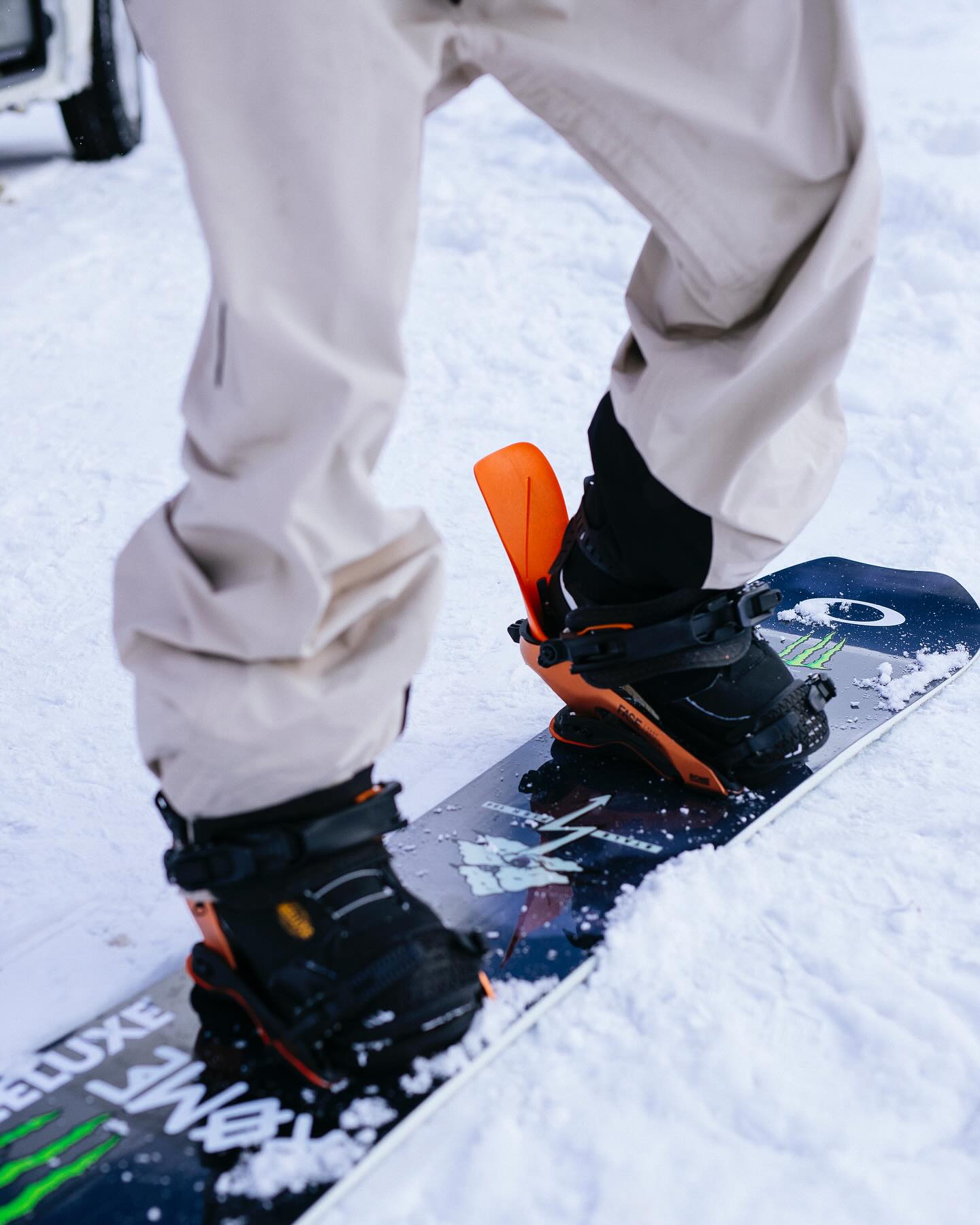
hill.camp does not test products first-hand. This guide is a structured synthesis of nine sources — three tested buyer’s guides from the snowboard and outdoor press, a scored freeride test from an independent review site, four category rankings from a YouTube reviewer and a retailer’s team-tested selection — assembled with AI assistance and edited before publication. Almost every source earns affiliate commission or sells the bindings it recommends; we say so where it matters.
The best snowboard bindings of 2026/27 are not hard to find: every magazine, retailer and YouTube channel has a list. The hard part is knowing which picks are genuine and which are this year’s marketing. So instead of adding one more list, we laid nine of them side by side and looked for the bindings that keep reappearing across different testers, different terrain and different business models. A binding that wins one award might be a fluke. A binding that turns up in five lists, ridden by different people in Tahoe, Colorado, the Alps and the UK, probably is not.
Two trends dominate this season. Fast-entry bindings have gone mainstream, with FASE models now appearing in general best-of lists rather than a separate niche, and dampening has become the selling point of the year, from Union’s new three-piece Neo to Jones’s foam-packed Nebula. Pair whatever you choose with the right boots: our best snowboard boots of 2026/27 is the companion to this guide.
The Shortlist at a Glance
| Binding | Best for | Entry | Flex (as rated) | US price | Picked by |
|---|---|---|---|---|---|
| Rome Katana AW / AW Pro / AW FASE | Best overall, most adjustable | Strap or FASE | 6–9/10 depending on version and setup | $400–470 | 6 of 9 sources |
| Union Neo | All-mountain with a freeride lean | Strap | 6/10 to mid-stiff | $379.95 | 5 of 9 |
| Jones Mercury FASE | Fast-entry all-mountain freeride | FASE | 6.5–8/10 | $370 | 5 of 9 |
| Union Ultra | Freestyle and park | Strap | 6/10, mid-soft | $329–330 | 4 of 9 |
| Salomon Highlander | All-mountain with lateral freedom | Strap | 7/10 | $379.95 | 4 of 9 |
| K2 Bond | Do-it-all workhorse | Strap | 7/10 | $330 | 4 of 9 |
| Union Atlas / Atlas Pro | Hard-charging all-mountain and freeride | Strap | Stiff / 8–9/10 | $400 / $499.95 | 4 of 9 |
| Bataleon Ghost FASE | Affordable fast-entry freestyle | FASE | 5/10, medium | $299.95 | 4 of 9 |
| Jones Nebula FASE | Soft, damp park and creative riding | FASE | 4/10, medium | $299.95 | 3 of 9 |
| Nidecker LT / OG Supermatic | Hands-free entry with any boot | Supermatic | 6–8/10 | $430 / $480 | 2 of 9 |
| Nitro Talent | Best budget | Strap | 4/10, mid-soft | $180–200 | 2 of 9 |
« Picked by » counts the sources that name the binding as a winner, ranked pick, honourable mention or recommended model. We count the YouTube reviewer’s four lists as four sources because he ranks each category separately, so his choices weigh slightly more than a single magazine’s. Prices are US list prices quoted by our sources for 2026/27; flex ratings are as each source gives them, and they do not translate cleanly between brands.
Best Overall: Rome Katana AW (Pro and FASE)
No binding appears in more of our sources. Whitelines includes the carbon Katana Pro in its 2026/27 list, and its tester calls it one of the most dynamic bindings in the industry, the most comfortable he tested all winter and a true daily driver. The Angry Snowboarder’s host ranks the Katana Pro first among all-mountain freeride bindings and the Katana AW FASE first among all-mountain freestyle bindings, with the standard Katana as an honourable mention. GearJunkie names the Katana AW Pro and women’s Katana AW its best for customisation and boot fit; Outside calls the Katana AW its most customisable pick; Blue Tomato features the Katana AW FASE.
The reason is adjustability. Rome’s PivotMount system offers eight ankle-strap positions per side, 64 combinations in total, and raising the strap turns a mid-stiff binding into a stiff one, which is why Whitelines rates the Pro anywhere from 7 to 9/10. The AsymWrap chassis connects the baseplate at three points for lateral feel, the Pro adds 30 per cent carbon to the baseplate and highback, and the stretchy AuxTech straps drew praise from almost every tester; Outside’s crew described the fit as « damn-near vacuum-sealed ».
The caveats come from the same sources. Outside reports that one long-term tester ripped through an AuxTech ankle strap on a cold day in the Alps, and GearJunkie notes a slight durability concern with carbon and the patience needed to dial in so many settings. The Pro costs around $470, the standard AW about $400. If you want fast entry, the Katana AW FASE keeps most of the formula, though FASE versions lose highback rotation; our FASE guide covers the trade-offs.
Best All-Mountain: Union Neo
The new Union Neo is the breakout binding of the season. It opens Whitelines’ 2026/27 list, Outside names it best all-mountain/freeride binding, The Angry Snowboarder ranks it second in both his freeride list and his personal top five, and Blue Tomato features it. Its key feature is a three-piece baseplate, with two nylon sidewalls around a mini-disc housing, which adds lateral flex while keeping heel-to-toe power. Dual-density bushings, softer EVA at the front and rubber at the rear, make it, in The Angry Snowboarder’s words, the dampest binding Union has ever made.
Testers describe it as the Ultra’s comfort in a more freeride-tinged package (Whitelines) or as a cross between the Ultra and the Falcor (The Angry Snowboarder). Outside’s only complaint is the forward lean adjuster: two positions, and a screwdriver needed to change it.
Its stiffness is where sources disagree. Whitelines rates it 6/10 and calls it softer than the rest of Union’s high-performance line; Outside calls it mid-stiff; Blue Tomato says medium; and The Angry Snowboarder calls it the softest binding on his freeride list while still locked in heel to toe. Our reading: it is a medium binding with unusual lateral give, best for riders who like to surf and tweak rather than straight-line.
Best Workhorse: K2 Bond
The K2 Bond wins on consistency rather than headlines. Whitelines lists it, The Angry Snowboarder ranks it fifth in both his personal top five and his all-mountain freestyle list, and names it an honourable mention for park. Everyone describes it the same way: a no-frills, reliable, mid-flex binding that suits almost any board. Its highbacks and straps use castor-bean-based plastic, which K2 says keeps the flex consistent across temperatures, and a baseplate that conforms to the board as it bends. The footbed is twice as thick as last year’s, according to Whitelines. A Whitelines tester summed it up: nothing particularly hi-tech, and that is what she loved about it. At around $330, it is the safe choice if you want one binding for everything.
Best for Freestyle and Park: Union Ultra and Jones Nebula FASE
For traditional straps, the Union Ultra is the consensus. Outside names it its best freestyle binding, The Angry Snowboarder ranks it second for park, Whitelines and Blue Tomato both include it. It is mid-soft, light and damp, with a lightweight bushing and a forgiving, tweakable baseplate. The 2026/27 version finally adds forward lean adjustment, although Outside points out that it has only two positions and requires a screwdriver. The Angry Snowboarder, who disliked the first version, now loves it and finds the new highback slightly stiffer, which he welcomes for bigger jumps.
For fast entry, the surprise is the Jones Nebula FASE. The Angry Snowboarder ranks it first for park and first in his personal top five, calling it possibly his favourite Jones binding ever and the dampest FASE binding yet, thanks to a big foam pad underfoot. He notes its large moulded ankle strap has no padding, and recommends using the shorter screw setting. Blue Tomato features it too; at $299.95 it is one of the cheapest FASE models.
Other park picks: the Nitro One (third for park on The Angry Snowboarder’s list, with an air-cushion heel), the Bataleon Blaster AW (fourth), the Salomon District Pro (fifth), the YES Select (Whitelines, $249.95), the Ride Spectrum and the Bataleon Ghost FASE, discussed below.
Best for Freeride and Carving
Freeride is where the sources diverge most, because each one tested different stiff bindings:
- Union Atlas and Atlas Pro. Outside gives the Atlas ($400) its Editors’ Choice for the third year running, as a stiff all-mountain workhorse for straight lines and cliff drops, though one aggressive tester regrets that its slotted highback is now softer laterally. Outside points those riders to the Atlas Pro ($499.95), with a forged carbon footbed and stiffer highback. Whitelines’ tester calls the Atlas Pro « simply the best », and Snowboarding Profiles ranks it joint fourth among freeride bindings at 86.3/100. Blue Tomato features the standard Atlas.
- Flux XV. Snowboarding Profiles’ highest-scoring freeride binding for several years running, at 91.1/100: very stiff (9/10), with outstanding ankle support, but less cushioning than its rivals. About $574.
- Bataleon Astro FW and Bent Metal Transfer Pro. Snowboarding Profiles’ second and third (88.4 and 87.9). The Astro is unusually cushioned for its power; the new Transfer Pro is the cheapest in that test at $379.99 and turns easily at low speed, but its mini disc does not fit 4×4 inserts.
- Ride Circuit and Circuit Carbon. Outside names the $600 Circuit Carbon its best freeride binding, ultra-stiff yet damper than expected, but heavier than carbon suggests and overkill for most riders; it recommends the $400 Circuit for everyone else. The Angry Snowboarder ranks the Circuit fourth for freeride and third in his personal list, noting that its aluminium chassis rides as damp as a composite.
- K2 Program. GearJunkie’s best sustainable freeride binding ($390, 9/10 flex according to K2), tested in Silverton and Telluride; its tool-free levers are hard to open with cold fingers. The Angry Snowboarder gives it an honourable mention.
- Nitro Phantom. Third for freeride on The Angry Snowboarder’s list, with an air-cushioned heel he recommends for riders with sore knees or hips.
For the most demanding riders, Whitelines adds the very stiff Drake Radar (9/10) and the Union Source TH ($699.95), a forged-carbon freestyle binding its tester found almost unmatched for response but light on cushioning. Snowboarding Profiles’ joint-fourth Jones Apollo Pro ($649.95) and Salomon Quantum round out the high end.
Best for Lateral Freedom: Salomon Highlander
The Salomon Highlander ($379.95) is the binding for riders who want edge-to-edge power without a rigid heel. Its Shadowfit baseplate uses a flexible nylon heelcup, held together by Kevlar cables, that hugs the boot and allows lateral play for presses and tweaks. Outside names it the best men’s all-mountain binding, after a tester rode it for about 80 days without mechanical problems. Whitelines’ Ed Leigh, who admits it is his own daily binding, calls it stiff and flexible in all the right places; The Angry Snowboarder ranks it fourth in his personal top five and gives it a freeride honourable mention.
The doubt is about heavier riders. Outside’s 155 lb tester notes that heavier or more aggressive riders might overpower the heelcup, and The Angry Snowboarder thinks riders around 250 lb (about 113 kg) or more will find it too soft. Salomon’s brand story is on our Salomon profile.
Best Fast-Entry Bindings
Quick-entry systems are now part of mainstream best-of lists. Our guide to quick entry bindings compares the systems; here are the models our sources pick.
Jones Mercury FASE: the fast-entry benchmark
GearJunkie’s best overall fast-entry binding (9/10, its highest score) and Outside’s best all-mountain freeride FASE model, the Mercury FASE ($370) is also The Angry Snowboarder’s daily driver, with more than 200 days on it. Outside’s testers call its downhill performance « as good as it gets for the fast-entry niche ». Both test teams list the same compromises: you sometimes need to loosen the ankle strap or nudge the toe strap before entering, the reclined highback gets in the way when skating, and stepping in on steep slopes or in powder is awkward. GearJunkie’s tester had to sit down in steep terrain.
Bataleon Ghost FASE and ThirtyTwo T32M FASE: the freestyle options
The $300 Bataleon Ghost FASE is Outside’s best all-mountain freestyle FASE binding, « as cushy as a beanbag chair », and fourth on The Angry Snowboarder’s all-mountain freestyle list, which notes that Bataleon has fixed the toe strap that used to sit too low on entry. Outside’s testers found it heavy and tall, and not the most responsive at full speed. The ThirtyTwo T32M FASE ($330) is GearJunkie’s best freestyle step-in binding, with plush padding and a tweakable highback. At the stiffer end, The Angry Snowboarder ranks the new ThirtyTwo T32M XLT FASE fifth among freeride bindings.
Nidecker Supermatic: hands-free with any boot
GearJunkie names the Nidecker LT Supermatic ($480) its best high-performance step-in binding, praising its immediate edge engagement in steep Colorado terrain; snow can build up under the heel pedal in wet conditions. It also recommends the OG Supermatic ($430) for its truly hands-free entry and ability to work as a normal strap binding in deep snow. Blue Tomato features the LT. Our FASE vs Supermatic comparison explains the difference between the two systems.
Burton Step On: if you are buying new boots
Outside’s best Step On binding is the Cartel Step On X EST (women’s Lexa X EST, $350): light, responsive and well damped, but hard to get on and off in steep terrain, and some testers missed straps. GearJunkie also recommends the more cushioned Step On Genesis EST ($400). Both EST models fit only Burton Channel boards and need Step On boots. See our Step On vs Supermatic comparison.
One point of balance: Outside reports that most of its 31 testers moderately prefer traditional straps to FASE, and strongly prefer FASE to Step On, while acknowledging they ride five days a week and are not the target audience. The Angry Snowboarder, by contrast, now rides FASE almost exclusively. None of our sources picked CLEW.
Best Budget Bindings
- Nitro Talent ($180–200). Outside’s best budget binding and a Whitelines pick: mid-soft, with an aluminium heelcup, EVA padding and straps borrowed from Nitro’s high-end models. Testers found the footbed and straps a little bare compared with pricier models.
- Head EX One ($189). GearJunkie’s best budget binding, but a stiff one, built for aggressive all-mountain riding; its ratchets take effort to release and changing stance means removing the footbed.
- Bent Metal Metta ($239.99), YES Select ($249.95), Season Meld ($260) and Union Strata ($260). Mid-flex all-rounders from Whitelines and GearJunkie. Whitelines calls the Metta « the Goldilocks », and GearJunkie praises the Meld’s cold-proof alloy buckles.
Also Recommended
- Nidecker Orbit Pro ($299.95). Nidecker’s stiff freestyle and all-mountain strap binding, picked by Whitelines and GearJunkie for its adjustable heelcup and split footbed; GearJunkie saw paint wear on the highback after a few days.
- Jones Aurora and Orion ($300–330). Outside’s best women’s all-mountain binding and a GearJunkie pick, with Jones’s SkateTech fulcrum chassis and reversible straps for surf or freeride modes.
- Union Trilogy ($350). Outside’s best women’s binding for the second year running.
- Ride Drone ($360). Outside’s most durable pick, with a thick aluminium chassis; lighter riders found it a « bear trap ».
- Burton Cartel ($259.95 for the base version, $330 for the Cartel X Re:Flex). Whitelines’ « Ronseal » classic and GearJunkie’s best for response and heel hold.
- Union Force, Nitro Team Pro, Amplid Proton and Arbor Utility. Second and third on The Angry Snowboarder’s all-mountain freestyle list, and two Whitelines favourites for simplicity and comfort.
Where the Sources Disagree
- Flex ratings. The same binding gets different numbers from different sources. GearJunkie rates the Jones Mercury FASE 6.5/10, while Whitelines’ quick-entry guide gives it 8/10. GearJunkie’s own comparison chart rates the Orbit Pro 8/10 while its review text says 9/10, and it rates the T32M FASE 8/10 while describing it as soft and park-oriented. Use flex ratings to compare bindings within one brand or one source, not across them.
- How hands-free FASE is. Blue Tomato describes the Mercury FASE as needing « no bending down, no readjusting ». Every tester in our sources says otherwise: you ratchet the ankle strap by hand, and sometimes adjust the toe strap too.
- Durability. Premium materials split opinion: carbon (GearJunkie) and AuxTech straps (Outside) raised concerns on the Katana, the Union Falcor’s carbon highback can crack if not folded down (The Angry Snowboarder), and Salomon’s flexible heelcup may not suit heavy riders. On the other hand, no source reported a structural failure on the shortlisted bindings during testing; Outside’s test logged two broken bindings in total without naming them.
How to Choose Snowboard Bindings
- Buy your boots first. Your boot size determines your binding size, and a binding only performs as well as the boot inside it. Our guide to choosing snowboard boots explains fit and flex.
- Match flex to board and style. As a rough guide used by Outside: below 5/10 for park, beginners and cruisy riding; 5 to 8 for all-mountain; 8 and above for freeride. Snowboarding Profiles adds that a binding should sit within about two points of your board’s flex, and that a stiff binding on a soft board can feel twitchy.
- Check the mounting. Most bindings fit 2×4, 4×4 and The Channel, but Burton EST bindings fit only Channel boards, and some mini discs, such as the Bent Metal Transfer Pro’s, do not fit 4×4 inserts.
- Decide on entry. Straps give the most adjustment and the best feel; FASE keeps that feel with faster entry; Supermatic and Step On remove the bend at the top of the run. Our FASE guide and comparisons cover the trade-offs.
- Demo if you can. Every source agrees that bindings are personal; the one that suits you may not top any list.
How Far to Trust the Sources
Every source here has a commercial angle. Outside, GearJunkie, Snowboarding Profiles, Whitelines and The Angry Snowboarder all earn affiliate commission on sales, and Blue Tomato sells every binding it features, several of which were out of stock when we read the page. That said, the test methods differ: Outside sent more than 40 bindings to 31 testers for long-term testing, GearJunkie logged 30 to 53 days per tester, and Snowboarding Profiles scores each binding on a weighted grid. The Angry Snowboarder’s host is open about his preferences, including riding FASE almost exclusively and leaning towards softer bindings this season, which explains why FASE and soft models top his lists. We have given the most weight to bindings that several independent teams picked separately.
Our Take
If you want one binding that most testers would recommend, it is the Rome Katana AW: the most adjustable binding on the market and the most frequent pick in our sources, available with or without FASE. If you prefer Union, the new Neo is the all-mountain pick of the year, the Ultra remains the park benchmark and the Atlas the choice for charging. The K2 Bond is the safe workhorse, and the Salomon Highlander the pick for riders who want lateral freedom.
For fast entry, the Jones Mercury FASE is the benchmark, with the Bataleon Ghost FASE and Jones Nebula FASE as softer, cheaper options and the Nidecker LT Supermatic if you want no ratchet at all. On a budget, start with the Nitro Talent. And whatever you choose, buy the boots first.
FAQ
What are the best snowboard bindings for 2026/27?
Across nine test teams and reviewers, the most frequently recommended bindings are the Rome Katana AW (including Pro and FASE versions), the new Union Neo, the Jones Mercury FASE, the Union Ultra, the Salomon Highlander, the K2 Bond, the Union Atlas and the Bataleon Ghost FASE.
What are the best snowboard bindings for park?
The Union Ultra is the consensus strap binding for park. For fast entry, the Jones Nebula FASE and Bataleon Ghost FASE are the most recommended soft, damp options.
What are the best freeride snowboard bindings?
Testers’ picks include the Union Atlas Pro, the Flux XV, the Ride Circuit Carbon, the Bataleon Astro FW, the Bent Metal Transfer Pro and the K2 Program. For fast entry, the Jones Mercury FASE.
What are the best budget snowboard bindings?
The Nitro Talent ($180–200) is the most recommended budget binding. The Head EX One ($189) is a stiffer budget option, and the Bent Metal Metta, YES Select and Season Meld are good mid-flex choices under $260.
Are FASE bindings as good as strap bindings?
Most testers say FASE bindings ride very much like strap bindings, and several FASE models are among this year’s top picks. Outside’s testers still slightly prefer traditional straps, while The Angry Snowboarder now rides FASE almost exclusively.
How stiff should my snowboard bindings be?
Roughly: soft (below 5/10) for park and beginners, medium (5 to 8) for all-mountain riding, and stiff (8 and above) for freeride and carving. Match the binding to your board’s flex and your boots, and remember that ratings vary from brand to brand.
For full specifications of the most recommended fast-entry models, see Rome’s FASE page, home of the Katana, and Nidecker’s binding range, including the Supermatic and Orbit Pro.