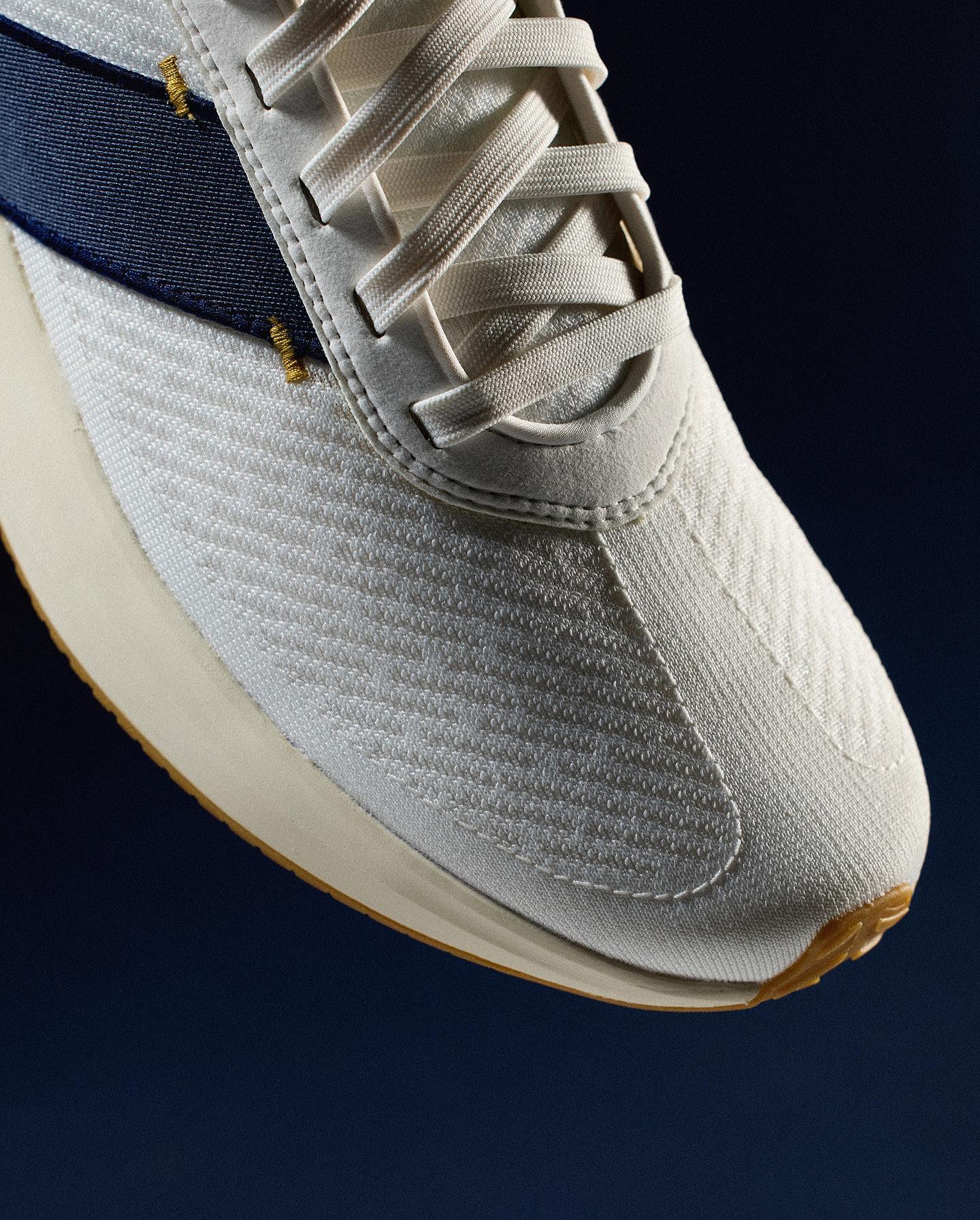
hill.camp does not test products first-hand. This comparison is a structured synthesis of 8 independent sources covering both shoes — specialist field tests, retailer panels, verified owner feedback and manufacturer specifications — assembled with AI assistance and edited before publication. Sources are selected and verified by runners who follow this equipment closely. Very few reviewers test both models in the same conditions, so cross-reading the two bodies of testing is the only honest way to compare them — and it lets us flag where sources contradict each other instead of smoothing it over.
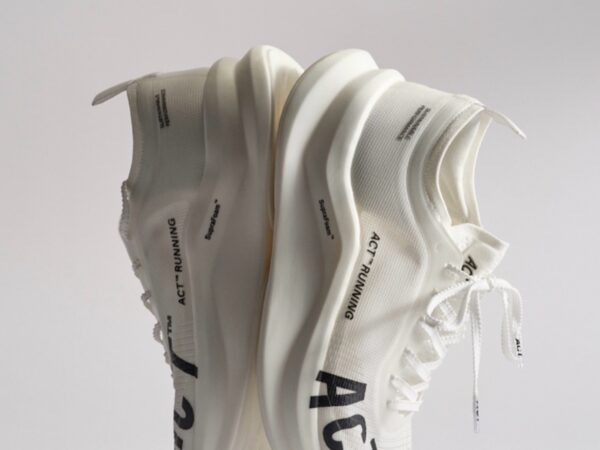
These two shoes share a name, a sash, and a design language, and almost nothing else. The Eliot Runner was Tracksmith’s first attempt at footwear — a low-stack, firm, handsome daily trainer that a lot of people ended up walking in rather than running in. The Eliot Ryder, arriving three and a half years later, stacks 45 mm underfoot, hides most of it inside the shoe, and finally gives the brand a running shoe that reviewers reach for on purpose. Comparing them is less about picking a winner than about understanding what Tracksmith learned in between — because on nearly every axis where the Runner drew criticism, the Ryder moves in the opposite direction. Sometimes too far.
Eliot Ryder vs Eliot Runner: Specs Side by Side
| Spec | Eliot Ryder | Eliot Runner |
|---|---|---|
| Price | $220 | $198 |
| Weight (US M9) | ~269–272 g / 9.5–9.6 oz | 261 g / 9.2 oz |
| Stack (heel / forefoot) | 44.5–45 mm / 37.5 mm | 33.5 mm / 24.5 mm |
| Drop | 7–7.5 mm | 9 mm |
| Midsole | 25 mm supercritical ATPU drop-in + firmer chassis | Dual-density Pebax + 10 mm supercritical sockliner |
| Plate | None | None |
| Forefoot width | 115 mm — broad | Narrow to medium |
| Outsole | « Net Mesh » gum rubber, full coverage | Full-coverage gum rubber (~90%) |
| Best for | Easy miles, long runs, recovery, all-day wear | 3–10 miles easy to moderate, casual crossover |
| Release | July 2026 | December 2022 |
The Same Idea, Scaled Up Enormously
The thread connecting these two shoes is the drop-in midsole, and it is worth understanding because it explains most of what follows. Both put foam inside the upper rather than entirely beneath it, so the foot contacts the cushioning directly instead of through a lasting board. The Runner did this with a 10 mm supercritical Pebax sockliner sitting on a firmer Pebax base. The Ryder takes the same concept and more than doubles it: a 25 mm slab of supercritical ATPU, the largest drop-in midsole in running footwear, resting on a firmer supercritical chassis.
The scaling changes the shoe completely. On the Runner, the drop-in produced a pleasant step-in feel and a modest cushioning boost on a fundamentally low, firm platform. On the Ryder, it produces a genuine max-cushion ride while keeping the external silhouette lean — roughly half the stack is hidden inside the shoe rather than piled underneath. That is why a 45 mm trainer reads visually as something closer to a lifestyle sneaker.
There is also a material shift worth noting. The Runner used Pebax throughout; the Ryder uses cheaper ATPU in the replaceable slab and reserves Pebax for the permanent footbed foundation. Pebax costs several times more per unit, so putting it in the part that stays and the cheaper polymer in the part designed to compress and be swapped is a rational allocation rather than a downgrade — though it does mean the Ryder’s headline foam is not the premium material the Runner’s was.
Ride: Firm and Grounded vs Soft and Rolling
This is where the two shoes diverge most sharply, and neither ride is objectively better — they answer different questions.
The Eliot Runner is firm, grounded, and connected. Its Pebax is processed to be considerably less compliant than the foam in race shoes, so runners expecting bounce were disappointed while those approaching it as a well-calibrated daily trainer found it enjoyable. The forefoot is flat and flexible rather than rockered, giving good ground feel and natural propulsion at everyday paces. Its sweet spot is three to ten miles at easy to moderate effort; beyond eight to ten miles, most testers wanted more underfoot.
The Ryder is soft, smooth, and protective. Testers reach for words like plush and tender, and the ATPU delivers real energy return — a rolling springiness rather than a mechanical trampoline. The stability is the genuine surprise: max cushion normally costs you a stable platform, but the firmer carrier foam and its sidewalls contain the soft slab well enough that testers navigated uneven ground without the hesitation high-stack shoes usually provoke. Where the Runner ran out of cushioning at ten miles, the Ryder is at its best on long efforts.
Both shoes cap out at similar places on the speed dial, for different reasons. The Runner lacks propulsive snap because its foam is firm and its geometry flat. The Ryder lacks it because the soft gum outsole is mushy at toe-off, the forefoot tapers thin, and turnover is slow. Neither is a workout shoe. Testers noted a front-to-back split in the Ryder’s personality — solid and powerful at the rear, comparatively flat up front — which is a more specific version of the same limitation.
Fit: An Overcorrection, Honestly Assessed
The Runner’s fit was its most persistent problem. The toe box ran narrow to medium, ruling out wider feet entirely. Sizing was inconsistent between production batches — one reviewer tested two pairs in different colourways and found them to fit noticeably differently. Some runners found their usual size ran long by a full size. The heel collar sat low, a consequence of the 10 mm sockliner lifting the foot higher than the collar was designed for, producing an occasionally insecure heel.
The Ryder fixes the length and the width. It is true to size, and the forefoot measures 115 mm — broad, relaxed, and finally accessible to the feet earlier Eliots excluded. For high-volume and wide-footed runners, this is the single biggest improvement in the shoe.
But the correction may have gone too far. Narrow-footed testers split on the Ryder. Some found that snugging the laces produced a secure hold. Others described the foothold as the shoe’s weakest attribute, with foot movement that is merely noticeable at easy pace becoming distracting when cornering or accelerating. One reviewer’s complaint about the original Runner was a cramped, low toe box — and his complaint about the Ryder is a toe box that is too wide. Tracksmith solved one fit problem by creating its mirror image.
One caveat we flag because it is unresolved: a New England running retailer that fits the shoe in store describes the Ryder as running short and narrow, directly contradicting the reviewer consensus. We cannot reconcile that, and it reinforces the same practical advice that applied to the Runner — try before you buy. Tracksmith’s 30-day, 100-mile return policy exists for a reason.
Two irritations carry across both shoes: the laces are too long on each, and neither upper is especially breathable. The Ryder’s thick woven mesh and double-layer gusseted tongue make it the warmer of the two.
The Outsole Problem, Half Solved
Both shoes use full-coverage gum rubber, and both grip well across road, wet surfaces, gravel and light trail. But the Runner’s outsole was widely criticised as stiff, firm and overdone — it added weight, made the ride harsh at footstrike, and on at least one tester’s pair hardened over time until the shoe turned slick.
The Ryder’s « Net Mesh » layout is a clear improvement: not lumpy, not rigid, smooth and quiet underfoot. It is still not ideal. The semi-translucent crystal-type rubber remains soft, which adds weight and blunts the response at toe-off. More than one reviewer wished Tracksmith had moved to a lighter cast polyurethane compound. And there is an open durability question — one tester noted lateral heel wear after only 20–25 miles, which given the Runner’s history is worth watching rather than dismissing.
Construction and Value
Both shoes are built to a standard that has no real equivalent in running footwear: stitched and woven overlays instead of printed synthetics, suede at the wear points, detailed top stitching, nothing heat-pressed or glued. The Ryder pushes this further than the Runner did, and reviewers who have handled hundreds of shoes said plainly that no one else in the category builds to this level of finish.
The $22 price gap is not the interesting part. What matters is what each shoe delivers for its money. At $198, the Runner asked you to pay a premium over mainstream daily trainers for a shoe that most testers preferred walking in — a difficult argument, and one the brand’s own reviewers made only half-heartedly. At $220, the Ryder asks for more but delivers a shoe reviewers genuinely wanted to run in, scoring between 7.9 and 9.65 out of 10 across independent panels. Relative to what you get, the more expensive shoe is the better value.
Both remain expensive against pure running metrics. A Nike Vomero or an ASICS Glideride Max delivers more capability per euro than either Eliot. What Tracksmith sells alongside the running is construction quality and a silhouette you can wear all day, and that has always been the actual proposition — clearer in the brand’s wider story than in any spec sheet.
Which One Should You Buy?
Choose the Eliot Ryder if you want a shoe you will actually run in. It is the better running shoe by a clear margin — more cushioned, more protective, more stable, more comfortable over distance, and better suited to long runs, easy days and recovery miles. It is also the better choice if you have wide or high-volume feet, or if you want one shoe that covers the airport, the coffee shop and a morning run. For most runners choosing between these two, the Ryder is the answer. Our full Tracksmith Eliot Ryder review goes deeper on the drop-in midsole, the fit debate and the durability question.
Choose the Eliot Runner if you specifically want ground feel and a firm, traditional, connected ride, or if your runs are consistently short and you prefer a lower stack. It has better lockdown than the Ryder, which matters if your feet are narrow. And it is the cheaper of the two and the more discreet, if the Ryder’s added bulk — modest as it is — still reads as too much shoe for casual wear. Be aware that its sizing inconsistency is a genuine risk.
If neither quite fits, the rest of the line is worth a look: the Eliot Racer is the carbon-plated race-day option, and the Eliot Range takes the brand onto trail, with mixed results.
Our Take
This is not a close contest, and pretending otherwise would be dishonest. The Ryder is the better shoe by most measures that matter to a runner, and its existence somewhat clarifies what the Runner always was — a beautifully made object that happened to have laces, and which a lot of owners ended up wearing to dinner rather than on a Sunday long run. The Runner is not a bad shoe. It is a good-looking one that never found its purpose on the road.
What makes the comparison genuinely interesting is that the Ryder is not a corrected Runner. It is a differently conceived shoe that happens to fix the Runner’s problems as a side effect of aiming somewhere else. The harsh outsole is softened, the cramped fit is opened up, the thin forefoot is replaced by real protection, and the firm ride becomes plush. Each of those is an improvement. But the Ryder also introduces a fit problem the Runner never had, in the opposite direction, which suggests Tracksmith is still calibrating rather than converging.
Our honest recommendation is straightforward: if you are choosing between these two for running, buy the Ryder and try it on first. If you already own the Runner and like it as a walking and travel shoe, the Ryder does not replace it so much as give you the running shoe the Runner was never quite able to be. You can see both models on the official Tracksmith website.
Frequently Asked Questions
Is the Eliot Ryder a replacement for the Eliot Runner?
No. They occupy different categories. The Runner is a low-stack (33.5 mm) daily trainer with a firm, connected ride; the Ryder is a max-cushion trainer at 45 mm built for long, easy miles. Tracksmith continues to sell both. That said, for runners who wanted the Runner to be a proper running shoe rather than a lifestyle crossover, the Ryder is the shoe that delivers.
Which is more comfortable, the Eliot Ryder or the Eliot Runner?
The Ryder, clearly. Its 25 mm ATPU drop-in slab delivers considerably more cushioning and impact protection than the Runner’s 10 mm Pebax sockliner over a firm base, and the difference grows with distance. The Runner’s sweet spot ends around eight to ten miles; the Ryder is designed for exactly the efforts beyond that. The Ryder also has a roomier toe box, though narrow-footed runners may find the Runner’s lockdown more secure.
Do the Eliot Ryder and Eliot Runner fit the same?
No. The Runner ran narrow to medium and its sizing was inconsistent between production batches, with some runners finding it long by a full size. The Ryder is true to size lengthwise with a much broader 115 mm forefoot. Anyone excluded from the Runner by width should find the Ryder accommodating. Narrow-footed runners may find the opposite problem — several testers reported the foot moving inside the shoe at faster paces.
Is the extra $22 for the Eliot Ryder worth it?
If you intend to run in the shoe, yes, and it is not close. The Ryder delivers substantially more cushioning, better stability, a smoother outsole, and a wider fit for an 11% price increase. The Runner’s value case always rested more on aesthetics and casual crossover than on running performance. Both shoes remain expensive relative to mainstream trainers that outperform them on pure running metrics.
Can either shoe handle faster running?
Neither is a workout shoe. The Runner lacks propulsive snap because its Pebax is firm and its forefoot flat. The Ryder reaches tempo pace but no further, held back by a soft gum outsole with little pop, a thin tapered forefoot, and slow turnover. Both handle a pickup at the end of an easy run; neither is the shoe for intervals or race pace. For that, the carbon-plated Eliot Racer is Tracksmith’s answer.
Which is better as an everyday casual shoe?
Both work, and the choice comes down to silhouette. The Runner is lower and more discreet, closer to a vintage tennis shoe, and several reviewers travelled with it as their only pair of footwear. The Ryder hides its 45 mm stack remarkably well but is still visibly the bulkier shoe, though testers reported wearing it with dresses and to the office without it looking out of place. The Ryder is more comfortable for long days on your feet; the Runner is the more understated.