hill.camp does not test products first-hand. This review is a structured synthesis of 6 independent sources — specialist field tests, retailer panels, verified owner feedback and manufacturer specifications — assembled with AI assistance and edited before publication. Sources are selected and verified by runners who follow this equipment closely. That method lets us cross-reference more testing than any single reviewer could, and to flag where sources contradict each other instead of smoothing it over.
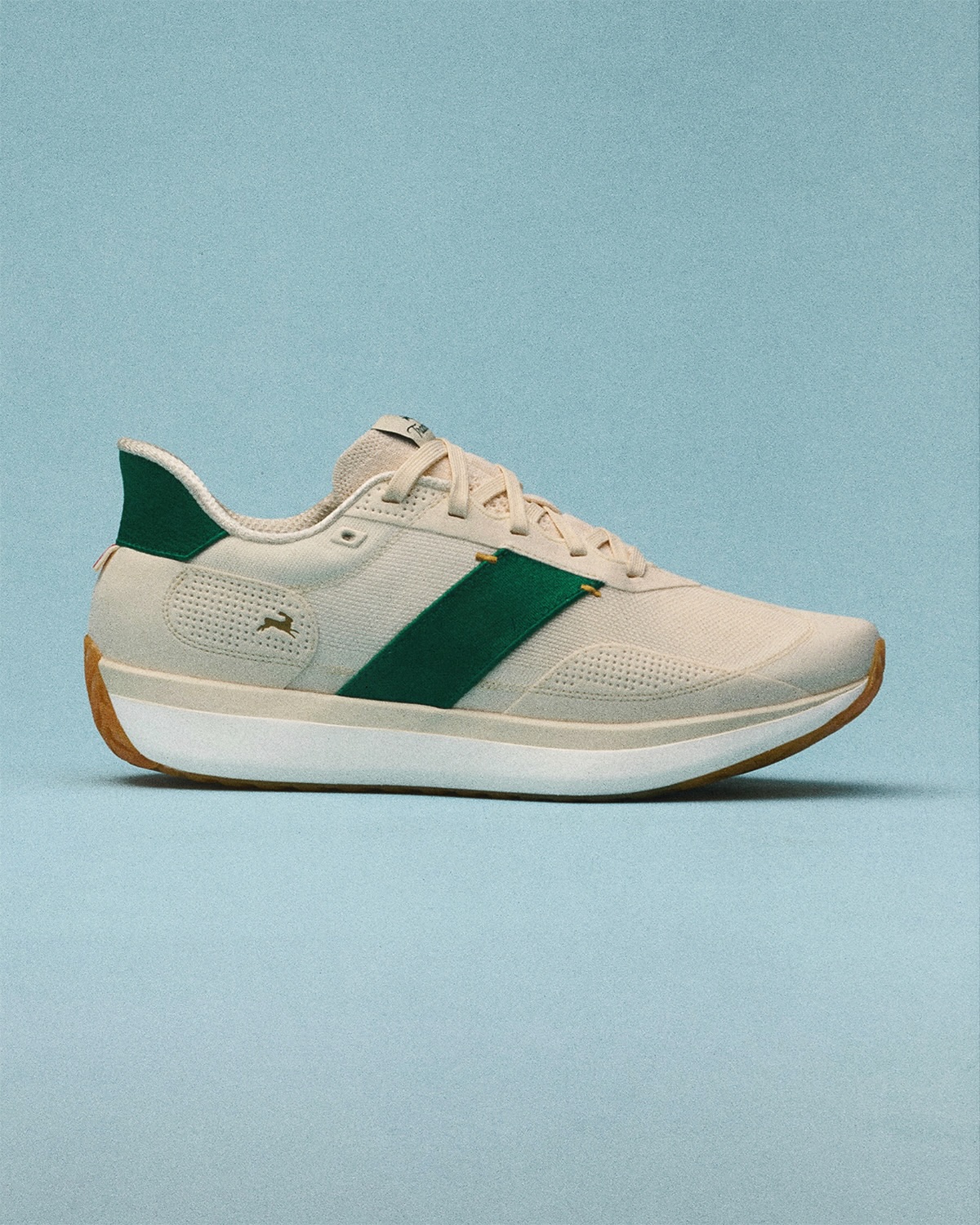
Four shoes into its footwear programme, Tracksmith has finally built the one it probably should have started with. The Eliot Ryder is a $220 max-cushion trainer with 45 mm of stack that does not look like it has 45 mm of stack — and that sleight of hand, achieved through the largest drop-in midsole in running, is the entire proposition. The reviews have been broadly warm, in some cases effusive. But the interesting thing about the Ryder is not that testers liked it. It is that a shoe built around aesthetics, in a category defined by performance metrics, has ended up being the most convincing running shoe the brand has made.
Tracksmith Eliot Ryder Review: Quick Specs
| Weight | ~269–272 g / 9.5–9.6 oz (US M9); ~240 g / 8.5 oz (US W8) |
| Stack height | 44.5–45 mm heel / 37.5 mm forefoot (sources differ) |
| Drop | 7–7.5 mm |
| Drop-in midsole | 25 mm supercritical ATPU, claimed 85% energy return |
| Chassis | Firmer supercritical carrier foam, no plate |
| Platform width | 90 mm heel / 82 mm midfoot / 115 mm forefoot |
| Upper | Engineered woven mesh, suede overlays, gusseted knit tongue |
| Outsole | « Net Mesh » gum rubber, full coverage |
| Intended use | Easy miles, long runs, recovery, all-day wear |
| Retail price | $220 / £220 / €265 |
A note on those first three rows: the published figures do not fully agree. Stack is quoted as either 44.5 mm or 45 mm at the heel and drop as either 7 mm or 7.5 mm depending on the outlet, and weights land between 265 g and 272 g across sample sizes. These are rounding-level discrepancies rather than meaningful ones, but we would rather flag them than pretend to a precision the sources do not support.
The Drop-In Midsole: A Genuine Idea, Not a Marketing One
Most max-cushion trainers stack their foam beneath a lasting board, so your foot sits on top of the midsole with a layer of fabric and structure in between. The Ryder inverts this. A 25 mm slab of supercritical ATPU sits inside the upper, above the lasting board, resting on a firmer supercritical chassis below. The practical consequence is that your foot is in direct contact with the soft foam. Testers describe the sensation as standing in the cushioning rather than on it, and the difference in immediacy is apparently obvious from the first step.
This is the largest drop-in midsole in running footwear by some margin, and it produces two effects worth separating. The first is the ride, which we come to below. The second is visual: because roughly half the stack is hidden inside the shoe rather than piled underneath it, the Ryder has a silhouette closer to a lifestyle sneaker than a max-cushion trainer. Every reviewer independently arrived at some version of the same observation — a 45 mm shoe that does not read as 45 mm to the eye. Tracksmith’s own pitch is max cushion « without the aesthetic baggage, » which is a fairly direct swipe at the sculpted-sidewall convention the category has settled into.
There is also a materials decision embedded here that deserves noting, because it is smarter than it first appears. The replaceable slab uses ATPU; the permanent footbed foundation uses Pebax. Pebax costs several times more per unit than ATPU. Putting the cheaper polymer in the part designed to compress and be swapped, and the more expensive one in the part that stays, is a defensible allocation of cost rather than a corner cut. Whether anyone will actually buy replacement slabs is another question, and the honest answer is probably not — the running industry is organised around annual models and constant novelty, and a design that asks customers to keep an upper for two seasons is swimming against that current. It is a correct idea that will likely go unrewarded.
The Ride: Plush, Stable, and Deliberately Unhurried
The consensus on the Ryder’s ride is unusually tight across independent panels: soft, smooth, protective, stable, and not fast. Testers consistently reach for words like plush, tender, and reassuring. The ATPU delivers real energy return — enough that the shoe feels alive rather than dead underfoot — but it is a rolling, metered springiness rather than the mechanical trampoline effect of a plated super shoe. One European reviewer summarised it as a soft type of energy return rather than a bouncy one, which captures the distinction well.
The stability is the genuine surprise. Max cushion usually means a stability compromise: soft foam at height tends to feel wobbly, and runners find themselves hunting for a platform that keeps shifting. The Ryder largely avoids this, and the credit goes to the two-part construction. The firmer carrier foam and its sidewalls create a chassis that contains the soft slab, while positioning the cushioning inside the shoe lowers the effective centre of gravity. Multiple testers reported navigating uneven ground at pace without the hesitation they normally feel in high-stack shoes — one specifically noted taking it over gravel and sand without trouble. For a 45 mm plateless platform, that is a real achievement.
There is no plate, and we think that is the right call. Many super trainers are built as detuned race shoes, with stiff plates and aggressive rockers that make them too demanding for what the category is actually for — a shoe you wear a few times a week that feels livelier than a mileage workhorse. Plates belong in racing shoes. The Ryder’s rocker is correspondingly subtle, which divides opinion: a midfoot striker who wanted a more pronounced roll found the geometry too flat, while heel and forefoot strikers benefit from the gentler profile. It is a legitimate trade-off rather than an error.
Where the shoe runs out of road is at pace. It handles a tempo effort without falling apart, but the top end is limited, and the reasons are structural. The soft gum rubber outsole lacks decisive pop at toe-off. The forefoot tapers quickly, leaving the very front of the shoe thin and flexible in feel. Turnover is on the slower side. Several testers described a front-to-back split in personality — a solid, powerful rear half and a comparatively flat, underpowered front. If you want one shoe that covers easy days and workouts, this is not it.
Fit: The Widest Tracksmith Yet, and the Most Contested
The three previous Eliots were all criticised for running narrow. The Ryder corrects this, and the correction is substantial — 115 mm across the forefoot, with a toe box testers describe as broad, relaxed, and accommodating. Length is true to size, unlike the Racer, where some runners sized up. Anyone ruled out of earlier Tracksmith shoes by width should find the Ryder genuinely accessible.
Whether the correction went too far depends entirely on your foot. Runners with high-volume or wide feet are close to unanimous in praising it. Runners with narrow, low-volume feet split. Some reported that snugging the laces produced a secure hold without the upper bagging. Others found the foothold to be the shoe’s weakest attribute — foot movement that is merely noticeable at easy pace becoming genuinely distracting when cornering or accelerating. One tester put it bluntly: the toe box is too wide in its pursuit of casual comfort. The irony, as he pointed out, is that his complaint about the original Eliot Runner was the opposite problem.
One dissenting data point worth flagging honestly: a New England running retailer that stocks and fits the shoe reports it running short and narrow and advises sizing up. This directly contradicts the reviewer consensus of true-to-size and generously wide. We cannot reconcile the two, and we are not going to pretend we can. What it does reinforce is the practical advice: try the Ryder on before committing $220, particularly if your feet sit at either extreme of the volume range.
Two smaller fit notes recur across sources. The laces are excessively long — a complaint raised by nearly every tester, and one Tracksmith has now carried across multiple models. And the tongue, padded in three pods, would benefit from an additional cushioned section under the top lace lock.
Construction: Where the Money Actually Goes
This is the part of the Ryder that has no real competition, and it is worth being specific about why. The top eyelets are stitched. The sash on the sidewall and the accent around the heel cup are stitched and woven, not printed synthetic overlays. Suede reinforces the wear points instead of cheaper poly. There is detailed top stitching throughout, a gold hare logo, a knit tongue, and a full gum rubber outsole patterned with small Tracksmith logos. Nothing on the shoe is heat pressed or glued on.
Each of these choices costs money and slows production, which is precisely why other brands avoid them. No one else in running footwear is currently building to this standard of finish, and reviewers who have handled hundreds of shoes said so plainly. The unboxing is part of the same programme — an oversized premium box with interior artwork of a New England dirt road, which is theatre, but effective theatre.
Whether construction quality of this kind justifies a price premium is a personal question rather than a technical one. Tracksmith is betting that some runners will answer yes, in the way that some photographers pay three times the price for a hand-assembled camera that does less on paper. It is not an irrational bet — that market exists and has sustained itself for decades — but it is a narrower one than the running industry usually plays for.
The Outsole and Breathability: Two Consistent Complaints
The « Net Mesh » outsole is a clear improvement on the firm, stiff, overdone rubber of the Eliot Runner and the Eliot Range. Grip has been excellent across dry road, wet road, gravel, and fine sand, and full coverage should mean good durability. But the semi-translucent crystal-type rubber is soft, and softness has costs: it adds weight, and it contributes to the muted response at toe-off. More than one tester wished Tracksmith had used a lighter, more modern cast polyurethane compound instead. There is also an unresolved durability question — a similar rubber on the Eliot Runner hardened over time and turned slick, and one tester noted lateral heel wear after only 20–25 miles.
Breathability is the other recurring flag. The engineered woven mesh is thick, the overlays are not heavily perforated, and the gusseted tongue forms a double layer. The result is a shoe that runs warm. Testers survived hot-weather runs without real problems, but at easy paces the shoe is warmer than the category standard, and in genuine summer heat it is a factor. Tracksmith’s love of layered fabrics and thick side panels keeps coming at the cost of airflow — the same criticism that followed the Eliot Racer.
Where It Sits in the Tracksmith Line
Four shoes in, Tracksmith’s footwear record reads as one miss, one good shoe in an unforgiving market, one divisive experiment, and now the closest fit yet between product and brand. The Eliot Runner was a handsome shoe that few people wanted to train in, and it pivoted into what it probably always was — a lifestyle walking shoe. The Eliot Racer recovered ground: a legitimately good super shoe from an independent brand, though one that struggles to earn race-day trust against established names. The Eliot Range drew the harshest reception of the three, and at $240 it handed sceptics an easy target.
The Ryder is the first Tracksmith shoe where the category and the brand require no translation of each other. Super trainers tolerate personality, reward eccentric design, and are bought by runners who want a shoe that signals something. That is Tracksmith’s native territory. Reviewers who tested the Racer noted something instructive: the ATPU foam that felt underpowered at racing pace is perfectly pleasant at easy pace. The Ryder is the more honest expression of what this midsole material actually wants to do. If you are weighing it directly against the brand’s first shoe, our Eliot Ryder vs Eliot Runner comparison sets the two side by side.
It also arrives at a moment when the brand’s cultural position has shifted. Tracksmith created the premium independent running category in 2014, and that category is now crowded — Bandit, Satisfy, District Vision and others have all built businesses on some version of the same idea, and several now sell footwear too. A sash singlet no longer marks an insider the way it once did. None of that is a criticism of the Ryder, but it explains why this shoe carries more weight for the company than a fourth model normally would.
Our Take
The Eliot Ryder is the best running shoe Tracksmith has made, and the first we would hand to someone sceptical of the brand’s footwear. The drop-in midsole is a real idea executed well rather than a spec-sheet gimmick — it produces genuine softness, genuine stability, and a silhouette that solves the aesthetic problem the category has never bothered to address. At 269 g for 45 mm of stack it is impressively light, and the construction is without equal in running footwear. Scores from independent panels ranged from 7.9 to 9.65 out of 10, which is a wide spread but sits comfortably in positive territory.
The honest limitations are all real and all consistent. It is not fast, and it is not trying to be — the soft outsole and thin, tapered forefoot cap the top end firmly. It runs warm. The wide fit that finally opens Tracksmith to broad feet leaves narrow-footed runners with a lockdown problem that becomes distracting the moment the pace lifts. And at $220 you are paying a premium for construction quality and design in a category where $150–170 buys you shoes that run better, if not as beautifully. Durability remains unproven — the outsole compound is the specific thing to watch.
Our recommendation is narrower than the enthusiasm around this shoe might suggest. If you want a dedicated easy-day and long-run shoe that you will also wear off the run, and you have medium-to-wide feet, the Ryder is close to the best-executed version of that formula currently available. If you want a max-cushion trainer that does everything, or you have narrow feet, or you want the most running shoe per euro, better options exist. What Tracksmith has built is not the most capable shoe in the category. It is the most enjoyable one to own, and for a specific kind of runner that has always been the point. You can find the full range on the official Tracksmith website.
Frequently Asked Questions
What is a drop-in midsole, and why does it matter on the Eliot Ryder?
A drop-in midsole sits inside the upper, above the lasting board, rather than beneath it. On the Ryder this is a 25 mm slab of supercritical ATPU — the largest in running footwear — resting on a firmer supercritical chassis. Because the foot contacts the soft foam directly, the cushioning feels more immediate than in a conventional stacked midsole. It also hides roughly half the stack inside the shoe, which is why a 45 mm trainer looks like a lifestyle sneaker.
Does the Tracksmith Eliot Ryder have a carbon plate?
No. The Ryder is deliberately plateless, relying on the ATPU slab, the firmer carrier chassis, and a subtle rocker for its ride. Stability comes from the platform width and the sidewalls of the chassis rather than from a stiffening element. This is a reasonable choice for a super trainer — plates suit racing shoes, where the stiffness is worth the demand it places on the runner.
How does the Eliot Ryder fit compared with the Eliot Runner and Racer?
Considerably wider. The Runner, Racer and Range were all criticised for narrowness, and the Ryder corrects that with a 115 mm forefoot and a broad, relaxed toe box. Length is true to size, whereas some runners sized up in the Racer. The caveat is that runners with narrow, low-volume feet may find the fit too accommodating, with reports of the foot moving inside the shoe at faster paces. One retailer contradicts the reviewer consensus entirely and describes the fit as short and narrow, so trying before buying is genuinely advisable.
Can you use the Eliot Ryder for tempo runs or racing?
It will reach tempo pace but not comfortably beyond it, and it is not a racing shoe. The soft gum rubber outsole lacks decisive pop at toe-off, the forefoot tapers thin, and turnover is on the slower side. Testers consistently describe a solid rear half and a comparatively flat front. Its natural territory is easy miles, long runs, and recovery days. For faster sessions, a dedicated speed shoe is the better answer.
Is the Eliot Ryder breathable enough for summer running?
Less than most. The engineered woven mesh is thick, the overlays are lightly perforated, and the gusseted tongue creates a double layer. Testers completed hot-weather runs without real problems, but the shoe runs warm by category standards. At easy paces this may not matter much; in sustained summer heat it is worth factoring in.
Is the Tracksmith Eliot Ryder worth $220?
It depends on what you are buying. As a pure running tool, shoes at $150–170 outperform it — the Nike Vomero and the ASICS Glideride Max both deliver more capability for less money. What $220 buys is construction without equal in running footwear (stitched and woven overlays, suede reinforcement, nothing glued), a silhouette you can wear all day, and expected durability. If you want one shoe that handles the airport, the coffee shop and a morning run, the value case is real. If you want the most performance per euro, it is not.